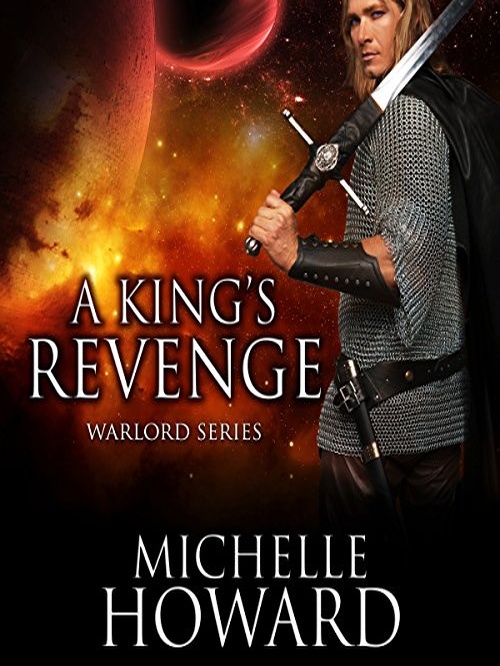
A King’s Revenge Review

The Enduring Reckoning of Sovereignty and Sentiment in A King’s Revenge

In the intricate tapestry of Fantasy Romance, where the weight of crowns often contends with the urgings of the heart, Michelle Howard‘s A King’s Revenge (part of the Warlord series) presents a poignant exploration of grief, duty, and the unexpected resurgence of affection. We are invited into a world where past trauma casts long shadows, even over monarchs, and where true healing might arrive disguised as a serendipitous encounter.

The Sovereign’s Solitude and the Echo of Loss

At its core, A King’s Revenge delves into the profound isolation of power, epitomized by Tarik Sabarn, King of Desani. Having suffered the brutal murder of his Queen, Tarik’s narrative arc begins not with conquest, but with an internal retreat, a monarch who has foregone the solace of love for the stoicism of rulership. It is a familiar trope, perhaps, yet Howard imbues Tarik with a palpable despondency that resonates beyond the page, drawing us into the psychological landscape of a king undone by personal tragedy. This is not merely a ruler but a man who has experienced the ultimate loss, and his subsequent emotional stagnation provides a fertile ground for the dramatic unfolding of the plot. The title itself, A King’s Revenge, prompts an immediate inquiry: is the revenge literal, a pursuit of justice for his fallen queen, or is it a more subtle, internal battle—a reclamation of his own capacity for life and love?

A Confluence of Fates: Beyond the Random Encounter

The narrative gains its romantic impetus through the introduction of Lea, whose motivations run deeper than a casual flirtation. Her quest for “answers,” hinted at within the summary, suggests a parallel journey of discovery that intertwines dramatically with Tarik’s own emotional void. What begins as a “random night of passion” quickly transcends the superficial, evolving into a bond forged by shared vulnerability and mutual revelation. Howard here crafts a compelling argument for the transformative power of connection, positing that the most profound insights, and indeed, love itself, can emerge from the most unforeseen circumstances. The inherent danger, the “if she’s not careful, they’ll both lose out again,” underscores the fragile nature of their burgeoning relationship, hinting at external threats or internal demons that threaten to unravel their newfound happiness. It is this delicate balance between burgeoning hope and looming peril that lends the Romance its intellectual weight.

The Audio Experience: A Dual Narration of Depth

One cannot overlook the auditory dimension of this tale, skillfully brought to life by Tristan Wright and Sarah Grace Wright. The choice of dual narration for a Fantasy Romance is often a strategic one, allowing for distinct voices to inhabit the internal worlds of the protagonists. We imagine Tristan Wright‘s voice imbuing King Tarik with the gravitas of a weary sovereign and the burgeoning hope of a man rediscovering affection, while Sarah Grace Wright would undoubtedly capture Lea’s inquisitive spirit and the vulnerability that underpins her newfound love. This collaborative narration promises an immersive experience, allowing the listener to fully appreciate the emotional nuances that Howard so carefully weaves into her narrative.

The Sovereign Verdict: A Phoenix from the Ashes

A King’s Revenge is, in essence, a tale of redemption, not merely of a king, but of a soul. Michelle Howard offers a narrative that asks us to consider whether it is truly possible to escape the gravitational pull of past tragedies, or if true strength lies in allowing new affections to mend old wounds. The relatively concise duration of five hours and twenty-one minutes suggests a focused, impactful journey, shying away from sprawling epicism in favor of a concentrated character study.

This is a book for those who appreciate Fantasy Romance that prioritizes emotional depth over exhaustive world-building, where the internal struggles of its characters are as compelling as any external conflict. It will resonate with readers who enjoy tales of second chances, of monarchs grappling with very human vulnerabilities, and of the potent, often perilous, nature of love rekindled amidst sovereign duties. We find in A King’s Revenge a poignant reminder that even in kingdoms haunted by loss, the human spirit, with enough courage, can always find its way back to warmth and connection.


A Gift for the King Review

Stars And Chains: Critique Of Sara Fields

Aliens abduct Lana. Steal student for space auction. Reality shatter. Book expose primal fear. We analyze dark themes.

Mechanics Of Alien Control

Sara Fields build brutal universe. Lana fight auction. Rebel for freedom. Captors spank Lana. Punish girl for defiance. Visceral impact hit reader. Narrative arc map complete subjugation.

King Dante claim human. Ruler demand total obedience. Dominant lovemaking follow strict rules. Pain ignite desire. Complex psychology emerge. Nuanced perspective show Stockholm syndrome. Intellectual rigour dissolve. Primal lust dominate mind.

Lana flee cage. Escape for independence. Rival steal human. Dante crush enemy. King smash foe for absolute ownership. Paradigmatic shift happen. Rescue cement permanent enslavement. Author mix Romance with dark Fantasy.

Final Judgment

I judge book harsh. Stormy Night Publications publish heavy BDSM. Rating sit 3.75. Dorian Bane voice dominance well.

Target audience crave dark dynamics. Read book for unconventional power play. Vanilla readers flee.

Golden cage offer safety. Cold void offer freedom. Which you pick? Reader reflect now.

A Gift for the Doctor Review

When Captivity Becomes Liberation: The Paradox of Power in Sara Fields’ A Gift for the Doctor

What does it mean to surrender — not out of weakness, but from a position of extraordinary strength? It’s a question that pulses beneath the surface of Sara Fields’ A Gift for the Doctor, the second installment in her Terranovum Brides series, and one that elevates what might otherwise be a straightforward paranormal romance into something more psychologically textured than its premise initially suggests.

Morgana is no damsel. She is, we are told, her kingdom’s most powerful sorceress — a woman who chooses captivity to protect the people she loves. That single act of agency sets the entire narrative in motion, and it’s worth pausing on, because it reframes everything that follows. Every moment of vulnerability, every scene of submission to the alpha shifter Kade, exists in tension with the knowledge that this woman could, presumably, burn it all down if she wished.

The Architecture of Desire and Defiance

Fields constructs her central dynamic with a clarity that borders on architectural precision. Kade is the doctor, the examiner, the man who literally holds power over Morgana’s exposed body. The medical play elements — clinical, intimate, deliberately transgressive — serve as more than erotic set dressing. They function as a metaphor for the stripping away of pretense, the dismantling of the armor Morgana has built around herself as both sorceress and survivor.

What I find genuinely interesting here is the layered deception at the story’s core. Kade has been ordered to claim Morgana, to breed a child that would merge two powerful bloodlines for a tyrant’s benefit. Yet his true allegiance lies with the rebellion. Morgana believes she is a prisoner submitting to an enemy’s tool; Kade knows he is a double agent falling for the woman he was meant to exploit. Neither possesses the full truth, and Fields milks this asymmetry of knowledge for considerable dramatic tension.

The power exchange in their relationship is rarely simple. It oscillates — spanking scenes that enforce dominance sit alongside moments where Kade’s protectiveness reveals his own vulnerability. Fields understands, at least intuitively, that the most compelling BDSM-inflected narratives are not about the subjugation of one party but about the mutual risk of emotional exposure.

Sorceress, Shifter, and the Politics of Bodies

The worldbuilding of Terranovum remains somewhat sketched rather than fully rendered — this is, after all, a novella-length work clocking in at just over five hours in Logan McAllister’s narration. But Fields weaves enough political scaffolding into the romance to give it stakes beyond the bedroom. Civil war looms. A tyrant manipulates bloodlines like a breeder selecting livestock. The commodification of Morgana’s body — her womb, specifically — echoes real-world anxieties about reproductive autonomy that lend the fantasy elements an unexpected bite.

As a sequel to A Gift for the King, this installment benefits from an established universe but also suffers slightly from sequel syndrome: certain emotional beats feel accelerated, as though the narrative trusts that readers arriving from the first book will fill in the gaps of worldbuilding and emotional context that newcomers might find thin.

McAllister’s narration deserves mention. He navigates the tonal shifts — from tender to commanding to politically charged — with a steadiness that keeps the audiobook from tipping into melodrama, a real risk given the material’s intensity.

The Tension Between Formula and Feeling

I won’t pretend this is a work of subversive literary fiction. Fields writes within a well-established genre framework, and she honors its conventions: the dominant alpha, the reluctant but aroused heroine, the escalating physical encounters that mirror deepening emotional connection. The publisher’s note is admirably transparent about what readers will encounter — spanking, medical play, BDSM elements — and that honesty is itself a form of respect for the audience.

Where Fields succeeds most is in the emotional throughline. Morgana’s internal conflict — between her identity as an independent, powerful woman and her growing desire to yield to Kade — never fully resolves into easy comfort. Even at the story’s climax, when romance and revolution converge, there’s a sense that submission remains a choice she makes daily, not a state she falls into permanently. That distinction matters enormously, and it’s what separates competent erotic romance from the genuinely compelling variety.

Where the book stumbles is in pacing. The transition from captive-and-captor tension to allied lovers fighting a common enemy happens with a swiftness that undercuts the political narrative. The civil war feels more like a backdrop than a fully realized conflict, and the resolution arrives with a neatness that the story’s darker undertones don’t entirely earn.

Who Should Open This Book — and Why

A Gift for the Doctor is crafted for readers who appreciate their romance dark, their fantasy unapologetic, and their power dynamics rendered with emotional specificity rather than mere shock value. If you found yourself drawn to the psychological complexity beneath works like Katee Robert’s Dark Olympus series or Ruby Dixon’s more intense offerings, Fields operates in adjacent territory with her own distinctive voice.

It is not a book for everyone — nor does it aspire to be, and that self-awareness is one of its quiet strengths.

Here is the question I’m left with: In a genre so often dismissed as mere escapism, why does the fantasy of chosen surrender resonate so deeply with readers who, in their waking lives, fight relentlessly for control? Perhaps because fiction remains the one space where we can safely explore the terrifying, exhilarating possibility that letting go might not destroy us — it might, against all logic, set us free.

A Fugitive Green Review

A Seventeen-Year-Old Spy, a Deranged Duke, and the Dangerous Commerce of Rare Books

What happens when you hand a teenage girl a list of incunabula to acquire and a secondary mandate to gather political intelligence across enemy lines? If you’re Diana Gabaldon, you craft a novella that turns the genteel world of rare book dealing into a theater of espionage, grief, and unexpected desire — all in under six hours of narration.

A Fugitive Green, one of the final novellas in Gabaldon’s collection Seven Stones to Stand or Fall, is a prequel of sorts — not to Claire and Jamie’s sprawling saga, but to the quieter, more cerebral corners of the Outlander universe. Here, we meet Minerva “Minnie” Renault before she becomes Minerva Grey, before she becomes anyone’s mother or wife. She is simply a girl with an extraordinary education, a father who trades in secrets as readily as in vellum, and an assignment in England that will reshape the trajectory of her life.

The Education of a Young Operative

Gabaldon has always excelled at writing women who are competent before they are romantic, and Minnie is no exception. At seventeen, she can appraise a medieval Book of Hours with surgical precision and navigate a drawing room full of aristocrats with equal dexterity. Her father has raised her not merely as a bibliophile but as an instrument — fluent in languages, trained in observation, comfortable with moral ambiguity.

What I find most compelling about this setup is its refusal to sentimentalize youth. Minnie is not naive. She is not wide-eyed. She operates in a world where information is currency and books are both objects of beauty and vessels for coded correspondence. Gabaldon treats her protagonist’s competence as a given rather than a revelation, which is a quietly radical narrative choice. We are not asked to marvel at a young woman’s capability; we are simply invited to watch her deploy it.

Harold Grey and the Architecture of Grief

The emotional core of this novella — and the element that elevates it beyond a charming historical caper — is Harold Grey, Duke of Pardloe. Lord John’s elder brother arrives in this story widowed, volatile, and described with the loaded word “deranged.” But Gabaldon, ever the precise architect, reveals that what looks like madness is merely grief without a socially acceptable container.

Harold is a man whose inner world has been demolished, and he lacks the vocabulary — or the permission — to say so. In an era that demanded stoicism from its men of rank, his raw emotional state reads as pathology. Gabaldon explores this with characteristic subtlety: she doesn’t psychoanalyze Harold so much as she lets us observe the wreckage and draw our own conclusions.

The interplay between Minnie’s controlled professionalism and Harold’s unraveling vulnerability creates a tension that is far more interesting than conventional romance. These are two people who meet at the intersection of duty and damage, and their connection feels earned precisely because Gabaldon never rushes it.

Espionage in the Margins

Gabaldon understands something fundamental about espionage fiction that many thriller writers miss: the best intelligence work happens in the margins of ordinary life. Minnie isn’t scaling walls or decoding ciphers by candlelight — she’s evaluating book collections, making polite conversation, and noting which aristocrats seem nervous about their finances. The tradecraft is embedded in the mundane, which makes it feel authentic and, paradoxically, more thrilling.

The novella’s Paris-to-England trajectory also gives Gabaldon room to sketch the political landscape of the era with her usual granular detail. She never info-dumps; instead, she filters historical context through Minnie’s professional eye. We learn about the geopolitics of the period because Minnie needs to know them to do her job. It’s exposition disguised as character work — one of Gabaldon’s most reliable tricks, and one she executes here with practiced elegance.

The Constraints and Rewards of the Short Form

At roughly five hours and forty-eight minutes in Jeff Woodman’s capable narration, A Fugitive Green necessarily lacks the sprawling, digressive richness of Gabaldon’s full-length novels. There are no hundred-page detours into herbalism or Highland culture. What we get instead is a disciplined, tightly wound narrative that proves Gabaldon can work in miniature without losing her voice.

That said, the novella’s brevity is both its strength and its limitation. Harold Grey deserves more pages. The political intrigues Minnie uncovers feel sketched rather than fully rendered. And the ending, while satisfying, arrives with a swiftness that leaves the reader slightly breathless — not in a good way, but in the manner of a conversation cut short just as it was getting truly interesting.

A Gem for the Committed, a Puzzle for the Uninitiated

I’ll be direct: this novella is not a point of entry into the Outlander universe. Its pleasures are deeply referential — the thrill of meeting Minnie decades before her appearances in the main series, the satisfaction of seeing how the Grey family’s complicated emotional DNA was established long before Lord John became a fan favorite. Readers unfamiliar with the broader saga will find a perfectly competent historical novella. Readers steeped in Gabaldon’s world will find something richer: a keystone that quietly supports an entire narrative architecture.

A Fugitive Green is for those who believe that the most dangerous weapon in any century is not a sword or a pistol but a young woman with a sharp mind, a careful eye, and a father who taught her that every book is a door — and every door can be either opened or weaponized. The question Gabaldon leaves us with is deceptively simple: When you’ve been raised to see people as sources of information, what does it cost you to finally see one as a human being?

A Fire in the Flesh Review

The Crucible of Fate: Armentrout’s Latest Foray into Primordial Entanglements

In the expansive and often tumultuous landscape of fantasy romance, where mythical stakes frequently collide with the deeply personal, Jennifer L. Armentrout‘s A Fire in the Flesh, the latest installment in her Flesh and Fire series, arrives with the weight of expectation and the promise of primordial chaos. We find ourselves, once again, thrust into a world teetering on the precipice, where the very fabric of existence is woven through ancient prophecies, divine betrayals, and the searing intensity of a love that dares to defy even the Fates.

Navigating the Labyrinth of Divinity and Desire

From its very inception, A Fire in the Flesh plunges the reader, or in this case, the listener, into an immediate and harrowing dilemma. Sera and Nyktos, our central figures, are ensnared in the clutches of Kolis, the self-proclaimed and deeply unsettling King of the Gods. This narrative choice eschews the gentle preamble, opting instead for a psychological crucible that immediately tests the resilience of our protagonists and the very foundation of their burgeoning, yet undeniably potent, connection. Armentrout masterfully leverages this captivity as more than mere plot device; it becomes a lens through which she explores the profound complexities of power, agency, and the often-blurry lines between savior and captor.

The author, with a seasoned hand evident across her extensive body of work in the fantasy and romance genres, delves into the existential quandary of destiny versus self-determination. The promise of “the one thing more powerful than the Fates” is not merely a tantalizing hook but a thematic undercurrent that permeates every interaction and revelation. Here, Armentrout invites us to question whether love, in its purest and most desperate form, can truly unravel the meticulously spun threads of prophecy, or if it is merely another intricately designed strand within that very tapestry. The exploration of Kolis’s “erratic nature and twisted sense of honor” adds a fascinating layer to the antagonist, moving him beyond a one-dimensional villain into a figure whose cruelty is tempered, however slightly, by an almost perverse adherence to his own warped moral code. This nuance, while disquieting, enriches the narrative considerably.

Echoes of Ancient Lore and the Resonance of the Human Spirit

What truly distinguishes A Fire in the Flesh is its ambitious attempt to marry the epic scale of a looming “War of Primals” and the very “creation of the realms” with the intimate, often raw, emotional landscape of Sera’s personal journey. We witness her grapple not only with Kolis’s machinations and the shocking truths unveiled within his Court—truths that fundamentally “upend what she has understood about her duty”—but also with the inexorable march toward her own Ascension. This dual-pronged struggle, external and internal, provides the narrative with its dynamic tension.

The interplay between Nyktos’s unwavering resolve to preserve Sera’s life, even at the cost of “utter destruction of the realms,” and Sera’s own burgeoning understanding of her role, elevates the romance from mere passionate entanglement to a desperate pact forged in the crucible of impending doom. It is here that Armentrout‘s prose, often visceral and immediate, finds its stride, conveying the urgency and the palpable sense of danger that permeates every page. The intricate lore, while dense at times, serves to ground the personal drama within a rich, mythological framework, offering a symphony of myth and emotion that is both expansive and deeply personal. Furthermore, for those who embark on this journey via Brilliance Audio, Stina Nielsen‘s narration adds an invaluable dimension, her nuanced performance capturing the gravitas of the stakes and the fiery spirit of the characters.

A Concluding Illumination

Ultimately, A Fire in the Flesh is a bold continuation, one that refuses to shy away from the darker corners of its fantastical world or the complex motivations of its divine inhabitants. It is a testament to Armentrout‘s enduring ability to craft narratives that are both compellingly intricate and emotionally resonant. While the pace can feel relentless, the deluge of revelations and the constant threat of annihilation ensure that the reader remains thoroughly engaged, perpetually questioning the nature of truth, loyalty, and the ultimate price of survival.

This book will undoubtedly resonate most profoundly with devotees of complex, high-stakes fantasy romance who revel in deep lore, morally grey characters, and relationships forged in fire. It is for those who seek not just a love story, but a sweeping epic where the boundaries of fate are constantly challenged, and the power of choice, however constrained, remains the most potent weapon. As the narrative careens towards its inevitable, yet tantalizingly unpredictable, climax, one is left to ponder: Can true love indeed be the “unexpected thread” that untangles the unwritten, or is it merely the catalyst for a grander, perhaps more tragic, design?

A Discovery of Witches Review

When Alchemy Meets Academia: The Intoxicating World of A Discovery of Witches

What happens when a historian who has spent her entire career running from magic finally opens a book that refuses to let her go? Deborah Harkness answers that question with a novel that is less a fantasy romance and more an intellectual seduction — one that wraps its tendrils around you with the patience of a centuries-old vampire and the precision of a Oxford scholar.

A Discovery of Witches, the opening volume of the All Souls Series, is a book that shouldn’t work as well as it does. It traffics in creatures we’ve seen countless times — witches, vampires, daemons — yet it refuses to treat them as mere genre furniture. Instead, Harkness, herself a professor of history, constructs a world where the supernatural is governed by the same institutional politics, intellectual rivalries, and bureaucratic pettiness that define any elite university. And that, I’d argue, is precisely what makes it dangerous.

The Scholar Who Couldn’t Outrun Her Own Blood

Diana Bishop is not your standard urban fantasy protagonist. She’s a tenure-track historian at Yale, a reluctant witch who has systematically suppressed her powers in favor of empirical rigor and academic respectability. When she calls up Ashmole 782 — an alchemical manuscript that every creature in existence seems to want — she doesn’t reach for a wand. She reaches for her training. Harkness builds Diana’s character on a fascinating tension: the woman who trusts footnotes more than spells, forced to confront the reality that her intellect alone cannot protect her.

This is the novel’s first transformative insight — the cost of self-denial as identity. Diana’s rejection of magic isn’t rebellion; it’s trauma response, inherited grief, and the desperate desire to be judged on merit rather than birthright. Harkness handles this with remarkable psychological nuance, never reducing Diana’s internal conflict to a simple before-and-after arc.

Matthew Clairmont and the Problem of the Romantic Predator

Then there is Matthew Clairmont — a 1,500-year-old vampire, Oxford geneticist, wine connoisseur, and walking contradiction. Let me be direct: Matthew is the kind of character who will either captivate you or infuriate you, and possibly both simultaneously. He is protective to the point of controlling, ancient in ways that make genuine equality with Diana structurally difficult, and yet Harkness writes him with enough self-awareness and vulnerability that he never quite collapses into archetype.

What elevates the Matthew-Diana dynamic beyond standard paranormal romance is its intellectual courtship. These two fall in love over manuscripts and wine, yoga and scientific debates about creature genetics. Their attraction is cerebral before it is physical, and Harkness earns their slow-burn tension through shared curiosity rather than contrived proximity. The nearly twenty-four hours of Jennifer Ikeda’s narration in the audiobook edition only deepens this experience — Ikeda renders the scholarly rhythms of Diana’s inner life with a warmth and intelligence that paper alone cannot replicate.

Still, I won’t pretend the power imbalance doesn’t occasionally chafe. Harkness is aware of it — she threads the tension deliberately — but whether she fully resolves it is a question the series must answer over time.

A World Built on Institutional Power, Not Just Magic

The novel’s most underappreciated achievement is its worldbuilding, which operates not through elaborate magic systems but through politics, lineage, and institutional control. The Congregation — a governing body of witches, vampires, and daemons — functions less like a fantasy council and more like the Vatican crossed with the UN Security Council: slow, self-serving, and deeply invested in maintaining a status quo that benefits those already in power. The prohibition against inter-species relationships isn’t just a plot device; it’s a meditation on how institutions codify fear into law.

Harkness contextualizes her supernatural world within real historical and scientific frameworks — alchemy as proto-chemistry, creature DNA as evolutionary divergence, Oxford’s Bodleian Library as a genuinely sacred space. This is a novelist who understands that the most compelling magic is the kind that sits comfortably beside a bibliography.

Where the Spell Occasionally Falters

No honest review can ignore the novel’s pacing. At nearly twenty-four hours in audio, A Discovery of Witches is a sprawling, sometimes indulgent narrative. The middle third lingers in domestic and romantic territory long enough that readers craving plot momentum may grow restless. Harkness is clearly building — layering character, atmosphere, and lore with a historian’s patience — but patience, in fiction, must be repaid with proportional payoff. The novel delivers, though it takes its time arriving.

The prose, too, occasionally over-explains. Harkness’s academic instincts sometimes override her novelist’s instincts; she tells us what a scene means when she’s already shown us beautifully.

The Final Reckoning

A Discovery of Witches is a rare thing: a genre novel with genuine intellectual ambition that doesn’t sacrifice emotional resonance for cleverness. Its 4.5-star reader rating feels earned. Harkness has written a book that respects both the traditions of Romance and Fantasy while quietly subverting each — delivering a love story built on scholarship, a fantasy grounded in history, and a heroine whose greatest power is her refusal to stop asking questions.

This is a book for: readers who fell in love with the atmosphere of The Historian by Elizabeth Kostova, who want their paranormal romance steeped in wine and old manuscripts rather than leather and nightclubs, and who believe that the sexiest thing two people can share is genuine intellectual respect.

Here’s what I’d leave you with: Diana Bishop spent years believing that denying her nature made her stronger. How many of us are doing the same — calling our avoidance discipline, our fear rationality? The real alchemy in this novel isn’t turning lead into gold. It’s the far more terrifying transformation of letting yourself become what you already are.

A Crown of the Gods Review

When Gods Fall, Queens Must Rise: S.M. Gaither’s Ambitious Finale

What does it cost to claim a throne you were born to hold — when the very gods conspire to ensure you never sit upon it? This is the question that pulses at the heart of S.M. Gaither’s A Crown of the Gods, the culminating volume of the Shadows and Crowns series, and it is a question that refuses to offer easy answers.

Epic fantasy has long been enamored with the image of the reluctant monarch, the hero who must wrestle destiny into submission before donning the crown. But Gaither does something subtler here, something that elevates this finale beyond the familiar beats of its genre. Casia Greythorne is not reluctant — she is reckoning. And there is a world of difference between the two.

The Weight of an Unfinished Past

The most compelling tension in A Crown of the Gods is not the looming war between mortals and divine beings — though Gaither stages that conflict with considerable narrative ambition. It is the quieter, more corrosive war Casia wages against her own history. The Kethran Empire’s vacant throne is less a seat of power than a mirror, and what it reflects back is a past Casia has spent the entire series strategically avoiding.

This is where Gaither’s storytelling instincts are sharpest. She understands that the most devastating battlefields are interior ones. The external apocalypse — gods ascending, realms blurring, the architecture of reality itself buckling — functions as a magnificent, operatic backdrop to what is fundamentally a story about confrontation with self. Casia’s journey in this final installment is less about accumulating power and more about excavating truth, and Gaither refuses to let her protagonist emerge from that excavation unscathed.

Divinity as Disruption

One of the series’ most intellectually satisfying threads reaches its fullest expression here: the erosion of the boundary between mortal and divine. Gaither treats godhood not as transcendence but as disruption — a force that destabilizes political order, fractures relationships, and corrupts the very concept of agency. The former ruler’s ascension to divinity doesn’t resolve the empire’s crisis; it becomes the crisis. There is a sharp, almost philosophical edge to this conceit. In Gaither’s world, the divine is not salvation. It is the ultimate complication.

This positions the novel within a rich tradition of fantasy that interrogates the nature of power itself — works where crowns and thrones are not endpoints but crucibles. I found myself thinking of Katherine Arden’s Winternight Trilogy and its treatment of old gods colliding with human ambition, though Gaither’s approach is darker, more romantically charged, and less concerned with historical allegory.

Romance as Structural Architecture

Let us address the romance at the novel’s core, because it deserves more than a passing mention. In lesser hands, the romantic thread in a series finale this plot-heavy would feel like obligation — a box to check before the final battle. Gaither weaves it into the narrative’s structural DNA. The romantic relationship here is not decoration; it is load-bearing. The emotional stakes between Casia and her counterpart directly inform the strategic and political decisions that shape the war’s outcome. Love, in this novel, is not a subplot. It is a form of statecraft, a species of defiance, and — in the book’s most affecting passages — a kind of prayer against annihilation.

Jesse Vilinsky’s narration for the Tantor Audio edition deserves particular recognition. Across nearly seventeen hours of audio, Vilinsky sustains the emotional granularity this story demands, shifting between Casia’s steely determination and her more vulnerable reckonings with an almost uncanny precision. It is the kind of performance that doesn’t simply deliver a book — it interprets one.

The Courage to Leave Scars

Where many series finales rush toward catharsis, Gaither makes the braver choice: she lets the story hurt. The novel’s central revelation — that the answers Casia needs may annihilate the future she is fighting for — is not a narrative bluff. Gaither follows through on that premise with a conviction that I found genuinely startling. This is a writer who respects her characters enough to let them break, and who respects her readers enough to trust that they will find meaning in the fractures.

That said, the novel is not without its structural indulgences. The middle act, dense with worldbuilding exposition and political maneuvering, occasionally loses the propulsive urgency that the opening chapters establish so effectively. Gaither’s ambition sometimes outpaces her pacing, and a handful of secondary characters feel more like thematic placeholders than fully realized figures. These are minor grievances in the context of a finale that otherwise delivers on its promises with remarkable emotional precision — but they bear mentioning.

A Throne Worth Claiming

A Crown of the Gods is, ultimately, a novel about the terrible clarity that comes from looking backward in order to move forward. It is a fitting, emotionally devastating conclusion to a series that has consistently refused to simplify the relationship between power, love, and sacrifice.

This is essential reading for those who crave fantasy romance with genuine philosophical weight — readers who want their epic battles accompanied by equally epic interior reckonings. If you have followed Casia Greythorne this far, you owe it to yourself — and to her — to witness the end.

And when you reach the final chapter, ask yourself this: If claiming your crown meant losing the person you became while fighting for it, would you still reach for it?

I suspect Gaither already knows your answer. I suspect that is precisely why this story lingers.

A Court of Silver Flames Review

When the Broken Ones Rise: A Court of Silver Flames and the Alchemy of Healing

There is a question that fantasy rarely has the courage to ask: what happens to the survivor after the war is won? Sarah J. Maas, to her considerable credit, refuses to look away.

A Court of Silver Flames — the fifth installment in the A Court of Thorns and Roses series — is not, despite what its packaging might suggest, simply another chapter in Feyre and Rhysand’s saga. It is, in fact, a radical act of narrative displacement. The throne is handed to the character most readers had written off as irredeemable: Nesta Archeron, the eldest sister, the difficult one, the one who bites. And it is precisely this choice that elevates the novel from competent fantasy romance into something far more psychologically honest.

The Sister No One Wanted to Understand

I’ll say it plainly: Nesta Archeron is not designed to be liked. She is abrasive, self-destructive, and armored in a contempt so thorough it functions as a second skin. Where Feyre’s arc in previous volumes followed the familiar grammar of the chosen one — suffering, transformation, triumph — Nesta’s trajectory is messier, uglier, and infinitely more recognizable. She drinks. She sleeps with strangers. She pushes away everyone who reaches for her. She is, in clinical terms, a woman in the grip of post-traumatic stress disorder, and Maas renders this with a visceral specificity that caught me off guard.

The brilliance here is structural. By shifting perspective away from the established protagonists, Maas accomplishes something that few series authors manage mid-run: she interrogates her own world from the inside. The Night Court, so luminous and aspirational through Feyre’s eyes, becomes a gilded cage when viewed through Nesta’s. The Inner Circle, so beloved by readers, reveals its capacity for judgment, its blind spots, its quiet cruelties dressed up as concern. This is not accidental. This is an author interrogating the mythology she herself built, and finding it insufficient.

Steel Forged in the Staircase

The novel’s central metaphor — Nesta’s grueling physical training at the House of Wind, including the punishing ten-thousand-step staircase she must climb daily — operates on multiple registers simultaneously. On the surface, it is a training montage. Beneath that, it is a meditation on the relationship between body and psyche, on the way physical discipline can become a scaffold for emotional reconstruction. And deeper still, it is about the radical vulnerability required to accept help without interpreting it as weakness.

Cassian, the male lead and Nesta’s romantic counterpart, deserves particular mention. Their dynamic avoids the trap that ensnares so many fantasy romances — the notion that love alone is curative. Cassian does not fix Nesta. He cannot. What he does, with a patience that is itself a form of quiet heroism, is refuse to abandon her while she fixes herself. The distinction matters enormously. Their relationship burns slowly, combatively, and when it finally ignites, the heat is earned rather than manufactured.

Three insights anchor the novel’s emotional architecture:

First, that anger and love are not opposites but often cohabitants — Nesta’s fury at the world is inseparable from her capacity to protect it. Second, that healing is not linear, and Maas is unafraid to show her protagonist regressing, relapsing, clawing back ground she had already gained. Third, that female friendship — particularly Nesta’s bond with Gwyn and Emerie — can be as transformative as any romantic love, perhaps more so. The Valkyrie subplot, in which these three women train together and forge an identity beyond their trauma, is among the finest material Maas has ever written.

Where the Flames Flicker

The novel is not without its indulgences. At over 750 pages, there are stretches where the pacing sags under the weight of world-building tangents and political subplots that feel more like scaffolding for future installments than organic story. The Blood Rite sequence in the final act, while propulsive, relies on familiar action-fantasy beats that feel somewhat conventional after the psychological acuity of everything preceding it. And certain secondary characters — Amren in particular — are handled with a bluntness that borders on caricature.

Stina Nielsen’s narration in the audiobook edition deserves recognition: she differentiates Nesta’s brittle exterior from her interior monologue with remarkable precision, making the listening experience an genuinely complementary mode of engagement.

A Mirror, Not an Escape

Here is my conviction: A Court of Silver Flames is the most emotionally mature novel in the ACOTAR series, and it achieves this precisely because it is willing to be uncomfortable. It asks us to sit with a protagonist who does not apologize for her damage, who does not perform recovery for our comfort, who earns her redemption in increments so small they would be invisible if Maas were a less attentive writer.

This book is for readers who have grown weary of heroines whose pain is decorative. It is for those who understand that the hardest battle in any fantasy epic is not the one fought with swords. And it is, quietly but unmistakably, for anyone who has ever stood at the bottom of an impossible staircase and taken the first step anyway.

What armor are you still wearing that you’ve mistaken for skin?

A Court of Mist and Fury Review

When the Cage Is Golden, the Escape Becomes the Story

There is a moment in A Court of Mist and Fury — quiet, devastating, easy to miss if you’re reading too fast — where Feyre Archeron realizes that the man who fought to save her has become the man she needs saving from. Not through cruelty, exactly. Through love misapplied. Through protection that calcifies into control. It is a moment that cuts close to the bone of lived experience, and it is the reason this second installment in Sarah J. Maas‘s A Court of Thorns and Roses series transcends its genre trappings to become something genuinely urgent.

I’ll say it plainly: this is one of the rare sequels that doesn’t just surpass its predecessor — it redefines the entire project.


The Architecture of a Fractured Self

Where the first novel operated within the familiar scaffolding of a Beauty and the Beast retelling, ACOMAF dismantles that scaffolding with surgical precision. Feyre returns from Under the Mountain not as a triumphant heroine but as a woman drowning in post-traumatic silence — vomiting before her wedding, painting the walls of her bedroom with scenes of darkness she cannot articulate to the people who claim to love her. Maas commits fully to this psychological descent, and the result is a portrayal of PTSD that carries genuine visceral impact, particularly within a genre that too often treats trauma as a plot device to be resolved by the right kiss.

The narrative structure mirrors Feyre’s internal fracture. The first third of the novel moves with a suffocating slowness that is entirely deliberate — we are trapped in the Spring Court alongside her, feeling the walls close in, watching Tamlin’s protectiveness metastasize into something indistinguishable from imprisonment. It is uncomfortable reading. It is meant to be. Maas is asking us to sit with the dissonance between what a relationship looks like from the outside — powerful Fae lord, beautiful manor, safety after horror — and what it feels like from within.

This is not subtle work. But it is effective work, and the distinction matters.


Rhysand and the Subversion of the Romantic Paradigm

The novel’s most provocative move is its wholesale renegotiation of whom we are meant to trust. Rhysand, the villain-coded High Lord of the Night Court who spent the entirety of the first book as a morally ambiguous manipulator, emerges here as something far more complex: a leader who understands that genuine respect means allowing someone the dignity of their own choices, even — especially — when those choices involve risk.

I want to be precise about why this works, because it could so easily have devolved into a simplistic “bad boy was actually good all along” redemption arc. What Maas does instead is more interesting. She presents Rhysand as a man who has done unconscionable things — and who does not ask to be absolved. His court, the Night Court, with its Inner Circle of fiercely loyal, beautifully realized secondary characters — Mor, Cassian, Azriel, Amren — operates not as a hierarchy of power but as a chosen family forged in mutual trauma. The contrast with the Spring Court’s feudal paternalism is stark and, I think, philosophically deliberate.

The slow-burn romance between Feyre and Rhysand is, on a craft level, masterfully paced. Maas understands that the most potent romantic tension lives not in proximity but in recognition — two people seeing each other’s damage clearly and choosing to stay anyway. Their dynamic crackles not because of the considerable physical attraction (though Maas writes that with characteristic heat) but because it is rooted in intellectual and emotional equity. He teaches her to read. She challenges his martyrdom. They argue about strategy. This is a love story built on the radical premise that partnership means neither person diminishes themselves.


Power, Autonomy, and the Politics of Protection

Beneath the romance and the high-fantasy world-building — which expands dramatically here, encompassing courts of seasonal and celestial alignment, ancient magical hierarchies, and an approaching existential threat — ACOMAF is engaged in a sustained interrogation of a single question: What does it mean to protect someone?

Tamlin locks Feyre in the manor. Rhysand hands her weapons and says, “I want you to have choices.” The novel frames these as fundamentally different philosophies of love, and it does so without reducing Tamlin to a cartoon. He is afraid. He has his own trauma. His love is real. It is also suffocating, and Maas refuses to let the authenticity of his feelings excuse the consequences of his actions. This is a nuanced ethical position for any novel to take; for a fantasy romance marketed to a young-adult-adjacent audience, it borders on the revolutionary.

Feyre’s journey from hollowed-out survivor to a woman who claims her own power — literally, as she trains her emerging magical abilities, and figuratively, as she rebuilds her sense of self — forms the emotional spine of the book. It is a narrative of recovery that insists recovery is not linear, not pretty, and not accomplished alone.


Where the Seams Show

The novel is not without its structural weaknesses. At over twenty-three hours in audiobook form (narrated with considerable skill by Jennifer Ikeda, whose vocal differentiation of the expanding cast is impressive), ACOMAF occasionally indulges in expository world-building that slows the narrative momentum, particularly in its middle section. The political machinations of the various Fae courts, while necessary for the series’ larger arc, sometimes feel more like table-setting than storytelling. And Maas’s prose, while propulsive and emotionally acute, can tip into repetition — we are told of Feyre’s hollowness, her fracture, her darkness, with a frequency that occasionally blunts the very impact it seeks to create.

These are minor complaints against the weight of what the book achieves, but they are worth noting honestly.


A Story That Earns Its Devotion

The 4.85 average rating this book carries is not the inflated enthusiasm of an undiscriminating fandom. It is the collective recognition that Sarah J. Maas has accomplished something genuinely difficult: she has written a fantasy romance that takes its characters’ interiority as seriously as its action sequences, that treats the question of whom to love as an extension of the question of how to live, and that understands — with a clarity that feels hard-won — that the most dangerous prisons are the ones that look like safety.

A Court of Mist and Fury is essential reading for anyone who believes the Romance and Fantasy genres are capable of psychological and moral sophistication. It is for readers who want their escapism laced with uncomfortable truths about autonomy, consent, and the long work of healing. It is, frankly, for anyone who has ever stayed too long in a situation that looked like love from every angle except the one that mattered — the view from inside.

Here is the question I’d leave you with: When we talk about the stories that shape how a generation understands relationships, do we take seriously enough the ones that arrive wrapped in faerie wings and magic? Perhaps we should. The truths in ACOMAF are no less true for being spoken by immortals.

A Court of Frost and Starlight Review

When the War Ends, the Real Wounds Begin

What happens after the final battle? After the blood dries on the battlefield and the victory feasts wind down, what remains? It’s a question fantasy rarely bothers to ask. We close the book on the climactic showdown, satisfied, and seldom wonder how the heroes sleep at night — or whether they sleep at all. In A Court of Frost and Starlight, Sarah J. Maas dares to linger in that uncomfortable aftermath, and the result is something unexpectedly intimate, occasionally uneven, and quietly significant within the broader architecture of her A Court of Thorns and Roses series.

A Novella That Breathes Between the Storms

Let me be direct: this is not a novel. It’s a novella — a bridge, a breath, an interlude. Readers expecting the kinetic plotting and escalating stakes of A Court of Wings and Ruin will find themselves recalibrating within the first few chapters. The pacing is deliberately slow. The action is domestic. The drama is internal. And I’d argue that’s precisely the point.

Set in the months following the war against Hybern, the story follows Feyre and Rhysand as they navigate the reconstruction of the Night Court during the approach of Winter Solstice. On the surface, it’s a holiday narrative — gift-giving, decorating, reunions with beloved characters. Beneath that surface, Maas is doing something more deliberate: she’s cataloging grief.

The Cartography of Scars

The most compelling dimension of Frost and Starlight lies in its refusal to let trauma be conveniently resolved. Maas rotates through multiple points of view — Feyre, Rhysand, Cassian, Morrigan — and each perspective reveals a character performing normalcy while privately fracturing. Rhysand’s guilt over what he asked of his people. Feyre’s compulsive need to create, to paint, as though beauty might paper over the void. Nesta’s corrosive rage, which Maas renders not as villainy but as a wound turned outward.

It’s Nesta, in fact, who emerges as the novella’s most visceral presence despite relatively limited page time. She is the character who refuses to perform healing on anyone else’s timeline, and Maas wisely doesn’t force her to. The seeds planted here — her self-destruction, her isolation, her fury at a world that broke her and then expected gratitude — would later bloom into the sprawling narrative of A Court of Silver Flames. In retrospect, this novella functions as essential groundwork.

Cassian, too, carries a particular weight. His scenes vibrate with suppressed longing and a soldier’s restlessness — a man built for war who must now learn the architecture of peace. It’s a subtle portrait, and one of Maas’s more psychologically credible characterizations.

The Limits of the Interlude

I won’t pretend the novella is without its weaknesses. The pacing, while thematically justified, occasionally tips from meditative into inert. Some chapters read more like connective tissue than narrative — functional rather than essential. The Feyre-Rhysand dynamic, while warm, risks saccharine territory; their relationship has been so thoroughly idealized across three prior volumes that the absence of genuine friction between them here feels less like marital contentment and more like narrative stasis.

There’s also the question of depth versus breadth. By touching on so many characters’ inner lives, Maas sometimes sacrifices the kind of sustained, immersive interiority that would make any single arc truly devastating. We get glimpses — powerful ones — but glimpses nonetheless.

And yet, I find myself forgiving these structural imperfections. The novella knows what it is. It doesn’t pretend to be the next epic installment. It asks for six hours of your time — Amanda Leigh Cobb‘s narration on the audiobook makes those hours feel effortless — and offers in return something the main series rarely pauses long enough to provide: emotional reckoning.

The Quiet Before the Next Thunder

A Court of Frost and Starlight is, ultimately, a story about the lie we tell ourselves after survival — that the hard part is over. Maas understands, perhaps intuitively, that survival is merely the beginning of a different kind of battle, one fought in kitchens and bedrooms and the silence between conversations.

This novella is for readers already invested in the Inner Circle, those who care less about where the plot goes next and more about what these characters carry inside them. It is not the entry point. It is not the crescendo. It is the moment you sit with someone you love and realize that the cracks in them run deeper than you’d allowed yourself to see.

So here’s the question worth sitting with: Do we read fantasy to escape the aftermath — or to finally, safely, face it?