A Twilight Crown: Power, Desire, and the Edge of Faerie
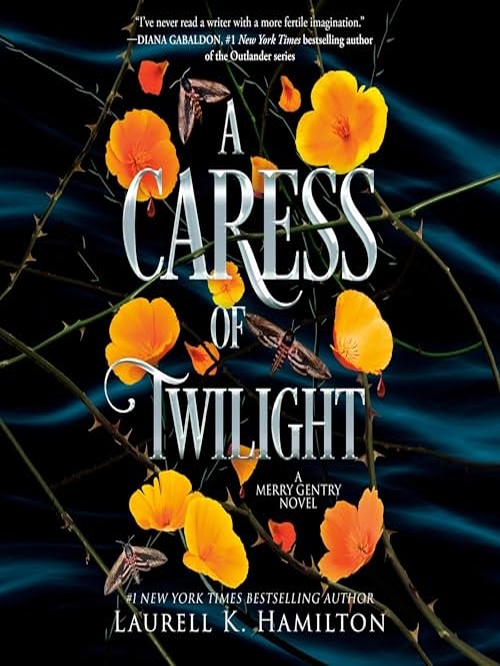
Laurell K. Hamilton’s A Caress of Twilight lands us back in the mercurial realm of Merry Gentry, where the trappings of royalty collide with the relentless grind of homicide investigation. Hamilton invites us to contemplate a world in which the very act of conception becomes a geopolitical lever, and in doing so she fashions a narrative that is as much a meditation on agency as it is a sensational dark‑fantasy mystery.
The Lure of the Unseen Throne
From the opening line—“I am Princess Meredith, heir to a throne—if I can stay alive long enough to claim it.”—we sense a paradox that threads through the entire novel: survival is both the prerequisite and the weapon. Hamilton’s prose, while unapologetically lush, never obscures the structural precision of her plot. The narrative arc is calibrated to keep us aware of three intersecting pressures: political intrigue, sexual sovereignty, and an encroaching cosmic threat. This triadic tension is the first transformative insight, revealing how the author treats the female body not merely as a site of desire but as an arena of power negotiation.
The Politics of Procreation
Hamilton reframes the classic “royal heir” trope by embedding it within a modern feminist discourse. Meredith’s quest to conceive a child before her cousin, Prince Cel, does so is less a romantic subplot than an existential wager: the survival of an entire mythic ecosystem hinges on biological continuity. This reframing offers a second insight—the fecundity of myth can be interrogated through contemporary lenses of bodily autonomy. The author’s willingness to dramatize the physiological stakes of fertility while maintaining the fantastical stakes of Faerie underscores a sophisticated overlap of personal and planetary peril.
An Ancient Evil as Mirror
The novel’s antagonistic force—a primordial darkness threatening the fabric of reality—functions less as a typical monster and more as a symbolic echo of humanity’s own self‑destructive impulses. By juxtaposing visceral murder mysteries with an existential crisis, Hamilton invites readers to consider how personal trauma can mirror cultural decay. This third insight exposes a paradigmatic shift within urban fantasy: the genre’s monsters become metaphors for internalized anxieties rather than external obstacles.
Stylistic Flourish Meets Narrative Discipline
Hamilton’s language oscillates between baroque description and razor‑sharp dialogue, a balance that sustains intellectual rigour without alienating the reader. A notable passage—“The scent of pine and blood mingled, as if the forest itself were inhaling my dread.”—exemplifies her capacity for visceral impact while reinforcing thematic resonance. The prose never devolves into gratuitous eroticism; instead, each intimate scene is calibrated to underscore power dynamics, adding depth to the novel’s exploration of consent and coercion.
Verdict
I find A Caress of Twilight to be a compelling study in how dark fantasy can interrogate contemporary sociopolitical questions while delivering the genre’s expected thrills. Hamilton succeeds in weaving an intricate tapestry where mythic stakes and personal agency are inseparable. The novel will satisfy readers who relish slow‑burn intellectual thrillers that reward close reading, as well as fans of Hamilton’s earlier works who seek a more analytically textured experience.
Ideal audience: readers comfortable with mature themes, who appreciate urban fantasy that doubles as cultural critique; scholars of gender studies interested in the politics of fertility within speculative fiction; and anyone eager to explore how power can be both inherited and manufactured.
What would the crown look like if we, too, were forced to earn it through survival?