A Torn Paige Review

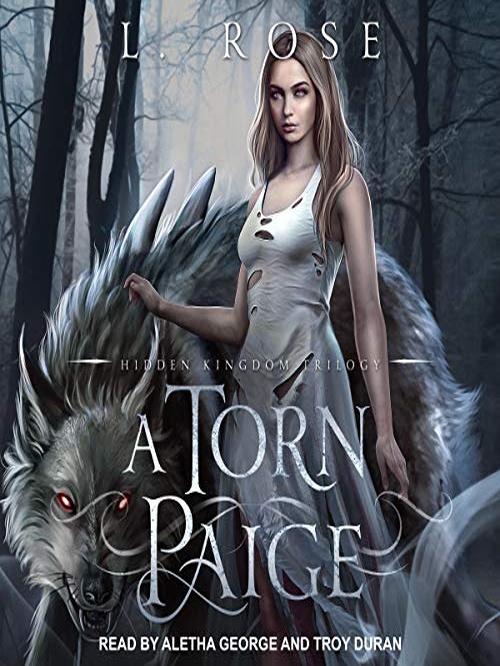
Psychological Fracture In A Torn Paige

Nursery Rhymes And Nightmares

Childhood rhyme hide horror. Monsters approach door. We ask: How human mind process paradigm shift? Verse mock tragedy. Identity break.

Thematic Depth And Narrative Arc

L. Rose construct A Torn Paige. Text launch Hidden Kingdom Trilogy. Work fuse Romance and Fantasy. Plot demonstrate intellectual rigor.

  • Relational Complexity: Protagonist forge polyamorous bond. Four men anchor Paige Alice. Structure subvert traditional romance trope. Dynamic offer nuanced perspective. Trust equal survival.
  • Internal Metamorphosis: Paige undergo visceral change. Identity fracture. Good elements battle bad reality. Inner turmoil drive external conflict.
  • Aural Execution: Narrators Troy Duran and Aletha George deliver prose. Voices amplify emotional gravity. Pace fit 05:52:00 duration.

Subjective Assessment

Book succeed. Publisher Tantor Audio produce solid work. Rating 4.52 validate quality. Worldbuilding brutal. Plot possess visceral impact. I judge text excellent.

Ideal reader: Fantasy fan seek dark theme. Reader demand unconventional relationship structure.

Monsters wait. You read book. Discover truth.

A Tiger’s Bride Review

A Roar of Attraction: Unpacking the Allure of A Tiger’s Bride

In the ever-expanding tapestry of Romance and Fantasy literature, certain archetypes persist, captivating readers with their primal allure. A Tiger’s Bride, from Eve Langlais‘s popular A Lion’s Pride series, narrated with a confident cadence by Brock Thompson, thrusts us into one such narrative – a tale where destiny, or perhaps sheer determination, takes the form of an accidental abduction and a subsequent, delightfully complicated courtship. We find ourselves asking: What is it about the untamed, the forbidden, that continues to resonate so deeply within our collective romantic consciousness?

When Instinct Collides with Convention

Langlais masterfully plays with the “forced proximity” and “fated mates” tropes, albeit with a wonderfully audacious twist. The premise – an “accidental kidnapping” leading to a “forced marriage” – immediately sets a tone that is both outlandish and undeniably intriguing. It’s a scenario that, on the surface, might raise eyebrows, yet within the carefully constructed world of paranormal Romance, it becomes a compelling exploration of initial resistance giving way to undeniable connection. The protagonist, a Siberian tiger shifter, is driven by an instinct so potent it bypasses societal niceties, directly claiming the woman he desires. This is not a subtle dance of wills; it’s a powerful declaration, and Langlais invites us to examine the psychological underpinnings of such a visceral attraction.

The introduction of a “virgin bride” adds another layer of complexity, transforming what could be a straightforward seduction into a journey of delicate persuasion and genuine care. The hero’s internal struggle to make her “first time perfect” humanizes his otherwise dominant persona, revealing an unexpected tenderness beneath the fierce exterior. It’s a nuanced perspective on alpha masculinity, where power is tempered by a surprising vulnerability and a desire to truly cherish. This shift from pure instinct to thoughtful consideration forms a significant part of the narrative arc, inviting readers to consider the evolution of desire and respect.

Beyond the Veil of the Ordinary: Shifters, Surprises, and Soaring Stakes

What elevates A Tiger’s Bride beyond a mere romantic entanglement is its genre grounding in Fantasy. The inherent wildness of the Siberian tiger shifter provides a potent metaphor for raw, untamed passion, but also for protection and unwavering loyalty. The supernatural element allows Langlais to introduce external threats – a plane crash, relentless hunters – that serve as crucibles for the burgeoning relationship. These high-stakes scenarios force the characters to rely on each other, accelerating their emotional bond and offering ample opportunity for dramatic tension and heroic displays.

The world-building, though not overtly dense, serves its purpose by establishing the unique challenges and exhilarating freedoms of a shifter existence. We are drawn into a world where instinct, magic, and human emotion interweave, creating a narrative that feels both escapist and deeply engaging. Brock Thompson‘s narration undoubtedly enhances this immersion, his voice lending gravitas and dynamism to the shifter’s powerful presence and the heroine’s evolving strength. His performance is a testament to the art of audiobook interpretation, capturing the rhythm and intensity of Langlais‘s prose.

The Verdict: A Potent Brew of Passion and Peril

A Tiger’s Bride may not set out to redefine literary Fantasy, but it unequivocally delivers a potent and satisfying experience within its chosen domain. Eve Langlais has a distinctive talent for crafting engaging paranormal romances that blend humor, heat, and high-octane plot points. We found ourselves thoroughly captivated by the sheer audacity of the premise and the compelling chemistry that blossoms between the protagonists. It is a story that, despite its initial unconventional setup, delves into themes of belonging, acceptance, and the undeniable force of connection.

This book is an ideal companion for discerning readers who appreciate the vibrant energy of paranormal Romance, particularly those who revel in tales of powerful alpha heroes, spirited heroines, and narratives that aren’t afraid to embrace a touch of the extraordinary. If you seek an escape into a world where destiny is fierce, love is primal, and the journey to happily-ever-after is paved with thrilling challenges and tender moments, then this particular adventure promises a deeply rewarding listen. It reminds us that even in the most improbable of circumstances, true partnership can emerge, wild and untamed, yet profoundly beautiful.

A Tale of Two Demon Slayers Review

Dark Twin Demand Blood

Magic Shatter Normal

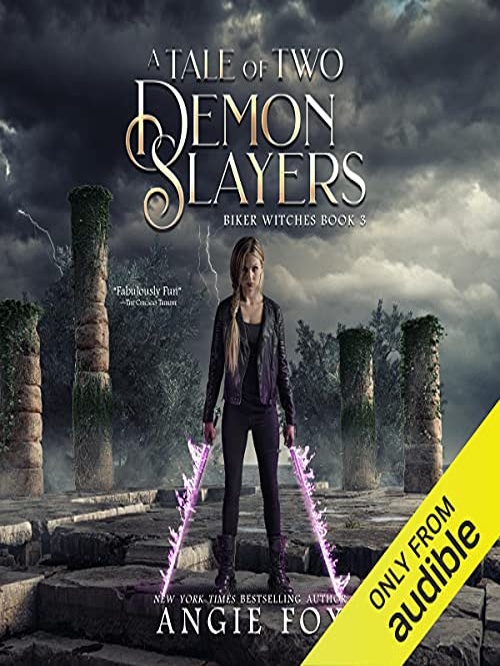
Identity break. Teacher color-code plans before. Magic change life. Teacher become slayer. She fight imp. She fight demon. Mundane die. Supernatural rule.

Evil Mirror Attack

Angie Fox write Fantasy. Story hold Romance. Hero travel Greece meet griffin family. Sun shine. Drink pour. Peace end fast. Dark magic forge twin. Twin steal power kill hero. Theme show duality. Hero face dark self.

Weird Pack Win

Twin fight solo. Hero gather pack stop evil. Biker witch grandma ride. Jack Russell dog talk. Necromancer cast spell. Absurd mix work well. Tavia Gilbert speak audio. Pace move fast.

Judge Book

I like story. Action hit hard. Good for Fantasy reader. Perfect for Romance fan. Reader buy book learn survival. Read story.

A Soul of Ash and Blood Review

User ask review. I write text. Follow rules. Read output.

Memory Serve As Anchor In Awakened Realm

Weight Of Past Action

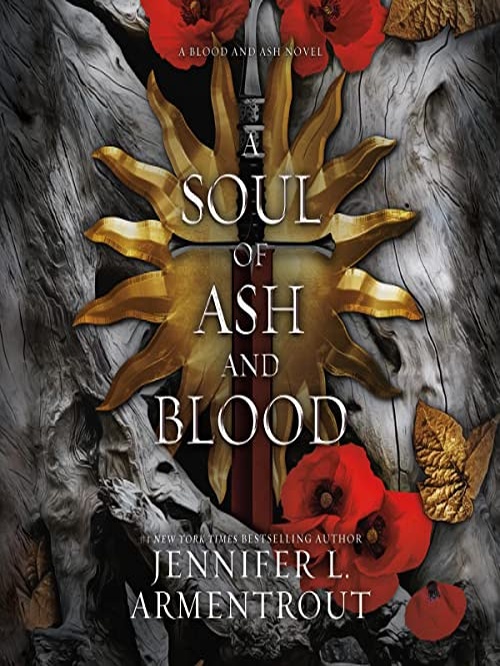
Gods awake. War loom. Queen transform. Become Primal. Poppy fall sleep. Casteel fear loss. He speak. Memory save her. We observe paradigmatic shift. Jennifer L. Armentrout pivot lens. Fantasy fuse Romance. Hawke speak now.

Visceral Impact Of Shared History

Narrative arc bend. We revisit start. Casteel reveal truth. Kieran know secrets. Now reader know.

Transformative insight emerge:
* Vulnerability build strength. Casteel talk. Words break silence.
* Perspective alter truth. Old event get new frame. Nuanced perspective shine.
* Stillness breed tension. Sleep contrast war.

Author show intellectual rigour. Series Blood and Ash grow. Prose hit hard. Casteel voice cause visceral impact. He remember. We feel.

Judgment On Stasis

I judge book. Book succeed. New view help.

Audience map clear. Fans of slow-burn tension read. Thinkers seeking unconventional wisdom read.

What wake when stasis end? Realm change. Cas change. You reflect. Read book. Await dawn.

A Shadow in the Ember Review

User want fancy review. I write text. Review follow strict rules. Read review.

The Architecture of Fate: Deconstructing Jennifer L. Armentrout’s Primal Mythos

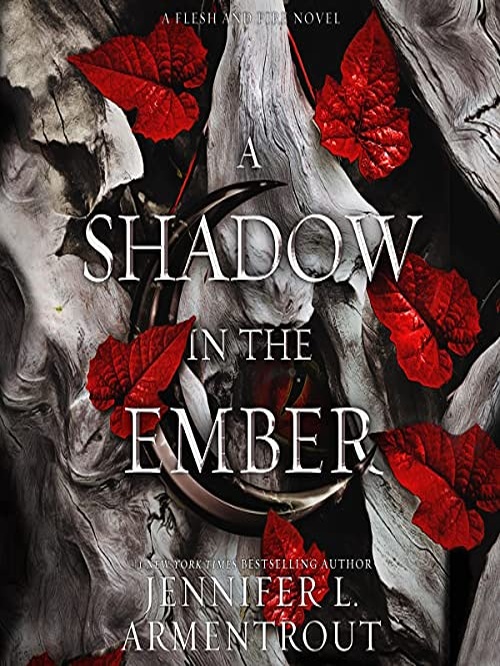
What is the true cost of salvation when the currency demanded is one’s own soul? The reluctant assassin, bound by duty and destined for tragedy, is a narrative cornerstone. Yet, within A Shadow in the Ember—the inaugural installment of the Flesh and Fire series—Jennifer L. Armentrout manipulates this archetype with an intellectual rigor that elevates the text far beyond a mere prequel to her beloved Blood and Ash universe. We are invited into a meticulously crafted paradigm where destiny is not a divine gift, but a psychological prison.

The Psychological Anatomy of a Weapon

At the center of this moral labyrinth is Seraphena Mierel. She is introduced not as a protagonist afforded the luxury of self-discovery, but as an instrument of statecraft. Born shrouded in the veil of the Primals, her existence is entirely transactional. I found her internal duality to be the novel’s most compelling triumph. She operates as a Maiden to the public, yet harbors the lethal mandate of an assassin whose singular mission is to seduce and execute the Primal of Death. Armentrout excels in mapping the visceral impact of this burden. Sera’s conviction that she is a “monster”—a specter drenched in blood—offers a nuanced perspective on the trauma of indoctrination. We witness a protagonist who has wholly internalized her objectification, viewing herself merely as a blade wielded by desperate ancestors.

The Dichotomy of Desire and Annihilation

When Seraphena inevitably collides with her target, the narrative arc shifts from political espionage to an evocative exploration of intimacy as rebellion. The Primal of Death is introduced not merely as an antagonist, but as a catalyst for Seraphena’s buried humanity. Armentrout navigates the Romance and Fantasy genres with a masterful, slow-burning cadence. The romance here is intrinsically linked to destruction; to fall in love is to ensure the kingdom’s slow demise at the hands of the Rot.

The author’s prose shines brightest when dissecting the friction between Sera’s lethal conditioning and the seductive, unspooling truths offered by the Primal. His unexpected tenderness does not simply ignite physical passion—it systematically dismantles the dark, fatalistic architecture of Sera’s mind. It is a paradigmatic shift where the ultimate act of defiance is to allow oneself to feel.

A Subjective Assessment

A Shadow in the Ember stands as a triumph of atmospheric world-building and character-driven tension. I find Armentrout’s exploration of agency amidst predestination to be deeply resonant. She forces us to question whether true freedom can ever be achieved when our genesis is steeped in the machinations of gods and ancestors.

This work is essential reading for aficionados of the romantasy subgenre who demand emotional intelligence alongside their escapism. It is perfectly tailored for readers who savor slow-burn, morally ambiguous narratives where the stakes are apocalyptic and the romance is unapologetically fierce.

As you close the final chapter, one must ponder: When the forces of Life and Death have explicitly authored your beginning and your end, is the brief, fiery space between them enough to call your own?

Review done. Tell next task.

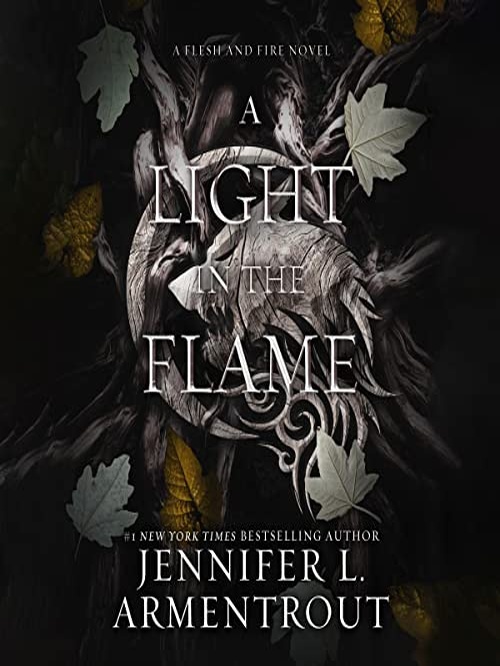
A Light in the Flame Review

Navigating the Labyrinth of Destiny: A Critical Look at A Light in the Flame

In the ever-expanding cosmos of Fantasy Romance, certain narratives manage to etch themselves into the reader’s psyche, not merely as fleeting entertainment but as explorations of profound human (and non-human) dilemmas. A Light in the Flame, the second installment in Jennifer L. Armentrout‘s Flesh and Fire series, is precisely such a work. It invites us, the discerning bibliophile, to delve deeper into a world where destiny is a cruel mistress, love a dangerous gamble, and power an intoxicating, often corrupting, force.

The Inextricable Knot of Duty and Desire

From the outset, A Light in the Flame plunges us back into the tumultuous existence of Sera, whose very purpose has been intricately woven into the fabric of a prophecy—a destiny to end the tyrannical reign of Kolis. The central tension here, as elegantly articulated in the description, revolves around the shattering of fragile trust between Sera and Nyktos, the Primal she was fated to destroy yet now finds herself inextricably bound to. What Armentrout masterfully achieves is the visceral juxtaposition of duty and an undeniable, scorching passion. We witness Sera‘s internal battle, a compelling, almost agonizing dance between the self she believes she must be and the woman she is becoming through her volatile connection with Nyktos. It challenges us to ponder: can true agency exist when one’s very survival, and the fate of realms, hinges on an emotion as elusive and dangerous as love? The narrative suggests that even in the most dire of circumstances, the heart finds its own intractable logic, often at odds with the grand designs of prophecy.

World-Building as a Tapestry of Peril

Armentrout continues to expand the rich, often brutal, mythology of Iliseeum and the Shadowlands, transforming what might initially appear as a mere backdrop into an active, menacing character itself. The escalation of attacks and Kolis‘s summons to Court are not simply plot devices; they are tectonic shifts that underscore the existential threat facing our protagonists. The revelation of the “Primal power of Life” growing within Sera, pushing her toward her Culling and subsequent Ascension, introduces an element of biological imperative intertwined with the metaphysical. This intricate layering of lore—the necessity of Nyktos‘s love for her survival, his supposed inability to feel it—elevates the stakes beyond mere romantic entanglement. It becomes an ontological quest, where the very definition of being and purpose is under constant scrutiny. Armentrout compels us to consider the burden of power, particularly when it blossoms within a vessel unprepared for its full, transformative weight.

The Unspoken Language of Primal Affection

While the explicit nature of the Romance genre often emphasizes the physical, A Light in the Flame delves into the more nuanced, almost philosophical aspects of connection. The idea that Nyktos is “incapable of feeling” love, yet Sera‘s Ascension is contingent upon it, creates a fascinating psychological dilemma. Is love purely an emotion, or can it manifest as an act of will, a profound commitment despite inherent limitations? This exploration pushes against conventional notions of affection, suggesting that perhaps love, in its primal form, is less about sentimentality and more about a deep-seated recognition, a mutual necessity for survival and growth. The book, through Sera‘s journey, encourages us to look beyond superficial expressions and seek the deeper currents of connection that bind beings together, even when those bonds are forged in the crucible of conflict and prophesied destruction.

A Journey Through Fire and Reflection

A Light in the Flame is not a book for the faint of heart, nor for those seeking a light, ephemeral read. It is a robust, deeply immersive experience, narrated with a captivating intensity by Stina Nielsen for Brilliance Audio, which further amplifies the inherent drama. This is a narrative that demands engagement, that pulls you into its vortex of despair and burgeoning hope. While Armentrout‘s prose remains evocative and her pacing relentless, it is the thematic undercurrents—the burden of destiny, the transformative power of love, and the intricate dance between individual will and cosmic imperative—that truly resonate.

For those who crave Fantasy Romance with high emotional stakes, intricate world-building, and characters who grapple with their very essence, A Light in the Flame offers a rich, challenging, and ultimately rewarding journey. It is a necessary read for anyone invested in the Flesh and Fire series, deepening the complexities and raising profound questions about sacrifice, survival, and the enduring, often perilous, nature of connection. We are left to ponder: when caught between the hammer of fate and the anvil of the heart, can one truly forge their own path, or are we forever bound by the sparks ignited by primordial fires?

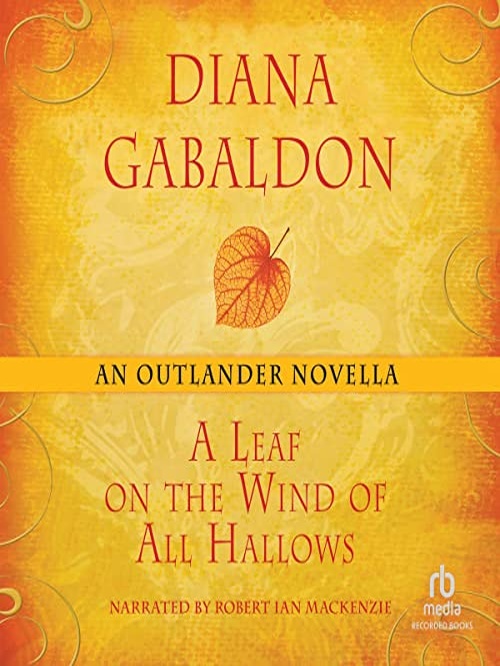
A Leaf on the Wind of All Hallows Review

When the Sky Itself Becomes a Door: Diana Gabaldon’s Quietest Heartbreak

What do we owe the dead? More precisely, what do we owe the stories of those who vanished into the machinery of war — not heroically, not cleanly, but in the confused, ragged way that real disappearances happen? Diana Gabaldon has spent decades building the sprawling, time-crossed universe of Outlander, but in A Leaf on the Wind of All Hallows, she does something remarkably restrained: she tells a small story. A war story. A love story. A ghost story. And at barely two hours of audio, it cuts deeper than many novels ten times its length.

The Weight of a Missing Father

Roger MacKenzie Wakefield has always been one of the Outlander saga’s most quietly tragic figures — a man defined as much by absence as by presence. Orphaned during World War II, he carried a clean, digestible narrative: mother lost to the Blitz, father killed in RAF combat. Tidy. Heroic. Utterly incomplete.

This novella dismantles that tidiness with surgical care. We are placed not in Roger’s searching hands but in the cockpit and cramped domestic world of his father, Jerry MacKenzie — a young RAF pilot navigating the twin terrors of aerial combat and the dawning, impossible realization that the world contains doors that should not exist. Gabaldon’s genius here is in her refusal to romanticize. Jerry is not a time-traveler by ambition or destiny. He is a man caught — literally — in a phenomenon he cannot name, cannot control, and cannot survive intact.

War as Liminal Space

What strikes me most forcefully about this novella is how Gabaldon collapses the distance between the supernatural and the historically mundane. The standing stones — that iconic mechanism of the Outlander mythology — are not presented here as portals of adventure. They are a horror. They are the war itself made metaphysical: a force that tears a man from his wife, his infant son, his own timeline, with the same indifferent brutality as a Messerschmitt’s guns.

There is a passage — brief, almost throwaway — where Jerry feels the shift in the air, the wrongness of time bending around him mid-flight. Gabaldon renders this not with the lush, swooning prose of Claire’s original journey through the stones, but with the clipped, adrenaline-soaked perception of a combat pilot. The effect is devastating. We are reminded that the fantastical, stripped of wonder, is simply another form of violence.

Robert Ian MacKenzie’s narration deserves particular mention. His reading carries the weight of Scottish cadence without tipping into caricature, and he handles the story’s tonal shifts — from domestic tenderness to aerial terror to metaphysical bewilderment — with an economy that mirrors Gabaldon’s own prose.

A Mother’s Story, Half-Told

The novella’s other quiet revolution is its treatment of Marjorie, Jerry’s wife. She is not merely the woman left behind. Gabaldon grants her agency, intelligence, and a form of terrible knowledge that the narrative only partially reveals. We see in Marjorie the outline of a woman who understands more than she should — about the stones, about what her husband’s disappearance truly means — and who makes choices that are neither passive nor fully explained. It is a portrait sketched in deliberate incompleteness, and I find that restraint more compelling than any explicit revelation could be.

This is, I think, Gabaldon’s deepest thematic preoccupation across the entire Outlander series made crystalline: the people we love are not ours to keep, and the stories we tell about their loss are almost never the true ones.

Small Canvas, Permanent Mark

Let me be direct: A Leaf on the Wind of All Hallows is not a standalone experience. Readers unfamiliar with the Outlander world will find it moving but incomplete, a chapter torn from a larger book — which, in a sense, it is. Its emotional payload detonates fully only if you have walked with Roger through his own discovery in An Echo in the Bone, only if you understand the particular cruelty of learning that your origin story was a lie told out of love.

But for those already invested in this universe, this novella is essential. Not because it fills a plot hole — though it does — but because it reframes everything we thought we understood about inheritance, loss, and the thin membrane between one world and the next.

Perfect for: devoted Outlander readers hungry for the emotional archaeology of Roger’s lineage; lovers of wartime fiction that refuses sentimentality; anyone who believes the best speculative fiction asks not what if we could travel through time but what would it cost us.

I am left with a question that Gabaldon, characteristically, refuses to answer fully: If you knew the sky could open and swallow you whole — erase you from your own son’s memory — would you still fly? Jerry MacKenzie flew. And the leaf fell. And we are still listening for where it landed.

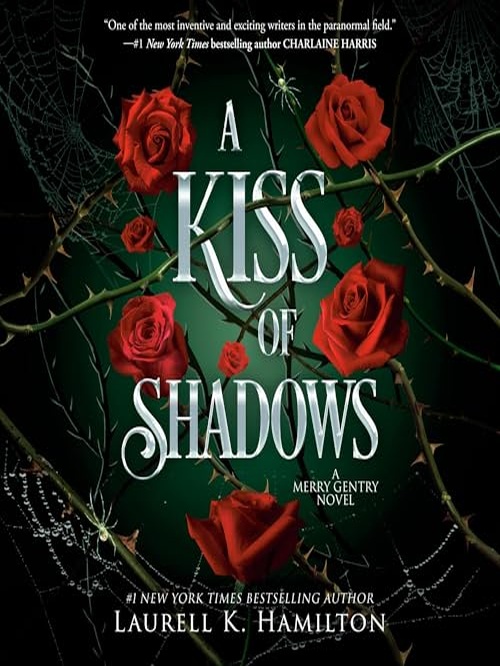
A Kiss of Shadows Review

A Faerie’s Gambit: Unveiling the Shadows of Desire and Dominion

The modern metropolis often serves as an unsuspecting canvas for tales of the fantastical, yet few narratives plunge us into its mythical underbelly with the audacious sensuality and intricate political intrigue found in Laurell K. Hamilton‘s A Kiss of Shadows. This debut into the Merry Gentry series is not merely another foray into urban Fantasy; it is a sophisticated, often disquieting, exploration of power, identity, and the very nature of desire, draped in the shimmering, dangerous allure of the fae.

The Mundane Veil and the Royal Summons

Our introduction to Merry Gentry finds her living a carefully constructed double life in Los Angeles, a private investigator specializing in supernatural phenomena—a decidedly mundane existence for a princess of the High Court of Faerie. This initial dichotomy, between the gritty reality of L.A.’s streets and the ethereal lineage she attempts to conceal, immediately piques our interest. Yet, as the Queen’s assassin, a figure of undeniable menace and charm, arrives to reclaim her, the illusion shatters. Merry is summarily thrust back into a world where politics are as deadly as magic, and where her very existence is a pawn in her dreaded aunt’s Machiavellian schemes. The premise is stark: produce an heir, claim the crown, or face certain death. Such is the high-stakes game for dominion in Faerie.

A Court of Shifting Alliances and Unapologetic Sensuality

Hamilton masterfully constructs a Faerie realm that is both breathtakingly beautiful and disturbingly brutal, challenging idyllic notions of elvenkind. This is no pastoral idyll; it is a court steeped in ancient feuds, where beauty masks treachery and immortality breeds a unique brand of ennui and cruelty. One of A Kiss of Shadows‘s most compelling aspects is its unflinching gaze at the intersections of power and carnal desire. Merry’s predicament forces her into the constant company of the most exquisite immortal men, each a potential suitor, ally, or rival. The novel delves into these complex relationships with an honesty that is both refreshing and, at times, provocative. Hamilton does not shy away from the visceral impact of these interactions, crafting a narrative where the personal is profoundly political, and physical intimacy is as much a weapon as it is a bond. This nuanced exploration positions A Kiss of Shadows as a significant work within the Romance and Fantasy genres, pushing boundaries in its portrayal of female agency amidst intense pressure.

The Penumbra of Purpose: Hamilton’s Distinctive Voice

The stylistic choices within A Kiss of Shadows underscore its unique narrative ambition. Laurell K. Hamilton employs a prose that is both evocative and direct, capable of conjuring lavish fae courts and the mundane grit of human existence with equal dexterity. Her strength lies in building a world that feels simultaneously ancient and contemporary, populated by characters whose motivations are often ambiguous, reflecting the morally grey landscape they inhabit. We witness Merry’s internal struggle with her heritage, her burgeoning power, and the terrifying prospect of her impending role, all rendered with a psychological depth that elevates the narrative beyond mere plot points. The author’s ability to interweave intricate world-building with moments of raw emotional vulnerability and thrilling action sequences ensures that the pacing remains taut, drawing the reader deeper into Merry’s perilous journey.

A Reckoning with Royalty and Recompense

Ultimately, A Kiss of Shadows is more than just a captivating story of a princess fighting for her crown; it is a meditation on the nature of destiny and the choices one makes when survival hangs in the balance. We emerge from Hamilton‘s world both thrilled and contemplating the burdens of power and the intricate dance between duty and desire.

For discerning readers who crave a Fantasy that dares to entwine raw passion with regal duty, who are unafraid of protagonists navigating morally ambiguous terrains, A Kiss of Shadows offers a potent draught. It is a necessary read for those who seek to understand how myth can be re-forged for a modern sensibility, leaving us to ponder: what depths would we plumb, and what shadows would we embrace, to truly claim our rightful place?

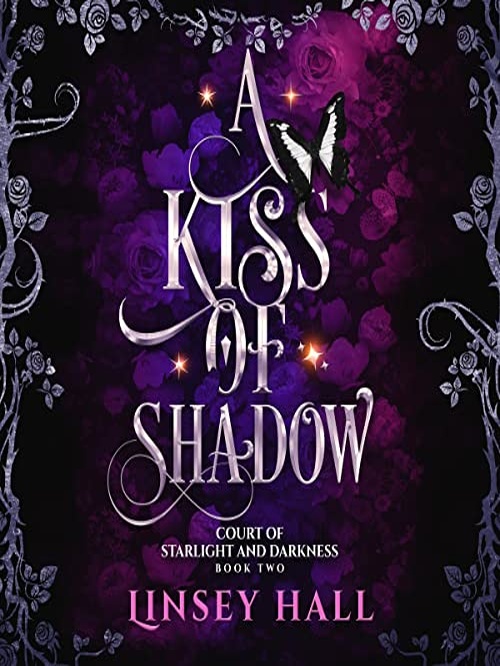
A Kiss of Shadow Review

Where Shadows Embrace Starlight: An Examination of A Kiss of Shadow

In a literary landscape increasingly populated by fae courts and mystical realms, one might be tempted to dismiss another entry into the Fantasy Romance genre as merely a fleeting pleasure. Yet, A Kiss of Shadow, the inaugural volume in Linsey Hall‘s Court of Starlight and Darkness series, demands a more discerning gaze. It is not merely a tale of forbidden love and arcane powers; it is an exploration of the magnetic pull between order and chaos, light and shadow, and the undeniable human (or fae) tendency to seek solace in the very things that threaten to consume us. We find ourselves drawn into a world where allegiance is fluid and the heart’s desires often defy the strictures of tradition.

The Allure of the Penumbral Court

Linsey Hall immediately establishes a captivating world, one drenched in the intricate politics and raw, untamed magic characteristic of the fae. What sets A Kiss of Shadow apart, however, is its confident refusal to shy away from the darker facets of its premise. The eponymous “Shadow” is not merely a stylistic flourish but a palpable entity, a force that shapes destiny and fuels desire. Hall masterfully crafts a narrative that feels both familiar in its romantic tropes and refreshingly original in its execution of the fantastical elements. The world-building is sufficiently robust to anchor the more ethereal aspects of the fae courts, presenting us with a landscape that feels ancient, dangerous, and utterly irresistible. It’s a testament to Hall‘s narrative control that we quickly become invested in the fates of characters caught in this delicate balance.

Navigating the Heart’s Treacherous Terrain

At its core, A Kiss of Shadow is, of course, a Romance. Yet, it is a romance forged in the crucible of intrigue and danger. The central relationship is less a gentle unfolding and more a tempestuous clash of wills and destinies, a dance between two formidable individuals. Hall avoids the saccharine and delves into the complexities of attraction born from adversarial positions, crafting a dynamic that pulses with an almost primal energy. We witness the slow, tantalizing erosion of resistance, the subtle shifts in power, and the undeniable chemistry that binds the protagonists. It is a nuanced portrayal of affection blooming amidst peril, challenging our preconceptions of what love should look like in a world where every touch could be a betrayal, and every whispered promise fraught with hidden agendas. The prose, at times, achieves a vivid, almost visceral quality, particularly when describing these intimate, high-stakes encounters.

The Echoes of Choice and Consequence

Beyond the immediate thrill of romance and magic, A Kiss of Shadow quietly engages with themes of agency, sacrifice, and the enduring power of choice. Our protagonists are not passive pawns in a larger cosmic game; they are active participants, wrestling with their own desires, responsibilities, and the weighty legacy of their respective courts. Hall invites us to ponder the nature of darkness – is it an inherent evil, or merely an untamed aspect of existence? And what does it mean to embrace one’s true nature, even when that nature challenges societal norms and expectations? The narrative compels us to consider the fine line between power and corruption, and the courage required to forge one’s own path in a world that seeks to define you.

A Worthy Prelude to Darkness and Delight

In conclusion, A Kiss of Shadow is a compelling opening gambit from Linsey Hall. It offers more than just escapism; it presents a richly imagined world, characters with genuine depth, and a romantic tension that crackles off the page. The narrative is well-paced, maintaining an engaging rhythm that ensures the reader is both entertained and intellectually stimulated throughout its ~5-hour journey (for those who prefer the capable narration of Laurel Schroeder).

This is a book for those who appreciate their Fantasy with a generous serving of intense Romance, for readers who relish morally ambiguous characters and intricate world-building. It is particularly suited for individuals drawn to tales of powerful heroines, dominant fae lords, and the seductive allure of forbidden magic. We are left not just satisfied, but eager for the subsequent chapters in this promising saga, pondering how far into the shadows one might venture for a kiss of true starlight. What boundaries, we might ask ourselves, are we willing to transgress when passion and destiny collide?

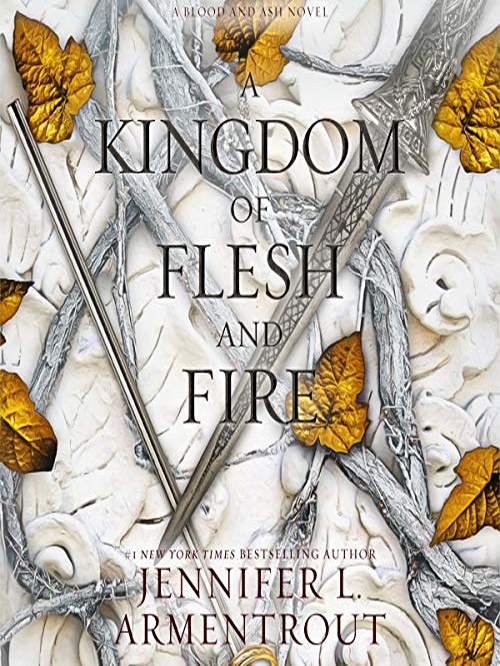
A Kingdom of Flesh and Fire Review

When the Veil Lifts: A Kingdom of Flesh and Fire and the Seduction of Moral Complexity

There is a particular kind of narrative tension that the best fantasy romance writers understand instinctively — the kind that does not merely ask will they or won’t they, but rather who are these people beneath the roles they’ve been forced to inhabit? Jennifer L. Armentrout, with the second installment of her Blood and Ash series, doubles down on exactly this question, and the result is a book that operates with far more psychological intelligence than its genre label might initially suggest.

The Architecture of a Necessary Betrayal

A Kingdom of Flesh and Fire opens in the wreckage of the first book’s explosive conclusion. Poppy — no longer the sheltered, ceremonially veiled Maiden — is now a captive of Casteel Da’Neer, the man she trusted and the man who deceived her. What Armentrout does with this setup is, frankly, more sophisticated than most readers might anticipate: she refuses to let either character retreat into the comfortable binaries of victim and villain.

Poppy’s interiority here is the novel’s true engine. Stripped of her religious identity, her institutional purpose, and her constructed sense of self, she must confront a question that resonates far beyond the fantasy kingdoms of Solis and Atlantia — what remains of a person when every defining narrative about them turns out to be fabricated? This is not merely a romantic dilemma. It is an existential one, and Armentrout handles it with surprising emotional precision.

Trust as a Tactical and Emotional Battlefield

The central structural gamble of this novel is its uneasy alliance between Poppy and Casteel. They must cooperate. They must not trust each other. And yet, inevitably, irrevocably, they do — in increments so carefully calibrated that the reader feels each concession as a small, private surrender.

Casteel, to his credit, is not simply a brooding love interest with good cheekbones and a dark past. Armentrout constructs him as a man fluent in manipulation who is, increasingly, unmanned by genuine feeling. His lies are seductive, yes — but it is his truths that carry genuine weight, and the novel’s most affecting passages are those quiet moments when the performative architecture of his persona cracks just slightly. The best romance, at its core, is about vulnerability. And Armentrout understands that vulnerability, in a character like Casteel, must be earned by the narrative, not simply declared.

The Political Body and the Mythological Undercurrent

What elevates A Kingdom of Flesh and Fire above its more formulaic peers in the Fantasy Romance genre is Armentrout’s sustained attention to world-building as political metaphor. The Ascended are not merely supernatural antagonists — they are an institution, a theocratic power structure built on manufactured consent and enforced ignorance. Poppy’s journey out of Solis is, at its most fundamental, a deprogramming narrative: the slow, painful dismantling of inherited ideology.

The wolven, the Descenters, the Atlantian court — each faction exerts pressure on Poppy not merely as plot mechanics, but as competing ideological claims on her identity and her body. This is a novel deeply preoccupied with the question of who gets to define a person’s worth and purpose, and it asks that question through the language of myth and monarchy with considerable thematic consistency.

Armentrout also begins, here, to unfurl the deeper mythological scaffolding of the series — the bleeding skies, the trembling earth, the slow revelation that Poppy is something other than what any kingdom has accounted for. These elements are handled with enough restraint to feel genuinely ominous rather than merely decorative.

On Pacing, Prose, and the Strategic Use of Slow Burns

No honest review of this novel should omit its structural indulgences. At over 700 pages in print form, A Kingdom of Flesh and Fire lingers — sometimes productively, sometimes not. Armentrout’s prose is not the crystalline, literary kind; it is propulsive, emotionally immediate, and occasionally repetitive in its rendering of Poppy’s internal states. Readers expecting the taut economy of, say, a Naomi Novik novel will need to recalibrate their expectations.

But within its own aesthetic logic, the pacing is largely deliberate and occasionally masterful. The slow burn here is not merely a romantic device — it is a structural argument. The novel insists that connection forged in the aftermath of betrayal must be rebuilt slowly, tested repeatedly, earned through accumulated shared experience rather than grand gesture. That is, frankly, a more mature romantic philosophy than the genre typically offers.

A Story for Readers Who Want More Than Escape

I would resist the impulse to recommend this novel to everyone, because its pleasures are specific and its demands are real. A Kingdom of Flesh and Fire rewards readers who are genuinely invested in Poppy as a psychological subject, not merely as a romantic heroine. It rewards patience with payoff. It rewards the willingness to inhabit moral ambiguity without demanding premature resolution.

This is, at its best, a novel about the terrifying freedom of an identity in collapse — and the equally terrifying possibility that the person who emerges from that collapse might choose, with full awareness, to love the man who helped destroy the old self. That is not a comfortable romantic fantasy. It is, however, a deeply human one.

For readers already immersed in the Blood and Ash world, this second volume is essential and, in many respects, superior to its predecessor in emotional complexity and narrative ambition. For those new to Armentrout’s work, begin at the beginning — the architecture of this investment requires the proper foundation.


The question worth sitting with, long after the final page: How much of who we are is the story we’ve been told about ourselves — and what does it cost to finally put that story down?