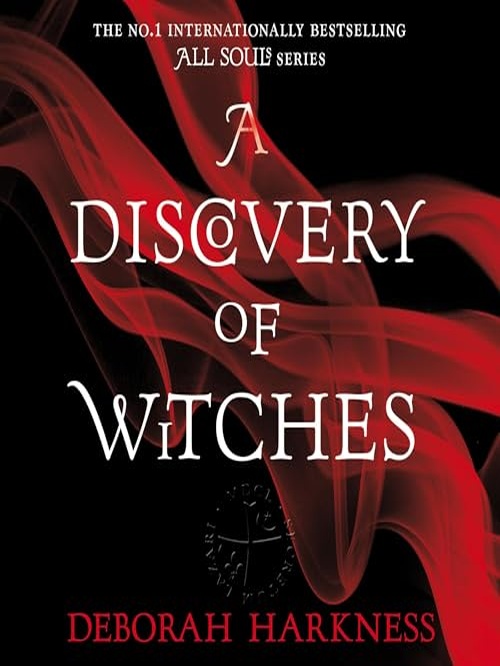
When Alchemy Meets Academia: The Intoxicating World of A Discovery of Witches
What happens when a historian who has spent her entire career running from magic finally opens a book that refuses to let her go? Deborah Harkness answers that question with a novel that is less a fantasy romance and more an intellectual seduction — one that wraps its tendrils around you with the patience of a centuries-old vampire and the precision of a Oxford scholar.
A Discovery of Witches, the opening volume of the All Souls Series, is a book that shouldn’t work as well as it does. It traffics in creatures we’ve seen countless times — witches, vampires, daemons — yet it refuses to treat them as mere genre furniture. Instead, Harkness, herself a professor of history, constructs a world where the supernatural is governed by the same institutional politics, intellectual rivalries, and bureaucratic pettiness that define any elite university. And that, I’d argue, is precisely what makes it dangerous.
The Scholar Who Couldn’t Outrun Her Own Blood
Diana Bishop is not your standard urban fantasy protagonist. She’s a tenure-track historian at Yale, a reluctant witch who has systematically suppressed her powers in favor of empirical rigor and academic respectability. When she calls up Ashmole 782 — an alchemical manuscript that every creature in existence seems to want — she doesn’t reach for a wand. She reaches for her training. Harkness builds Diana’s character on a fascinating tension: the woman who trusts footnotes more than spells, forced to confront the reality that her intellect alone cannot protect her.
This is the novel’s first transformative insight — the cost of self-denial as identity. Diana’s rejection of magic isn’t rebellion; it’s trauma response, inherited grief, and the desperate desire to be judged on merit rather than birthright. Harkness handles this with remarkable psychological nuance, never reducing Diana’s internal conflict to a simple before-and-after arc.
Matthew Clairmont and the Problem of the Romantic Predator
Then there is Matthew Clairmont — a 1,500-year-old vampire, Oxford geneticist, wine connoisseur, and walking contradiction. Let me be direct: Matthew is the kind of character who will either captivate you or infuriate you, and possibly both simultaneously. He is protective to the point of controlling, ancient in ways that make genuine equality with Diana structurally difficult, and yet Harkness writes him with enough self-awareness and vulnerability that he never quite collapses into archetype.
What elevates the Matthew-Diana dynamic beyond standard paranormal romance is its intellectual courtship. These two fall in love over manuscripts and wine, yoga and scientific debates about creature genetics. Their attraction is cerebral before it is physical, and Harkness earns their slow-burn tension through shared curiosity rather than contrived proximity. The nearly twenty-four hours of Jennifer Ikeda’s narration in the audiobook edition only deepens this experience — Ikeda renders the scholarly rhythms of Diana’s inner life with a warmth and intelligence that paper alone cannot replicate.
Still, I won’t pretend the power imbalance doesn’t occasionally chafe. Harkness is aware of it — she threads the tension deliberately — but whether she fully resolves it is a question the series must answer over time.
A World Built on Institutional Power, Not Just Magic
The novel’s most underappreciated achievement is its worldbuilding, which operates not through elaborate magic systems but through politics, lineage, and institutional control. The Congregation — a governing body of witches, vampires, and daemons — functions less like a fantasy council and more like the Vatican crossed with the UN Security Council: slow, self-serving, and deeply invested in maintaining a status quo that benefits those already in power. The prohibition against inter-species relationships isn’t just a plot device; it’s a meditation on how institutions codify fear into law.
Harkness contextualizes her supernatural world within real historical and scientific frameworks — alchemy as proto-chemistry, creature DNA as evolutionary divergence, Oxford’s Bodleian Library as a genuinely sacred space. This is a novelist who understands that the most compelling magic is the kind that sits comfortably beside a bibliography.
Where the Spell Occasionally Falters
No honest review can ignore the novel’s pacing. At nearly twenty-four hours in audio, A Discovery of Witches is a sprawling, sometimes indulgent narrative. The middle third lingers in domestic and romantic territory long enough that readers craving plot momentum may grow restless. Harkness is clearly building — layering character, atmosphere, and lore with a historian’s patience — but patience, in fiction, must be repaid with proportional payoff. The novel delivers, though it takes its time arriving.
The prose, too, occasionally over-explains. Harkness’s academic instincts sometimes override her novelist’s instincts; she tells us what a scene means when she’s already shown us beautifully.
The Final Reckoning
A Discovery of Witches is a rare thing: a genre novel with genuine intellectual ambition that doesn’t sacrifice emotional resonance for cleverness. Its 4.5-star reader rating feels earned. Harkness has written a book that respects both the traditions of Romance and Fantasy while quietly subverting each — delivering a love story built on scholarship, a fantasy grounded in history, and a heroine whose greatest power is her refusal to stop asking questions.
This is a book for: readers who fell in love with the atmosphere of The Historian by Elizabeth Kostova, who want their paranormal romance steeped in wine and old manuscripts rather than leather and nightclubs, and who believe that the sexiest thing two people can share is genuine intellectual respect.
Here’s what I’d leave you with: Diana Bishop spent years believing that denying her nature made her stronger. How many of us are doing the same — calling our avoidance discipline, our fear rationality? The real alchemy in this novel isn’t turning lead into gold. It’s the far more terrifying transformation of letting yourself become what you already are.