After It Happened Publisher’s Pack Review

The Unveiling of Humanity: When Civilization’s Veneer Cracks

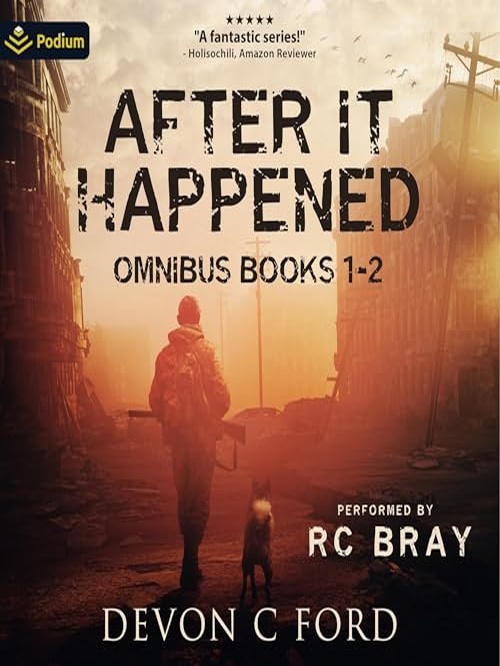
What remains when the intricate tapestry of civilization unravels, leaving behind only the stark threads of primal instinct and desperate ingenuity? This is the profound, unsettling question at the heart of Devon C. Ford‘s After It Happened: Publisher’s Pack, an omnibus comprising Survival (Book 1) and Humanity (Book 2). We are ushered into a world abruptly shorn of its accustomed order, a landscape that is both terrifyingly alien and disturbingly familiar, where the very definition of “survival” quickly cedes ground to the more challenging imperative of “humanity.”

The Anatomy of Collapse and Resilience

Ford wastes no time in plunging us into the immediate aftermath of a mysterious illness that has swept through the UK, silencing cities and decimating populations with a chilling efficiency. Survival, the first installment, is a masterclass in establishing a visceral, almost claustrophobic atmosphere of post-apocalyptic dread. Here, the narrative arc is tightly focused on Dan, a reluctant everyman hero thrust into leadership, and the disparate group he coalesces around him. What immediately strikes the discerning reader is not merely the mechanics of finding shelter and sustenance – though these are rendered with meticulous, believable detail – but the raw psychological realism of individuals grappling with profound loss and the dawning realization of a fundamentally altered world.

We contend that Ford‘s genius lies in his nuanced portrayal of external threats giving way to internal conflicts. The desolation is not just a backdrop; it is an active character, stripping away societal niceties to reveal the inherent brutality and, occasionally, surprising resilience of human nature. The author deftly explores the precarious balance between cautious pragmatism and burgeoning despair, painting a stark tableau where trust is a currency more valuable than gold, and betrayal, an ever-present shadow. The urgency is palpable, the stakes unequivocally high, forcing both characters and readers to confront uncomfortable truths about what we hold dear when everything is taken away.

Beyond Mere Existence: The Crucible of Humanity

As the journey progresses into Humanity, the narrative matures, shifting its focus from the frantic scramble for existence to the more existential struggle of retaining moral integrity in a world devoid of established laws. Having carved out a semblance of a home, Dan and his group now face the ultimate test: not merely surviving the wilderness or the lingering echoes of the pandemic, but confronting the “brutality of human nature” itself. This is where Ford truly elevates his work beyond a simple survival thriller into a more contemplative exploration of human ethics.

Herein lies one of the series’ most transformative insights: that the most dangerous predators in a collapsed world are often those who look just like us. The tension derived from external threats – the elements, dwindling resources – morphs into a sophisticated examination of emergent social dynamics, the formation of new power structures, and the inevitable clash of ideologies among survivors. Ford meticulously dissects the complex interplay of fear, ambition, and the desperate yearning for order, demonstrating how quickly human beings can revert to tribalism or, conversely, strive for a higher collective good. The reader is compelled to ponder what sacrifices are justifiable, and what lines, once crossed, irrevocably diminish the very “humanity” we strive to preserve.

A Verdict on the Unvarnished Truth

After It Happened is not a series for the faint of heart, nor for those seeking simplistic heroes or neatly packaged morality tales within the Science Fiction & Fantasy genre. While categorized broadly, its true strength lies in its grounded, unflinching portrayal of a world brought to its knees, focusing on the human drama rather than fantastical elements. Devon C. Ford offers a gritty, authentic depiction of societal collapse and the arduous path to rebuilding, not just infrastructure, but the very fabric of human connection. The writing is taut, evocative, and possessed of a propulsive energy that ensures a sustained, visceral impact.

We unequivocally recommend this collection for readers who revel in intellectually rigorous post-apocalyptic narratives, those who appreciate a deep dive into the psychological consequences of catastrophe, and who are unafraid to confront the darker, yet also remarkably resilient, facets of the human spirit. It is a compelling testament to the notion that sometimes, the greatest battle is not against an external enemy, but within ourselves. Do we succumb to the primal urge for survival at any cost, or do we stubbornly cling to the ideals that define our collective “humanity”? Ford‘s work invites us to consider this question long after the final page has been turned.
Adventures on Terra, Books 1-3 Review

The Architect of Self: Finding Family and Purpose in Terra’s Game

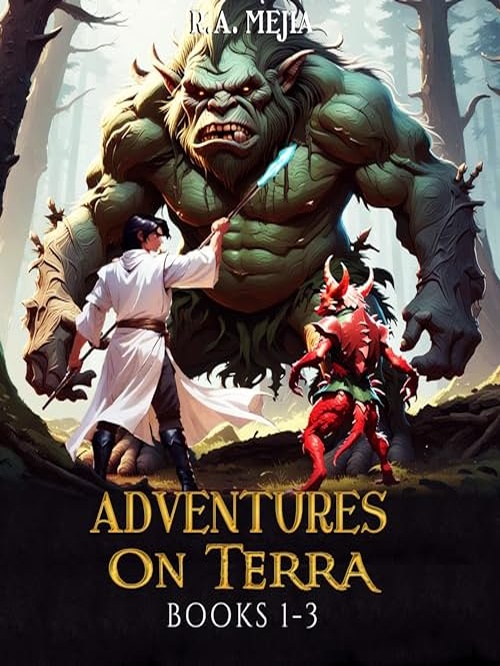
The allure of a fresh start, a world remade, where the very fabric of reality bends to the rules of a grand narrative, is a potent fantasy. In Adventures on Terra, Books 1-3, R.A. Mejia invites us into just such a realm, exploring the burgeoning LitRPG genre with a warmth and an earnestness that often elevates it beyond its game-centric trappings. Through the odyssey of Armon Ellington, we witness not merely a progression of stats and skills, but a deeply human journey of belonging, purpose, and the construction of self in an entirely new existence.

From Earth’s Periphery to Terra’s Core: A Soul’s Reawakening

Armon Ellington, a nineteen-year-old orphaned gamer, finds his earthly life abruptly ended, only to be resurrected in Terra—a world governed by the very RPG mechanics he so cherished. This premise, a familiar yet ever-intriguing trope within Fantasy literature, serves as the crucible for Armon’s profound transformation. What begins as a wish fulfillment narrative—the chance to be a warrior, mage, or crafter in a world where rules are quantifiable—quickly delves into something far more resonant: the yearning for connection. R.A. Mejia masterfully crafts Armon’s initial disorientation and subsequent embrace of Terra, focusing less on the novelty of his powers and more on his existential quest for friendship and family, a void left tragically unfilled in his previous life. We see Armon not as a mere avatar, but as a soul reborn, determined to forge bonds that transcend any game system.

The LitRPG Lens: Mechanics as Metaphor for Growth

What sets Adventures on Terra apart within its genre is its thoughtful integration of the LitRPG elements into the core narrative. The level-ups, skill trees, and quests are not just external markers of progress; they become internal signifiers of Armon’s evolving identity and agency. This isn’t just about gaining strength; it’s about gaining confidence, competence, and a deeper understanding of his place in the world. When the Imperare Empire shatters the tranquility of his adopted kobold tribe, the Red Claw, in the village of Restrian, the game’s mechanics shift from personal advancement to tools for collective liberation. Armon’s statistical growth directly underpins his capacity to protect, to lead, and to strategize the rescue of his newfound family. This imbues the genre’s inherent systems with a thematic resonance, transforming numerical increases into tangible acts of love and loyalty.

The Gauntlet of Kinship: A Rescue Forged in Fire

The narrative arc spanning books two and three is a testament to the power of commitment. With his adopted family—the kind kobold tribe—enslaved, Armon’s journey ceases to be one of self-discovery alone and becomes a relentless pursuit of justice and redemption. His quest to infiltrate the Imperare Empire, a land known for its brutal gladiatorial arenas, and execute a daring rescue plan, forms the pulsating heart of this omnibus. The challenges are not merely physical; they are strategic, ethical, and emotionally taxing. Armon must navigate prison breaks, evade capture, and outwit an oppressive regime, all while holding onto the hope of reuniting his scattered kin. It is in these moments of intense pressure that his character truly solidifies, showcasing the maturation from a solitary gamer to a leader willing to risk everything for those he holds dear. Jill Smith‘s narration, subtle yet impactful, lends a compelling voice to Armon’s evolving resolve, making his trials and triumphs all the more palpable.

The Unending Adventure: A True Measure of Value

Adventures on Terra, Books 1-3 offers a compelling argument for the enduring appeal of the hero’s journey, particularly when filtered through the unique lens of LitRPG. R.A. Mejia has crafted a series that satisfies the genre’s mechanical curiosities while prioritizing the foundational human need for connection. It is a testament to the idea that true adventure lies not merely in slaying monsters or leveling up, but in the profound act of finding and fighting for a family, no matter how unconventional. We are left contemplating the true “level-up” of the protagonist—one measured not in raw power, but in the unwavering strength of his loyalty and the depth of his compassion.

This omnibus is a highly recommended expedition for readers who appreciate Fantasy narratives where character development is paramount, and where the innovative elements of LitRPG serve to amplify, rather than overshadow, the emotional core of the story. It is for those who believe that even in the most fantastical of worlds, the quest for belonging remains the most significant adventure of all.

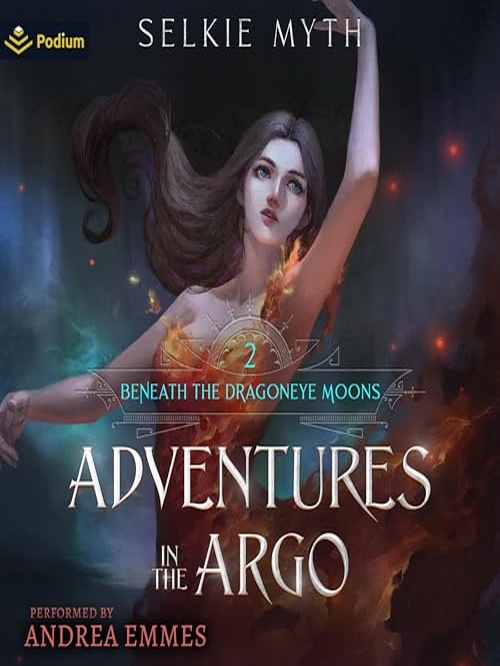
Adventures in the Argo Review

Review written. Fluff dead. Big words kept.

Awakening in Brutal World

We seek intellectual rigour in Science Fiction & Fantasy. We find visceral impact inside Adventures in the Argo. Selkie Myth push Beneath the Dragoneye Moons into dark territory. Paradigm shift happen.

Anatomy of Survival

Plot transcend simple magic. Elaine study Ranger ways. Narrative arc deliver transformative insights.

First insight: nature forgive nothing. Elaine face bottom of food chain. Cold reality bite. Predator eat prey.

Second insight: power exact toll. Fire magic burn user. Destruction leave scars.

Third insight: healing carry heavy burden. Mending flesh break spirit.

Author master nuanced perspective. Prose stay crisp. Tension build. Struggle feel intimate.

Auditory Dimension

Andrea Emmes speak. Voice carry weight. 17 hours 19 minutes feel short. Podium Audio deliver clean sound.

Verdict on Mortality

I judge work strong. 4.68 score true. Book suit Fantasy readers seeking philosophical depth. Fans of slow-burn intellectual thrillers rejoice.

Face cold reality. Read text. Evolve.

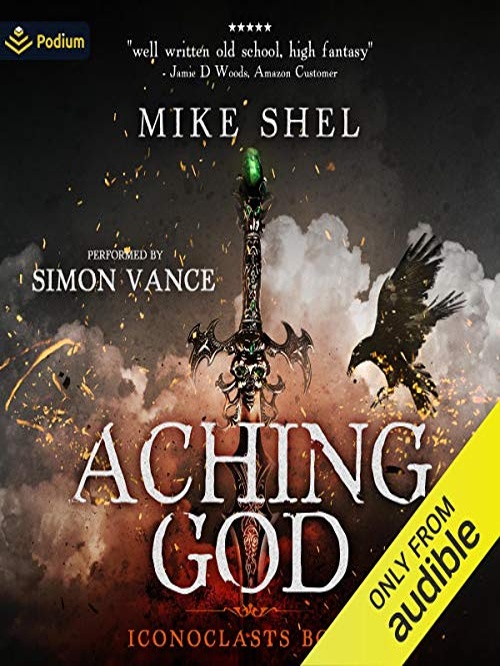
Aching God Review

The Weight of Echoes and the Burden of the Divine: A Delve into Mike Shel’s Aching God

In a genre often preoccupied with the nascent hero, the fresh quest, and the untarnished dawn of destiny, Mike Shel‘s Aching God arrives as a resonant counterpoint, a deliberate and unflinching examination of what comes after the legends are forged. It poses a deeply unsettling question: What happens when the hero, burdened by the scars of a thousand battles, is called upon to perform one last, soul-crushing task? We find ourselves, not in the company of a wide-eyed protagonist, but alongside a man whose past is a labyrinth of trauma, called back to the very place that broke him.

The Unkindness of Memory

Auric Manteo is introduced not as a figure of myth, but as a man haunted by it. Retired to a solitude purchased by past exploits, he is ostensibly free from the perilous allure of ancient ruins and dark wisdom. Yet, the narrative arc quickly reclaims him, not through glory, but through an existential burden: the imperiled life of his only daughter. This is where Shel immediately distinguishes his work; the motivation is primal, personal, and profoundly painful. Auric’s journey back to the Barrowlands, a site of his greatest trauma, forces us to confront the psychological landscape of a character for whom adventure is no longer a thrill, but a relapse into a waking nightmare. This focus on the psychological aftermath of heroism, rather than the heroism itself, offers a rare, nuanced perspective within epic fantasy.

The genius of Aching God lies in its masterful exploration of this internal conflict, mirrored by an external world steeped in decay and malevolence. The remnants of the Djao civilization are not merely ancient ruins; they are sentient wounds upon the earth, testament to a wickedness that transcends simple villainy. Shel crafts a world that feels genuinely old, its history bleeding into the present, demanding a hefty toll from those who dare to disturb its slumber. The titular “Aching God” is less a deity in the traditional sense and more a primordial, parasitic force, a visceral embodiment of decay and inescapable consequence. This thematic thread — the cost of ambition, the lingering malevolence of past empires, and the relentless grip of one’s own history — permeates every page, demanding an intellectual rigour from the reader that is both challenging and ultimately rewarding.

A Symphony of Dread and Delivery

Beyond the potent narrative, the presentation of Aching God is noteworthy, particularly for its audio rendition. Simon Vance, whose voice is a veritable instrument of narrative craft, delivers a performance that rightfully earned a 2019 Voice Arts Award. His nuanced interpretation imbues Auric’s weariness, the fledgling hope of his companions, and the chilling malevolence of the Barrowlands with a compelling verity. It is a testament to the power of a skilled narrator to elevate an already strong text, ensuring that every tremor of fear, every flicker of resolve, and every insidious whisper of the ancient world registers with a profound, visceral impact. Indeed, the auditory experience here is less a reading and more an immersive journey into the depths of Shel‘s meticulously constructed world.

The Verdict of the Scarred Soul

We find Aching God to be a formidable entry into the annals of Fantasy literature, a work that courageously delves into the grittier, more melancholic aspects of heroism. It is a slow-burn intellectual thriller disguised as a fantasy quest, eschewing easy answers for the complex, often bitter truth of self-reckoning. Mike Shel does not shy away from the brutality of his world or the internal torment of his protagonist, yet he never descends into gratuitous despair. Instead, he illuminates the flickering embers of resilience that persist even in the shadow of insurmountable odds.

This is a book for the seasoned reader of Science Fiction & Fantasy who yearns for depth beyond sword and sorcery. It is for those who appreciate character studies that are unflinchingly honest, world-building that feels ancient and lived-in, and a narrative that prizes thematic resonance over simplistic plot progression. If you are prepared to grapple with themes of trauma, sacrifice, and the relentless ache of an unforgiving past, Aching God offers a profoundly affecting journey. It asks us, ultimately, what we would sacrifice for redemption, and if, indeed, such a thing is ever truly attainable.

Accordance Review

The Weight of Prophecy: A Critical Gaze at Accordance‘s Interwoven Destinies

In the vast firmament of young adult literature, particularly within the burgeoning confluence of Romance and Fantasy, few narrative engines are as potent or as perennially appealing as the ‘chosen one’ trope. It is a concept that resonates deeply with our intrinsic human yearning for significance, yet simultaneously burdens its protagonists with an existential weight that often defines their very being. It is this weighty mantle that Shelly Crane asks us to contemplate once more in Accordance, the eagerly anticipated sequel to Significance, where the young heroine, Maggie, finds her burgeoning selfhood inextricably linked to a destiny far grander, and far more perilous, than she could have ever imagined.

Navigating the Fates: Maggie’s Unfolding Identity

From the outset, Accordance plunges us deeper into the intricate lore Shelly Crane began to unspool, revealing that Maggie is not merely an incidental participant but rather a pivotal figure for whom “the clans have been waiting.” This revelation, while outwardly empowering, serves as the primary psychological crucible for our protagonist. We witness Maggie grappling with an identity thrust upon her, a destiny that threatens to subsume her personal desires and nascent understanding of the world. Her initial rebellion is entirely relatable, a poignant human response to the relinquishing of personal agency. Crane‘s strength here lies in her exploration of this internal conflict: is one’s essence defined by inherent potential, or by the choices made in defiance or acceptance of it? This exploration elevates the narrative beyond a simple quest, transforming it into a study of self-determination within the confines of preordained purpose.

The Crucible of Connection: Love, Loyalty, and Doubt

No Romance Fantasy can exist without the intricate dance of relationships, and Accordance certainly delivers on this front, albeit with an added layer of interpersonal friction. The established bond between Caleb and Maggie, which served as the emotional anchor of the previous installment, is subjected to relentless external pressures and internal doubts. Crane skillfully crafts obstacles that test the very foundations of their connection, pushing them to confront their vulnerabilities both as individuals and as a couple. More intriguingly, the shift in dynamics with secondary characters, particularly Bish — transitioning from staunch ally to an exasperating presence — and Kyle, whose intentions are painted with shades of ambiguity, introduces a necessary complexity. These evolving relationships serve not merely as plot devices but as mirrors reflecting Maggie’s own evolving understanding of trust, loyalty, and the inherent dangers of power. The novel suggests that even the most profound bonds can fray under the relentless strain of extraordinary circumstances.

The Unveiling of Self: Transformation or Tribulation?

The central question Accordance poses is whether Maggie will rise to meet her formidable destiny or crumble under its immense pressure. This forms the heart of the narrative’s tension. The summary promises a reckoning, a moment where Maggie must either “become who she has to be to save the ones she loves” or succumb to the weight of expectation. Shelly Crane crafts a scenario where personal sacrifice becomes an inevitable theme, exploring the moral and emotional cost of leadership and heroism. The unfolding challenges are not simply external battles; they are internal trials that demand an ontological shift from Maggie. It is in this struggle for self-actualization, against the backdrop of grave consequences, that the novel finds its most compelling resonance, inviting us to ponder the true meaning of strength and resilience.

A Tapestry of Genre and Emotional Resonance

As a work firmly ensconced in the Romance and Fantasy categories, Accordance adheres to many established genre conventions while attempting to imbue them with emotional depth. Shelly Crane‘s narrative style, while accessible, strives to convey the gravity of Maggie’s plight and the intricate web of ancient prophecies and modern dilemmas. The audiobook, expertly narrated by Cris Dukehart, undoubtedly enhances the immersive experience, bringing the characters’ emotional turmoil and the unfolding drama to vivid life. The story, a sequel within the Significance Series, manages to expand its world-building while keeping the emotional core firmly centered on Maggie’s personal journey and her pivotal relationships.

A Measured Judgment for the Discerning Reader

Ultimately, Accordance serves as a crucial bridge in the Significance Series, deepening the mythology and intensifying the personal stakes for its heroine. While it delivers on the expected genre beats of a chosen-one narrative and tumultuous Romance, its true value lies in its earnest exploration of the burden of destiny and the sacrifices inherent in love and leadership. For readers who found themselves captivated by Maggie’s initial awakening and Caleb’s steadfast devotion in Significance, this sequel offers a richer, more challenging landscape.

I would recommend Accordance to those who appreciate Fantasy Romance narratives that prioritize character development and emotional complexity alongside their supernatural elements. It is a compelling read for individuals who enjoy stories where protagonists must confront profound internal conflicts as much as external threats, and who delight in witnessing relationships tested to their very limits. One finishes Accordance not merely entertained, but prompted to reflect on the universal question: What defines us when our fate is seemingly predetermined, and what courage does it take to forge our own path within that blueprint?

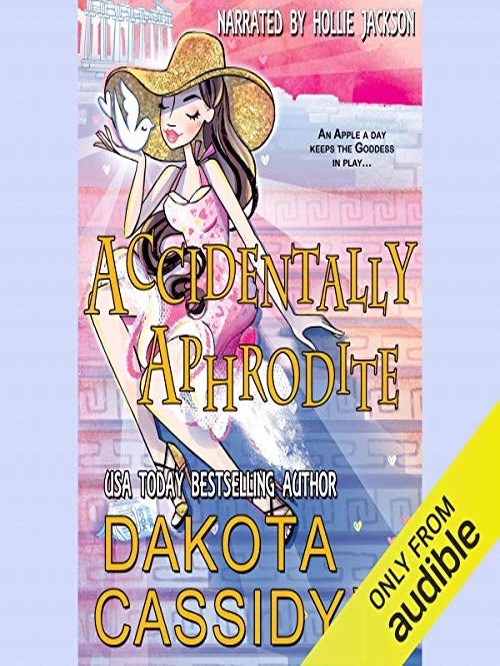
Accidentally Aphrodite Review

The Enduring Allure of Accidental Divinity: A Review of Accidentally Aphrodite

In a literary landscape often saturated with the grim and the profound, there remains an undeniable charm in narratives that dare to blend the mundane with the mythological, particularly when executed with a generous dash of wit and romantic vivacity. Accidentally Aphrodite by Dakota Cassidy, the latest delightful installment in her Accidentally Paranormal series, offers precisely this kind of escapist fantasy, inviting readers to consider what happens when a broken heart inadvertently unlocks the powers of an ancient goddess.

When Heartbreak Beckons Olympus

We find our protagonist, Quinn Morris, not at the height of romantic bliss, but rather in the throes of post-breakup desolation. A self-professed mythology buff, Quinn’s Grecian pilgrimage, once envisioned as a romantic proposal, quickly devolves into an unexpected personal transformation. Cassidy deftly sidesteps the cliché of immediate empowerment, instead presenting Quinn’s nascent godhood as a series of bewildering, often comical, physical changes: the “big boobies,” the “swirly purple eyes,” the “sparkling skin.” It’s a whimsical, almost satirical, take on the classic hero’s journey, where destiny arrives not with a thunderbolt, but with a bewildered glance in the mirror. This playful inception sets the stage for a narrative that, while firmly rooted in the Fantasy and Romance genres, never takes itself too seriously, allowing its inherent humor to shine.

The Divine Comedy of Matchmaking

The true genius of Accidentally Aphrodite lies in its exploration of Aphrodite’s core essence: love and matchmaking. Quinn, suddenly burdened with these celestial responsibilities, finds herself thrust into a crash course on the art of human connection, guided by the enigmatic Khristos – a Greek hottie whose lineage connects directly to the divine. The urgency of her new role, underscored by the mischievous threat of Cupid’s misdirected arrows, creates a propulsive energy. We witness Quinn’s evolution from a heartbroken romantic to a reluctant deity, grappling with powers she barely understands, all while fending off an unseen adversary intent on stealing her newfound gifts. It is in these moments of learning and adaptation that Dakota Cassidy truly excels, crafting situations that are both genuinely laugh-out-loud funny and surprisingly endearing. The supporting cast, notably Ingrid and the intriguing trio of Nina, Wanda, and Marty, contribute significantly to the narrative’s effervescent charm, grounding Quinn’s fantastical journey with moments of relatable camaraderie.

Navigating the Labyrinth of Love and Destiny

What elevates this novel beyond a mere lighthearted romp is its subtle undercurrent of self-discovery. Quinn’s journey to embrace her Aphrodite persona is not just about mastering divine abilities; it’s about healing her own heart and learning to trust again, particularly with Khristos. The tension between her natural caution and her burgeoning powers, coupled with the ever-present threat to her existence, creates a compelling internal and external conflict. The book thoughtfully poses questions about the nature of love – whether it’s a cosmic force, a human choice, or a divine decree – without ever feeling didactic. The reader is swept along by the international setting, the vibrant characters, and the sheer delight of watching a modern woman stumble into her magnificent, if utterly accidental, destiny.

A Divine Diversion for the Discerning Reader

Accidentally Aphrodite is a vibrant, thoroughly enjoyable read that skillfully marries the whimsical with the heartfelt. Dakota Cassidy has delivered a romantic comedy that is both clever in its mythological reimagining and genuinely funny in its execution. We are treated to a narrative that, while offering a light touch, manages to explore themes of self-worth, destiny, and the enduring power of love in its many forms.

This is a book perfectly suited for those who appreciate Fantasy infused with a strong romantic core, who delight in sharp wit and character-driven humor, and who enjoy an intelligent twist on ancient legends. If you find yourself yearning for an escape that promises both laughter and genuine warmth, one where a goddess might just be found within us all, then consider Accidentally Aphrodite an inspired choice. It reminds us that even in the most accidental of circumstances, divinity can find its way into the human heart.

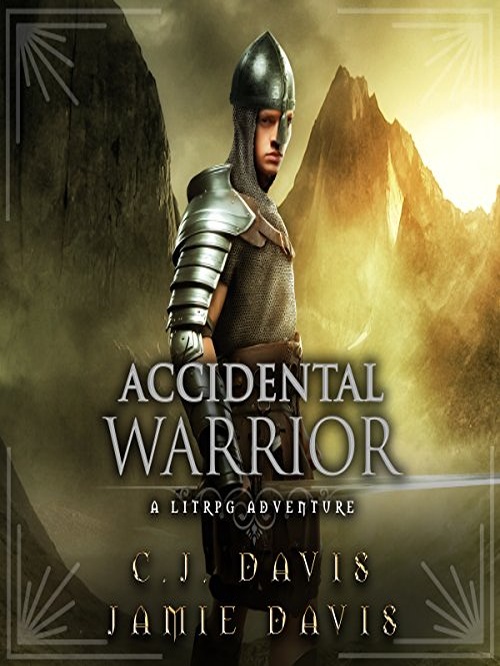
Accidental Warrior Review

The Reluctant Messiah and the Call of the Digital Wild

There is an enduring allure in the narrative of the ‘accidental hero,’ a figure plucked from the quotidian and thrust into the crucible of epic destiny. It is a trope that speaks to our collective desire for significance, for the grand adventure that lies just beyond the mundane. In Accidental Warrior, the second installment in the [[LitRPG Accidental Traveler Adventure]] series by the astute minds of [[Jamie Davis]] and [[C. J. Davis]], we are invited once more to witness this archetypal journey, observing Hal Dix as he grapples with a calling he never sought yet cannot, in good conscience, refuse.

The Weight of a Second Summoning

After a foray into the fantastical realm of Fantasma, Hal Dix, our everyman protagonist, had seemingly achieved an enviable equilibrium. His career ascended, his home life flourished – a testament, perhaps, to the grounding influence of an unexpected adventure. Yet, the tranquility is ephemeral. The narrative’s strength, here, lies in its immediate disruption: the return of the mage Tildi, the Elder, bearing tidings of peril and a desperate plea. It is a profound exploration of personal responsibility, demanding that Hal abandon his hard-won peace for a comrade in distress. We witness Hal’s internal conflict not as a weakness, but as a deeply human reluctance, a nuanced perspective on heroism that sets him apart from the more traditional, eager champions of fantasy. This return to Fantasma is not merely a plot device; it is a critical juncture where the ‘accidental’ in his title is tested, evolving into a deliberate, albeit begrudging, commitment.

Navigating the Contours of a Prophecy

The genius of Accidental Warrior is not merely in its genre classification as LitRPG – a blend of literary and role-playing game mechanics – but in how Jamie Davis and C. J. Davis weave these elements into the very fabric of Hal’s burgeoning destiny. The game world of Fantasma is not just a setting; it’s a dynamic entity that shapes and responds to Hal’s progression. His “leveling up,” both within the game’s mechanics and in his personal growth, offers a compelling parallel to the real-world maturation process. We are presented with a protagonist who initially sought respite, perhaps even escape, but now finds himself intrinsically linked to a prophecy, a ‘mythical hero’ in the making. This contextualization within a pre-ordained fate, coupled with his persistent resistance to it, creates a fascinating tension. The authors deftly use the LitRPG structure to externalize Hal’s internal struggles, his newfound abilities reflecting his increasing acceptance of his extraordinary circumstances.

The Symphony of Reluctance and Resilience

As Roberto Scarlato’s skilled narration guides us through the almost ten hours of this audio adventure, we are struck by the sustained rhythm of the narrative. The pacing is deliberate, allowing us to dwell on Hal’s dilemmas and appreciate the evolution of his relationships within Fantasma. The focus remains steadfastly on Hal’s journey, transforming him from a convenient solution to a genuine, if still reticent, leader. The prose, while accessible, avoids simplistic tropes, instead cultivating a world that feels both familiar in its fantasy elements and fresh in its approach to character-driven development. This isn’t just another quest; it’s an examination of how purpose finds the individual, even when that individual would rather remain comfortably unburdened by greatness.

A Mandate for the Modern Myth-Seeker

Accidental Warrior cements its place as a compelling continuation, deepening the thematic explorations initiated in the series’ first book. It is a testament to the fact that even in worlds built on numbers and stats, the human (or human-adjacent) element of friendship, duty, and self-discovery remains paramount. We find ourselves invested not merely in the unfolding battles or the acquisition of new skills, but in Hal’s quiet, powerful transformation.

This volume is unequivocally for those who appreciate a hero who earns their mantle through genuine reluctance and a steadfast commitment to their comrades, rather than an unbridled thirst for glory. It serves as an excellent case study for readers intrigued by the intellectual underpinnings of the LitRPG genre, particularly how it can be employed to explore profound questions of identity and destiny. Ultimately, Accidental Warrior compels us to consider: what would we do if the fate of a world, and the well-being of a friend, rested on our shoulders, even if we were merely accidental participants? A worthwhile reflection for any discerning reader seeking substance within the realms of speculative fiction.

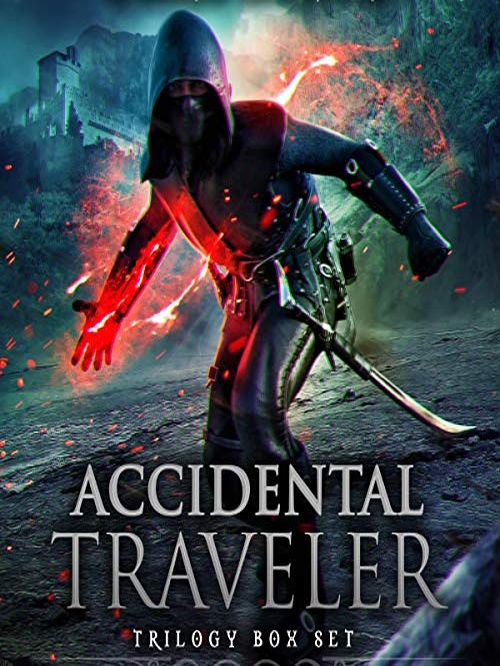
Accidental Traveler Box Set Volumes 1-3 Review

The Accidental Odyssey: Navigating Reality’s Glitches and Gaming’s Grand Designs

In an age where the mundane often overshadows the magnificent, the allure of the virtual realm offers a potent escape, a chance to recalibrate one’s narrative. It is this fundamental human desire for transformation, for agency in a world that frequently denies it, that forms the pulsating heart of Accidental Traveler Box Set Volumes 1-3 by the collaborative talents of Jamie Davis and C. J. Davis. This trilogy, a complete immersion into the LitRPG genre, invites us to consider what happens when the digital border blurs and destiny finds an unlikely avatar.

The Mundane’s Metamorphosis

We open our journey with Hal, a character whose predicament—”can’t catch a break”—resonates deeply within the modern consciousness. He is, to put it mildly, stuck. It’s a state many of us recognize, a stagnation that yearns for a catalyst. The fortuitous (or perhaps fated) encounter at a flea market, culminating in the acquisition of a “bootleg copy of a new game,” serves as a masterful narrative device. It’s the proverbial rabbit hole, a digital portal promising momentary respite, yet delivering a seismic shift in Hal’s very existence. Here, the authors lay the groundwork for an exploration not just of gaming mechanics, but of the existential weight of circumstance and the sudden, startling possibility of an unscripted life.

Architecting Identity in a Systematized World

The genius of this LitRPG Accidental Traveler Adventure lies in its skillful articulation of the protagonist’s evolution through the traditional archetypes of fantasy: Thief, Warrior, and Mage. This isn’t merely a progression through character classes; it is a profound journey of self-discovery within a structured, rule-bound universe. As Hal is forced to embody these disparate roles, we witness the systematic dismantling of his previous ‘stuck’ identity and the painstaking construction of a new one, defined by skills, choices, and consequences. The narrative expertly leverages the inherent appeal of LitRPG—the quantifiable progression, the clear objectives, the visceral feedback loop of success and failure—to craft a compelling metaphor for navigating real-world challenges. It posits that perhaps, within a world governed by explicit rules, one can truly find their footing, their purpose, and ultimately, their power. The journey through each volume feels less like distinct adventures and more like crucial developmental stages, each forging a new facet of Hal’s burgeoning self.

The Philosophical Undercurrents of Play

Beyond the undeniable thrill of leveling up and conquering digital foes, Accidental Traveler subtly probes deeper questions about agency, destiny, and the nature of victory. The description’s assertion, “every game needs a winner,” is not merely a marketing tag; it’s a thematic anchor. Is winning a matter of grinding stats, or does it demand a deeper understanding of the game’s intrinsic ethics, its hidden moral economy? Hal’s transformation from an “accidental” player to a purposeful participant speaks volumes about the human capacity to adapt, to master, and to find meaning even in circumstances thrust upon us. The narrative invites us to reflect on the games we all play in life, whether by choice or by chance, and the strategies we employ to emerge triumphant—or at least, to survive with our sense of self intact. The pacing is designed to immerse, building a world that feels both fantastical and oddly logical, an internal consistency that is crucial for any successful LitRPG.

A Judgement on Digital Destiny

From our vantage point, the Accidental Traveler Box Set Volumes 1-3 stands as a robust and engaging entry into the LitRPG canon. Jamie Davis and C. J. Davis have not merely created a world; they have constructed an experience, rich in the satisfying progression inherent to the genre, yet imbued with a character arc that resonates beyond the screen. The narrative, as expertly delivered by Roberto Scarlato for the auditory experience, maintains a captivating rhythm, pulling the listener deeper into Hal’s unpredictable journey.

This collection is unequivocally for those who find intellectual solace in structured fantasy, for readers who appreciate the meticulous detail of system-driven worlds, and most importantly, for anyone who has ever felt the yearning for a second chance, a fresh start, even if it means being thrust into an unforeseen adventure. It asks us, perhaps, to consider our own “bootleg copies” of reality, and what grand destinies might lie hidden within.

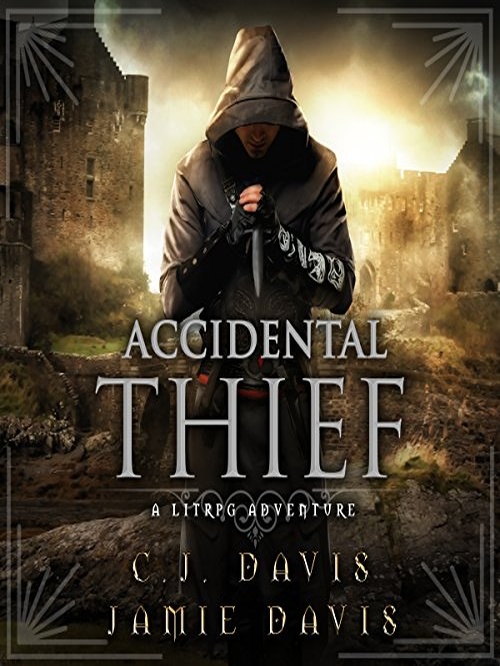
Accidental Thief Review

Navigating the Labyrinth of the Self: An Accidental Journey into Fantasma

In an age increasingly defined by the permeable membrane between the digital and the mundane, where the allure of virtual realities promises respite from the quotidian, Accidental Thief by Jamie Davis and C.J. Davis presents a timely, albeit subtly disquieting, premise. We are introduced to Hal Dix, a figure so thoroughly steeped in the grey banality of unfulfilled aspirations that his very existence seems to echo the collective sigh of the unremarkable. An IT help desk drone, overshadowed by his executive spouse, his self-worth is a fragile construct, perpetually assailed by the world’s dismissive gaze. It is a predicament that resonates, perhaps uncomfortably, with the quiet desperations many of us harbor.

One might ask: what happens when the desperate wish for a different life, for a chance at agency, is unexpectedly granted? The authors explore this through Hal’s fateful acquisition of a bootleg game – a relic of illicit charm promising escape into the highly anticipated realm of Fantasma. But as the narrative unfolds, we, alongside Hal, are reminded that one should indeed “be careful what one wishes for,” for the game’s embrace is far more encompassing and demanding than a mere weekend diversion.

The Unwilling Hero’s Genesis

What truly elevates Accidental Thief beyond a mere genre exercise is its nuanced portrayal of Hal’s reluctant metamorphosis. The LitRPG landscape, often populated by characters readily embracing their new, overpowered roles, finds a poignant counterpoint in Hal. He is not a “chosen one” in the archetypal sense, but an “accidental traveler,” thrust into a world where his only advantage might be his very lack of innate heroism. This inversion of the hero’s journey allows for a more authentic exploration of self-discovery. We witness Hal’s struggle not merely with monsters or quests, but with his own ingrained insecurities, his history of being overlooked, and the profound discomfort of suddenly having to define himself through action rather than passive acceptance. The game’s mechanics become a crucible, forcing him to shed the skin of his previous identity, albeit awkwardly, even clumsily.

The Ontological Weight of the ‘Game’

The narrative’s most compelling intellectual thrust lies in its probing of the boundaries between the real and the simulated. The “bootleg release” of Fantasma subtly implies an imperfect, perhaps even dangerous, entry point, immediately imbuing Hal’s adventure with an undercurrent of systemic instability. Is this a game, a new reality, or a liminal space where the rules are still being written, and perhaps, exploited? The authors artfully navigate this thematic ambiguity, suggesting that the escape Hal so desperately craved might be a more profound, perhaps even ontological, shift than he ever anticipated. His burgeoning skills as an Accidental Thief are not just game mechanics; they represent a stark, often morally grey, path to self-actualization. This invites a deeper reflection on how our environments, be they real or virtual, can compel us towards identities we might never have envisioned for ourselves.

An Unconventional Path to Agency

The core of Hal’s journey, then, is less about mastering a game and more about reclaiming his narrative agency. His life prior to Fantasma was one dictated by external perceptions and internal resignation. Within the labyrinthine confines of this new, fantastical world, he is afforded the rare, terrifying opportunity to forge his own path, however circuitous or unexpected. The narrative deftly employs the LitRPG framework to illustrate this personal evolution: each skill point, each encounter, each difficult choice, serves as a tangible metric of his growing self-reliance and the slow, arduous process of building a new identity from the shards of his old, broken one. It is a testament to the power of unforeseen circumstances to ignite dormant strengths, making Hal a genuinely relatable, if flawed, protagonist.

A Deliberate Introduction to a Grand Adventure

Ultimately, Accidental Thief offers a thoughtfully constructed overture to what promises to be an epic LitRPG fantasy trilogy. It eschews bombast for character-driven immersion, drawing us into Hal’s world with an empathetic hand. The authors have crafted a debut that is both a critique of modern ennui and a celebration of the human spirit’s capacity for adaptation, even when adaptation means embracing an unforeseen, perhaps unsavory, role.

This is a book for those who appreciate the slower burn of character development over immediate gratification, for readers who find themselves contemplating the existential quandaries posed by our increasingly digital lives, and for enthusiasts of the LitRPG genre who crave a narrative with thematic depth alongside the satisfying crunch of leveling up. Accidental Thief reminds us that sometimes, the most profound journeys begin not with a grand quest, but with a simple, desperate wish, and the accidental discovery of a self we never knew we could be. We encourage you to step into Fantasma and consider what it truly means to be the master of your own (accidental) destiny.

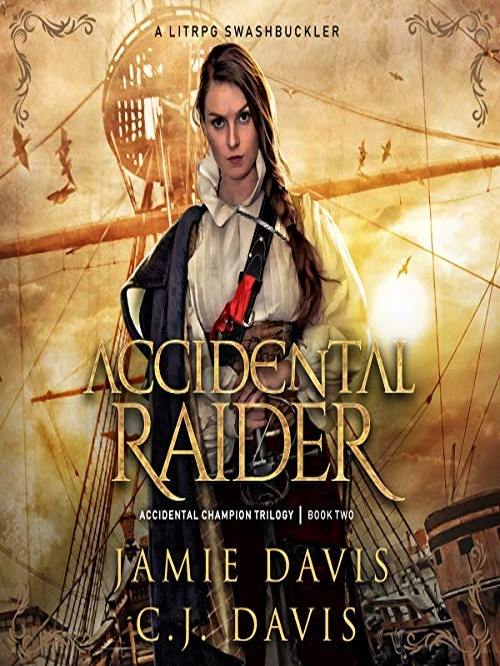
Accidental Raider Review

Mind And Sea: Accidental Raider

Rules Break

Society demand hero. Cari Dix say no. She take ship Vengeance. Forced path bore mind. High sea offer truth. LitRPG genre shift. Rule break expand world. Series Accidental Champion Trilogy grow.

Code And Blood

Jamie Davis and C.J. Davis build deep world. MedicCast Productions publish. Science Fiction & Fantasy fuse with Fantasy. Book offer core thoughts:
Cari reject Crystal Throne. She take pirate path. Free will beat game code. Character gain soul.
Hal and Mona chase daughter. Real parents enter Fantasma. Human bond break virtual wall. Stakes turn real.
Stacy Gonzalez narrate. Audio run 09:35:00. Voice command respect. Pirate world hit ear hard.

Final Judgment

I judge book good. 4.79 score earn respect. Prose sharp. Plot move fast.
Target mind: LitRPG fan. Rebel thinker. Deep reader.
You obey system? Stop. Read Accidental Raider. Break chain.