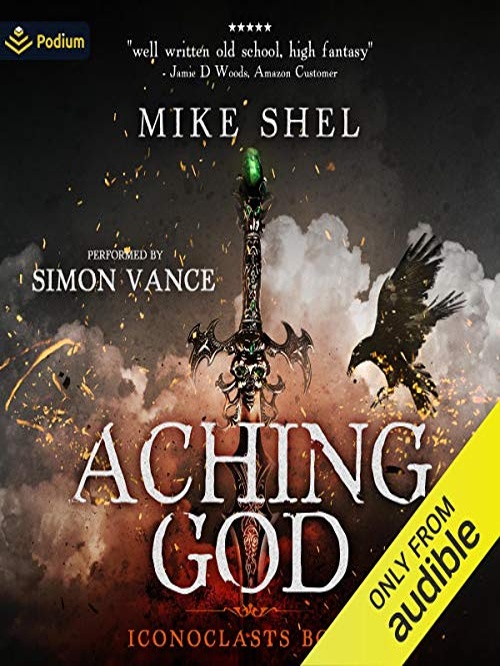
The Weight of Echoes and the Burden of the Divine: A Delve into Mike Shel’s Aching God
In a genre often preoccupied with the nascent hero, the fresh quest, and the untarnished dawn of destiny, Mike Shel‘s Aching God arrives as a resonant counterpoint, a deliberate and unflinching examination of what comes after the legends are forged. It poses a deeply unsettling question: What happens when the hero, burdened by the scars of a thousand battles, is called upon to perform one last, soul-crushing task? We find ourselves, not in the company of a wide-eyed protagonist, but alongside a man whose past is a labyrinth of trauma, called back to the very place that broke him.
The Unkindness of Memory
Auric Manteo is introduced not as a figure of myth, but as a man haunted by it. Retired to a solitude purchased by past exploits, he is ostensibly free from the perilous allure of ancient ruins and dark wisdom. Yet, the narrative arc quickly reclaims him, not through glory, but through an existential burden: the imperiled life of his only daughter. This is where Shel immediately distinguishes his work; the motivation is primal, personal, and profoundly painful. Auric’s journey back to the Barrowlands, a site of his greatest trauma, forces us to confront the psychological landscape of a character for whom adventure is no longer a thrill, but a relapse into a waking nightmare. This focus on the psychological aftermath of heroism, rather than the heroism itself, offers a rare, nuanced perspective within epic fantasy.
The genius of Aching God lies in its masterful exploration of this internal conflict, mirrored by an external world steeped in decay and malevolence. The remnants of the Djao civilization are not merely ancient ruins; they are sentient wounds upon the earth, testament to a wickedness that transcends simple villainy. Shel crafts a world that feels genuinely old, its history bleeding into the present, demanding a hefty toll from those who dare to disturb its slumber. The titular “Aching God” is less a deity in the traditional sense and more a primordial, parasitic force, a visceral embodiment of decay and inescapable consequence. This thematic thread — the cost of ambition, the lingering malevolence of past empires, and the relentless grip of one’s own history — permeates every page, demanding an intellectual rigour from the reader that is both challenging and ultimately rewarding.
A Symphony of Dread and Delivery
Beyond the potent narrative, the presentation of Aching God is noteworthy, particularly for its audio rendition. Simon Vance, whose voice is a veritable instrument of narrative craft, delivers a performance that rightfully earned a 2019 Voice Arts Award. His nuanced interpretation imbues Auric’s weariness, the fledgling hope of his companions, and the chilling malevolence of the Barrowlands with a compelling verity. It is a testament to the power of a skilled narrator to elevate an already strong text, ensuring that every tremor of fear, every flicker of resolve, and every insidious whisper of the ancient world registers with a profound, visceral impact. Indeed, the auditory experience here is less a reading and more an immersive journey into the depths of Shel‘s meticulously constructed world.
The Verdict of the Scarred Soul
We find Aching God to be a formidable entry into the annals of Fantasy literature, a work that courageously delves into the grittier, more melancholic aspects of heroism. It is a slow-burn intellectual thriller disguised as a fantasy quest, eschewing easy answers for the complex, often bitter truth of self-reckoning. Mike Shel does not shy away from the brutality of his world or the internal torment of his protagonist, yet he never descends into gratuitous despair. Instead, he illuminates the flickering embers of resilience that persist even in the shadow of insurmountable odds.
This is a book for the seasoned reader of Science Fiction & Fantasy who yearns for depth beyond sword and sorcery. It is for those who appreciate character studies that are unflinchingly honest, world-building that feels ancient and lived-in, and a narrative that prizes thematic resonance over simplistic plot progression. If you are prepared to grapple with themes of trauma, sacrifice, and the relentless ache of an unforgiving past, Aching God offers a profoundly affecting journey. It asks us, ultimately, what we would sacrifice for redemption, and if, indeed, such a thing is ever truly attainable.