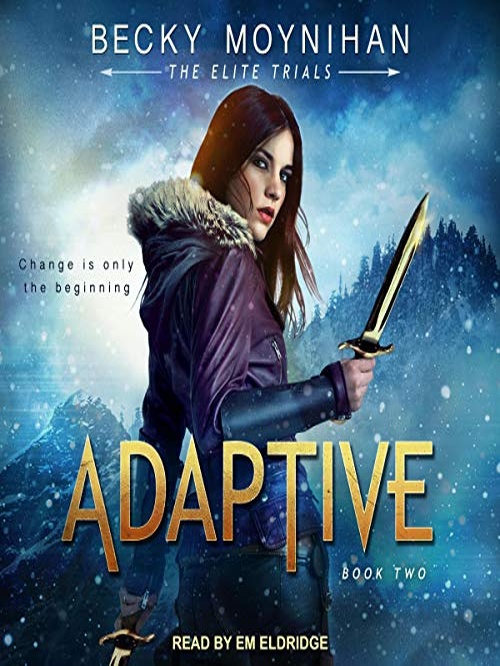
Navigating the Labyrinth of Liberty: A Close Reading of Adaptive
In an era saturated with tales of rebellion and post-apocalyptic resilience, Adaptive, the latest installment in [[Elite Trials]] by [[Becky Moynihan]], presents a refreshingly complex examination of what it truly means to be free. We are often drawn to narratives where the protagonist’s escape from oppression guarantees immediate emancipation. Yet, Moynihan deftly subverts this expectation, plunging her heroine, Lune, into a paradox where the perceived liberation from Tatum City only tightens the unseen chains of obligation and manipulation. This is not merely a story of survival, but a profound inquiry into the psychological cost of agency and the fluid nature of allegiance.
The Shifting Sands of Control
From the outset, Adaptive establishes a narrative landscape where personal desires are constantly pitted against external pressures. Lune’s desperate bid for freedom transmutes into a desperate scramble for survival, dictated by an adoptive father who wields her vulnerabilities as weapons. This sophisticated portrayal of psychological manipulation is, in my estimation, one of the novel’s most compelling strengths. The pressure placed upon Lune to locate Bren and fulfill her mission is not merely a plot device; it’s a crucible designed to test her moral fortitude and redefine her understanding of loyalty.
Adding another layer of compelling unpredictability is Ryker, Lune’s enigmatic companion. His presence introduces a fascinating dynamic, as his own undisclosed mission creates a friction that both challenges and complements Lune’s trajectory. Their uneasy alliance forces a constant re-evaluation of trust, exposing the inherent dangers and fleeting nature of partnerships forged under duress. Moynihan excels at painting these relationships with a brushstroke of ambiguity, ensuring that the reader, much like Lune, is perpetually discerning between friend and foe, truth and expediency.
The Philosophy of Adaptation
The very title, Adaptive, is a prescient indicator of the thematic core that permeates this [[Teen & Young Adult]] [[Science Fiction & Fantasy]] offering. Lune’s journey is a masterclass in evolving, not merely to physical threats but to the insidious mental and emotional trials that seek to unravel her very being. The external world, brutal and unforgiving, serves as a mirror reflecting her internal struggle to maintain identity amidst ever-shifting loyalties and burgeoning revelations. We witness her grapple with impossible choices, each decision a weighty stone shaping the path ahead. This narrative arc speaks to the broader human condition: our perpetual need to adjust, compromise, and reinvent ourselves in the face of insurmountable odds.
The prose, delivered with a directness that belies its underlying complexity, draws the reader into Lune’s visceral experience. For those who choose the auditory journey, [[Em Eldridge]]‘s narration, published by [[Tantor Audio]], imbues the characters with a palpable urgency and emotional depth that elevates the experience. Her performance ensures that the 10 hours and 30 minutes spent in Lune’s world are not merely listened to, but felt deeply.
A Verdict on Evolving Truths
Adaptive is, in its essence, a sophisticated exploration of personal conviction against a backdrop of pervasive control. It is my firm belief that [[Becky Moynihan]] has crafted a sequel that not only expands the Elite Trials universe but also deepens its philosophical underpinnings. The 4.55 rating it has garnered is, in this critic’s view, a well-deserved recognition of its nuanced narrative and compelling character development.
This book is an essential read for aficionados of Science Fiction & Fantasy who crave more than just escapism. It is particularly suited for those Teen & Young Adult readers who appreciate a protagonist wrestling with complex moral dilemmas rather than clear-cut heroics. Adaptive invites us to ponder the very nature of truth and freedom: are they absolutes, or are they, too, concepts that must continuously adapt to survive the crucible of existence? We are left to reflect on how readily we might surrender our own perceived liberties for the promise of a different, albeit constrained, future.