When the Cage Is Golden, the Escape Becomes the Story
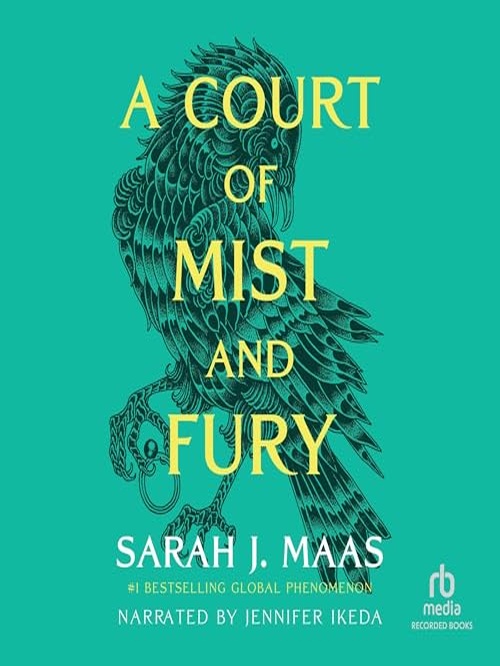
There is a moment in A Court of Mist and Fury — quiet, devastating, easy to miss if you’re reading too fast — where Feyre Archeron realizes that the man who fought to save her has become the man she needs saving from. Not through cruelty, exactly. Through love misapplied. Through protection that calcifies into control. It is a moment that cuts close to the bone of lived experience, and it is the reason this second installment in Sarah J. Maas‘s A Court of Thorns and Roses series transcends its genre trappings to become something genuinely urgent.
I’ll say it plainly: this is one of the rare sequels that doesn’t just surpass its predecessor — it redefines the entire project.
The Architecture of a Fractured Self
Where the first novel operated within the familiar scaffolding of a Beauty and the Beast retelling, ACOMAF dismantles that scaffolding with surgical precision. Feyre returns from Under the Mountain not as a triumphant heroine but as a woman drowning in post-traumatic silence — vomiting before her wedding, painting the walls of her bedroom with scenes of darkness she cannot articulate to the people who claim to love her. Maas commits fully to this psychological descent, and the result is a portrayal of PTSD that carries genuine visceral impact, particularly within a genre that too often treats trauma as a plot device to be resolved by the right kiss.
The narrative structure mirrors Feyre’s internal fracture. The first third of the novel moves with a suffocating slowness that is entirely deliberate — we are trapped in the Spring Court alongside her, feeling the walls close in, watching Tamlin’s protectiveness metastasize into something indistinguishable from imprisonment. It is uncomfortable reading. It is meant to be. Maas is asking us to sit with the dissonance between what a relationship looks like from the outside — powerful Fae lord, beautiful manor, safety after horror — and what it feels like from within.
This is not subtle work. But it is effective work, and the distinction matters.
Rhysand and the Subversion of the Romantic Paradigm
The novel’s most provocative move is its wholesale renegotiation of whom we are meant to trust. Rhysand, the villain-coded High Lord of the Night Court who spent the entirety of the first book as a morally ambiguous manipulator, emerges here as something far more complex: a leader who understands that genuine respect means allowing someone the dignity of their own choices, even — especially — when those choices involve risk.
I want to be precise about why this works, because it could so easily have devolved into a simplistic “bad boy was actually good all along” redemption arc. What Maas does instead is more interesting. She presents Rhysand as a man who has done unconscionable things — and who does not ask to be absolved. His court, the Night Court, with its Inner Circle of fiercely loyal, beautifully realized secondary characters — Mor, Cassian, Azriel, Amren — operates not as a hierarchy of power but as a chosen family forged in mutual trauma. The contrast with the Spring Court’s feudal paternalism is stark and, I think, philosophically deliberate.
The slow-burn romance between Feyre and Rhysand is, on a craft level, masterfully paced. Maas understands that the most potent romantic tension lives not in proximity but in recognition — two people seeing each other’s damage clearly and choosing to stay anyway. Their dynamic crackles not because of the considerable physical attraction (though Maas writes that with characteristic heat) but because it is rooted in intellectual and emotional equity. He teaches her to read. She challenges his martyrdom. They argue about strategy. This is a love story built on the radical premise that partnership means neither person diminishes themselves.
Power, Autonomy, and the Politics of Protection
Beneath the romance and the high-fantasy world-building — which expands dramatically here, encompassing courts of seasonal and celestial alignment, ancient magical hierarchies, and an approaching existential threat — ACOMAF is engaged in a sustained interrogation of a single question: What does it mean to protect someone?
Tamlin locks Feyre in the manor. Rhysand hands her weapons and says, “I want you to have choices.” The novel frames these as fundamentally different philosophies of love, and it does so without reducing Tamlin to a cartoon. He is afraid. He has his own trauma. His love is real. It is also suffocating, and Maas refuses to let the authenticity of his feelings excuse the consequences of his actions. This is a nuanced ethical position for any novel to take; for a fantasy romance marketed to a young-adult-adjacent audience, it borders on the revolutionary.
Feyre’s journey from hollowed-out survivor to a woman who claims her own power — literally, as she trains her emerging magical abilities, and figuratively, as she rebuilds her sense of self — forms the emotional spine of the book. It is a narrative of recovery that insists recovery is not linear, not pretty, and not accomplished alone.
Where the Seams Show
The novel is not without its structural weaknesses. At over twenty-three hours in audiobook form (narrated with considerable skill by Jennifer Ikeda, whose vocal differentiation of the expanding cast is impressive), ACOMAF occasionally indulges in expository world-building that slows the narrative momentum, particularly in its middle section. The political machinations of the various Fae courts, while necessary for the series’ larger arc, sometimes feel more like table-setting than storytelling. And Maas’s prose, while propulsive and emotionally acute, can tip into repetition — we are told of Feyre’s hollowness, her fracture, her darkness, with a frequency that occasionally blunts the very impact it seeks to create.
These are minor complaints against the weight of what the book achieves, but they are worth noting honestly.
A Story That Earns Its Devotion
The 4.85 average rating this book carries is not the inflated enthusiasm of an undiscriminating fandom. It is the collective recognition that Sarah J. Maas has accomplished something genuinely difficult: she has written a fantasy romance that takes its characters’ interiority as seriously as its action sequences, that treats the question of whom to love as an extension of the question of how to live, and that understands — with a clarity that feels hard-won — that the most dangerous prisons are the ones that look like safety.
A Court of Mist and Fury is essential reading for anyone who believes the Romance and Fantasy genres are capable of psychological and moral sophistication. It is for readers who want their escapism laced with uncomfortable truths about autonomy, consent, and the long work of healing. It is, frankly, for anyone who has ever stayed too long in a situation that looked like love from every angle except the one that mattered — the view from inside.
Here is the question I’d leave you with: When we talk about the stories that shape how a generation understands relationships, do we take seriously enough the ones that arrive wrapped in faerie wings and magic? Perhaps we should. The truths in ACOMAF are no less true for being spoken by immortals.