A Dragon of a Different Color Review

When the Nice Dragon Must Bare His Teeth

What happens when diplomacy becomes a battlefield and kindness is mistaken for capitulation? In the third installment of Rachel Aaron‘s Heartstrikers series, A Dragon of a Different Color, this question ceases to be rhetorical. It becomes the very axis upon which an entire clan’s survival rotates—and it does so with a narrative ferocity that caught me, a reader already invested in Julius’s journey, genuinely off guard.

Aaron has been building toward this collision since the first book. Julius Heartstriker, the “nice dragon,” has spent two volumes proving that gentleness is not weakness, that empathy can be a strategic instrument in a world governed by predatory hierarchies. But here, in this third outing, Aaron does something far more interesting than simply rewarding her protagonist’s philosophy. She stress-tests it to the point of fracture.

The Geopolitics of Dragons

One of the most striking achievements of A Dragon of a Different Color is its ambitious expansion of scope. The insular politics of Clan Heartstriker—already a tangled web of sibling rivalries and maternal tyranny—suddenly find themselves dwarfed by the arrival of the Golden Emperor and the dragons of China. Aaron constructs a geopolitical chess match between dragon civilizations with the kind of structural confidence that reminds me, frankly, of the better entries in epic fantasy’s political tradition.

What elevates this beyond standard faction-based fantasy is the specificity of the power dynamics. The Golden Emperor doesn’t simply represent an external threat; he represents an entirely different philosophy of draconic governance, one that renders Julius’s hard-won progress within Heartstriker almost irrelevant. It’s a paradigmatic shift that forces every character—and every reader—to recalibrate their understanding of what power means in this world.

The Impossible Choice and Its Emotional Architecture

At the novel’s throbbing center lies a dilemma that Aaron constructs with surgical precision: Julius must choose between loyalty to his sister Chelsie, the one dragon who has consistently protected him, and the survival of the clan he has sacrificed everything to reform. This is not a contrived moral puzzle. It is an organic outgrowth of every relationship, every compromise, every quiet act of courage that has preceded it.

I found myself genuinely unsettled by how effectively Aaron dismantles the comforting fantasy that doing the right thing will eventually align all loyalties in the same direction. Sometimes love pulls you apart. Sometimes the people who saved you become the very obstacle between you and the people you’re trying to save. Aaron doesn’t flinch from this, and the emotional payoff is, consequently, enormous.

The narrative structure here deserves particular praise. Aaron weaves multiple escalating crises simultaneously—political, personal, magical—without ever losing the thread of Julius’s internal journey. The pacing across twenty-one hours of audiobook (narrated with characteristic precision by Vikas Adam, whose vocal differentiation of an enormous cast remains impressive) never sags, which is no small feat for a book operating at this level of complexity.

Nice Is Not the Same as Passive

Perhaps the most transformative insight buried in this novel is Aaron’s evolving meditation on what it means to be “good” in a system that equates goodness with submission. Julius’s niceness has always been his defining trait and his greatest vulnerability. In A Dragon of a Different Color, Aaron finally allows that niceness to develop teeth—not by abandoning it, but by revealing that true kindness sometimes demands confrontation, sacrifice, and the willingness to make enemies of people you love.

This is a more sophisticated moral argument than most epic fantasy bothers to articulate. It refuses the false binary between the gentle hero who wins through pure-hearted persistence and the hardened pragmatist who learns that the world is cruel. Julius remains fundamentally himself. He simply discovers that being himself has a higher cost than he imagined—and he pays it.

A Dragon Worth Following

A Dragon of a Different Color is, I believe, the strongest entry in the Heartstrikers series to this point. It takes the foundational charm of its protagonist, the intricate family dynamics, and the richly imagined urban fantasy setting, and layers onto them a geopolitical thriller’s tension and a character study’s emotional depth. Aaron writes with the confidence of someone who knows exactly where her story is going, and that assurance translates into a reading experience that feels both propulsive and deeply considered.

This is the book for readers who have ever grown tired of fantasy protagonists who must become cruel to become strong. It is for those who believe that the hardest battles are fought not with claws and fire but with the stubborn, exhausting insistence on remaining decent when every incentive points toward ruthlessness. And it is for anyone who appreciates a series that grows more ambitious with each installment rather than retreating to comfortable formulas.

The question Aaron leaves us with is deceptively simple, and it lingers long after the final chapter: When the price of protecting everyone is betraying someone—what does the nice dragon do?

The answer, it turns out, is anything but simple. And that is precisely why it matters.
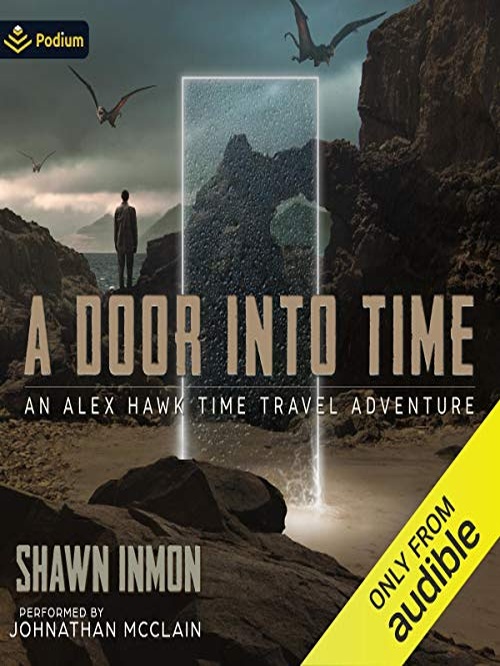
A Door into Time Review

When the Wall Comes Down: A Soldier’s Accidental Journey Through Time

What does a man do when the architecture of his own home becomes a metaphor for everything he cannot explain about his life? A Door into Time, the first entry in Shawn Inmon‘s An Alex Hawk Time Travel Adventure series, opens with precisely that question — and it is a more compelling one than it first appears.

The Premise That Earns Its Audacity

Alex Hawk is not your archetypal science fiction protagonist. He carries the particular weight of a Special Forces veteran navigating the unglamorous aftermath of service: a fractured marriage, a daughter he is perpetually on the verge of failing, and a mind trained to notice what others dismiss. It is this last quality — the soldier’s compulsive attention to anomaly — that sets the plot in motion. One wall in his house is measurably too short. Most men would let it go. Alex Hawk does not let things go.

This is Inmon‘s shrewdest narrative move. By grounding the inciting incident not in cosmic accident or scientific hubris, but in the obsessive competence of a damaged man trying to fill time before his daughter’s birthday party, the author transforms what could have been a pulpy genre contrivance into something with genuine psychological texture. The time travel portal is not a wonder — it is a consequence of character.

Competence as Currency

What A Door into Time trades in, more than temporal paradox or worldbuilding spectacle, is the currency of competence. Alex’s Special Forces background is not mere window dressing; it becomes the novel’s central philosophical argument. In a future that is deliberately disorienting and stripped of familiar social scaffolding, Hawk’s capacity to observe, adapt, and execute provides both his survival mechanism and his emotional through-line.

This is a recurring obsession in adventure fiction — the Heinleinian notion that a sufficiently capable individual can impose order on any chaos — and Inmon handles it with more restraint than the genre typically demands. Alex is capable, yes, but he is not invulnerable. The emotional stakes surrounding his daughter, planted firmly in the opening chapters, do not evaporate once the portal swallows him. They persist, creating a quiet ache beneath the action that prevents the narrative from becoming mere wish fulfillment.

Johnathan McClain‘s narration deserves particular acknowledgment here. His vocal register for Alex strikes a precise balance between granite competence and suppressed vulnerability — he sounds, convincingly, like a man who has learned to keep his softer frequencies buried just below the surface.

A Future Unlike Anything Imagined — Or Is It?

The novel’s marketing leans heavily on the promise of a radically reimagined future. This claim warrants a degree of measured skepticism. Inmon‘s future is vivid and functionally realized, but readers steeped in the genre’s richer traditions — Le Guin’s anthropological rigour, Wolfe’s labyrinthine ambiguity — may find the worldbuilding more serviceable than revelatory. What it lacks in paradigmatic originality, however, it compensates for in narrative momentum. The pacing is disciplined; the world unfolds through Alex’s eyes rather than expository declaration, which is the right instinct.

The note pinned by a knife beside the doorway — a warning Alex chooses to ignore — is the novel’s most elegantly economical image. It acknowledges the genre’s conventions with a knowing wink while simultaneously asking the reader to consider: how many warnings do we walk past in our own lives, held up by nothing more than stubbornness and curiosity?

Final Reckoning

A Door into Time is not a book that will trouble the canon. It does not aspire to. What it offers instead is something more honestly valuable: a propulsive, emotionally grounded adventure that uses the machinery of Science Fiction & Fantasy to explore a genuinely interesting character under extraordinary pressure. Shawn Inmon writes with the confidence of someone who trusts his protagonist, and that trust is, more often than not, infectious.

The 4.3 listener rating it carries on Audible is a fair accounting. This is not a revelation — it is a reliable, well-crafted entertainment with a beating human heart at its center.

Ideal for readers who prefer their time travel stories anchored in character rather than theoretical physics — particularly those who appreciate military fiction’s emphasis on psychological endurance and find themselves drawn to the question of whether competence, alone, is sufficient armor against the truly unknown.

The door is open. The warning is on the wall. The only question worth asking, really, is whether you are the kind of person who reads notes before stepping through.

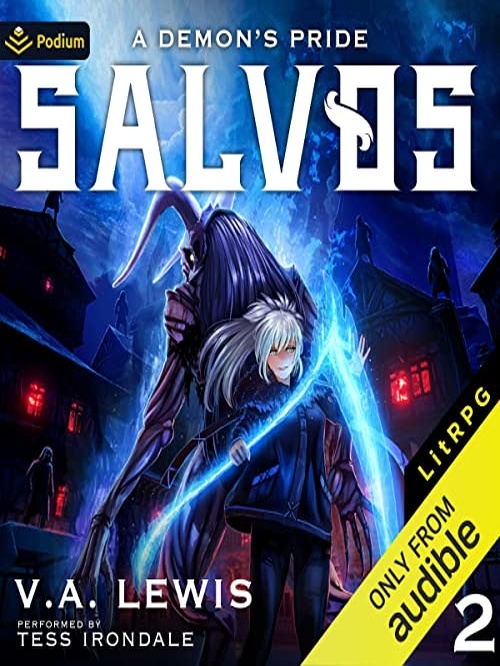
A Demon’s Pride A LitRPG Adventure Review

A Demon Walks Into a World That Hates Her — And Refuses to Apologize

What does it mean to be proud of what you are when the entire world has already decided you are monstrous? This is not a question borrowed from some literary fiction darling or a prestige philosophical novel. It comes, perhaps unexpectedly, from the third volume of V.A. Lewis’s Salvos series — a LitRPG web serial turned audiobook that, beneath its stat screens and level-ups, is conducting a surprisingly earnest interrogation of identity, prejudice, and the stubborn, irrational engine of selfhood.

A Demon’s Pride is not high literature. It does not pretend to be. But I find myself increasingly impatient with the assumption that genre fiction operating within progression fantasy frameworks cannot also be doing real thematic work. Lewis’s series has been building toward something, and this installment is where the scaffolding starts to reveal an actual architecture.

The Outsider Who Refuses the Mask

Salvos, our protagonist, is a Demon. Not metaphorically. Not as some edgy aesthetic choice. She is, within the world’s taxonomy, a creature from the Netherworld — alien in cognition, cheerfully sociopathic in her early appearances, and now, three books in, something far more complicated. She has earned her Gold Rank as an adventurer. She has companions she fiercely protects. And yet the world — its institutions, its people, its very System — categorizes her as an existential threat.

The tension Lewis constructs here is deceptively simple but narratively potent: Salvos cannot hide what she is forever, and she refuses to be ashamed of it. In a genre saturated with protagonists who conceal their overpowered nature for strategic advantage, Lewis flips the trope. Salvos’s concealment is not about power fantasy — it is about survival against systemic bigotry. The “pride” in the title is not vanity. It is ontological defiance.

This is where the book earns its weight. The [Cultists], the assassins, the company war she may or may not have accidentally ignited — these are competent action-adventure beats, well-paced and satisfying in the way progression fantasy demands. But they orbit a gravitational center that is genuinely interesting: what happens when a being who defines herself through growth and connection exists within a system designed to deny her both?

Progression as Philosophy, Not Just Mechanics

LitRPG lives or dies on its progression systems, and Lewis understands the contract. Numbers go up. Skills evolve. There are class advancements and satisfying power spikes. But what distinguishes A Demon’s Pride from the mechanical grind of lesser entries in the genre is that Salvos’s progression is inseparable from her psychological development. Each level gained, each new ability unlocked, is also a statement about who she is choosing to become — in a world that insists she has no right to choose at all.

I want to highlight something Lewis does quietly but effectively: Salvos’s naïveté is not static. In the first book, her ignorance of human social norms was played largely for comedy. Here, her misunderstandings carry consequences. She starts a company war through a combination of genuine confusion and an inability to process why beings would organize their economies around exploitation. It is funny. It is also, if you tilt your head slightly, a pointed observation about how normalized systems of power appear absurd when viewed by someone outside them entirely.

Tess Irondale’s narration deserves specific mention. Salvos is a character who could easily become grating — too loud, too impulsive, too relentlessly herself. Irondale threads the needle with precision, finding the vulnerability beneath the bravado, the loneliness beneath the cheerful aggression. At nearly twenty hours of audio, the performance never flags.

Where the Seams Show

I would be dishonest if I did not note the book’s limitations. Lewis’s prose, functional and clear, rarely rises to the level of memorable. The supporting cast, while likeable, tends toward archetypal rather than fully realized — they exist in relation to Salvos rather than as independent centers of narrative gravity. And the pacing in the middle third sags under the weight of sequential encounters that, while individually entertaining, blur together in retrospect.

There is also a structural tension inherent to serialized web fiction adapted into discrete volumes: A Demon’s Pride does not so much end as pause. The emotional arcs reach satisfying waypoints, but the larger story — Salvos’s search for her companion, her reckoning with the Netherworld, the world’s inevitable confrontation with what she truly is — remains deliberately, sometimes frustratingly, unresolved.

Who Should Walk This Road

This is a book for readers who have already bought into progression fantasy’s core promise — that watching a character grow stronger can be genuinely compelling narrative — and who are hungry for a series that asks why that growth matters. If you have bounced off LitRPG before, A Demon’s Pride is unlikely to convert you; it operates firmly within its genre’s conventions. But if you are already a citizen of this space, Lewis’s series represents something approaching its best self: genre fiction that takes its own premise seriously enough to find real meaning in it.

The question Salvos poses, ultimately, is one worth sitting with long after the stats fade from memory: If the world insists you are a monster, and you know you are not, how much of yourself are you willing to sacrifice to prove it? The answer this book offers — nothing, not one fragment — is, I think, more radical than it first appears.

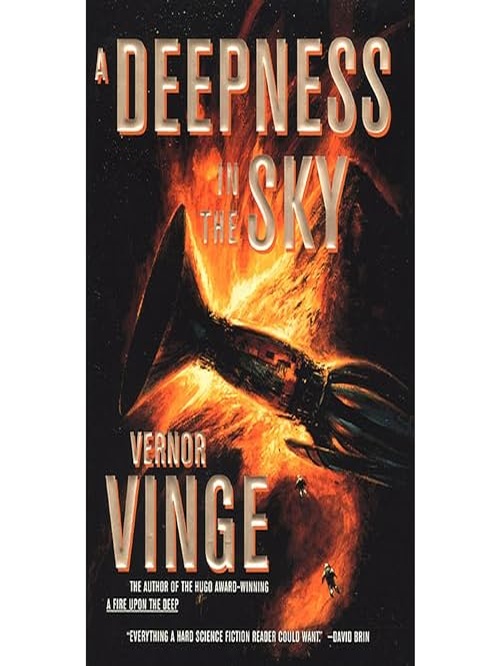
A Deepness in the Sky Review

Dark Star, Bright Mind: Sky Deepness

Star sleep. Star wake. Spiders live below. Men wait above. Qeng Ho trade. Emergents enslave brain. Betrayal strike. Qeng Ho fight.

Space Cold, Truth Deep

Vernor Vinge write heavy Science Fiction & Fantasy. I read. I judge. Book strong.

Emergents break minds. Tech make brain tool. Vinge show dark path. Freedom die. Efficiency win. Qeng Ho fight back. Free trade need free will. Mind freedom beat tech slave.

Spiders hide secret. Men think spiders dumb. Spiders play men. Narrative twist hard. Good trick. Vinge build heavy world.

Courage break chains. Love save innocents. Theme big. Not just space lasers. Human spirit grow.

Final Judge

Book win Hugo Award. Get Nebula nominate. Score hit 4.42. Deserve high score. Zones of Thought series grow strong. Macmillan Audio make sound version. Peter Larkin read. Voice good.

Target: You like smart Fantasy space book? Read this. You like deep think? Read this.

Emergents enslave brains for power. Qeng Ho fight for freedom. Read book.

You trade freedom for tech? Think hard. Decide.

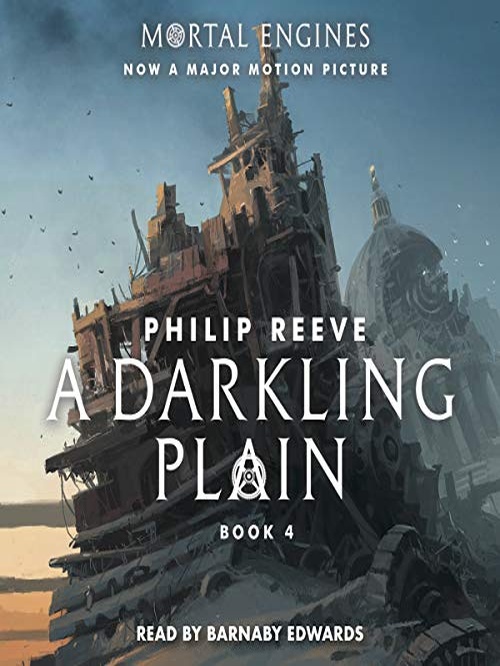
A Darkling Plain Review

The Echoes of a Dying World: A Concluding Reflection on A Darkling Plain

In the vast, shifting dunes of contemporary Science Fiction & Fantasy, few series have etched themselves into our collective imagination with the stark, singular vision of Philip Reeve’s Mortal Engines. Its culmination, A Darkling Plain, arrives not as a triumphant fanfare but as a resonant, melancholic symphony, an elegy to a world teetering on the brink, grappling with the profound consequences of its own brutal past. We approach this final volume with a sense of both dread and anticipation, eager to witness the ultimate fate of its complex characters and the ravaged, yet strangely beautiful, landscape they inhabit.

Unearthing Truths in a World Undone

Reeve has, throughout this remarkable series, masterfully woven a tapestry of municipal Darwinism, where cities devour cities in a perverse, mechanised struggle for survival. A Darkling Plain brings this brutal logic to its inevitable, devastating climax. The very mention of London as a “radioactive ruin” is enough to send a shiver down the spine, immediately setting a somber, apocalyptic tone. Yet, it is within these very ruins that Reeve posits the seeds of resolution, or perhaps, simply the brutal truths that have long lain dormant. The journey of Tom and Wren into the underbelly of this fallen titan is more than a mere treasure hunt; it is an archaeological excavation of humanity’s hubris and its desperate, lingering hope. Their discoveries are not just plot devices but philosophical insights into the cyclical nature of conflict and the faint possibility of transcending it.

The Crucible of Fanaticism and the Human Spirit

While Tom and Wren navigate the physical and metaphorical darkness, Hester faces a different kind of abyss. Her confrontation with a fanatical enemy, armed with both destructive weapons and an unyielding will to annihilate, elevates the narrative beyond mere adventure. This is where Reeve delves into the psychological and sociological underpinnings of his world. What drives such fanaticism? What are the limits of human endurance when faced with absolute malevolence? Hester’s arc, always fraught with moral ambiguity, reaches its most poignant and perilous point here, forcing us to consider the fine line between conviction and madness, survival and extinction. It is a testament to Reeve’s nuanced characterisation that we remain deeply invested in her struggle, even as her choices challenge our own ethical frameworks.

The Weight of a Legacy Unfurled

This final installment, a winner of the esteemed Guardian Children’s Fiction Prize, solidifies Reeve’s place as a visionary storyteller within the Teen & Young Adult landscape. Yet, to pigeonhole this work solely for a younger audience would be to overlook its profound intellectual rigour and its unflinching gaze into the darker aspects of human nature and societal collapse. The narrative pacing, even in its expansive 15-hour audio rendition (expertly brought to life by Barnaby Edwards), never falters, propelling us through a landscape of desperate gambits and heartbreaking revelations. Reeve does not offer easy answers; instead, he presents a deeply reflective and often bleak assessment of the choices that define our species, echoing historical parallels and speculative futures with incisive clarity.

A Stark Conclusion, A Lingering Question

Ultimately, A Darkling Plain is a masterclass in concluding an epic saga. It dares to be uncompromising, delivering a powerful, subjective conclusion that feels earned rather than contrived. This is a book for those who appreciate narratives that challenge, provoke, and linger long after the final page (or, in this case, the final spoken word). It is perfect for readers who gravitate towards Science Fiction & Fantasy that prioritises thematic depth over simplistic heroics, who are willing to confront the potential for both immense destruction and fragile hope within the human heart. We are left not with tidy resolutions, but with a profound call to reflection: What is the true cost of progress, and how much ruin can humanity truly bear before it is utterly transformed, or utterly lost? Reeve reminds us that the plain may be dark, but the questions it raises illuminate our own complex world with startling clarity.

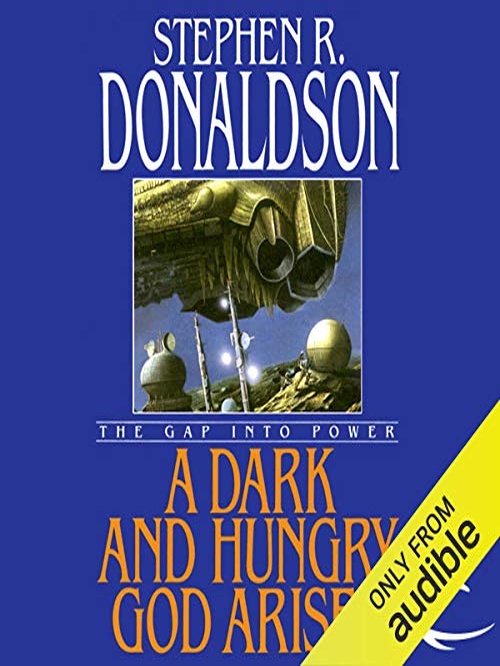
A Dark and Hungry God Arises The Gap into Power Review

When the Abyss Stares Back: Stephen R. Donaldson’s Unflinching Descent into Power

There is a particular kind of science fiction that refuses to let you look away. It doesn’t offer you heroes to admire from a comfortable distance or villains whose darkness is neatly contained within the borders of genre convention. Instead, it grabs you by the collar and forces your face toward the mirror, demanding you reckon with the ugliness that power — political, physical, psychological — inscribes upon the human soul. A Dark and Hungry God Arises, the third volume of Stephen R. Donaldson‘s Gap Cycle, is precisely that kind of book. And I suspect that’s exactly why it remains one of the most underappreciated achievements in modern space opera.


A Cathedral Built on Moral Wreckage

By the time we arrive at this third installment, Donaldson has already laid his groundwork with brutal efficiency. The Real Story and Forbidden Knowledge established the triangulated agony between Morn Hyland, Angus Thermopyle, and Nick Succorso — victim, monster, and charming predator, respectively, though those labels shift and dissolve with every chapter. Now, in A Dark and Hungry God Arises, the stage expands dramatically. We find ourselves at Billingate, an illegal shipyard that functions as a kind of Casablanca in the void — a place where every transaction has a second meaning, every alliance conceals a betrayal, and the line between civilization and savagery has been not merely blurred but deliberately erased.

What Donaldson constructs here is nothing short of architectural. The novel operates as a kaleidoscope of competing perspectives, each chapter rotating the narrative lens to reveal how the same events look radically different depending on whose desperation we inhabit. This is not the simple trick of unreliable narration. It is something more ambitious: a systematic dismantling of the very concept of narrative authority. No single character possesses the truth. No single motive is pure. We are left to assemble meaning from the wreckage of competing agendas, much as the characters themselves must do.


The Machinery of Manipulation

One of the most striking achievements of this novel is its treatment of institutional power — specifically, the cold war between Warden Dios, director of the United Mining Companies Police, and Holt Fasner, the corporate overlord Donaldson simply and chillingly calls “the Dragon.” Their conflict operates at a remove from the visceral horrors of Billingate, conducted through bureaucratic maneuvering, coded directives, and the strategic deployment of human beings as instruments. Angus Thermopyle, once a free agent of pure predatory instinct, has been literally reprogrammed — his body and mind cyborged into a weapon whose trigger belongs to someone else.

I find this to be Donaldson’s most devastating insight in the entire series up to this point: that the difference between a criminal and an operative of the state is not moral but merely procedural. Angus was monstrous when he was free. Now he is equally monstrous, but useful. The horror is not that institutions create monsters — it is that they simply redirect existing monstrosity toward approved targets. If that doesn’t resonate with a contemporary reader navigating questions about surveillance states, corporate governance, and the weaponization of individuals by larger systems, I’m not sure what would.


Morn Hyland and the Paradox of Survival

Morn remains the gravitational center of the Gap Cycle, though Donaldson wisely refuses to grant her the narrative prominence that would allow us to sentimentalize her suffering. She is not a symbol. She is not an archetype of resilience dressed in the trappings of science fiction. She is a woman making impossible choices under impossible conditions, and what makes her compelling is precisely her refusal to be reduced to any single interpretation.

In A Dark and Hungry God Arises, her agency — such as it exists — operates in the narrow spaces between the agendas of men and institutions that regard her as a resource to be exploited. Her zone implant, that device which allows external control over her emotional and physical states, functions as one of the most disturbing metaphors in contemporary science fiction: a literalization of the ways in which autonomy can be stripped, commodified, and bargained with. That Morn continues to act within these constraints, to find leverage in the very mechanisms of her oppression, gives the novel its fragile, defiant pulse.


The Architecture of Dread

I want to speak plainly about Donaldson’s prose in this volume, because it is both the novel’s greatest asset and its most common point of contention. He writes with a density and deliberateness that some readers mistake for opacity. Sentences coil and recurve, weighted with subordinate clauses that mirror the psychological complexity of the characters they describe. This is not accidental. Donaldson is a writer who believes that form should embody content, and in a novel about the labyrinthine nature of power, conspiracy, and self-deception, the prose itself becomes a maze the reader must navigate.

Scott Brick‘s narration of the audiobook edition deserves particular mention here. At over twenty hours, this is a demanding listen, but Brick brings a gravitas and clarity to Donaldson’s intricate sentences that makes them not merely comprehensible but compelling. He differentiates the novel’s sprawling cast with precision, and his pacing — unhurried but never slack — honors the deliberate rhythm of the source material. For those who have found Donaldson’s prose daunting on the page, the audiobook may well be the ideal entry point.


The Amnion Problem

No discussion of the Gap Cycle can avoid the Amnion — the alien species whose mutagenic agenda threatens humanity with a form of extinction that is, in some ways, worse than death. The Amnion don’t want to destroy us. They want to convert us, to dissolve individual identity into their collective biology. They are, in essence, the ultimate expression of the novel’s central anxiety: that selfhood is fragile, contingent, and perpetually under siege.

What I find remarkable is that Donaldson resists the temptation to make the Amnion the primary antagonists. They are a threat, certainly — existential and implacable. But the true danger in A Dark and Hungry God Arises comes from within. It is human greed, human cruelty, human institutional corruption that creates the conditions under which the Amnion can flourish. Billingate exists because humans built it. The black market in Amnion mutagens exists because humans profit from it. The alien menace is real, but it is enabled, at every turn, by the very species it threatens. This is not a novel about humanity rallying against an external enemy. It is a novel about whether humanity deserves to survive at all.


A Reckoning with Darkness

Let me be direct: A Dark and Hungry God Arises is not a comfortable read. It is not designed to be. Donaldson has never been interested in providing the reassurances that genre fiction so often trades in — the reliable hero, the satisfying resolution, the implicit promise that good will ultimately prevail. What he offers instead is something rarer and, I would argue, more valuable: an honest confrontation with the costs of power, the fragility of moral identity, and the terrible ingenuity of human beings when it comes to finding ways to harm one another.

This third volume represents the series at its most expansive and, paradoxically, its most claustrophobic. The canvas is vast — interstellar politics, alien biology, corporate conspiracy — but the emotional register is intimate and suffocating. Every character is trapped, whether by external forces or internal compulsions, and the reader is trapped with them.

Who should read this? Those who have already committed to the Gap Cycle, obviously — this is not a standalone entry point. But more broadly, this is essential reading for anyone who believes that science fiction at its best is not escapism but confrontation. If you admire the political ruthlessness of Frank Herbert‘s Dune, the psychological extremity of Peter Watts, or the moral complexity of Iain M. Banks‘s Culture novels, Donaldson’s Gap Cycle belongs on your shelf. It is harder, darker, and less forgiving than any of them, and it is precisely that refusal to flinch that makes it unforgettable.

Here is the question I am left with, three volumes deep into this series: If every institution corrupts, and every individual is compromised, where does moral authority reside? Donaldson doesn’t answer. He simply keeps turning the screw. And somehow, impossibly, I keep reading.

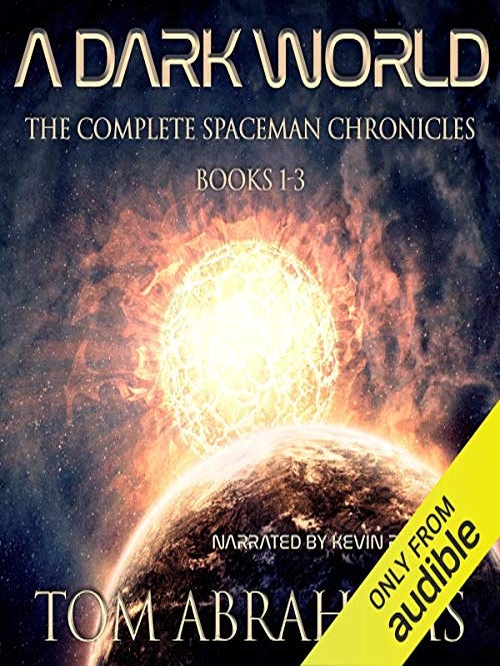
A Dark World The Complete SpaceMan Chronicles Review

When the Lights Go Out: A Chronicle of Human Resilience and Rebirth

We stand, perhaps, at a precipice in our technological age, where the very infrastructure that sustains our global civilization seems both miraculous and terrifyingly fragile. Tom Abrahams‘s A Dark World: The Complete SpaceMan Chronicles — comprising Spaceman, Descent, and Retrograde* — plunges us headfirst into this terrifying vulnerability, forcing a visceral examination of human nature when the digital hum falls silent and the sky itself turns hostile.

The Unraveling of the Fabric of Being

Abrahams initiates his sprawling narrative with a cataclysmic solar magnetic radiation blast, an event that instantly extinguishes much of Earth’s power grids. This isn’t merely a plot device; it is a profound philosophical premise. What happens when the intricate web of communication, logistics, and comfort that defines modern existence is summarily ripped asunder? The author doesn’t shy away from depicting the immediate, chaotic devolution, yet he masterfully avoids sensationalism for its own sake. Instead, he meticulously charts the concurrent struggles across vastly different, yet interconnected, stages. From the perilous, decaying orbit of the powerless International Space Station, where an astronaut battles not just for survival but for a reconnection to a silent Earth, to the immediate, gritty struggle within a Southeast Texas neighborhood, each locale serves as a crucible for humanity’s rawest instincts. The narrative’s strength lies in its refusal to offer simplistic answers, preferring instead to explore the nuanced permutations of desperation and defiance.

Echoes of Humanity in the Void

What truly elevates The SpaceMan Chronicles beyond a mere post-apocalyptic romp is its unwavering focus on the human element, enriched by a meticulous grounding in scientific verisimilitude. Abrahams, by his own account, consulted with former astronauts, NASA personnel, and astrophysicists, lending an invaluable layer of authenticity to the plight of his characters. We witness not just the physical challenges of survival – the scarcity of resources, the breakdown of law and order – but also the profound psychological toll. The astronaut’s isolation, the family’s desperate search for safety, the community’s struggle to forge new norms – these are all portrayed with an unflinching honesty that resonates deeply. It begs the question: what moral compass guides us when all conventional guidance systems fail? The series becomes a meditation on the innate human capacity for both devastating cruelty and astonishing self-sacrifice, exploring the fragile line between societal collapse and the emergent, raw bonds of kinship and shared purpose.

Rebuilding from the Ashes: A New World Order?

Yet, Abrahams doesn’t allow the narrative to wallow solely in the immediate aftermath. He introduces a chilling, underlying current: a shadowy conspiracy actively working to “rebuild the world in the shape of a new society” from a secret doomsday bunker deep within the Colorado Rockies. This layer transforms A Dark World from a survivalist epic into a compelling sociopolitical thriller. It forces us to confront the uncomfortable truth that even in humanity’s darkest hour, the lust for control and the ambition to reshape the future persist. The series thoughtfully interrogates the implications of such a grand design. Is this a vision of utopian order born from chaos, or merely a more sophisticated form of tyranny emerging from the ashes? The tension between organic, grassroots attempts at rebuilding and top-down, engineered societal restructuring provides a potent intellectual battleground.

Kevin Pierce‘s narration for this extensive 22-hour odyssey deserves a special mention. His voice becomes the steady, guiding presence through the darkness, imbuing each character and situation with appropriate gravitas and urgency, ensuring that the listener remains deeply immersed in this challenging world.

A Profound Reflection on Resilience

A Dark World: The Complete SpaceMan Chronicles is not merely a collection of stories; it is an extensive, intellectually rigorous examination of what it means to be human when the pillars of civilization crumble. I find myself returning to its themes long after the final chapter, contemplating our own societal vulnerabilities and the indomitable, yet complex, spirit of humanity. It is a work that manages to be both deeply personal and grandly expansive, prompting a profound reflection on resilience, leadership, and the eternal struggle for a meaningful existence.

This comprehensive series is an absolute imperative for those who appreciate science fiction that dares to be both scientifically plausible and philosophically probing. It is perfect for readers who gravitate towards narratives that explore the sociological ramifications of catastrophe and the inherent complexities of rebuilding, rather than simply reveling in destruction. If you are someone who ponders the ultimate test of the human spirit and the potential, both benevolent and sinister, of a world reset, then The SpaceMan Chronicles offers a truly enriching, albeit often harrowing, journey. What structures, visible and invisible, truly sustain us, and what will remain when they inevitably fall?

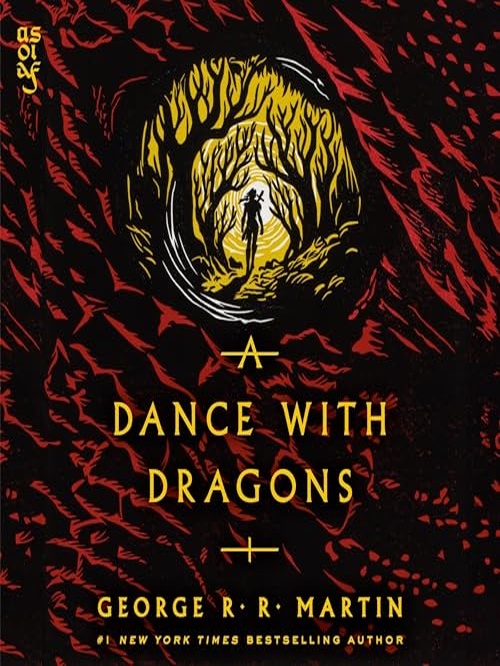
A Dance with Dragons Review

The Throne Is Won in Battle, but Held in Mud and Compromise

There is a moment in A Dance with Dragons — the fifth and, for now, final installment of George R.R. Martin‘s A Song of Ice and Fire — where Daenerys Targaryen, Mother of Dragons, Breaker of Chains, conqueror of cities, sits in a pit surrounded by thousands of screaming spectators and watches men die for sport. She hates it. She permits it anyway. It is, perhaps, the most quietly devastating scene Martin has ever written — not because of its violence, but because of what it says about the cost of ruling. You can burn a kingdom down with dragonfire. Governing what remains? That requires something fire cannot provide.

This is a novel about the morning after the revolution, and it is both Martin’s most ambitious and most polarizing work.


Power Doesn’t Arc — It Erodes

If A Game of Thrones was a masterclass in political betrayal and A Storm of Swords delivered the visceral shock of consequences made real, then A Dance with Dragons concerns itself with a far less cinematic question: what happens when the people who wanted power finally have it?

Jon Snow, the 998th Lord Commander of the Night’s Watch, discovers that commanding men is nothing like earning their respect. His decisions are sound, strategically defensible, even morally necessary — and they breed resentment in every corridor of Castle Black. Martin refuses to grant Jon the narrative armor of a protagonist who is simply misunderstood. Instead, he forces us to sit with an uncomfortable truth: good leadership often looks, from the inside, indistinguishable from tyranny.

Daenerys faces a mirror image of the same dilemma in Meereen. She has liberated a slave city, and now the freed and the former masters alike demand she become something she never prepared to be — an administrator. The dragon queen who swept across Slaver’s Bay with righteous fury finds herself negotiating sewer repairs and brokering marriages she does not want. Martin’s refusal to let Daenerys simply fly west to Westeros is not, as some critics have charged, narrative stalling. It is the entire point. Empire is not conquest; empire is maintenance, and maintenance is inglorious.

The Quiet Architecture of Identity

What struck me most on rereading — and this is a book that genuinely rewards rereading — is how deeply A Dance with Dragons is preoccupied with the question of selfhood. Theon Greyjoy, broken and renamed “Reek” by the sadistic Ramsay Bolton, undergoes one of the most harrowing identity deconstructions in modern fantasy. His chapters are not easy to stomach. They are also, I would argue, among the finest things Martin has ever written. The slow, agonizing process by which Theon claws his way back toward some fractured version of himself — “My name is Theon. You have to know your name” — carries a psychological authenticity that transcends genre. This is not fantasy escapism. This is literary fiction wearing a cloak of ice and snow.

Tyrion Lannister, too, is stripped of every advantage that once defined him — his name, his wealth, his wit as currency — and forced to confront a version of himself that is merely human. His journey down the Rhoyne, through slavery, through self-loathing, is Martin at his most Dostoevskian: a brilliant man who cannot stop destroying himself, narrating his own decline with devastating clarity.

And then there is the mystery of Aegon Targaryen — or whoever he truly is — a plot thread that interrogates the very nature of legitimacy. Does it matter if a king is real, Martin seems to ask, if enough people believe he is?

The Weight — and Worth — of Patience

I will not pretend this is a flawless book. It is not. At nearly forty-nine hours in Roy Dotrice‘s capable narration, A Dance with Dragons demands extraordinary patience. Certain Meereenese political intrigues feel labyrinthine to the point of opacity. Some readers will find the proliferation of new point-of-view characters — Quentyn Martell, Jon Connington, Barristan Selmy — dilutes rather than enriches the central narrative momentum. These are legitimate criticisms.

But I think they miss something essential about what Martin is constructing. This is not a series built on the architecture of payoff. It is built on the architecture of consequence. Every feast has a famine. Every war has an aftermath. Martin’s willingness to inhabit those unglamorous spaces — the council chambers, the sickbeds, the long marches through frozen wastes — is precisely what elevates A Song of Ice and Fire above its imitators. He does not skip to the good parts because he understands that the “boring” parts are where character is forged and meaning is made.

The novel’s final hundred pages, it should be said, deliver some of the most breathtaking cliffhangers in the entire series. Martin earns them precisely because he made us wait.

Who Should Walk This Road

A Dance with Dragons is not for the casual reader seeking quick narrative gratification. It is for those who have invested in this world and are willing to trust that Martin’s patience has purpose. It is for readers who find political complexity as thrilling as swordplay — who understand that a queen choosing whom to marry can carry more dramatic weight than a battle involving ten thousand soldiers.

It is, above all, for readers who believe that fantasy literature at its best does not offer escape from the human condition but a deeper immersion into it.

I finished A Dance with Dragons unsettled, hungry, and haunted — which is, I suspect, exactly how Martin intended it. The question that lingers is not what happens next in Westeros. It is the one the book has been asking all along, in every chapter, through every compromised choice and every shattered ideal:

When the cost of doing the right thing becomes indistinguishable from the cost of doing the wrong thing — how do you know which one you chose?

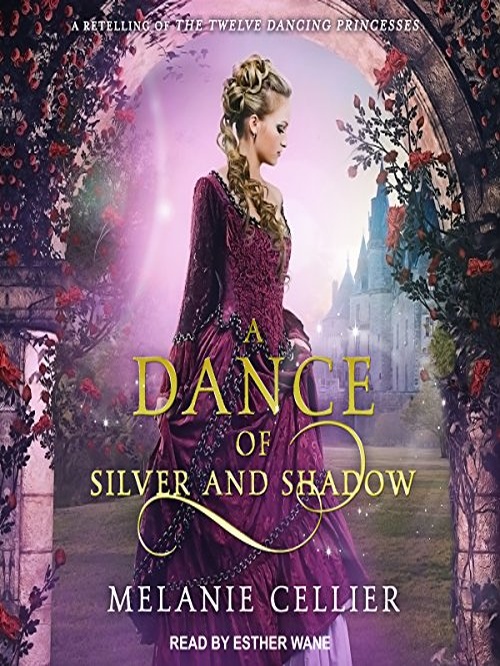
A Dance of Silver and Shadow Review

When Twelve Princesses Dance Underground, the Real Battle Is Above

What happens when you take one of the Grimms’ most enigmatic tales—The Twelve Dancing Princesses—and strip away its passive heroines, its voyeuristic soldier, and its pat resolution, then rebuild the entire architecture around agency, sisterhood, and the cost of sacrifice? You get Melanie Cellier’s A Dance of Silver and Shadow, a novel that is far more intellectually satisfying than its fairy-tale packaging might suggest.

I’ll confess: I approached this book with the skepticism I reserve for most fairy-tale retellings—a genre that too often mistakes surface-level inversion for genuine subversion. Cellier, however, understands something critical that many of her contemporaries do not. The power of a retelling lies not in merely reshuffling the deck but in interrogating why the original story compelled us in the first place.

The Curse as Political Architecture

The most striking move Cellier makes is transforming the enchanted underground ballroom from a site of escapist pleasure into a tournament—a competitive, high-stakes arena where princesses are not victims of their own frivolity but conscripts in a system designed to consume them. This is a paradigmatic shift worth pausing over. The original tale punishes the princesses for their secret nocturnal dancing, framing female desire and autonomy as inherently suspicious. Cellier inverts this entirely: the nightly descent into the magical realm is compulsory, imposed by a curse that threatens to devour the duchy of Marin itself.

Princess Liliana—Lily—is no passive participant. She arrives in Marin as a diplomat’s daughter, an outsider whose foreignness becomes both liability and advantage. The narrative arc Cellier constructs for her is one of escalating entanglement: political, magical, and romantic. What begins as curiosity sharpens into obligation, and obligation hardens into something closer to defiance.

The Twin Bond as Narrative Engine

The secret weapon of this novel—both literally and structurally—is the magical bond between Lily and her twin sister, Sophie. Cellier uses this connection with admirable restraint. It never devolves into a convenient deus ex machina; instead, it functions as a lens through which the book explores its most resonant theme: that strength is fundamentally relational. Lily is formidable not because she is a lone wolf with extraordinary gifts but because she is tethered to someone who sees the world from a different vantage point. Their shared perception becomes a form of intelligence that no single person could replicate.

This is a quietly radical proposition in a genre that still gravitates toward the Chosen One mythos. Cellier seems to argue that the most dangerous thing a corrupt system can face is not a singular hero but a partnership—two minds working in concert, filling each other’s blind spots.

Romance Under Constraint

The love story between Lily and the Marinese prince operates under a set of constraints that elevate it beyond the typical fantasy romance. There is genuine tension here, not manufactured through miscommunication or contrived misunderstandings, but rooted in structural impossibility. Lily cannot afford attachment because the tournament’s endgame demands sacrifice. The prince cannot fully trust an outsider when his duchy is fracturing. Their growing closeness carries the weight of consequence, and Cellier has the discipline to let that weight sit rather than rushing toward resolution.

I found myself thinking of the best slow-burn romances in the genre—Robin McKinley’s The Blue Sword, Shannon Hale’s The Goose Girl—where emotional intimacy is earned through shared purpose rather than manufactured proximity. Cellier belongs in that conversation, even if her prose doesn’t quite reach the lyrical heights of McKinley at her finest.

Where the Shadows Thin

The novel is not without its limitations. The worldbuilding of Marin, while functional, occasionally feels like sketched scenery rather than a lived-in place. The secondary princesses in the tournament blur together—a missed opportunity, given that twelve distinct women competing under duress could have generated a richer tapestry of motivation and conflict. And the pacing in the middle third sags slightly, as Lily’s daytime investigations retread ground without sufficient escalation.

But these are the imperfections of ambition, not laziness. Cellier is juggling a retelling, a political intrigue, a romance, and a magic-system novel simultaneously, and the fact that she mostly succeeds is itself noteworthy.

A Final Reckoning

A Dance of Silver and Shadow is a book that trusts its readers—trusts them to find the darkness inside the fairy tale, to appreciate a heroine who thinks before she acts, and to understand that love stories matter most when they cost something real. Melanie Cellier has crafted a retelling that honors its source material while refusing to be imprisoned by it.

This is for you if: you’ve exhausted the obvious fairy-tale retellings and hunger for one that treats the genre as intellectual territory worth exploring, not merely decorative nostalgia. Fans of Jessica Day George, Juliet Marillier, and the quieter end of YA fantasy will find a kindred spirit here.

I’m left with a question that the best retellings always provoke: What were the original twelve princesses really dancing toward? Cellier’s answer—that they were dancing toward their own destruction, and that the only way out was to refuse the music—strikes me as both truer and more unsettling than anything the Brothers Grimm dared to imagine.

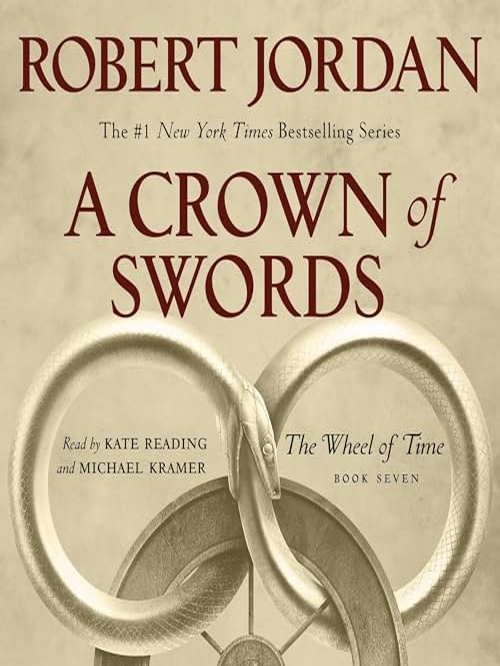
A Crown of Swords Review

A Crown of Swords: Where Victory Tastes of Ash and the World Refuses to Cooperate

What does it mean to win? Not in the clean, triumphant sense that fantasy so often promises — banners raised, enemies routed, the hero standing tall against a golden horizon — but in the bruising, ambiguous sense that real consequence demands. Robert Jordan‘s A Crown of Swords, the seventh installment in The Wheel of Time, poses this question with uncomfortable persistence. Rand al’Thor has broken the Aes Sedai. He has survived Dumai’s Wells. And yet, standing at what should feel like a pinnacle, he finds himself more fractured, more isolated, more dangerous than ever before.

This is not a novel about salvation. It is a novel about the cost of becoming the instrument of salvation.

The Dragon Reborn, Unraveling

Jordan has always been fascinated by the psychological toll of prophecy — the way destiny operates less like a gift and more like a slow confiscation of selfhood. In A Crown of Swords, that preoccupation reaches its most visceral articulation yet. Rand is not merely hardening; he is calcifying. The warmth that made him sympathetic in The Eye of the World has been methodically stripped away, replaced by a cold, geometric logic that borders on sociopathy. He must be hard, he tells himself. He must not break.

Jordan is doing something genuinely sophisticated here. Rand’s psychological deterioration is not dramatic villainy — it is bureaucratic, incremental, terrifyingly mundane. He makes decisions that are militarily sound and humanistically catastrophic, and the narrative refuses to adjudicate cleanly between them. This moral opacity is A Crown of Swords at its most intellectually rigorous, and it elevates the book well above the standard fantasy fare it superficially resembles.

The Texture of an Overcrowded World

One cannot review this novel without addressing its structural ambition — and its structural strain. Jordan’s world at this point in the series has achieved a density that is genuinely unparalleled in epic fantasy. Sea Folk Windfinders, Wise One politics, the internal fractures of the White Tower, the mercantile brutality of Ebou Dar — each thread carries its own weight, its own internal logic, its own cast of characters whose motivations deserve and receive genuine attention.

The Elayne and Mat storyline in Ebou Dar is, frankly, the novel’s most consistently pleasurable engine. Mat Cauthon — gambler, reluctant hero, walking anachronism — reaches something approaching full realization here. His interactions with the Daughter of the Nine Moons carry an erotic charge that Jordan handles with more wit than he is typically credited for. And the hunt for the bowl ter’angreal, MacGuffin though it may be, generates genuine momentum in a book that occasionally struggles to sustain it.

Egwene’s arc, meanwhile, operates in a different register entirely — quieter, more politically textured. Watching her consolidate authority among disparate factions of channelers is a masterclass in soft power, and Jordan renders her competence without rendering her infallible. She earns every inch.

Shadar Logoth and the Question of Ends

The novel’s climax — Rand’s confrontation with the Forsaken Sammael amid the corrupted ruins of Shadar Logoth — deserves particular attention, not for its action choreography but for its philosophical staging. Shadar Logoth is Jordan’s most potent symbol: a city destroyed not by the Shadow but by its own hatred of the Shadow. The evil that consumed it, Mashadar, kills indiscriminately. It does not distinguish between Forsaken and Dragon Reborn.

That Rand chooses this place for his confrontation is not incidental. Jordan is making a pointed argument about the seductive danger of fighting darkness by absorbing it — the very transformation Rand is undergoing on a psychological level. The setting and the character arc rhyme in ways that reward close reading and punish the speed-reader who treats this as mere action spectacle.

Whether the resolution of that confrontation fully satisfies is a matter of legitimate critical debate. Jordan’s handling of consequence here — specifically, what actually happens to Sammael — is elliptical in ways that feel less like artful ambiguity and more like narrative evasion. It is one of the book’s genuine weaknesses, and one worth naming plainly.

Measured Against the Series, Measured on Its Own Terms

A Crown of Swords is not The Shadow Rising, Jordan’s undisputed apex. It lacks that book’s anthropological boldness, its willingness to abandon familiar ground entirely in pursuit of world-mythological depth. Nor does it match Lord of Chaos for sheer structural audacity — the buildup to Dumai’s Wells remains one of the great sustained sequences in modern fantasy.

What it offers instead is consolidation with purpose. It is a novel doing the difficult, unglamorous work of managing an enormous narrative machine: setting pieces in motion, paying off threads laid books earlier, and complicating its central hero in ways that will take another seven volumes to resolve. Judged by those terms, it succeeds with considerable craft.

Kate Reading and Michael Kramer’s audiobook performances, for those engaging with Macmillan Audio‘s production, remain exemplary — their vocal differentiation across Jordan’s sprawling cast is an achievement that deserves acknowledgment in any honest accounting.

Who Needs This Book, and Why

A Crown of Swords belongs to readers who have already surrendered themselves to Jordan’s project — who understand that The Wheel of Time is not a series of self-contained novels but a single, vast work of philosophical fantasy published in installments. For those readers, this volume is essential: the psychological portrait of Rand alone justifies the investment.

For newcomers hoping to sample the series here: don’t. The rewards are real, but they are not portable. This is fiction that demands its full context.

The deeper question A Crown of Swords leaves resonating is one Jordan never quite states aloud but embeds in every interaction Rand has with the people who love him: At what point does the weapon aimed at the Dark One become indistinguishable from the darkness itself? Jordan does not answer. He is too honest for that. He simply keeps turning the Wheel.