When Twelve Princesses Dance Underground, the Real Battle Is Above
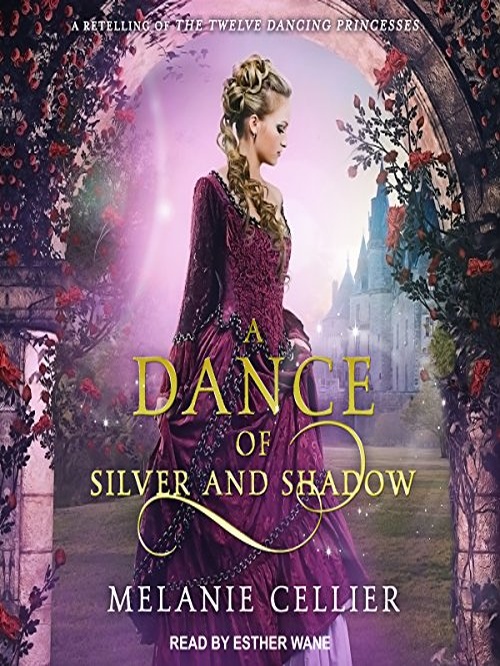
What happens when you take one of the Grimms’ most enigmatic tales—The Twelve Dancing Princesses—and strip away its passive heroines, its voyeuristic soldier, and its pat resolution, then rebuild the entire architecture around agency, sisterhood, and the cost of sacrifice? You get Melanie Cellier’s A Dance of Silver and Shadow, a novel that is far more intellectually satisfying than its fairy-tale packaging might suggest.
I’ll confess: I approached this book with the skepticism I reserve for most fairy-tale retellings—a genre that too often mistakes surface-level inversion for genuine subversion. Cellier, however, understands something critical that many of her contemporaries do not. The power of a retelling lies not in merely reshuffling the deck but in interrogating why the original story compelled us in the first place.
The Curse as Political Architecture
The most striking move Cellier makes is transforming the enchanted underground ballroom from a site of escapist pleasure into a tournament—a competitive, high-stakes arena where princesses are not victims of their own frivolity but conscripts in a system designed to consume them. This is a paradigmatic shift worth pausing over. The original tale punishes the princesses for their secret nocturnal dancing, framing female desire and autonomy as inherently suspicious. Cellier inverts this entirely: the nightly descent into the magical realm is compulsory, imposed by a curse that threatens to devour the duchy of Marin itself.
Princess Liliana—Lily—is no passive participant. She arrives in Marin as a diplomat’s daughter, an outsider whose foreignness becomes both liability and advantage. The narrative arc Cellier constructs for her is one of escalating entanglement: political, magical, and romantic. What begins as curiosity sharpens into obligation, and obligation hardens into something closer to defiance.
The Twin Bond as Narrative Engine
The secret weapon of this novel—both literally and structurally—is the magical bond between Lily and her twin sister, Sophie. Cellier uses this connection with admirable restraint. It never devolves into a convenient deus ex machina; instead, it functions as a lens through which the book explores its most resonant theme: that strength is fundamentally relational. Lily is formidable not because she is a lone wolf with extraordinary gifts but because she is tethered to someone who sees the world from a different vantage point. Their shared perception becomes a form of intelligence that no single person could replicate.
This is a quietly radical proposition in a genre that still gravitates toward the Chosen One mythos. Cellier seems to argue that the most dangerous thing a corrupt system can face is not a singular hero but a partnership—two minds working in concert, filling each other’s blind spots.
Romance Under Constraint
The love story between Lily and the Marinese prince operates under a set of constraints that elevate it beyond the typical fantasy romance. There is genuine tension here, not manufactured through miscommunication or contrived misunderstandings, but rooted in structural impossibility. Lily cannot afford attachment because the tournament’s endgame demands sacrifice. The prince cannot fully trust an outsider when his duchy is fracturing. Their growing closeness carries the weight of consequence, and Cellier has the discipline to let that weight sit rather than rushing toward resolution.
I found myself thinking of the best slow-burn romances in the genre—Robin McKinley’s The Blue Sword, Shannon Hale’s The Goose Girl—where emotional intimacy is earned through shared purpose rather than manufactured proximity. Cellier belongs in that conversation, even if her prose doesn’t quite reach the lyrical heights of McKinley at her finest.
Where the Shadows Thin
The novel is not without its limitations. The worldbuilding of Marin, while functional, occasionally feels like sketched scenery rather than a lived-in place. The secondary princesses in the tournament blur together—a missed opportunity, given that twelve distinct women competing under duress could have generated a richer tapestry of motivation and conflict. And the pacing in the middle third sags slightly, as Lily’s daytime investigations retread ground without sufficient escalation.
But these are the imperfections of ambition, not laziness. Cellier is juggling a retelling, a political intrigue, a romance, and a magic-system novel simultaneously, and the fact that she mostly succeeds is itself noteworthy.
A Final Reckoning
A Dance of Silver and Shadow is a book that trusts its readers—trusts them to find the darkness inside the fairy tale, to appreciate a heroine who thinks before she acts, and to understand that love stories matter most when they cost something real. Melanie Cellier has crafted a retelling that honors its source material while refusing to be imprisoned by it.
This is for you if: you’ve exhausted the obvious fairy-tale retellings and hunger for one that treats the genre as intellectual territory worth exploring, not merely decorative nostalgia. Fans of Jessica Day George, Juliet Marillier, and the quieter end of YA fantasy will find a kindred spirit here.
I’m left with a question that the best retellings always provoke: What were the original twelve princesses really dancing toward? Cellier’s answer—that they were dancing toward their own destruction, and that the only way out was to refuse the music—strikes me as both truer and more unsettling than anything the Brothers Grimm dared to imagine.