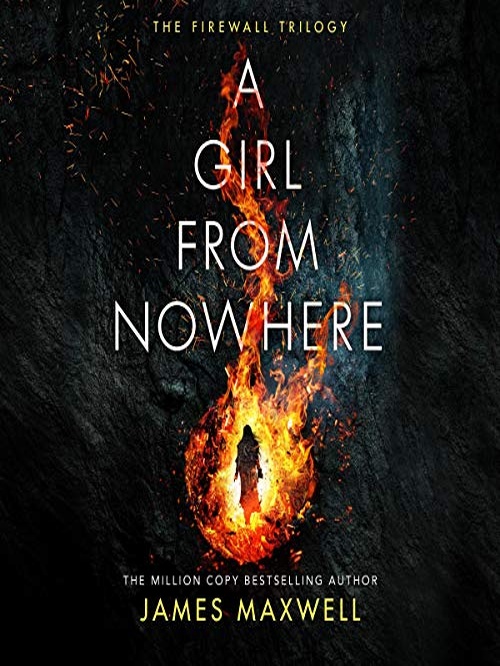
A Girl from Nowhere Review

When the Sun Burns Twice: James Maxwell’s Unforgiving Desert Epic

What does it mean to survive in a world that was never designed for your survival? It’s a question as old as speculative fiction itself, from Frank Herbert’s Arrakis to Cormac McCarthy’s ashen wastelands. In James Maxwell’s A Girl from Nowhere, the opening volume of The Firewall Trilogy, the answer arrives not through grand philosophical monologues but through blistered feet, a crippled leg, and the stubborn, almost irrational refusal to die. This is a novel that earns its emotional weight through deprivation—stripping its characters down to bone and sinew before asking us whether anything meaningful can be built from what remains.

A Wasteland That Breathes

Maxwell constructs his world with an economy that I find genuinely admirable. Two suns scorch the land. Water is currency. Survival is not metaphor—it is the plot. The wasteland here is not mere backdrop; it functions as an antagonist with its own rhythms, its own cruelties, its own indifferent logic. Raiders roam. Strange creatures hunt. And the land itself seems to reject the very notion of civilization.

What elevates this beyond standard post-apocalyptic fare is the texture of daily existence Maxwell renders. We feel the heat. We taste the dust. There is a physicality to this world-building that recalls the best traditions of Fantasy survival narratives—where the environment doesn’t simply threaten the characters but fundamentally shapes who they become. Taimin’s disability isn’t a plot device to be conveniently resolved; it is the lens through which he understands power, vulnerability, and the cost of depending on others in a place where dependency can kill you.

Two Broken Compasses Pointing Toward the Same Myth

The dual-protagonist structure is where Maxwell’s narrative instincts prove sharpest. Taimin—orphaned, crippled, burning with a revenge that gives him direction even as it hollows him out—is a familiar archetype, yes. The bereaved young man seeking blood. We’ve walked this road before. But Maxwell earns our patience by refusing to let revenge remain uncomplicated. The moment Taimin meets Selena, a mystic carrying her own invisible wounds and her own desperate faith in a place called the white city, the novel quietly pivots from a revenge thriller into something richer: a story about whether hope is a rational response to a world that offers no evidence for it.

Selena is the more interesting character, and I suspect Maxwell knows it. Her mystical abilities—hinted at, never fully explained in this first volume—introduce an epistemological tension into a narrative otherwise grounded in brutal realism. She knows things. Or believes she does. And Taimin, for all his pragmatic survivalism, chooses to follow her knowing toward a city that may not exist. This is not romance in any conventional sense. It is two people constructing a shared delusion sturdy enough to walk on.

The White City as Philosophical Wager

The fabled white city operates in this novel the way El Dorado operates in colonial narratives or the way the Green Light operates in Gatsby—as an organizing myth whose power lies precisely in its distance. Maxwell is wise enough not to deliver easy answers about what the city is or whether it deserves the faith Taimin and Selena invest in it. The journey is the argument. Every mile survived is evidence both for and against the proposition that sanctuary exists.

I’ll confess: there are moments where the pacing slows, where the episodic structure of encounter-danger-survive-move begins to feel mechanical. Maxwell’s prose, competently rendered through Simon Vance’s characteristically polished narration in the audio edition, is workmanlike rather than lyrical. He will never be accused of overwriting. Whether that restraint is a virtue or a limitation depends entirely on what you bring to the page. I found it appropriate—ornate language would feel dishonest in a world this merciless.

A Foundation Built on Honest Ground

A Girl from Nowhere is not a novel that reinvents Science Fiction & Fantasy. It is, however, a novel that honors the genre’s deepest impulse: to place human beings in impossible conditions and watch what they refuse to surrender. Maxwell builds his trilogy’s foundation on character rather than spectacle, on moral complexity rather than magic systems, and I respect the gamble. The 4.5 rating this book carries from its readership feels earned—not through pyrotechnics, but through the quiet accumulation of trust between author and audience.

This is a book for readers who find sustenance in desert narratives, who appreciate the slow burn of world-building that trusts you to keep walking even when the horizon offers nothing. If you loved the ecological brutality of Dune but craved something leaner, more intimate, less interested in empire and more interested in two people choosing each other against all rational evidence—start here.

The white city may or may not exist. But I suspect the real question Maxwell is asking across this trilogy is simpler and far more dangerous: Does it matter?
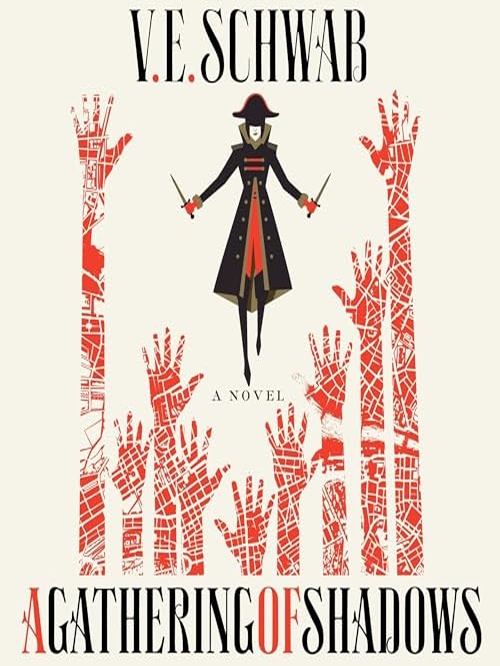
A Gathering of Shadows Review

[Review] [generate] [user requested].
[Read] [below].

Shadows Wake

Scars Stay Open

Four months pass. Stone fell. Peace lies. Peace hides pain. Kell suffers guilt. Rhy lives. Tied by magic. V. E. Schwab writes deep arcs. We see minds break. Book skips cheap action. Book shows real hurt.

Balance Demands Death

Magic seeks balance. One London stands. Another falls. Black London wakes. Claims power. Dead foes return. Seek revenge. Schwab proves actions cost. Multiverse acts cruel. Theme hits hard.

Games Blind Fools

Red London plays Element Games. Crowds cheer magic. Lila Bard sails. Joins fight. She hunts glory. Tournament masks danger. Bright lights hide shadows. Contrast builds tension.

Voices Give Life

Michael Kramer, Kate Reading read audiobook. Performance adds weight. Macmillan Audio makes 16 hours fly. Fantasy sounds real.

Final Judgment

I rate high. Sequel beats first book. Lore grows dark.
Target: Readers love deep Science Fiction & Fantasy.
Think: Shadow vanishes night. Shadow returns morning. You ready?

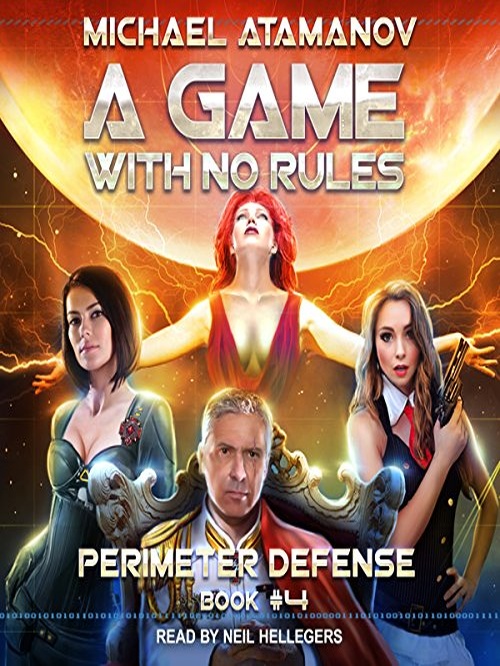
A Game with No Rules Review

When Empires Fracture: Order, Loyalty, and the Chaos Between

There is a particular dread that comes with watching a great institution collapse—not in a single catastrophic moment, but through a slow, grinding erosion of trust, obedience, and shared purpose. Michael Atamanov‘s A Game with No Rules, the latest installment in his Perimeter Defense series, understands this dread intimately. It weaponizes it.

The Anatomy of Institutional Decay

The Empire is crumbling. Not from without—at least, not yet—but from within, as the Great Houses turn increasingly inward, their loyalties calcifying into self-interest. Atamanov constructs this collapse with a structural intelligence that elevates the book well above standard Science Fiction space opera. This is not a story about laser battles and starship maneuvers, though those elements exist. It is, at its marrow, a study in political entropy—the moment when the center can no longer hold and every peripheral power begins to sense, with animal cunning, that the apex predator has grown old.

What makes Atamanov’s framing so sharp is his refusal to assign clean moral coordinates. The Great Houses are not simply villainous. They are rational actors responding to a weakened signal. That is a far more uncomfortable truth to sit with.

Three Tensions That Define the Narrative

First, the question of coordination versus coincidence. Atamanov plants this seed early and tends it with admirable patience. Are the cascading defections a spontaneous collapse, or does an unseen hand orchestrate them? This dramatic irony—the reader suspects conspiracy while the protagonist struggles to confirm it—generates a sustained intellectual tension that rewards attentive reading. It mirrors, not incidentally, how real political crises unfold: ambiguously, maddeningly, without the clean edges that hindsight later imposes.

Second, the alien invasion as structural pressure, not mere plot device. In lesser hands, the encroaching alien threat would serve as straightforward antagonism—the external monster that forces humanity to unite. Atamanov is more sophisticated. The invasion functions as a stress test, a forcing mechanism that exposes every fracture line the Empire had papered over with ceremony and tradition. The aliens matter less as characters than as a mirror held up to human dysfunction.

Third, the traitor aristocrats—and what their betrayal reveals about belonging. The rumored alliances between influential nobles and alien forces carry genuine psychological weight. Atamanov understands that treason is rarely born of ideology alone. It emerges from accumulated grievance, wounded pride, the slow accumulation of slights from institutions that promised more than they delivered. These figures, even when condemned, feel legible.

Atamanov in the Landscape of Military Science Fiction

Situating A Game with No Rules within the broader Science Fiction tradition, one finds Atamanov occupying an interesting middle ground—neither the austere, idea-driven density of Alastair Reynolds nor the propulsive pulp of early David Weber. He writes with the pacing instincts of someone who understands serialized fiction deeply: momentum is everything, but momentum must be earned through character investment, not action inflation.

Within the Perimeter Defense series, this volume marks what feels like a genuine narrative escalation—a pivot from tactical problem-solving toward something more philosophically ambitious. The stakes are no longer merely military. They are civilizational.

Neil Hellegers’ narration, across nearly thirteen hours, serves the material well. His register carries the right blend of world-weariness and urgency, lending the political machinations a gravity that cold prose alone might struggle to sustain.

Who Should Make This Journey

A Game with No Rules rewards readers who have followed the series, though its political architecture is drawn clearly enough that a patient newcomer can find their footing. It is ideally suited for those who find their Science Fiction most satisfying when it doubles as political philosophy—when questions of governance, loyalty, and institutional legitimacy carry as much weight as the technology enabling them. Fans of Frank Herbert’s Dune, particularly its preoccupation with how power corrupts the systems designed to wield it, will recognize a kindred sensibility here.

Those seeking pure action catharsis may find the deliberate pacing occasionally frustrating. That frustration, I would argue, is the point. Atamanov wants us to feel the friction of a world that refuses to resolve cleanly.

A Final Reckoning

With a rating that places it firmly among the more distinguished entries in contemporary military Science Fiction, A Game with No Rules earns its reputation not through spectacle but through seriousness of intent. Atamanov asks a question that feels urgently contemporary: when the institutions meant to protect us reveal themselves as hollowed out, who among us is willing—and capable—of being the load-bearing wall?

The answer he offers is not comfortable. But then, the best science fiction rarely is. It holds the mirror up until we are forced to look.

A Game of Thrones Review

Where Winter Lingers: The Enduring Resonance of A Game of Thrones

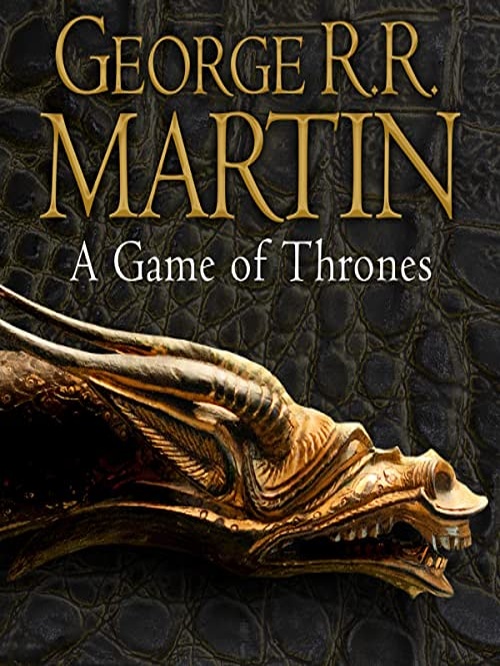
Long before dragons soared across our television screens, A Game of Thrones, the foundational pillar of George R.R. Martin’s epic A Song of Ice and Fire saga, had already captivated a readership hungry for narratives that dared to defy the comfortable conventions of Fantasy. We approach this seminal work not merely as a chronicle of warring houses and mythical creatures, but as a profound meditation on power, morality, and the human condition, intricately woven into a tapestry of unparalleled scope and grit.

The Unflinching Gaze of Power

What strikes us immediately within these pages is Martin’s audacious dismantling of traditional heroic archetypes. This is not a world where good always triumphs, or where valor guarantees survival. Instead, Westeros is a brutal, Machiavellian landscape where allegiances are fluid, and the pursuit of the Iron Throne is a zero-sum game played with devastating consequences. The narrative refuses to shy away from the visceral impact of ambition, depicting political machinations with a chilling realism that often feels more akin to historical fiction than conventional Fantasy. Lord Eddard Stark, a man whose honor is both his shield and his fatal flaw, serves as our moral compass, yet his journey swiftly teaches us that righteousness alone offers little protection in a realm defined by treachery. This unflinching honesty, this willingness to subvert expectation and expose the raw nerves of power, is one of the book’s most transformative insights. It forces us to confront uncomfortable truths about leadership, sacrifice, and the often-ephemeral nature of justice.

A Tapestry of Contradictions and Consequence

Martin’s prose, while direct, possesses an evocative rhythm that draws the reader deep into his meticulously crafted world. We are offered a kaleidoscope of perspectives, shifting between noble lords and cunning queens, exiled princes and nascent warriors, each voice contributing a crucial thread to the grand narrative. This multi-POV structure is not merely a stylistic choice; it is a critical tool that allows for a nuanced exploration of character motivation and the subjective nature of truth. No character exists in a moral vacuum; their actions, however seemingly virtuous or villainous, ripple outwards, creating a dense web of cause and effect. The very notion of heroism is constantly challenged, as protagonists are often driven by flawed desires, and even antagonists possess moments of surprising humanity. This intricate dance of contradictions elevates A Game of Thrones beyond simple escapism, inviting intellectual engagement with the ethical dilemmas faced by its inhabitants.

The Looming Shadow of Winter

Beyond the immediate human conflict, Martin masterfully conjures a world steeped in ancient magic and primal fear. The pervasive threat of “winter coming” serves as a constant, almost philosophical, backdrop to the internecine squabbles of humanity. It represents the larger, existential dangers that humanity often ignores in its petty squabbles for dominance. The ancient gods, the whispered legends, and the chilling presence “beyond the Wall” infuse the narrative with a sense of vast history and impending doom, reminding us of forces far greater than any king or queen. This layering of supernatural menace over political drama lends the book a unique depth, suggesting that even as societies tear themselves apart, greater perils often lie unheeded at the fringes of perception.

The Throne’s Enduring Legacy

A Game of Thrones is, without equivocation, a seminal work that reshaped the landscape of modern Fantasy. It presented a paradigm shift, proving that the genre could harbor the complexity of character and the moral ambiguity typically reserved for literary fiction or historical epics. It is a work that demands patience and rewards scrutiny, unraveling its layers with each rereading. We find its sustained popularity not merely in its sprawling plot, but in its relentless examination of human nature under duress, its critique of power structures, and its bold assertion that even in the most fantastical settings, the greatest monsters often wear human faces.

This is a book for those who seek more than simple escapism; it is for the reader who relishes intellectual rigour and thematic depth in their narratives. It’s a must-read for anyone interested in the evolution of storytelling, the psychology of power, or indeed, the very question of what it means to lead in a world where moral certainties are a luxury few can afford. We are left to ponder: in the grand game of thrones, does anyone ever truly win, or are we all merely pieces, destined to fall?

A Forge of Valor Review

When Love Demands Sacrifice and Lineage Demands Answers

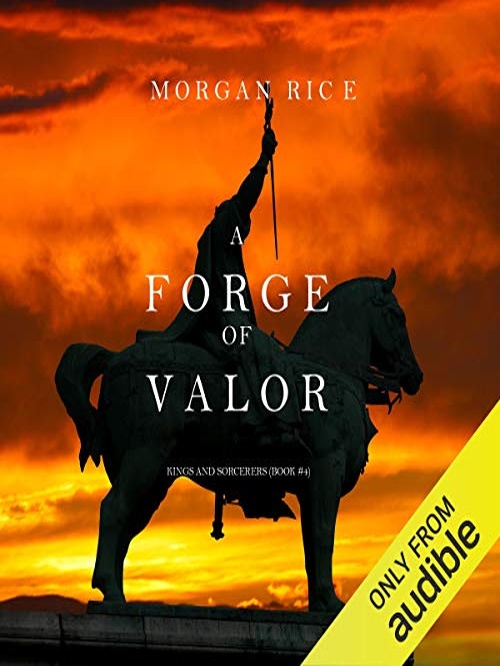
There’s a particular kind of fantasy novel that doesn’t ask you to think—it asks you to feel, to surrender to the velocity of its plot and the primal stakes of its world. Morgan Rice‘s A Forge of Valor, the fourth installment in the Kings and Sorcerers series, is precisely that kind of book: a breathless, sword-drawn sprint through a kingdom fracturing under the weight of war, secrets, and the terrible arithmetic of loyalty.

The question the book poses, perhaps unwittingly, is an old one—older than fantasy itself: What do we owe the people who made us, and what do we owe the power growing inside us?


The Architecture of Diverging Paths

What strikes me most about A Forge of Valor is its structural ambition. Rice juggles three distinct narrative threads—Kyra’s agonizing choice between self-knowledge and filial duty, Aidan’s desperate gambit to free his father from a capital dungeon, and Merk’s siege-bound defense of the Tower of Ur—and keeps each one taut with escalating tension. This is not a book that lingers. It moves with the relentless pacing of a serial, each chapter ending on a breath held just a beat too long.

The strongest of these threads belongs to Kyra. Her resurrection from near-death through Kyle’s sacrifice is more than a plot device; it functions as the novel’s central metaphor. Power, Rice insists, is never free. Every gift exacts its toll. Kyra’s subsequent confrontation with Alva about her mother’s identity finally cracks open a mystery that has simmered across the series, and the revelation—while I won’t spoil it—reframes everything we thought we understood about her abilities. The choice she then faces, between completing her training at the source of her power and rushing to save her imprisoned father, is genuinely compelling. It’s the classic tension between becoming and belonging, and Rice doesn’t resolve it cheaply.

The Forge as Metaphor

The title itself rewards a moment’s reflection. A forge doesn’t create metal—it transforms it through extreme heat and pressure. Every character in this installment is being subjected to their own crucible. Merk, the former assassin seeking redemption among the watchers of the Tower of Ur, discovers that guarding a nation’s most precious relic means more than passive vigilance when a massive troll army encircles his walls. His arc is the most conventionally heroic, but Rice grounds it in the visceral reality of siege warfare—the claustrophobia, the dwindling resources, the slow erosion of certainty.

Aidan’s storyline, with the loyal Motley at his side, carries the emotional weight of a child navigating an adult’s catastrophe. There’s something almost Dickensian about a boy threading through the perilous machinery of a hostile capital, armed with nothing but devotion and a dog. It’s the thinnest thread narratively, but it pulses with an earnest emotional frequency that balances the darker registers elsewhere.

What Rice Does Well—and Where the Seams Show

I should be candid. Rice’s prose operates in a particular register: clean, functional, and fast. You won’t find the ornate world-building of a Robin Hobb or the moral complexity of a Joe Abercrombie here. The dialogue serves plot more than character, and certain emotional beats—particularly around healing and sacrifice—arrive with a predictability that dulls their impact on a second reading. The troll invasion, while thrilling in its momentum, relies on familiar siege-narrative conventions without subverting them.

And yet, there’s an undeniable pull to Rice’s storytelling. She understands pacing the way a composer understands tempo. The six-hour audiobook, narrated by Wayne Farrell, moves like a river current—you don’t notice the speed until you look up and realize you’ve traveled miles. The 4.58 average rating from listeners reflects this: readers come for the velocity, and Rice delivers.

Who Should Pick This Up

A Forge of Valor is not for readers seeking literary deconstruction of the fantasy genre. It is for those who want to be transported—quickly, completely, without ironic distance. If you’ve followed Kyra, Aidan, and Merk through the first three volumes, this installment rewards your investment with genuine revelations and escalating stakes. It’s ideal for Young Adult and Science Fiction & Fantasy readers who prize momentum and emotional directness over ambiguity.

For newcomers, start with Rise of the Dragons. This is a river you enter at its source or not at all.

I’m left with this thought: Kyra’s choice—power or love, destiny or family—is one we dress up in different costumes throughout our lives. Rice frames it in swords and sorcery, but the forge she’s really describing is the one we all pass through when we realize that choosing who we want to become sometimes means walking away from the people who need us most.

What would you choose?

A Forest of Vanity and Valour Review

From Avarice to Altruism: Unraveling A Forest of Vanity and Valour

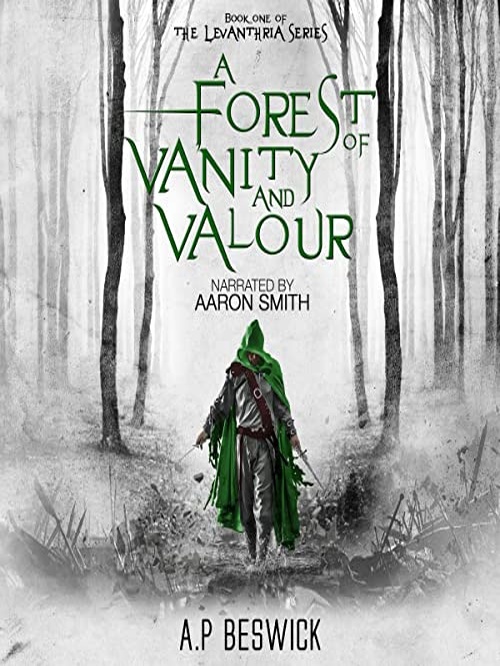
What ignites the spark of altruism in a heart hardened by avarice and self-interest? This ancient, often revisited, query forms the very crucible within which A.P Beswick’s inaugural entry into The Levanthria Series, A Forest of Vanity and Valour, forges its compelling narrative. We are introduced to Vireo Reinhold, a figure whose very existence is predicated upon the ruthless extraction of dues for his monarch’s endless war. He embodies a particular strain of self-serving pragmatism, thriving amidst the opulence his unsavoury profession affords him, entirely indifferent to the suffering his actions perpetuate. Yet, it is precisely this meticulously crafted edifice of vanity that Beswick orchestrates to crumble, laying bare the arduous path toward an improbable redemption.

The Unravelling of a Mercenary Heart

Beswick wastes no time in establishing Vireo as an anti-hero of the most unlikable sort. His initial portrayal is stark: a man reveling in the perks of power, his moral compass conspicuously absent, replaced instead by a keen sense of self-preservation and material acquisition. The narrative arc takes a sharp, compelling turn with the discovery of an ancient spellbook, a potent symbol of forgotten magic that promises both immense power and unimaginable peril. This artifact, coupled with a morally ambiguous affair and a forced “unthinkable act,” serves as the catalyst for Vireo’s abrupt and brutal exile. Suddenly stripped of his coercive power, his carefully constructed world collapses, and the very tome he coveted falls into the hands of an enemy. This paradigmatic shift in his circumstances is where the true intellectual rigour of the story begins, forcing Vireo—and by extension, us—to confront the essence of survival when one’s established tools of influence are rendered useless. His life, ironically, now hinges on the very skills he disdained: helping the less fortunate.

A Dark Fantasy Reimagined

Within the sprawling tapestry of Fantasy, A.P Beswick carves out a distinct niche with A Forest of Vanity and Valour. Labelled a “dark first book” in a series that promises “fantasy-retelling,” it moves with a visceral pace that eschews languid exposition for direct, impactful action. The novel deftly weaves elements of classic heroic journeys with a contemporary sensibility, delivering a narrative that feels both familiar in its archetypes and fresh in its execution. The world of Levanthria, though only partially revealed in this opening volume, promises a rich, ominous backdrop for Vireo’s struggle. The “fast-paced action” highlighted in the description is not merely an empty promise; it underpins Vireo’s desperate fight for survival, making his eventual turn towards altruism feel less like a convenient plot device and more like a hard-won necessity. We appreciate how Beswick maintains a tight focus on the psychological transformation of the protagonist, even amidst the external chaos, lending a nuanced perspective to the often-trodden path of “evil-to-good.”

The Genesis of a Champion

The central question that propels the latter half of the narrative—”Can Vireo redeem himself as the people’s champion before they all fall to a sinister fate?”—is answered through a series of difficult choices and emergent responsibilities. The journey from a self-serving debt collector to a potential saviour is fraught with internal conflict. It forces Vireo to re-evaluate his understanding of power, shifting from manipulation to genuine empowerment of others. This is where the “valour” truly begins to manifest, not in grand, self-aggrandizing gestures, but in the quiet, desperate acts of protecting those he once exploited. Beswick’s exploration of this transformation is compelling, suggesting that true heroism often arises not from innate goodness, but from the crucible of adversity that forces one to look beyond the self.

Beswick’s Pen: An Evocative Prelude

A.P Beswick’s prose in A Forest of Vanity and Valour is both evocative and precise, maintaining a tone appropriate for its dark Fantasy underpinnings. There is a lean efficiency to the storytelling, yet it never sacrifices thematic depth for pace. The descriptions are vivid enough to ground us in Levanthria, and the character internalizations, though often grim, are sufficiently detailed to make Vireo’s internal struggle palpable. This is not a tale of effortless transformation, but of a soul dragged kicking and screaming towards something resembling nobility.

We find A Forest of Vanity and Valour to be a promising start to The Levanthria Series. It is a tale for those who seek to unravel the complexities of human nature, who appreciate narratives where redemption is earned through hardship, and who enjoy classic Fantasy tropes infused with a darker, more analytical edge. If the thought of witnessing a thoroughly flawed individual navigate a treacherous path towards an uncertain heroism intrigues you, then A.P Beswick’s ominous tale invites a profound reflection on the true cost and ultimate reward of fighting for what is right.

A Fist Full of Credits Review

Blue Box Break World

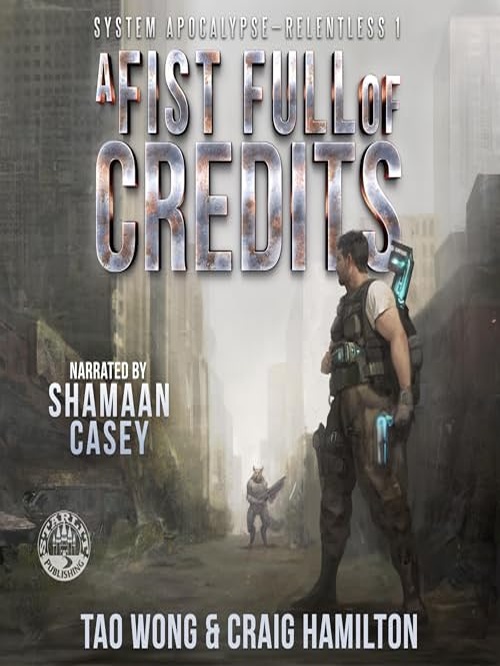
Earth end. Blue boxes fall. Magic crush machines. Pittsburgh burn. Men read A Fist Full of Credits. Men judge.

Hunt Men, Hunt Monsters

Hal Mason catch bad men. Hal fight wars. Hal survive. System arrive. Earth become game. Beasts mutate. Cities fall. Hal face new hunt.

Book show three hard truths.
First truth: Power cost soul. Hal ask heavy questions. Blood stain hands. System demand sacrifice.
Second truth: Craig Hamilton write raw pain. Tao Wong build harsh universe. System give magic. Magic break minds.
Third truth: Audio boom. Shamaan Casey speak 15 hours. Voice fit grim tale.

Story join System Apocalypse – Relentless series. Story push LitRPG bounds. Science Fiction & Fantasy grow dark. Book dodge pure hero myth. Hal push forward. Hal stay relentless.

Blood Buy Levels

Me rate high. 4.5 stars. Book grip tight.
Book fit dark readers. You like brutal Fantasy survival? You read.

Blue boxes drop today. You kill for levels? Read book. Find answer.

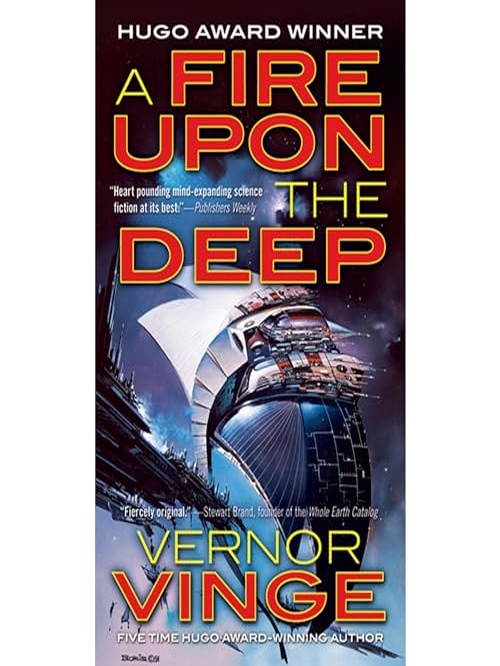
A Fire Upon the Deep Review

Traversing the Cosmic Divide: A Meditation on A Fire Upon the Deep

In an era saturated with fantastical escapism, what truly distinguishes a work of science fiction is its capacity to not merely transport us to another world, but to fundamentally alter our perception of our own. A Fire Upon the Deep by Vernor Vinge, the seminal inaugural volume of his Zones of Thought series, achieves precisely this, inviting us into a universe of breathtaking scale and profound intellectual ambition. It is not merely a story of galactic war and alien encounters; it is an ontological inquiry into the very nature of intelligence, the boundaries of possibility, and the arbitrary yet absolute divisions of a universe unfathomable.

The Architectonics of Thought and Space

Vinge’s genius lies in his audacious conceptualization of the “Zones of Thought,” a cosmological architecture that dictates the limits of consciousness and technology based on one’s physical location in the galaxy. From the ineffable, superintelligent entities dwelling in the “Transcend” – beings whose thoughts are so vast they can barely be perceived by lesser minds – to the “Unthinking Depths” where complexity itself collapses, this stratified reality forms the bedrock of an epic narrative. We are thrust into a universe where potential is a geographical lottery, an idea that, for me, resonates with an almost uncomfortable philosophical weight, prompting reflection on our own perceived limits and the unseen forces that might shape them. It’s a paradigm-shifting notion that elevates the common space opera into a canvas for grand philosophical speculation.

The narrative thrust of A Fire Upon the Deep ignites when the Straumli realm, driven by hubris and ambition, unleashes an ancient Transcendent artifact. What follows is not merely a military miscalculation, but a cataclysm that ripples across thousands of worlds, enslaving both natural and artificial intelligences. This central conflict is less about good versus evil and more about the chaotic consequences of meddling with forces beyond comprehension. It’s a visceral illustration of Icarus’s plight, writ across an interstellar scale, reminding us that the greatest dangers often stem not from malice, but from a profound lack of understanding.

Humanity’s Fragility and the Alien Tapestry

Amidst this cosmic maelstrom, Vinge grounds his story in the plight of a human family – scientists attempting to flee the encroaching disaster. Their capture by the Tines, an alien race of dog-like creatures with a fascinatingly complex, pack-based intelligence and a decidedly medieval culture, introduces a brilliant counterpoint to the high-concept cosmology. Here, the narrative shifts from the vastness of interstellar conflict to the intimate struggles of survival and cultural clashes. The Tines themselves are a masterclass in alien creation; their collective consciousness, their reliance on a group mind for individual sentience, is a potent exploration of alternative forms of intelligence. We witness the human children caught in a ruthless power struggle within Tine society, forced to navigate an entirely alien moral and social landscape. This juxtaposition – advanced human minds struggling to adapt to a technologically primitive yet socially intricate alien society – offers one of the novel’s most profound insights into the adaptability, and indeed the fragility, of intelligence.

A desperate rescue mission, composed of an eclectic crew that includes humans and other intriguing alien species, becomes the reader’s primary conduit through this labyrinthine universe. Their quest is twofold: to save the children and to retrieve a secret that holds the key to the survival of interstellar civilization itself. This journey is not merely an adventure; it is a meticulously crafted exploration of cooperation, sacrifice, and the enduring human (and non-human) spirit in the face of existential threats. Vinge‘s capacity for world-building here is nothing short of monumental, presenting us with cultures and biologies so distinct, yet so convincingly rendered, that they challenge our anthropocentric assumptions at every turn.

An Enduring Intellectual Legacy

Awarded the 1993 Hugo Award for Best Novel, A Fire Upon the Deep stands as a testament to Vernor Vinge‘s unparalleled vision within the Science Fiction & Fantasy genre. It is a work that transcends mere genre classification, offering both the thrill of a gripping space opera and the intellectual rigor of a philosophical treatise. His narrative arc is not linear but spiraling, constantly revealing new layers of complexity and demanding active engagement from the reader. We, as readers, are asked to grapple with concepts that push the very boundaries of our imagination, to consider intelligences so vastly different from our own that their motivations and actions are almost incomprehensible.

I find A Fire Upon the Deep to be a singularly transformative reading experience. It is a book that lingers, its ideas echoing long after the final page is turned, compelling us to re-evaluate our place in the universe and the potential, both glorious and terrifying, that lies beyond our immediate grasp. For those who seek not just stories, but universes to explore, and for minds that crave intellectual voyages as much as dramatic action, this novel is an absolute necessity. It serves as a powerful reminder that the finest science fiction is not just about what could be, but about what is within the infinite permutations of thought and existence. To truly comprehend our own limitations, we must first dare to imagine the boundless.

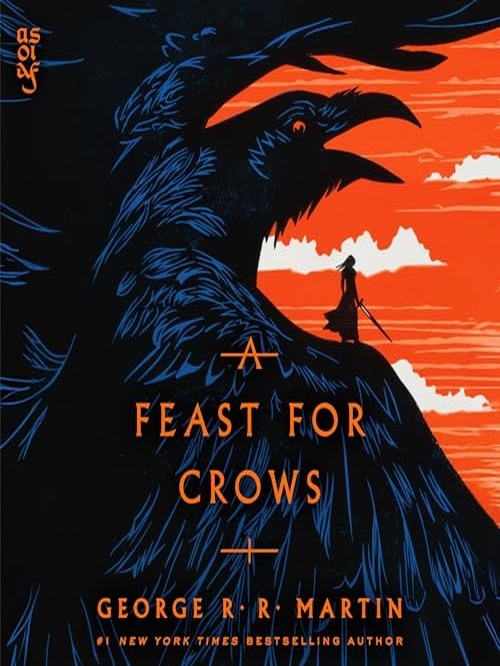
A Feast for Crows Review

The Kingdom Bleeds Out: On the Quiet Devastation of A Feast for Crows

What happens when the war ends but nobody wins? George R.R. Martin poses this question not with triumph or resolution, but with the unsettling image of carrion birds descending on a battlefield. The title itself—A Feast for Crows—is a thesis statement. This is not a book about victors. It is a book about scavengers, about the hollow men and women who remain standing when the dust settles, grasping at power with blood still drying under their fingernails.

And yet, for all its brilliance, this is the volume in A Song of Ice and Fire that divides the faithful most sharply. I’d argue that division is precisely the point.


The Silence Where Dragons Should Be

Let’s address the elephant—or rather, the absent dragon—in the room. A Feast for Crows was famously split from its sibling volume, A Dance with Dragons, meaning fan-favorite characters like Daenerys, Tyrion, and Jon Snow are entirely absent here. For readers who came to Martin’s saga seeking the momentum of war and the spectacle of dragonfire, this omission stings. It stings deliberately.

What Martin gives us instead is something rarer and, I would argue, more courageous: a study in entropy. The Seven Kingdoms are exhausted. The great houses have bled themselves nearly dry. And into that vacuum creep figures who are not conquerors but administrators, zealots, and opportunists—people for whom the aftermath is the opportunity. Martin is asking us to sit with discomfort, to watch a world try to rebuild itself with broken tools and compromised people. It is not a crowd-pleasing choice. It is, however, a profoundly honest one.

Cersei Lannister and the Architecture of Self-Destruction

If this book belongs to anyone, it belongs to Cersei. And what Martin accomplishes with her point of view is nothing short of a masterclass in unreliable narration and tragic irony.

We have watched Cersei from the outside for three books—calculating, cruel, formidable. Now Martin takes us inside her mind, and the revelation is devastating: she is none of those things. Or rather, she believes she is all of those things, and that belief is the engine of her undoing. Cersei fancies herself a female Tywin, a strategic genius shackled by a patriarchal world. The truth, which Martin lets us perceive through the gap between her self-narration and reality, is that she is paranoid, impulsive, and catastrophically poor at reading people.

This is not misogyny on Martin’s part—it is a portrait of what happens when a genuinely intelligent person is denied education, denied agency, denied respect for an entire lifetime, and then handed absolute power. Cersei’s chapters are a slow-motion car wreck narrated by the driver who insists she’s winning a race. I found them excruciating, mesmerizing, and among the finest character work in the entire series.

The Broken and the Reborn

Martin’s thematic preoccupation in A Feast for Crows is identity—specifically, the way violence strips identity away and the desperate, often futile ways people try to reconstruct themselves afterward.

Consider Brienne of Tarth, whose chapters have been criticized as repetitive wandering. I see something else entirely: a medieval road narrative that functions as a moral inventory of Westeros from the ground level. Brienne moves through a landscape of burned villages, broken men, and orphaned children. She is searching for Sansa Stark, yes, but she is also searching for proof that honor still means something in a world that has systematically punished her for believing in it. Her chapters are slow. They are meant to be. The slowness is the argument—that decency is a long, unglamorous, often thankless road.

Then there is the Jaime Lannister of this volume, a man literally and figuratively disarmed, attempting to become something other than the Kingslayer. And Arya Stark, surrendering her name at the House of Black and White, trading identity itself for the promise of power. And the introduction of the Ironborn and Dornish plotlines, cultures defined by their relationship to legacy and vengeance—people who construct identity entirely around what was taken from them.

Martin weaves these threads into a tapestry that asks a single, haunting question: when everything you were has been destroyed, what do you choose to become?

A Different Kind of Danger

The prose in A Feast for Crows is Martin at his most elegiac. The visceral shock of the Red Wedding is replaced by a creeping dread, a sense that the real catastrophe is not the war that was fought but the peace that is being built on rotten foundations. The rise of the Faith Militant under the High Sparrow—a plotline that resonates with uncomfortable contemporary relevance—is a slow burn that demonstrates how power vacuums are filled not by the strongest, but by the most fanatical.

Roy Dotrice’s narration in the audiobook edition deserves particular mention. His voice, weathered and textured like old parchment, suits this particular volume’s tone better than perhaps any other in the series. There is a weariness in his delivery that mirrors the weariness of Westeros itself.

The Verdict of the Crows

I will not pretend A Feast for Crows is flawless. The Ironborn chapters, particularly those centered on Aeron Greyjoy, can feel like detours into a saga we did not ask to enter. The pacing, by design, demands patience that not every reader will feel the story has earned. And the structural decision to split the narrative geographically rather than chronologically creates an inevitable sense of incompleteness—we are reading half a book, and we feel it.

But here is what I keep returning to, years after my first read: A Feast for Crows is the volume that trusts its readers the most. It trusts us to find drama in politics rather than battles, in psychology rather than spectacle, in the quiet horror of a kingdom eating itself alive rather than the loud horror of swords and fire. It is Martin’s most literary novel, his most thematically coherent, and—I suspect—the one that will age the best.

This book is for: readers who understand that the most interesting part of any war story is what comes after. Those who appreciate character studies drawn with surgical precision. Anyone who has ever watched someone in power and thought, they have no idea what they’re doing. And for those willing to accept that in Martin’s world, the feast is never a celebration—it is a funeral that hasn’t realized it yet.

So I leave you with this: in a genre that overwhelmingly celebrates the seizing of power, what does it mean that Martin wrote an entire novel about the cost of holding it? And what does it say about us that we found it so much harder to read?

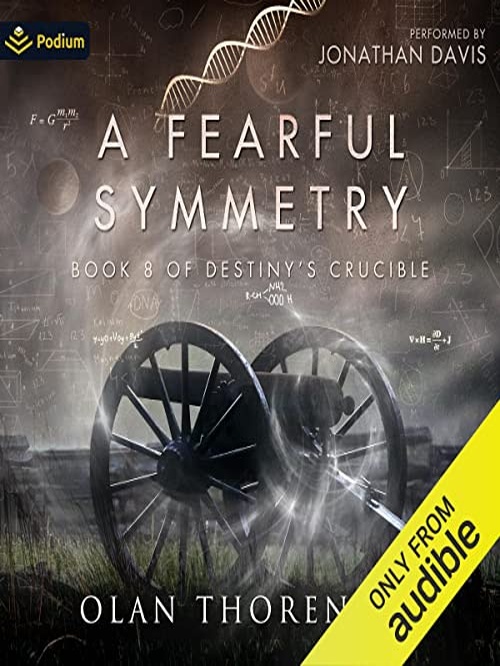
A Fearful Symmetry Review

When Science Meets the Forge of Civilization: Olan Thorensen’s A Fearful Symmetry

What happens when a modern mind, armed with centuries of accumulated scientific knowledge, collides with a world still forging its way through the crucible of early industrial development? It’s a question that science fiction has toyed with before—Mark Twain’s Connecticut Yankee comes to mind—but few series have pursued the premise with the methodical, almost obsessive rigor that Olan Thorensen brings to his Destiny’s Crucible series. A Fearful Symmetry, the latest installment, doesn’t merely continue the saga; it deepens it, complicates it, and forces us to reckon with an uncomfortable truth: that progress, even when guided by the best intentions and the sharpest intellect, carries within it a terrible symmetry of creation and destruction.

The title, borrowed from Blake’s immortal meditation on the tiger—”What immortal hand or eye / Dare frame thy fearful symmetry?”—is no decorative flourish. It’s a thesis statement.


The Weight of Knowledge in a World Not Ready for It

By this point in the series, Thorensen has moved well beyond the fish-out-of-water novelty that powered the early volumes. The protagonist is no longer simply surviving; he is shaping. And that shift—from adaptation to agency—is where A Fearful Symmetry finds its most fertile thematic ground.

What strikes me most is Thorensen’s refusal to romanticize the uplift narrative. There is no triumphant montage of a grateful civilization leaping forward. Instead, we get something far more honest: the grinding, politically fraught, morally ambiguous work of introducing technologies and ideas into a society that has its own momentum, its own power structures, its own resistance. Every advancement creates winners and losers. Every innovation disrupts an equilibrium that someone, somewhere, was depending on.

This is worldbuilding not as spectacle but as argument—a sustained intellectual case for the proposition that knowledge without wisdom is not liberation but another form of tyranny.


The Architecture of Consequence

Thorensen’s engineering background shows, and I mean that as high praise. The narrative architecture of A Fearful Symmetry operates with the precision of a well-designed system: inputs lead to outputs, actions cascade into consequences, and nothing—nothing—comes free. The geopolitical maneuvering in this volume is particularly sharp. Alliances form and fracture along fault lines that feel genuinely organic to the world Thorensen has built, rather than contrived for dramatic convenience.

There’s a passage midway through the book where the protagonist confronts the realization that his interventions have accelerated not just technological capacity but military capacity—that the same chemistry that produces fertilizer produces explosives. It’s a moment of quiet devastation, handled without melodrama, and it encapsulates what elevates this series above its portal-fantasy peers: the understanding that symmetry, in Blake’s sense, is not balance but duality. The lamb and the tiger. The plow and the sword.

Jonathan Davis, narrating the Podium Audio edition, brings a measured gravitas to these moments that serves the material beautifully. His pacing mirrors the novel’s own—deliberate, unhurried, trusting the listener to engage with complexity rather than demanding constant stimulation.


Hard Science Fiction with a Humanist Pulse

One of the persistent criticisms leveled at hard science fiction is that it privileges systems over souls—that characters become mere vessels for the author’s technical enthusiasms. Thorensen is not entirely immune to this charge; there are stretches where procedural detail threatens to eclipse emotional resonance. But A Fearful Symmetry represents, I think, a maturation. The interpersonal dynamics carry more weight here. The cost of leadership—isolation, moral compromise, the slow erosion of certainty—registers with a visceral impact that earlier volumes didn’t always achieve.

The supporting cast has grown into something genuinely compelling. These are not cardboard figures arranged around a protagonist; they are people with agendas, blind spots, loyalties that shift under pressure. Thorensen understands something essential about political fiction: that the most dangerous conflicts are not between good and evil but between competing visions of good.


A Series That Rewards the Patient Reader

With a rating hovering near 4.68 across its readership, the Destiny’s Crucible series has clearly found its audience—and earned their trust. A Fearful Symmetry rewards that trust handsomely, delivering the meticulous technical detail that fans expect while pushing into darker, more philosophically demanding territory.

This is a book for readers who believe that the best science fiction doesn’t just imagine other worlds but interrogates our own. For those who find satisfaction in watching ideas collide with the stubborn complexities of human nature. For anyone who has ever wondered whether knowing how to change the world is the same as knowing whether you should.

Thorensen dares to frame the fearful symmetry. The question he leaves us with is the one Blake left us with, too: not could it be done, but who would dare?

And what, exactly, are they willing to become in the process?