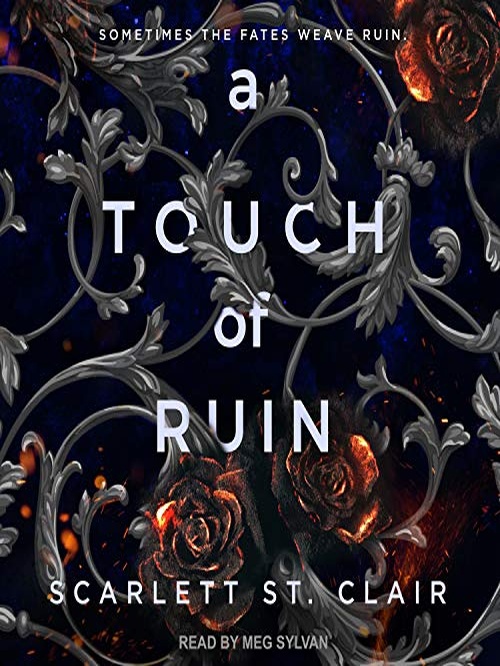
The Enduring Echoes of Olympus: A Touch of Ruin and the Weight of Divine Love
In the pantheon of contemporary mythological retellings, the romance between Hades and Persephone remains an inexhaustible fount of inspiration. A Touch of Ruin, the second installment in Scarlett St. Clair‘s popular [[Hades & Persephone]] series, dares to delve deeper into the burgeoning relationship between the King of the Underworld and the reluctant Goddess of Spring, pushing the boundaries of their commitment against a backdrop of public scrutiny and profound personal loss. It is a narrative that challenges the conventional idyllic portrayal of divine love, opting instead for a more visceral and, at times, brutal exploration of power, sacrifice, and the enduring scars of the past.
Navigating the Public Eye and Personal Strife
One of the novel’s most compelling narrative threads is its astute portrayal of Persephone’s life thrown into the merciless glare of the public eye. What begins as a clandestine affair blossoms into a scandalous revelation, transforming our protagonist from a relatively anonymous goddess into a figure of intense media fascination. This shift introduces a fascinating, almost modern, dynamic to the ancient myths, as Persephone grapples not only with her developing powers but also with the insidious nature of public opinion and the constant threat of her true identity being unveiled. We witness her struggling to reconcile her divine essence with the mundane demands of mortal perception, a struggle that lends a surprising psychological depth to her character. St. Clair masterfully weaves this external pressure into the internal landscape of Persephone, showcasing the profound impact of constant surveillance on one’s sense of self and purpose.
The Unveiling of Hades’s Labyrinthine Past
While Persephone’s journey towards self-actualization forms the narrative’s spine, the novel’s true magnetic pull lies in its further deconstruction of Hades, God of the Dead. The summary alludes to a “hellish past,” and indeed, A Touch of Ruin pulls back the curtain further on the traumas and burdens that shape this enigmatic deity. This is not the purely romanticized figure we might anticipate; instead, St. Clair presents a more complex, at times flawed and frustrating, individual whose decisions are deeply rooted in his history of suffering and sacrifice. His refusal to offer solace during a critical tragedy forces Persephone—and by extension, the reader—to confront a side of him previously unrevealed. This strategic narrative choice avoids simplistic characterizations, instead painting a portrait of a god whose love, while fierce, is perpetually shadowed by his own internal darkness and the weight of his eternal responsibilities.
Bargains, Consequences, and the Price of Power
The heart of A Touch of Ruin‘s conflict resides in the tragic event that befalls Persephone and her subsequent, desperate measures. Faced with a devastating loss and Hades’s perceived abandonment, Persephone embarks on a series of “bargains with severe consequences.” This particular thematic exploration elevates the novel beyond mere romance, delving into the morally grey areas of power. It prompts us to consider the ethical implications of wielding divine authority and the often-unforeseen costs of even the most well-intentioned interventions. The choices Persephone makes are not without significant personal and universal ramifications, offering a potent examination of agency, sacrifice, and the inherent dangers of seeking control in a universe governed by far greater, and often harsher, forces. Her journey through these perilous negotiations underscores a pivotal question: What is one willing to forfeit for love, for justice, or for vengeance?
A Question of Sovereignty and Self-Definition
Ultimately, A Touch of Ruin culminates in a potent interrogation of Persephone’s identity and her potential role as Hades’s queen. The trials she endures—the public scrutiny, the personal tragedy, the morally ambiguous bargains, and the unsettling revelations about Hades—all serve to push her to the brink. Her questioning of whether she “can truly become Hades’ queen” is not merely about romantic commitment; it is a profound existential query. It reflects a deeper internal conflict about who she is, who she is becoming, and whether the path laid before her aligns with her authentic self. This narrative arc, imbued with mature themes and stark emotional honesty, positions the novel as a significant chapter in Persephone’s ongoing evolution from a sheltered goddess to a formidable, self-possessed figure.
Final Thoughts on a Divine Journey
A Touch of Ruin solidifies Scarlett St. Clair‘s place in the burgeoning genre of mythological dark fantasy. While it may occasionally lean into the dramatic intensity expected of its romantic core, its strength lies in its unflinching portrayal of flawed deities and the complex interplay of love, power, and consequence. We find the narrative to be a compelling, if at times unsettling, exploration of a relationship that thrives in the shadows and is forged in the fires of adversity.
This book is ideal for readers who crave mythological retellings infused with a strong sense of emotional gravity and a willingness to explore the darker facets of love and destiny. It will resonate particularly with those who appreciate protagonists who grapple with profound personal growth against epic backdrops, and who are not afraid of narrative arcs that challenge conventional romantic idealism. A Touch of Ruin, in its raw depiction of divine struggle and human frailty, compels us to consider: What truly defines a monarch, and what price are we willing to pay to claim our throne, both literally and metaphorically?