A Kiss of Shadows Review

A Faerie’s Gambit: Unveiling the Shadows of Desire and Dominion

The modern metropolis often serves as an unsuspecting canvas for tales of the fantastical, yet few narratives plunge us into its mythical underbelly with the audacious sensuality and intricate political intrigue found in Laurell K. Hamilton‘s A Kiss of Shadows. This debut into the Merry Gentry series is not merely another foray into urban Fantasy; it is a sophisticated, often disquieting, exploration of power, identity, and the very nature of desire, draped in the shimmering, dangerous allure of the fae.

The Mundane Veil and the Royal Summons

Our introduction to Merry Gentry finds her living a carefully constructed double life in Los Angeles, a private investigator specializing in supernatural phenomena—a decidedly mundane existence for a princess of the High Court of Faerie. This initial dichotomy, between the gritty reality of L.A.’s streets and the ethereal lineage she attempts to conceal, immediately piques our interest. Yet, as the Queen’s assassin, a figure of undeniable menace and charm, arrives to reclaim her, the illusion shatters. Merry is summarily thrust back into a world where politics are as deadly as magic, and where her very existence is a pawn in her dreaded aunt’s Machiavellian schemes. The premise is stark: produce an heir, claim the crown, or face certain death. Such is the high-stakes game for dominion in Faerie.

A Court of Shifting Alliances and Unapologetic Sensuality

Hamilton masterfully constructs a Faerie realm that is both breathtakingly beautiful and disturbingly brutal, challenging idyllic notions of elvenkind. This is no pastoral idyll; it is a court steeped in ancient feuds, where beauty masks treachery and immortality breeds a unique brand of ennui and cruelty. One of A Kiss of Shadows‘s most compelling aspects is its unflinching gaze at the intersections of power and carnal desire. Merry’s predicament forces her into the constant company of the most exquisite immortal men, each a potential suitor, ally, or rival. The novel delves into these complex relationships with an honesty that is both refreshing and, at times, provocative. Hamilton does not shy away from the visceral impact of these interactions, crafting a narrative where the personal is profoundly political, and physical intimacy is as much a weapon as it is a bond. This nuanced exploration positions A Kiss of Shadows as a significant work within the Romance and Fantasy genres, pushing boundaries in its portrayal of female agency amidst intense pressure.

The Penumbra of Purpose: Hamilton’s Distinctive Voice

The stylistic choices within A Kiss of Shadows underscore its unique narrative ambition. Laurell K. Hamilton employs a prose that is both evocative and direct, capable of conjuring lavish fae courts and the mundane grit of human existence with equal dexterity. Her strength lies in building a world that feels simultaneously ancient and contemporary, populated by characters whose motivations are often ambiguous, reflecting the morally grey landscape they inhabit. We witness Merry’s internal struggle with her heritage, her burgeoning power, and the terrifying prospect of her impending role, all rendered with a psychological depth that elevates the narrative beyond mere plot points. The author’s ability to interweave intricate world-building with moments of raw emotional vulnerability and thrilling action sequences ensures that the pacing remains taut, drawing the reader deeper into Merry’s perilous journey.

A Reckoning with Royalty and Recompense

Ultimately, A Kiss of Shadows is more than just a captivating story of a princess fighting for her crown; it is a meditation on the nature of destiny and the choices one makes when survival hangs in the balance. We emerge from Hamilton‘s world both thrilled and contemplating the burdens of power and the intricate dance between duty and desire.

For discerning readers who crave a Fantasy that dares to entwine raw passion with regal duty, who are unafraid of protagonists navigating morally ambiguous terrains, A Kiss of Shadows offers a potent draught. It is a necessary read for those who seek to understand how myth can be re-forged for a modern sensibility, leaving us to ponder: what depths would we plumb, and what shadows would we embrace, to truly claim our rightful place?
A Kiss of Shadow Review

Where Shadows Embrace Starlight: An Examination of A Kiss of Shadow

In a literary landscape increasingly populated by fae courts and mystical realms, one might be tempted to dismiss another entry into the Fantasy Romance genre as merely a fleeting pleasure. Yet, A Kiss of Shadow, the inaugural volume in Linsey Hall‘s Court of Starlight and Darkness series, demands a more discerning gaze. It is not merely a tale of forbidden love and arcane powers; it is an exploration of the magnetic pull between order and chaos, light and shadow, and the undeniable human (or fae) tendency to seek solace in the very things that threaten to consume us. We find ourselves drawn into a world where allegiance is fluid and the heart’s desires often defy the strictures of tradition.

The Allure of the Penumbral Court

Linsey Hall immediately establishes a captivating world, one drenched in the intricate politics and raw, untamed magic characteristic of the fae. What sets A Kiss of Shadow apart, however, is its confident refusal to shy away from the darker facets of its premise. The eponymous “Shadow” is not merely a stylistic flourish but a palpable entity, a force that shapes destiny and fuels desire. Hall masterfully crafts a narrative that feels both familiar in its romantic tropes and refreshingly original in its execution of the fantastical elements. The world-building is sufficiently robust to anchor the more ethereal aspects of the fae courts, presenting us with a landscape that feels ancient, dangerous, and utterly irresistible. It’s a testament to Hall‘s narrative control that we quickly become invested in the fates of characters caught in this delicate balance.

Navigating the Heart’s Treacherous Terrain

At its core, A Kiss of Shadow is, of course, a Romance. Yet, it is a romance forged in the crucible of intrigue and danger. The central relationship is less a gentle unfolding and more a tempestuous clash of wills and destinies, a dance between two formidable individuals. Hall avoids the saccharine and delves into the complexities of attraction born from adversarial positions, crafting a dynamic that pulses with an almost primal energy. We witness the slow, tantalizing erosion of resistance, the subtle shifts in power, and the undeniable chemistry that binds the protagonists. It is a nuanced portrayal of affection blooming amidst peril, challenging our preconceptions of what love should look like in a world where every touch could be a betrayal, and every whispered promise fraught with hidden agendas. The prose, at times, achieves a vivid, almost visceral quality, particularly when describing these intimate, high-stakes encounters.

The Echoes of Choice and Consequence

Beyond the immediate thrill of romance and magic, A Kiss of Shadow quietly engages with themes of agency, sacrifice, and the enduring power of choice. Our protagonists are not passive pawns in a larger cosmic game; they are active participants, wrestling with their own desires, responsibilities, and the weighty legacy of their respective courts. Hall invites us to ponder the nature of darkness – is it an inherent evil, or merely an untamed aspect of existence? And what does it mean to embrace one’s true nature, even when that nature challenges societal norms and expectations? The narrative compels us to consider the fine line between power and corruption, and the courage required to forge one’s own path in a world that seeks to define you.

A Worthy Prelude to Darkness and Delight

In conclusion, A Kiss of Shadow is a compelling opening gambit from Linsey Hall. It offers more than just escapism; it presents a richly imagined world, characters with genuine depth, and a romantic tension that crackles off the page. The narrative is well-paced, maintaining an engaging rhythm that ensures the reader is both entertained and intellectually stimulated throughout its ~5-hour journey (for those who prefer the capable narration of Laurel Schroeder).

This is a book for those who appreciate their Fantasy with a generous serving of intense Romance, for readers who relish morally ambiguous characters and intricate world-building. It is particularly suited for individuals drawn to tales of powerful heroines, dominant fae lords, and the seductive allure of forbidden magic. We are left not just satisfied, but eager for the subsequent chapters in this promising saga, pondering how far into the shadows one might venture for a kiss of true starlight. What boundaries, we might ask ourselves, are we willing to transgress when passion and destiny collide?

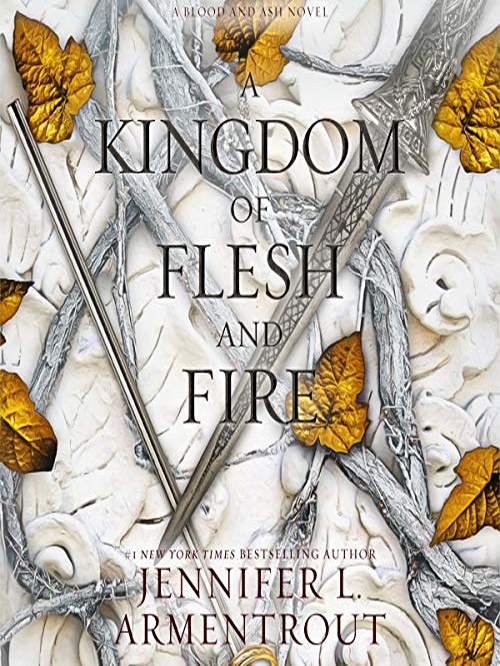
A Kingdom of Flesh and Fire Review

When the Veil Lifts: A Kingdom of Flesh and Fire and the Seduction of Moral Complexity

There is a particular kind of narrative tension that the best fantasy romance writers understand instinctively — the kind that does not merely ask will they or won’t they, but rather who are these people beneath the roles they’ve been forced to inhabit? Jennifer L. Armentrout, with the second installment of her Blood and Ash series, doubles down on exactly this question, and the result is a book that operates with far more psychological intelligence than its genre label might initially suggest.

The Architecture of a Necessary Betrayal

A Kingdom of Flesh and Fire opens in the wreckage of the first book’s explosive conclusion. Poppy — no longer the sheltered, ceremonially veiled Maiden — is now a captive of Casteel Da’Neer, the man she trusted and the man who deceived her. What Armentrout does with this setup is, frankly, more sophisticated than most readers might anticipate: she refuses to let either character retreat into the comfortable binaries of victim and villain.

Poppy’s interiority here is the novel’s true engine. Stripped of her religious identity, her institutional purpose, and her constructed sense of self, she must confront a question that resonates far beyond the fantasy kingdoms of Solis and Atlantia — what remains of a person when every defining narrative about them turns out to be fabricated? This is not merely a romantic dilemma. It is an existential one, and Armentrout handles it with surprising emotional precision.

Trust as a Tactical and Emotional Battlefield

The central structural gamble of this novel is its uneasy alliance between Poppy and Casteel. They must cooperate. They must not trust each other. And yet, inevitably, irrevocably, they do — in increments so carefully calibrated that the reader feels each concession as a small, private surrender.

Casteel, to his credit, is not simply a brooding love interest with good cheekbones and a dark past. Armentrout constructs him as a man fluent in manipulation who is, increasingly, unmanned by genuine feeling. His lies are seductive, yes — but it is his truths that carry genuine weight, and the novel’s most affecting passages are those quiet moments when the performative architecture of his persona cracks just slightly. The best romance, at its core, is about vulnerability. And Armentrout understands that vulnerability, in a character like Casteel, must be earned by the narrative, not simply declared.

The Political Body and the Mythological Undercurrent

What elevates A Kingdom of Flesh and Fire above its more formulaic peers in the Fantasy Romance genre is Armentrout’s sustained attention to world-building as political metaphor. The Ascended are not merely supernatural antagonists — they are an institution, a theocratic power structure built on manufactured consent and enforced ignorance. Poppy’s journey out of Solis is, at its most fundamental, a deprogramming narrative: the slow, painful dismantling of inherited ideology.

The wolven, the Descenters, the Atlantian court — each faction exerts pressure on Poppy not merely as plot mechanics, but as competing ideological claims on her identity and her body. This is a novel deeply preoccupied with the question of who gets to define a person’s worth and purpose, and it asks that question through the language of myth and monarchy with considerable thematic consistency.

Armentrout also begins, here, to unfurl the deeper mythological scaffolding of the series — the bleeding skies, the trembling earth, the slow revelation that Poppy is something other than what any kingdom has accounted for. These elements are handled with enough restraint to feel genuinely ominous rather than merely decorative.

On Pacing, Prose, and the Strategic Use of Slow Burns

No honest review of this novel should omit its structural indulgences. At over 700 pages in print form, A Kingdom of Flesh and Fire lingers — sometimes productively, sometimes not. Armentrout’s prose is not the crystalline, literary kind; it is propulsive, emotionally immediate, and occasionally repetitive in its rendering of Poppy’s internal states. Readers expecting the taut economy of, say, a Naomi Novik novel will need to recalibrate their expectations.

But within its own aesthetic logic, the pacing is largely deliberate and occasionally masterful. The slow burn here is not merely a romantic device — it is a structural argument. The novel insists that connection forged in the aftermath of betrayal must be rebuilt slowly, tested repeatedly, earned through accumulated shared experience rather than grand gesture. That is, frankly, a more mature romantic philosophy than the genre typically offers.

A Story for Readers Who Want More Than Escape

I would resist the impulse to recommend this novel to everyone, because its pleasures are specific and its demands are real. A Kingdom of Flesh and Fire rewards readers who are genuinely invested in Poppy as a psychological subject, not merely as a romantic heroine. It rewards patience with payoff. It rewards the willingness to inhabit moral ambiguity without demanding premature resolution.

This is, at its best, a novel about the terrifying freedom of an identity in collapse — and the equally terrifying possibility that the person who emerges from that collapse might choose, with full awareness, to love the man who helped destroy the old self. That is not a comfortable romantic fantasy. It is, however, a deeply human one.

For readers already immersed in the Blood and Ash world, this second volume is essential and, in many respects, superior to its predecessor in emotional complexity and narrative ambition. For those new to Armentrout’s work, begin at the beginning — the architecture of this investment requires the proper foundation.


The question worth sitting with, long after the final page: How much of who we are is the story we’ve been told about ourselves — and what does it cost to finally put that story down?

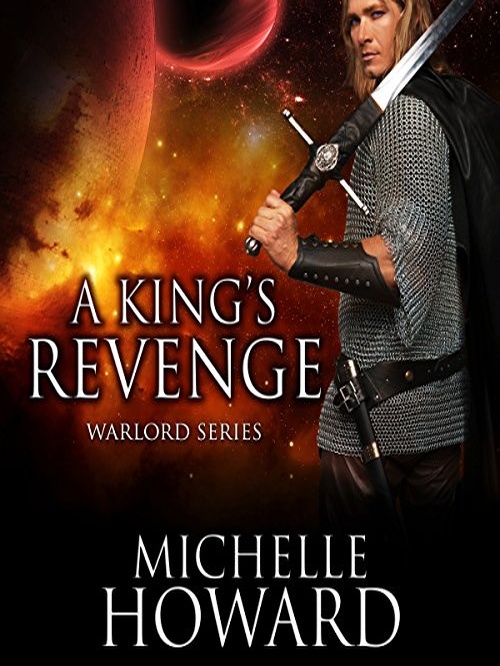
A King’s Revenge Review

The Enduring Reckoning of Sovereignty and Sentiment in A King’s Revenge

In the intricate tapestry of Fantasy Romance, where the weight of crowns often contends with the urgings of the heart, Michelle Howard‘s A King’s Revenge (part of the Warlord series) presents a poignant exploration of grief, duty, and the unexpected resurgence of affection. We are invited into a world where past trauma casts long shadows, even over monarchs, and where true healing might arrive disguised as a serendipitous encounter.

The Sovereign’s Solitude and the Echo of Loss

At its core, A King’s Revenge delves into the profound isolation of power, epitomized by Tarik Sabarn, King of Desani. Having suffered the brutal murder of his Queen, Tarik’s narrative arc begins not with conquest, but with an internal retreat, a monarch who has foregone the solace of love for the stoicism of rulership. It is a familiar trope, perhaps, yet Howard imbues Tarik with a palpable despondency that resonates beyond the page, drawing us into the psychological landscape of a king undone by personal tragedy. This is not merely a ruler but a man who has experienced the ultimate loss, and his subsequent emotional stagnation provides a fertile ground for the dramatic unfolding of the plot. The title itself, A King’s Revenge, prompts an immediate inquiry: is the revenge literal, a pursuit of justice for his fallen queen, or is it a more subtle, internal battle—a reclamation of his own capacity for life and love?

A Confluence of Fates: Beyond the Random Encounter

The narrative gains its romantic impetus through the introduction of Lea, whose motivations run deeper than a casual flirtation. Her quest for “answers,” hinted at within the summary, suggests a parallel journey of discovery that intertwines dramatically with Tarik’s own emotional void. What begins as a “random night of passion” quickly transcends the superficial, evolving into a bond forged by shared vulnerability and mutual revelation. Howard here crafts a compelling argument for the transformative power of connection, positing that the most profound insights, and indeed, love itself, can emerge from the most unforeseen circumstances. The inherent danger, the “if she’s not careful, they’ll both lose out again,” underscores the fragile nature of their burgeoning relationship, hinting at external threats or internal demons that threaten to unravel their newfound happiness. It is this delicate balance between burgeoning hope and looming peril that lends the Romance its intellectual weight.

The Audio Experience: A Dual Narration of Depth

One cannot overlook the auditory dimension of this tale, skillfully brought to life by Tristan Wright and Sarah Grace Wright. The choice of dual narration for a Fantasy Romance is often a strategic one, allowing for distinct voices to inhabit the internal worlds of the protagonists. We imagine Tristan Wright‘s voice imbuing King Tarik with the gravitas of a weary sovereign and the burgeoning hope of a man rediscovering affection, while Sarah Grace Wright would undoubtedly capture Lea’s inquisitive spirit and the vulnerability that underpins her newfound love. This collaborative narration promises an immersive experience, allowing the listener to fully appreciate the emotional nuances that Howard so carefully weaves into her narrative.

The Sovereign Verdict: A Phoenix from the Ashes

A King’s Revenge is, in essence, a tale of redemption, not merely of a king, but of a soul. Michelle Howard offers a narrative that asks us to consider whether it is truly possible to escape the gravitational pull of past tragedies, or if true strength lies in allowing new affections to mend old wounds. The relatively concise duration of five hours and twenty-one minutes suggests a focused, impactful journey, shying away from sprawling epicism in favor of a concentrated character study.

This is a book for those who appreciate Fantasy Romance that prioritizes emotional depth over exhaustive world-building, where the internal struggles of its characters are as compelling as any external conflict. It will resonate with readers who enjoy tales of second chances, of monarchs grappling with very human vulnerabilities, and of the potent, often perilous, nature of love rekindled amidst sovereign duties. We find in A King’s Revenge a poignant reminder that even in kingdoms haunted by loss, the human spirit, with enough courage, can always find its way back to warmth and connection.

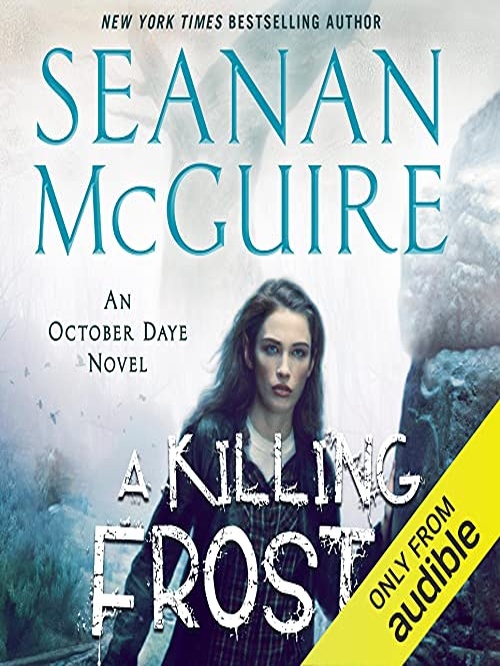
A Killing Frost Review

When the Past Demands a Seat at the Table: A Review of A Killing Frost

What does it cost to build a future when the past refuses to stay buried? Seanan McGuire asks this question with surgical precision in A Killing Frost, the fourteenth installment of her October Daye series — and the answer, as ever in Faerie, is paid in blood, obligation, and the particular agony of complicated love.

Fourteen Books In, and Still Finding New Ways to Wound You

There is a peculiar achievement embedded in long-running urban fantasy series that critics rarely acknowledge: the accumulation of consequence. Lesser authors treat each installment as a reset, a fresh wound sutured clean by the novel’s end. McGuire refuses that mercy. A Killing Frost operates with the full gravitational weight of thirteen preceding volumes pressing against every scene. Toby Daye’s world does not forget. Her history does not forgive. And Simon Torquill — legally her father through Faerie’s labyrinthine marriage traditions, morally her tormentor through years of inflicted trauma — cannot simply be uninvited from the wedding table without unraveling the political fabric of the Kingdom in the Mists.

This is where McGuire demonstrates her most sophisticated narrative instinct: she constructs plots from obligations, not conveniences. Toby doesn’t pursue Simon because she wants to. She does it because Faerie’s archaic structures demand it, because political reality supersedes personal trauma, and because somewhere beneath the scar tissue of her own history, there is a reckoning that has always been deferred. A Killing Frost is, at its structural core, a story about the debt we owe to understanding even those who have harmed us — and the radical, uncomfortable possibility of context reframing monstrosity.

The Architecture of Reluctant Forgiveness

What elevates this volume above standard quest-narrative mechanics is McGuire’s unflinching interrogation of complicity, coercion, and culpability. Simon Torquill is not rehabilitated cheaply here. The novel does not offer the reader the easy satisfaction of a villain-turned-ally whose past crimes dissolve under the warmth of redemption arc sentimentality. Instead, McGuire builds something far more psychologically rigorous: a portrait of a man whose monstrous actions were themselves the product of coercion, and the deeply unsettling moral question of whether that distinction matters to the people left broken in his wake.

Toby herself — sharp-edged, grief-worn, perpetually underestimating her own capacity for both destruction and compassion — serves as the ideal lens for this interrogation. Her resistance to softening toward Simon never feels performative. It feels earned, the product of fourteen books of accumulated pain. When she moves, however incrementally, toward something resembling comprehension, it lands with the visceral impact of a truth the reader has also been reluctant to accept.

Mary Robinette Kowal‘s narration, it must be noted, is essential architecture here. Her vocal rendering of Toby’s sardonic weariness and the emotional undertow beneath it transforms already strong prose into something genuinely immersive. Kowal understands that Toby’s humor is armor, and she plays both the shield and what it protects with equal skill.

Politics, Prophecy, and the Weight of Commitment

McGuire has always been astute about Faerie as a political landscape — a world where tradition operates as law, and law operates as trap. A Killing Frost expands this acuity. The wedding, ostensibly a celebration, becomes a nexus of political consequence, a reminder that in Faerie, private joy is never truly private. Every choice Toby makes radiates outward, touching courts and bloodlines and centuries-old alliances she neither asked for nor desired.

This is the paradigmatic tension at the series’ heart, and McGuire sharpens it here to a fine point: Toby Daye is a woman who wanted a quiet life and inherited an enormous fate. The irony has never grown stale across fourteen volumes because McGuire never lets Toby — or the reader — forget the specific, mundane human cost of epic destiny. The quest in A Killing Frost is framed as political necessity, but it is experienced as personal reckoning, and that dual register is where McGuire’s craft consistently operates at its most compelling.

For the Reader Who Has Earned This Book

Let me be direct about audience, because this matters: A Killing Frost is not a point of entry. Attempting to read it without the preceding thirteen volumes would be an act of narrative self-sabotage — the emotional resonance is cumulative, the political landscape requires cartographic familiarity, and the weight of Simon Torquill as a figure depends entirely on what the reader already carries into his presence.

For those who have made the journey, however, this is Seanan McGuire operating at the height of her powers in this world — morally complex, structurally confident, and emotionally unsparing in the very best sense. A Killing Frost belongs to that category of series installments that justify the entire investment that preceded them.

A Question Worth Sitting With

The book leaves its reader, as all great speculative fiction should, with an unresolved tension masquerading as resolution. Understanding the architecture of someone’s harm does not obligate forgiveness. But it does, perhaps, obligate something — some harder, less comfortable acknowledgment that people are rarely the uncomplicated villains our pain requires them to be.

Is that wisdom, or is it a burden Toby — and we — deserve to set down? McGuire, characteristically, doesn’t answer. She simply makes certain you cannot stop thinking about the question.

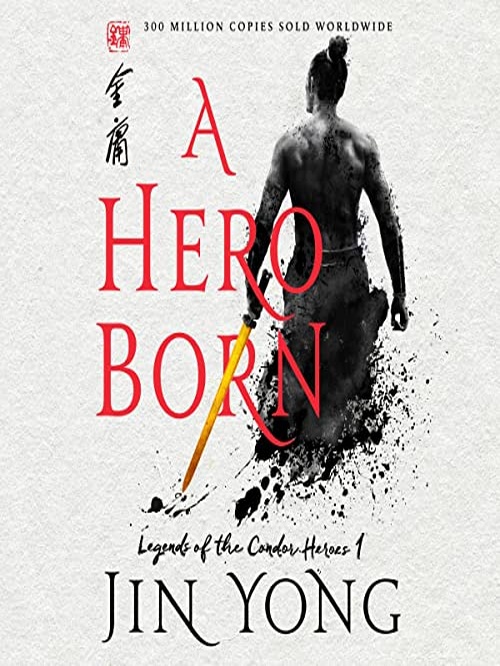
A Hero Born Review

The Wuxia Epic the West Almost Never Got to Read

What does it mean that arguably the most widely read novelist of the twentieth century—a writer whose works have sold over 300 million copies—remained virtually unknown to English-speaking audiences until 2018? Jin Yong‘s A Hero Born, the first volume of the Legends of the Condor Heroes tetralogy, is not merely a fantasy novel. It is a cultural artifact of staggering significance, a foundational text for an entire genre, and a mirror held up to a civilization’s deepest anxieties about loyalty, identity, and the moral weight of violence. That it took nearly six decades for this book to cross the linguistic divide is less a publishing curiosity than a quiet indictment of Western literary insularity.

A Story Forged in the Crucible of Empires

The novel opens in the dying light of the Southern Song dynasty, around AD 1200, a period of existential fragmentation for China. Two sworn brothers—patriotic soldiers of modest means—see their families torn apart by political treachery and Jurchen aggression. One child, Guo Jing, survives alongside his mother, fleeing northward into the Mongolian steppe, where they find unlikely refuge among the rising forces of a young warlord named Temüjin—the man history will remember as Genghis Khan.

What unfolds from this premise is not, however, a historical novel in any conventional Western sense. Jin Yong builds a world in which kung fu operates as both martial discipline and philosophical language, where combat sequences function as elaborate metaphors for moral argument. Guo Jing is, by design, no prodigy. He is slow-witted, stubborn, and almost comically earnest—a deliberate subversion of the gifted-hero archetype that dominates both Eastern and Western fantasy traditions. His education under the Seven Heroes of the South is less a training montage than a prolonged meditation on what it costs to become decent in a world that rewards cunning.

I find this choice quietly radical. In an era saturated with “chosen one” narratives and protagonists whose specialness is innate and effortless, Guo Jing earns every inch of his journey through sheer, unglamorous persistence. He is not born exceptional. He is born loyal. And Jin Yong asks us to consider whether that might be enough.

The Architecture of Wuxia, Decoded

For readers approaching wuxia fiction for the first time, a word of recalibration is necessary. The genre operates under narrative conventions that differ markedly from the Western fantasy canon shaped by Tolkien and his descendants. Where Western epic fantasy tends toward world-building through geography and lore—maps, appendices, invented languages—wuxia builds its architecture through martial lineage. Schools of fighting are schools of thought. A character’s shifu (master) matters more than their birthplace. Allegiance is demonstrated not through oaths sworn before thrones but through the specific way one throws a punch.

Jin Yong is a master of this idiom, and A Hero Born showcases three of his most distinctive strengths:

First, the choreography of violence as storytelling. The fight sequences in this novel are extraordinary—not because they are brutal, but because they are legible. Each combatant’s style encodes their psychology. The flamboyant techniques of the villainous martial artists contrast sharply with the grounded, orthodox methods of the Seven Heroes. Combat becomes characterization, and Jin Yong renders it with the precision of a dramatist blocking a stage play.

Second, the layering of historical and mythic registers. The novel weaves real historical events—the Mongol unification, the geopolitics of the Jin-Song conflict—into a fabric of invented martial arts lineages and supernatural feats with remarkable fluency. This is not history dressed up in fantasy costumes. It is an imaginative reckoning with history, a way of asking what loyalty and heroism look like when empires collapse and ordinary people are ground between tectonic forces they cannot control.

Third, the moral complexity beneath the adventure. Guo Jing’s journey toward his destined confrontation is not simply a matter of acquiring sufficient skill to defeat an opponent. It is a reckoning with inheritance—with the sins and promises of fathers, with the question of whether a child can escape the trajectory set by forces that predate their birth. The rival he must face carries a connection to his own family’s history, and Jin Yong refuses to reduce this antagonism to a simple good-versus-evil binary. There are betrayals on every side. There are reasons for every treachery.

What the Translation Reveals—and Conceals

Anna Holmwood’s English translation deserves specific acknowledgment. Translating wuxia is an act of controlled impossibility: the genre’s vocabulary is deeply embedded in Chinese literary, philosophical, and somatic traditions that have no direct English equivalents. Holmwood navigates this with considerable grace, opting for transparency over domestication. She preserves terms like shifu and qinggong where anglicization would flatten their meaning, and her rendering of the fight choreography maintains a kinetic clarity that is no small feat.

That said, I suspect something ineffable is lost—the rhythmic density of Jin Yong‘s Chinese prose, which readers familiar with the original describe as almost musical in its cadences. The audiobook narration by Carolyn Oldershaw and Daniel York Loh partially compensates, lending the text an oral-storytelling quality that feels appropriate to a genre born from Chinese storytelling traditions. York Loh in particular brings a cross-cultural sensibility that serves the material’s hybrid energy.

Still, the translation occasionally stumbles in pacing. Sections that likely crackle in Mandarin can feel episodic and digressive in English, particularly in the novel’s middle third, where the accumulation of new martial arts encounters risks becoming catalogic rather than propulsive. Western readers accustomed to tighter narrative economy may need to adjust their expectations—and their patience. This is a novel that rewards surrender to its rhythms rather than resistance.

More Than a Fantasy Novel—A Gateway to a Literary Continent

What strikes me most forcefully about A Hero Born is not any single narrative moment but rather the dawning recognition, as I read, of how vast and sophisticated a literary tradition I had been ignorant of. Jin Yong is often called “the Tolkien of Chinese literature,” but this comparison, while useful as marketing shorthand, is ultimately reductive. Tolkien was a philologist constructing a mythology for England. Jin Yong was a journalist and political commentator using the wuxia framework to interrogate the moral compromises of power, the fragility of brotherhood, and the question of what constitutes genuine heroism in a corrupted world. His concerns are less mythological than ethical.

A Hero Born is the opening movement of a much larger symphony—the first of four volumes, and one can feel the deliberate pacing of a novelist who knows he has room to develop his themes across thousands of pages. As a standalone experience, it is not without its frustrations: the characterization of women remains largely peripheral in this volume, and Guo Jing’s slowness, while thematically purposeful, can test one’s engagement. But as an invitation into a narrative world of extraordinary richness and moral seriousness, it is compelling.

This book is for readers who have exhausted the Tolkien-Martin-Le Guin axis of Western fantasy and hunger for something genuinely other—not exotic in the superficial sense, but structurally, philosophically, and aesthetically different. It is for anyone who suspects that the global canon of epic storytelling extends far beyond the boundaries we’ve been taught to recognize. It is for the reader willing to be a beginner again.

I finished A Hero Born with a question I haven’t been able to shake: How many other literary traditions of this magnitude are sitting just beyond the edge of our awareness, waiting for a translator brave enough to carry them across? And what does it say about us that we haven’t gone looking sooner?

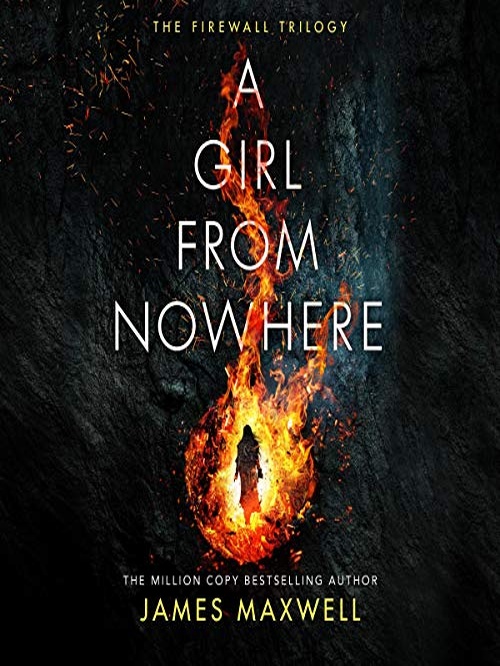
A Girl from Nowhere Review

When the Sun Burns Twice: James Maxwell’s Unforgiving Desert Epic

What does it mean to survive in a world that was never designed for your survival? It’s a question as old as speculative fiction itself, from Frank Herbert’s Arrakis to Cormac McCarthy’s ashen wastelands. In James Maxwell’s A Girl from Nowhere, the opening volume of The Firewall Trilogy, the answer arrives not through grand philosophical monologues but through blistered feet, a crippled leg, and the stubborn, almost irrational refusal to die. This is a novel that earns its emotional weight through deprivation—stripping its characters down to bone and sinew before asking us whether anything meaningful can be built from what remains.

A Wasteland That Breathes

Maxwell constructs his world with an economy that I find genuinely admirable. Two suns scorch the land. Water is currency. Survival is not metaphor—it is the plot. The wasteland here is not mere backdrop; it functions as an antagonist with its own rhythms, its own cruelties, its own indifferent logic. Raiders roam. Strange creatures hunt. And the land itself seems to reject the very notion of civilization.

What elevates this beyond standard post-apocalyptic fare is the texture of daily existence Maxwell renders. We feel the heat. We taste the dust. There is a physicality to this world-building that recalls the best traditions of Fantasy survival narratives—where the environment doesn’t simply threaten the characters but fundamentally shapes who they become. Taimin’s disability isn’t a plot device to be conveniently resolved; it is the lens through which he understands power, vulnerability, and the cost of depending on others in a place where dependency can kill you.

Two Broken Compasses Pointing Toward the Same Myth

The dual-protagonist structure is where Maxwell’s narrative instincts prove sharpest. Taimin—orphaned, crippled, burning with a revenge that gives him direction even as it hollows him out—is a familiar archetype, yes. The bereaved young man seeking blood. We’ve walked this road before. But Maxwell earns our patience by refusing to let revenge remain uncomplicated. The moment Taimin meets Selena, a mystic carrying her own invisible wounds and her own desperate faith in a place called the white city, the novel quietly pivots from a revenge thriller into something richer: a story about whether hope is a rational response to a world that offers no evidence for it.

Selena is the more interesting character, and I suspect Maxwell knows it. Her mystical abilities—hinted at, never fully explained in this first volume—introduce an epistemological tension into a narrative otherwise grounded in brutal realism. She knows things. Or believes she does. And Taimin, for all his pragmatic survivalism, chooses to follow her knowing toward a city that may not exist. This is not romance in any conventional sense. It is two people constructing a shared delusion sturdy enough to walk on.

The White City as Philosophical Wager

The fabled white city operates in this novel the way El Dorado operates in colonial narratives or the way the Green Light operates in Gatsby—as an organizing myth whose power lies precisely in its distance. Maxwell is wise enough not to deliver easy answers about what the city is or whether it deserves the faith Taimin and Selena invest in it. The journey is the argument. Every mile survived is evidence both for and against the proposition that sanctuary exists.

I’ll confess: there are moments where the pacing slows, where the episodic structure of encounter-danger-survive-move begins to feel mechanical. Maxwell’s prose, competently rendered through Simon Vance’s characteristically polished narration in the audio edition, is workmanlike rather than lyrical. He will never be accused of overwriting. Whether that restraint is a virtue or a limitation depends entirely on what you bring to the page. I found it appropriate—ornate language would feel dishonest in a world this merciless.

A Foundation Built on Honest Ground

A Girl from Nowhere is not a novel that reinvents Science Fiction & Fantasy. It is, however, a novel that honors the genre’s deepest impulse: to place human beings in impossible conditions and watch what they refuse to surrender. Maxwell builds his trilogy’s foundation on character rather than spectacle, on moral complexity rather than magic systems, and I respect the gamble. The 4.5 rating this book carries from its readership feels earned—not through pyrotechnics, but through the quiet accumulation of trust between author and audience.

This is a book for readers who find sustenance in desert narratives, who appreciate the slow burn of world-building that trusts you to keep walking even when the horizon offers nothing. If you loved the ecological brutality of Dune but craved something leaner, more intimate, less interested in empire and more interested in two people choosing each other against all rational evidence—start here.

The white city may or may not exist. But I suspect the real question Maxwell is asking across this trilogy is simpler and far more dangerous: Does it matter?

A Gift for the King Review

Stars And Chains: Critique Of Sara Fields

Aliens abduct Lana. Steal student for space auction. Reality shatter. Book expose primal fear. We analyze dark themes.

Mechanics Of Alien Control

Sara Fields build brutal universe. Lana fight auction. Rebel for freedom. Captors spank Lana. Punish girl for defiance. Visceral impact hit reader. Narrative arc map complete subjugation.

King Dante claim human. Ruler demand total obedience. Dominant lovemaking follow strict rules. Pain ignite desire. Complex psychology emerge. Nuanced perspective show Stockholm syndrome. Intellectual rigour dissolve. Primal lust dominate mind.

Lana flee cage. Escape for independence. Rival steal human. Dante crush enemy. King smash foe for absolute ownership. Paradigmatic shift happen. Rescue cement permanent enslavement. Author mix Romance with dark Fantasy.

Final Judgment

I judge book harsh. Stormy Night Publications publish heavy BDSM. Rating sit 3.75. Dorian Bane voice dominance well.

Target audience crave dark dynamics. Read book for unconventional power play. Vanilla readers flee.

Golden cage offer safety. Cold void offer freedom. Which you pick? Reader reflect now.

A Gift for the Doctor Review

When Captivity Becomes Liberation: The Paradox of Power in Sara Fields’ A Gift for the Doctor

What does it mean to surrender — not out of weakness, but from a position of extraordinary strength? It’s a question that pulses beneath the surface of Sara Fields’ A Gift for the Doctor, the second installment in her Terranovum Brides series, and one that elevates what might otherwise be a straightforward paranormal romance into something more psychologically textured than its premise initially suggests.

Morgana is no damsel. She is, we are told, her kingdom’s most powerful sorceress — a woman who chooses captivity to protect the people she loves. That single act of agency sets the entire narrative in motion, and it’s worth pausing on, because it reframes everything that follows. Every moment of vulnerability, every scene of submission to the alpha shifter Kade, exists in tension with the knowledge that this woman could, presumably, burn it all down if she wished.

The Architecture of Desire and Defiance

Fields constructs her central dynamic with a clarity that borders on architectural precision. Kade is the doctor, the examiner, the man who literally holds power over Morgana’s exposed body. The medical play elements — clinical, intimate, deliberately transgressive — serve as more than erotic set dressing. They function as a metaphor for the stripping away of pretense, the dismantling of the armor Morgana has built around herself as both sorceress and survivor.

What I find genuinely interesting here is the layered deception at the story’s core. Kade has been ordered to claim Morgana, to breed a child that would merge two powerful bloodlines for a tyrant’s benefit. Yet his true allegiance lies with the rebellion. Morgana believes she is a prisoner submitting to an enemy’s tool; Kade knows he is a double agent falling for the woman he was meant to exploit. Neither possesses the full truth, and Fields milks this asymmetry of knowledge for considerable dramatic tension.

The power exchange in their relationship is rarely simple. It oscillates — spanking scenes that enforce dominance sit alongside moments where Kade’s protectiveness reveals his own vulnerability. Fields understands, at least intuitively, that the most compelling BDSM-inflected narratives are not about the subjugation of one party but about the mutual risk of emotional exposure.

Sorceress, Shifter, and the Politics of Bodies

The worldbuilding of Terranovum remains somewhat sketched rather than fully rendered — this is, after all, a novella-length work clocking in at just over five hours in Logan McAllister’s narration. But Fields weaves enough political scaffolding into the romance to give it stakes beyond the bedroom. Civil war looms. A tyrant manipulates bloodlines like a breeder selecting livestock. The commodification of Morgana’s body — her womb, specifically — echoes real-world anxieties about reproductive autonomy that lend the fantasy elements an unexpected bite.

As a sequel to A Gift for the King, this installment benefits from an established universe but also suffers slightly from sequel syndrome: certain emotional beats feel accelerated, as though the narrative trusts that readers arriving from the first book will fill in the gaps of worldbuilding and emotional context that newcomers might find thin.

McAllister’s narration deserves mention. He navigates the tonal shifts — from tender to commanding to politically charged — with a steadiness that keeps the audiobook from tipping into melodrama, a real risk given the material’s intensity.

The Tension Between Formula and Feeling

I won’t pretend this is a work of subversive literary fiction. Fields writes within a well-established genre framework, and she honors its conventions: the dominant alpha, the reluctant but aroused heroine, the escalating physical encounters that mirror deepening emotional connection. The publisher’s note is admirably transparent about what readers will encounter — spanking, medical play, BDSM elements — and that honesty is itself a form of respect for the audience.

Where Fields succeeds most is in the emotional throughline. Morgana’s internal conflict — between her identity as an independent, powerful woman and her growing desire to yield to Kade — never fully resolves into easy comfort. Even at the story’s climax, when romance and revolution converge, there’s a sense that submission remains a choice she makes daily, not a state she falls into permanently. That distinction matters enormously, and it’s what separates competent erotic romance from the genuinely compelling variety.

Where the book stumbles is in pacing. The transition from captive-and-captor tension to allied lovers fighting a common enemy happens with a swiftness that undercuts the political narrative. The civil war feels more like a backdrop than a fully realized conflict, and the resolution arrives with a neatness that the story’s darker undertones don’t entirely earn.

Who Should Open This Book — and Why

A Gift for the Doctor is crafted for readers who appreciate their romance dark, their fantasy unapologetic, and their power dynamics rendered with emotional specificity rather than mere shock value. If you found yourself drawn to the psychological complexity beneath works like Katee Robert’s Dark Olympus series or Ruby Dixon’s more intense offerings, Fields operates in adjacent territory with her own distinctive voice.

It is not a book for everyone — nor does it aspire to be, and that self-awareness is one of its quiet strengths.

Here is the question I’m left with: In a genre so often dismissed as mere escapism, why does the fantasy of chosen surrender resonate so deeply with readers who, in their waking lives, fight relentlessly for control? Perhaps because fiction remains the one space where we can safely explore the terrifying, exhilarating possibility that letting go might not destroy us — it might, against all logic, set us free.

A Gathering of Shadows Review

[Review] [generate] [user requested].
[Read] [below].

Shadows Wake

Scars Stay Open

Four months pass. Stone fell. Peace lies. Peace hides pain. Kell suffers guilt. Rhy lives. Tied by magic. V. E. Schwab writes deep arcs. We see minds break. Book skips cheap action. Book shows real hurt.

Balance Demands Death

Magic seeks balance. One London stands. Another falls. Black London wakes. Claims power. Dead foes return. Seek revenge. Schwab proves actions cost. Multiverse acts cruel. Theme hits hard.

Games Blind Fools

Red London plays Element Games. Crowds cheer magic. Lila Bard sails. Joins fight. She hunts glory. Tournament masks danger. Bright lights hide shadows. Contrast builds tension.

Voices Give Life

Michael Kramer, Kate Reading read audiobook. Performance adds weight. Macmillan Audio makes 16 hours fly. Fantasy sounds real.

Final Judgment

I rate high. Sequel beats first book. Lore grows dark.
Target: Readers love deep Science Fiction & Fantasy.
Think: Shadow vanishes night. Shadow returns morning. You ready?