A Court of Mist and Fury Review

When the Cage Is Golden, the Escape Becomes the Story

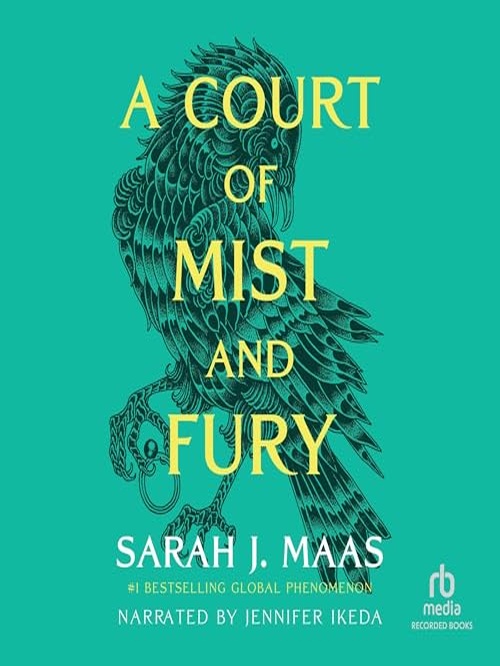
There is a moment in A Court of Mist and Fury — quiet, devastating, easy to miss if you’re reading too fast — where Feyre Archeron realizes that the man who fought to save her has become the man she needs saving from. Not through cruelty, exactly. Through love misapplied. Through protection that calcifies into control. It is a moment that cuts close to the bone of lived experience, and it is the reason this second installment in Sarah J. Maas‘s A Court of Thorns and Roses series transcends its genre trappings to become something genuinely urgent.

I’ll say it plainly: this is one of the rare sequels that doesn’t just surpass its predecessor — it redefines the entire project.


The Architecture of a Fractured Self

Where the first novel operated within the familiar scaffolding of a Beauty and the Beast retelling, ACOMAF dismantles that scaffolding with surgical precision. Feyre returns from Under the Mountain not as a triumphant heroine but as a woman drowning in post-traumatic silence — vomiting before her wedding, painting the walls of her bedroom with scenes of darkness she cannot articulate to the people who claim to love her. Maas commits fully to this psychological descent, and the result is a portrayal of PTSD that carries genuine visceral impact, particularly within a genre that too often treats trauma as a plot device to be resolved by the right kiss.

The narrative structure mirrors Feyre’s internal fracture. The first third of the novel moves with a suffocating slowness that is entirely deliberate — we are trapped in the Spring Court alongside her, feeling the walls close in, watching Tamlin’s protectiveness metastasize into something indistinguishable from imprisonment. It is uncomfortable reading. It is meant to be. Maas is asking us to sit with the dissonance between what a relationship looks like from the outside — powerful Fae lord, beautiful manor, safety after horror — and what it feels like from within.

This is not subtle work. But it is effective work, and the distinction matters.


Rhysand and the Subversion of the Romantic Paradigm

The novel’s most provocative move is its wholesale renegotiation of whom we are meant to trust. Rhysand, the villain-coded High Lord of the Night Court who spent the entirety of the first book as a morally ambiguous manipulator, emerges here as something far more complex: a leader who understands that genuine respect means allowing someone the dignity of their own choices, even — especially — when those choices involve risk.

I want to be precise about why this works, because it could so easily have devolved into a simplistic “bad boy was actually good all along” redemption arc. What Maas does instead is more interesting. She presents Rhysand as a man who has done unconscionable things — and who does not ask to be absolved. His court, the Night Court, with its Inner Circle of fiercely loyal, beautifully realized secondary characters — Mor, Cassian, Azriel, Amren — operates not as a hierarchy of power but as a chosen family forged in mutual trauma. The contrast with the Spring Court’s feudal paternalism is stark and, I think, philosophically deliberate.

The slow-burn romance between Feyre and Rhysand is, on a craft level, masterfully paced. Maas understands that the most potent romantic tension lives not in proximity but in recognition — two people seeing each other’s damage clearly and choosing to stay anyway. Their dynamic crackles not because of the considerable physical attraction (though Maas writes that with characteristic heat) but because it is rooted in intellectual and emotional equity. He teaches her to read. She challenges his martyrdom. They argue about strategy. This is a love story built on the radical premise that partnership means neither person diminishes themselves.


Power, Autonomy, and the Politics of Protection

Beneath the romance and the high-fantasy world-building — which expands dramatically here, encompassing courts of seasonal and celestial alignment, ancient magical hierarchies, and an approaching existential threat — ACOMAF is engaged in a sustained interrogation of a single question: What does it mean to protect someone?

Tamlin locks Feyre in the manor. Rhysand hands her weapons and says, “I want you to have choices.” The novel frames these as fundamentally different philosophies of love, and it does so without reducing Tamlin to a cartoon. He is afraid. He has his own trauma. His love is real. It is also suffocating, and Maas refuses to let the authenticity of his feelings excuse the consequences of his actions. This is a nuanced ethical position for any novel to take; for a fantasy romance marketed to a young-adult-adjacent audience, it borders on the revolutionary.

Feyre’s journey from hollowed-out survivor to a woman who claims her own power — literally, as she trains her emerging magical abilities, and figuratively, as she rebuilds her sense of self — forms the emotional spine of the book. It is a narrative of recovery that insists recovery is not linear, not pretty, and not accomplished alone.


Where the Seams Show

The novel is not without its structural weaknesses. At over twenty-three hours in audiobook form (narrated with considerable skill by Jennifer Ikeda, whose vocal differentiation of the expanding cast is impressive), ACOMAF occasionally indulges in expository world-building that slows the narrative momentum, particularly in its middle section. The political machinations of the various Fae courts, while necessary for the series’ larger arc, sometimes feel more like table-setting than storytelling. And Maas’s prose, while propulsive and emotionally acute, can tip into repetition — we are told of Feyre’s hollowness, her fracture, her darkness, with a frequency that occasionally blunts the very impact it seeks to create.

These are minor complaints against the weight of what the book achieves, but they are worth noting honestly.


A Story That Earns Its Devotion

The 4.85 average rating this book carries is not the inflated enthusiasm of an undiscriminating fandom. It is the collective recognition that Sarah J. Maas has accomplished something genuinely difficult: she has written a fantasy romance that takes its characters’ interiority as seriously as its action sequences, that treats the question of whom to love as an extension of the question of how to live, and that understands — with a clarity that feels hard-won — that the most dangerous prisons are the ones that look like safety.

A Court of Mist and Fury is essential reading for anyone who believes the Romance and Fantasy genres are capable of psychological and moral sophistication. It is for readers who want their escapism laced with uncomfortable truths about autonomy, consent, and the long work of healing. It is, frankly, for anyone who has ever stayed too long in a situation that looked like love from every angle except the one that mattered — the view from inside.

Here is the question I’d leave you with: When we talk about the stories that shape how a generation understands relationships, do we take seriously enough the ones that arrive wrapped in faerie wings and magic? Perhaps we should. The truths in ACOMAF are no less true for being spoken by immortals.
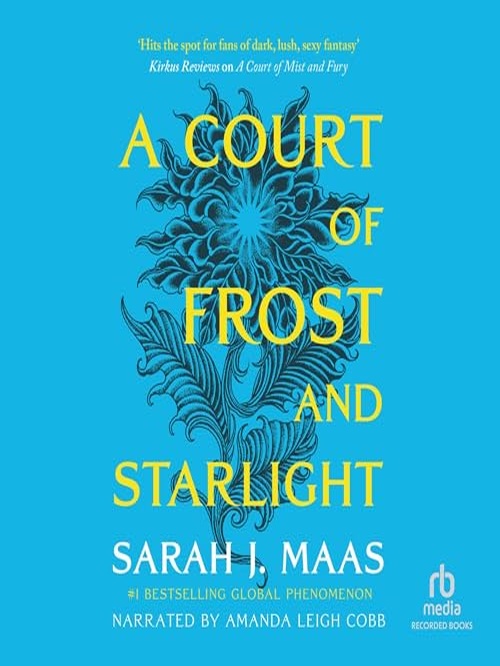
A Court of Frost and Starlight Review

When the War Ends, the Real Wounds Begin

What happens after the final battle? After the blood dries on the battlefield and the victory feasts wind down, what remains? It’s a question fantasy rarely bothers to ask. We close the book on the climactic showdown, satisfied, and seldom wonder how the heroes sleep at night — or whether they sleep at all. In A Court of Frost and Starlight, Sarah J. Maas dares to linger in that uncomfortable aftermath, and the result is something unexpectedly intimate, occasionally uneven, and quietly significant within the broader architecture of her A Court of Thorns and Roses series.

A Novella That Breathes Between the Storms

Let me be direct: this is not a novel. It’s a novella — a bridge, a breath, an interlude. Readers expecting the kinetic plotting and escalating stakes of A Court of Wings and Ruin will find themselves recalibrating within the first few chapters. The pacing is deliberately slow. The action is domestic. The drama is internal. And I’d argue that’s precisely the point.

Set in the months following the war against Hybern, the story follows Feyre and Rhysand as they navigate the reconstruction of the Night Court during the approach of Winter Solstice. On the surface, it’s a holiday narrative — gift-giving, decorating, reunions with beloved characters. Beneath that surface, Maas is doing something more deliberate: she’s cataloging grief.

The Cartography of Scars

The most compelling dimension of Frost and Starlight lies in its refusal to let trauma be conveniently resolved. Maas rotates through multiple points of view — Feyre, Rhysand, Cassian, Morrigan — and each perspective reveals a character performing normalcy while privately fracturing. Rhysand’s guilt over what he asked of his people. Feyre’s compulsive need to create, to paint, as though beauty might paper over the void. Nesta’s corrosive rage, which Maas renders not as villainy but as a wound turned outward.

It’s Nesta, in fact, who emerges as the novella’s most visceral presence despite relatively limited page time. She is the character who refuses to perform healing on anyone else’s timeline, and Maas wisely doesn’t force her to. The seeds planted here — her self-destruction, her isolation, her fury at a world that broke her and then expected gratitude — would later bloom into the sprawling narrative of A Court of Silver Flames. In retrospect, this novella functions as essential groundwork.

Cassian, too, carries a particular weight. His scenes vibrate with suppressed longing and a soldier’s restlessness — a man built for war who must now learn the architecture of peace. It’s a subtle portrait, and one of Maas’s more psychologically credible characterizations.

The Limits of the Interlude

I won’t pretend the novella is without its weaknesses. The pacing, while thematically justified, occasionally tips from meditative into inert. Some chapters read more like connective tissue than narrative — functional rather than essential. The Feyre-Rhysand dynamic, while warm, risks saccharine territory; their relationship has been so thoroughly idealized across three prior volumes that the absence of genuine friction between them here feels less like marital contentment and more like narrative stasis.

There’s also the question of depth versus breadth. By touching on so many characters’ inner lives, Maas sometimes sacrifices the kind of sustained, immersive interiority that would make any single arc truly devastating. We get glimpses — powerful ones — but glimpses nonetheless.

And yet, I find myself forgiving these structural imperfections. The novella knows what it is. It doesn’t pretend to be the next epic installment. It asks for six hours of your time — Amanda Leigh Cobb‘s narration on the audiobook makes those hours feel effortless — and offers in return something the main series rarely pauses long enough to provide: emotional reckoning.

The Quiet Before the Next Thunder

A Court of Frost and Starlight is, ultimately, a story about the lie we tell ourselves after survival — that the hard part is over. Maas understands, perhaps intuitively, that survival is merely the beginning of a different kind of battle, one fought in kitchens and bedrooms and the silence between conversations.

This novella is for readers already invested in the Inner Circle, those who care less about where the plot goes next and more about what these characters carry inside them. It is not the entry point. It is not the crescendo. It is the moment you sit with someone you love and realize that the cracks in them run deeper than you’d allowed yourself to see.

So here’s the question worth sitting with: Do we read fantasy to escape the aftermath — or to finally, safely, face it?

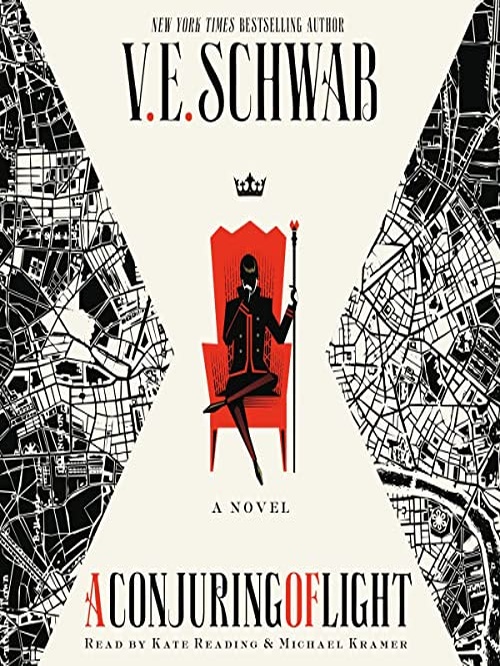
A Conjuring of Light Review

Empire Fall: Schwab Conclude Magic Arc

Paradigmatic Shift Begin

Equilibrium break. Magic demand blood. A Conjuring of Light face void. Genre require high stakes. I analyze text. Mind engage nuanced perspective.

Narrative Arc Close

V. E. Schwab end trilogy. Author write heavy truth.
Characters bleed. Magic exact cost.
Worlds crash. Intellectual rigor show.
Foes return. Past haunt present.
Prose cut deep. Visceral impact hit hard.
Macmillan Audio publish saga. Kate Reading and Michael Kramer narrate text. Voices elevate words.

Final Judgment

I judge book worthy. Conclusion satisfy. Schwab master craft.
Target audience: Science Fiction & Fantasy fans. Thinkers. Readers seeking grim Fantasy.
Reader reflect. Power demand cost. Buy book. Read text.

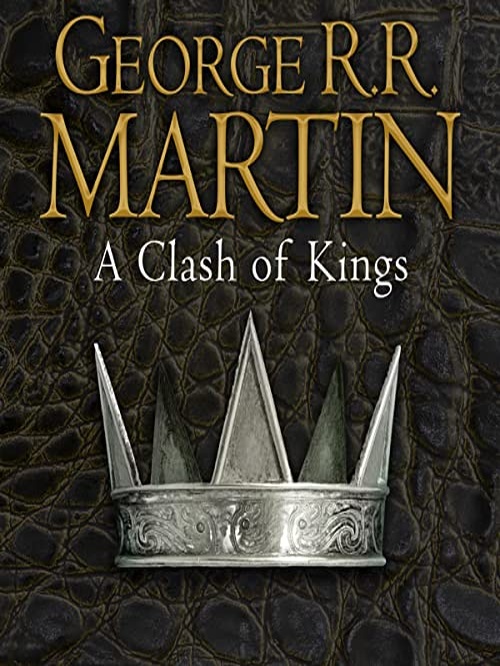
A Clash of Kings Review

The Unfolding Tapestry of Kingship and Chaos: A Deep Dive into A Clash of Kings

In the annals of fantasy literature, few sagas have etched themselves into the collective consciousness with the indelible force of A Song of Ice and Fire. Following the seismic shifts of its predecessor, A Clash of Kings by George R.R. Martin does not merely continue the narrative; it elevates the foundational tremors into a full-blown seismic event, reshaping the very landscape of Westeros and, indeed, our expectations of the genre itself. We are plunged headlong into a world where the precarious balance of power has irrevocably shattered, and the stakes for every soul, from peasant to king, have become impossibly high.

Navigating the Charybdis of Crown and Consequence

A Clash of Kings distinguishes itself not merely through its expansive scope but through its unflinching examination of the moral calculus demanded by leadership amidst existential threat. Here, Martin refines his intricate narrative architecture, deftly weaving together disparate threads that illuminate the multifaceted nature of governance and ambition. The titular clash is not solely between armies, but between competing ideologies of rule, each championed by flawed individuals convinced of their own divine right or pragmatic necessity. We witness the brutal pragmatism of Stannis Baratheon, the unsettling messianic fervor surrounding Daenerys Targaryen, the cunning manipulations of the Lannisters, and the tragic heroism of the Stark children, each narrative strand contributing to a tapestry of bewildering complexity. This is not a tale of clear-cut heroes and villains, but rather a profound meditation on the corrosive nature of power and the terrifying burden of sovereignty.

Martin’s genius lies in his refusal to simplify. The strategic brilliance of Tyrion Lannister, for instance, is presented alongside his personal vulnerabilities and the societal prejudices he faces, making him a figure of compelling paradox. Similarly, the burgeoning sense of self in Arya Stark, forced into a harsh education in survival and subterfuge, transcends typical character arcs to explore the psychological toll of trauma and adaptation. These aren’t just characters; they are studies in human resilience and depravity, their choices rippling through the land with devastating consequence. The novel forces us to confront uncomfortable truths about justice, loyalty, and the seductive allure of absolute power, often leaving us to ponder if any victory can ever truly be clean in such a morally compromised world.

Furthermore, the expansion of the known world — from the brutal, ancient lands beyond the Wall, where Martin delves deeper into the chilling mythos of the Others, to the exotic, mercantile city of Qarth — serves not just as exotic scenery but as crucial context for the global implications of Westeros’s internal strife. The growing supernatural elements are seamlessly integrated, reminding us that the human squabbles, however grand, are but one facet of a larger, more ancient struggle for the very fate of the world. This contextualization enriches the thematic depth, adding layers of cosmic dread to the all-too-human political machinations.

The Weight of a World in Turmoil

To immerse oneself in A Clash of Kings is to undertake a journey of intellectual and emotional rigour. It is a work that demands patience and rewards scrutiny, unraveling its layers like a historical document rather than a simple fantasy novel. The prose, while not overtly florid, possesses a vivid, almost painterly quality, particularly in its descriptions of battle, landscape, and the inner turmoil of its sprawling cast. Martin uses language with precision, crafting scenes that resonate with visceral impact and profound psychological insight. We are not merely observers but rather embedded within the shifting allegiances and perilous campaigns, feeling the bite of winter and the heat of ambition.

This is a book for the discerning reader who appreciates a narrative that eschews easy answers and embraces the sprawling, often contradictory nature of human experience. It is for those who find intellectual pleasure in dissecting political intrigue, exploring the nuances of character development, and contemplating the broader philosophical questions embedded within a richly imagined secondary world. If your reading tastes lean towards the intricate tapestries of historical fiction, the moral quandaries of philosophical novels, or the epic scope of classic literature, then A Clash of Kings offers a rewarding, albeit challenging, engagement.

Ultimately, A Clash of Kings is far more than just the second act in a fantasy saga; it is a masterclass in world-building and character-driven storytelling, cementing George R.R. Martin‘s place as a modern literary titan. It invites us not just to read, but to ponder the true cost of ambition, the fragility of order, and what, if anything, remains sacred when a world plunges into chaos. What, we are compelled to ask, defines a king in an age where all crowns are forged in blood and betrayal?

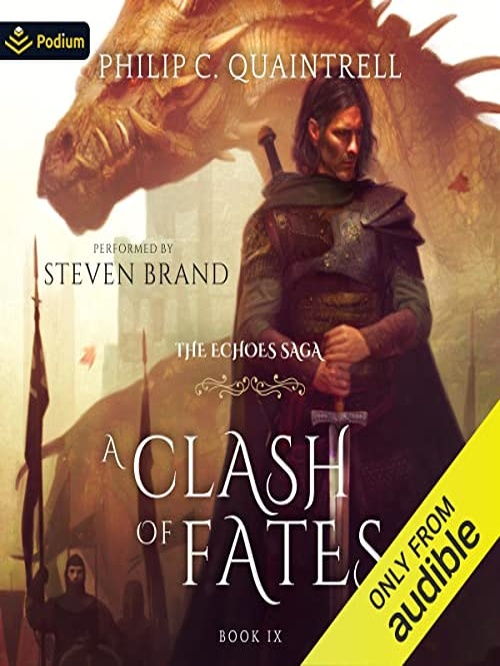
A Clash of Fates Review

When Worlds End, What Remains? A Reckoning with A Clash of Fates

There is a peculiar gravity to final chapters — not just the last pages of a book, but the concluding movement of an entire saga. We arrive carrying the accumulated weight of every alliance forged, every betrayal endured, every world threatened across thousands of pages. Philip C. Quaintrell understands this burden implicitly, and in A Clash of Fates, the capstone of The Echoes Saga, he does something rarer than most fantasy authors dare: he earns his ending.

The Architecture of Consequence

What separates Quaintrell’s work from the crowded field of epic Fantasy is his unrelenting fidelity to consequence. Other saga-closers often buckle under the structural pressure of resolving too many threads, resorting to deus ex machina resolutions or, worse, conveniently trimmed character arcs. A Clash of Fates refuses that easy exit. Every narrative strand introduced across the preceding volumes carries genuine weight here — and Quaintrell pulls them taut rather than cutting them loose.

The result is a kind of narrative accountability that feels almost unfashionable in contemporary epic fantasy. Characters do not merely survive; they are marked by survival. The philosophical underpinning at work here is essentially Greek in its sensibility — that fate is not a destination but a reckoning, and the collision promised in the title is less about armies than it is about the moral debts accumulated by those who dared to shape the world.

Echoes of Everything That Came Before

Quaintrell demonstrates, with considerable craft, that a saga’s final installment is structurally analogous to the last movement of a symphony. The themes introduced in early volumes — identity, sacrifice, the corrupting seductiveness of power — do not resolve so much as they resolve into one another, creating a thematic density that rewards readers who have committed to the full journey.

There is a particular kind of satisfaction, almost archaeological in nature, in watching a writer excavate the implications of his own world-building. The “echoes” of the series title reveal themselves here not as metaphor but as mechanism: the past is not backdrop but active agent. This is sophisticated genre fiction operating at the level of its best ambitions.

Steven Brand‘s narration for Podium Audio deserves specific mention. Brand has long been the vocal architecture through which this saga breathes, and his performance in this installment carries a palpable earned gravity — the weariness in his voice when rendering certain characters feels less like performance than testimony.

Where the Seams Show

Intellectual honesty compels acknowledgment of the work’s friction points. At roughly three hours of runtime for this volume, the pacing in the middle act occasionally strains — certain convergences feel telegraphed a beat too early, robbing key confrontations of their full visceral impact. And while Quaintrell’s prose is reliably serviceable, it rarely achieves the lyrical elevation that might have pushed A Clash of Fates from very good to genuinely great literature. The bones of something transcendent are present; the marrow, occasionally, is not.

These are the critiques of a reader who cares, however. The machinery of the plot operates with impressive precision, and Quaintrell’s genuine affection for his characters — his refusal to treat them as mere instruments of plot — is evident on virtually every page.

The Verdict of an Ending

A Clash of Fates lands where it must: with the quiet devastation of an ending that respects both its world and its readers. The 4.8+ community rating is not, in this case, merely the enthusiasm of a dedicated fanbase — it reflects a saga that delivered on its promises with uncommon integrity.

This is, emphatically, not an entry point. Do not begin here. But for those who have walked the length of The Echoes Saga, this conclusion offers what so few saga-closers genuinely provide: the sense that the journey warranted exactly this destination, and no other.

For readers who hunger for epic Fantasy that treats consequence as sacred, who find moral complexity more compelling than moral simplicity, and who are willing to invest the emotional capital that long-form fantasy demands — Quaintrell’s saga, concluded here, is essential reading.

The final question A Clash of Fates leaves us with is perhaps the most honest one any epic fantasy can pose: not whether the heroes won, but whether winning was ever truly the point.

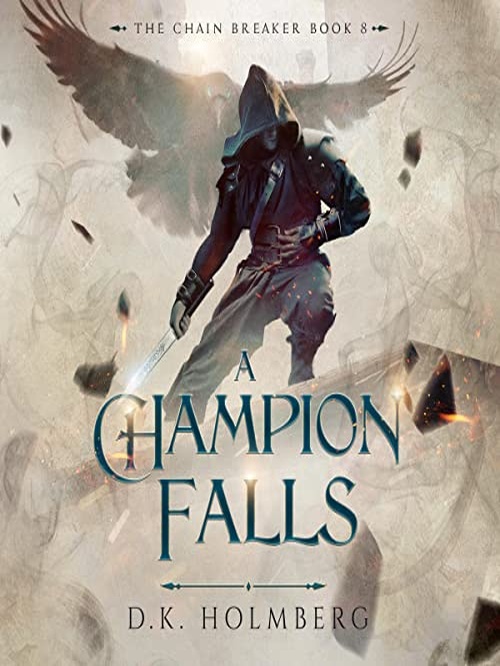
A Champion Falls Review

Hero Break, Hero Grow: Review A Champion Falls

Win Bring Threat

Power change world. Gavin hold destructive nihilar magic. Chauvan fall. Friends safe? No. [[D.K. Holmberg]] show deep theme. Success paint target. Yoran face danger. Enemy hunt El’aras for ancient hate. Gavin must fight. Win battle start new war.

Stripped Soul Find Truth

Narrative arc turn sharp. Gavin isolated. Magic gone. Book ask philosophical question. Who man be without power? Author write: “Assassin. Chain Breaker. Champion.” Old labels fail. Identity stripped bare. Gavin must find internal strength. Character arc show visceral impact. Series [[The Chain Breaker]] push hero down. Hero must rise.

World Turn Dark

Chauvan seek dark allies to kill Gavin. World burn. Lore expand. Book push [[Science Fiction & Fantasy]] genre bounds. High stakes stay real. Friends die if Gavin fail. [[ASH Publishing]] release audiobook. Run 08:33:00. [[John Pirhalla]] speak words. Voice add weight. Rating 4.816666666666666 show reader love.

Final Thought

We judge book strong. We think story hit hard. Lose power force big character growth. [[Fantasy]] elements work well.

Reader Match

Book fit deep readers. People want slow mind shift. Fans love broken heroes.

Ask Self

Tool break. Magic fade. What remain inside you? Read book. Find truth.

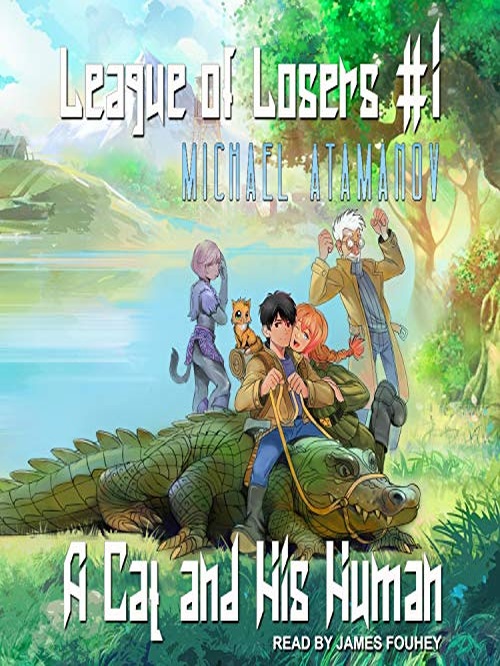
A Cat and His Human Review

Feline Intellect Subvert Primate Brawn

Existential Paradigmatic Shift

Betrayal shatter protagonist Andrei. Reality offer void or primeval realm. Andrei select realm for survival. Man bring ginger companion. Companion possess physical limp. Transition trigger paradigmatic shift.

Consciousness Bifurcated

Realm mutate cognition. Intelligence flow to feline. Brawn remain with human. Narrative arc explore symbiotic survival. Cat wield intellectual rigour. Human devolve into clumsy vessel. Feline evaluate loyalty for future safety. Abandon foolish primate? Protect flesh anchor? Dilemma deliver visceral impact.

Thematic Subversion

[[Michael Atamanov]] dismantle [[Fantasy]] trope. Author erase human supremacy. Feline assert cognitive dominance. [[Alix Merlin Williamson – translator]] preserve prose fidelity. [[James Fouhey]] amplify vocal dichotomy. Work elevate [[Science Fiction & Fantasy]] genre. [[Tantor Audio]] deliver acoustic excellence. [[League of Losers]] series challenge species bias.

Subjective Verdict

We deem work triumphant. 4.45 rating validate merit. Text mock anthropocentric arrogance. Book reward minds seeking unconventional wisdom.

Reader analyze domestic beast. Beast manipulate master? Read text. Uncover truth.

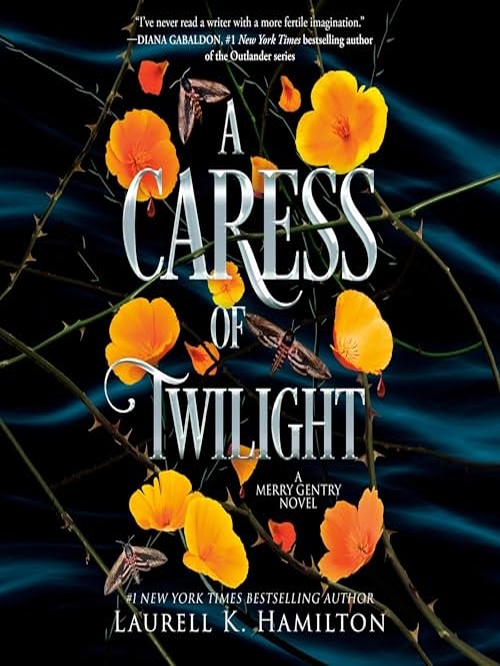
A Caress of Twilight Review

A Twilight Crown: Power, Desire, and the Edge of Faerie

Laurell K. Hamilton’s A Caress of Twilight lands us back in the mercurial realm of Merry Gentry, where the trappings of royalty collide with the relentless grind of homicide investigation. Hamilton invites us to contemplate a world in which the very act of conception becomes a geopolitical lever, and in doing so she fashions a narrative that is as much a meditation on agency as it is a sensational dark‑fantasy mystery.

The Lure of the Unseen Throne

From the opening line—“I am Princess Meredith, heir to a throne—if I can stay alive long enough to claim it.”—we sense a paradox that threads through the entire novel: survival is both the prerequisite and the weapon. Hamilton’s prose, while unapologetically lush, never obscures the structural precision of her plot. The narrative arc is calibrated to keep us aware of three intersecting pressures: political intrigue, sexual sovereignty, and an encroaching cosmic threat. This triadic tension is the first transformative insight, revealing how the author treats the female body not merely as a site of desire but as an arena of power negotiation.

The Politics of Procreation

Hamilton reframes the classic “royal heir” trope by embedding it within a modern feminist discourse. Meredith’s quest to conceive a child before her cousin, Prince Cel, does so is less a romantic subplot than an existential wager: the survival of an entire mythic ecosystem hinges on biological continuity. This reframing offers a second insight—the fecundity of myth can be interrogated through contemporary lenses of bodily autonomy. The author’s willingness to dramatize the physiological stakes of fertility while maintaining the fantastical stakes of Faerie underscores a sophisticated overlap of personal and planetary peril.

An Ancient Evil as Mirror

The novel’s antagonistic force—a primordial darkness threatening the fabric of reality—functions less as a typical monster and more as a symbolic echo of humanity’s own self‑destructive impulses. By juxtaposing visceral murder mysteries with an existential crisis, Hamilton invites readers to consider how personal trauma can mirror cultural decay. This third insight exposes a paradigmatic shift within urban fantasy: the genre’s monsters become metaphors for internalized anxieties rather than external obstacles.

Stylistic Flourish Meets Narrative Discipline

Hamilton’s language oscillates between baroque description and razor‑sharp dialogue, a balance that sustains intellectual rigour without alienating the reader. A notable passage—“The scent of pine and blood mingled, as if the forest itself were inhaling my dread.”—exemplifies her capacity for visceral impact while reinforcing thematic resonance. The prose never devolves into gratuitous eroticism; instead, each intimate scene is calibrated to underscore power dynamics, adding depth to the novel’s exploration of consent and coercion.

Verdict

I find A Caress of Twilight to be a compelling study in how dark fantasy can interrogate contemporary sociopolitical questions while delivering the genre’s expected thrills. Hamilton succeeds in weaving an intricate tapestry where mythic stakes and personal agency are inseparable. The novel will satisfy readers who relish slow‑burn intellectual thrillers that reward close reading, as well as fans of Hamilton’s earlier works who seek a more analytically textured experience.

Ideal audience: readers comfortable with mature themes, who appreciate urban fantasy that doubles as cultural critique; scholars of gender studies interested in the politics of fertility within speculative fiction; and anyone eager to explore how power can be both inherited and manufactured.

What would the crown look like if we, too, were forced to earn it through survival?

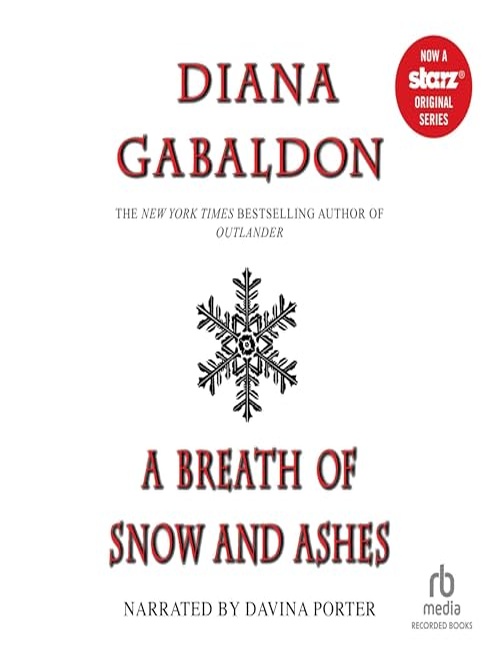
A Breath of Snow and Ashes Review

User [request] book review.
AI [write] English text.
Task [require] sophisticated persona.
[Read text].


The Weight of Tomorrow: Foresight and Fracture in Gabaldon’s Pre-Revolutionary Masterpiece

What does it mean to stand on the precipice of a historical cataclysm, knowing the exact hour the ground will give way? In A Breath of Snow and Ashes, the staggering sixth installment of the Outlander series, author Diana Gabaldon thrusts us into the crucible of 1772 North Carolina. The American Revolution is no longer a distant philosophical debate; it is a bloody, visceral reality encroaching upon the Fraser threshold.

The Burden of Temporal Omniscience

The narrative arc of this volume is defined not merely by action, but by the psychological terror of anticipation. Claire Fraser, our time-tethered anchor, possesses a terrifying omniscience. She knows the colonies will unite and rebel. She knows independence is forged in the blood of British loyalists—loyalists like her husband, Jamie, who is currently tasked by the Crown to maintain order. Gabaldon masterfully balances the tension between macro-historical inevitability and micro-personal survival. By transcending the traditional boundaries of Romance and Fantasy, she delivers a profound meditation on determinism.

Political Friction and the Illusion of Control

Jamie Fraser’s predicament provides a deeply nuanced perspective on leadership and duty. Implored by the governor to unite the people and preserve the colony for King George III, Jamie carries the agonizing privilege of knowing his pacification efforts are ultimately doomed. Gabaldon refuses to paint the pre-revolutionary landscape in simple strokes of retroactive patriotism. Instead, she exposes the localized violence—cabins burned to the ground, communities shattered by ideological rifts. Furthermore, the inclusion of a 1776 newspaper clipping prophesying Jamie’s death acts as a ticking clock within this historical powder keg, elevating the intellectual rigour of the entire plot.

It is also imperative to acknowledge the auditory dimension of this epic. As narrated by Davina Porter and produced by Recorded Books, the spoken rendition captures the sweeping, polyphonic scale of Gabaldon’s universe. Porter’s vocal agility grounds the dizzying historical details, giving undeniable visceral impact to both geopolitical maneuverings and quiet, domestic tragedies.

Ashes of the Old World

My personal assessment of this novel is one of profound admiration. Gabaldon manages to balance an epic historical scope with intimate, unshakeable devotion, never sacrificing the integrity of either. The narrative demands intellectual patience, but it rewards the reader with a distinctly humanistic portrait of survival against insurmountable odds.

This tome is a must-read for those who crave historically immersive, slow-burn epics that challenge conventional storytelling. It is perfect for discerning readers who appreciate deeply entrenched political drama woven through the fabric of an enduring relationship.

As the ashes of the old world settle across the page, we are left to ponder a haunting question: if we held the script of history in our hands, would we possess the fortitude to play our parts, knowing the heartbreak that awaits the final act?

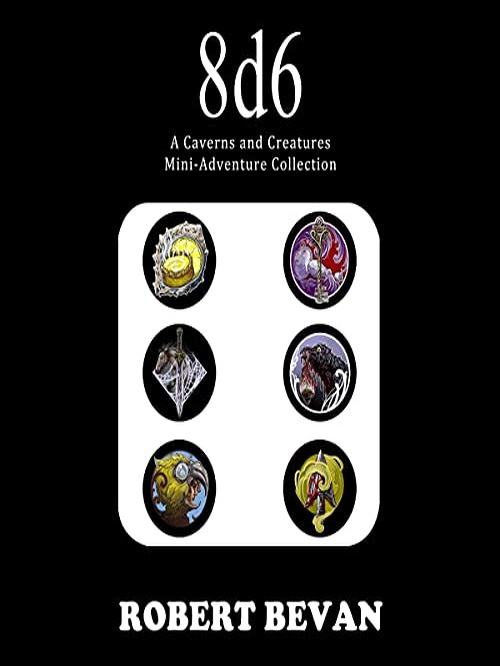
8d6 Review

User need book review. I write. Sophisticated style. English. Markdown below.

The Vulgar Sublime: Deconstructing Robert Bevan’s Comic Absurdity in ‘8d6’

Few literary realms invite as much skepticism from the traditional canon as the LitRPG and comedy-fantasy subgenres. Yet, within this niche, Robert Bevan has carved out a distinct, albeit mud-spattered, throne. His compilation, 8d6, gathers six short stories from the Caverns & Creatures universe, offering a crude yet strangely profound mirror to the tabletop gaming experience. Narrated with characteristically dynamic range by Jonathan Sleep, this collection—spanning tales from This Poo Shall Pass to The Winds of Cooper—serves as both an entry point and a cynical homecoming.

The Anatomy of LitRPG Satire

What elevates 8d6 beyond mere toilet humor is its keen understanding of the psychology of the tabletop gamer. We see this acutely in stories like Fortune Favors the Kobold and Asses to Asses. Bevan does not merely mock the mechanics of roleplaying games; he deconstructs the inherent selfishness of the players. The narrative arc of each story relies not on heroic triumph, but on the inevitable friction between modern human neuroses and high-fantasy stakes. The prose, while peppered with vulgarity, displays a sharp comedic timing and an awareness of genre tropes that suggests a deep affection for the very medium it satirizes.

Visceral Comedy and Narrational Synergy

The visceral impact of the collection is amplified significantly by Jonathan Sleep’s audio performance. In This Poo Shall Pass and Hung Ogre, Sleep’s vocal agility lends a Shakespearean gravity to situations that are fundamentally ridiculous. This juxtaposition creates a delightful cognitive dissonance. I found myself analyzing the socioeconomic plight of fantasy monsters while laughing at vulgar escapades. This is the true strength of Bevan’s work: under the guise of sophomoric humor lies a biting critique of fantasy escapism.

A Verdict on the Absurd

For those seeking a lofty, philosophical epic, 8d6 will undoubtedly disappoint. It is loud, offensive, and proudly lowbrow. However, for the listener who appreciates the subversion of high-fantasy tropes and understands the chaotic energy of a tabletop session gone horribly wrong, this collection is indispensable. It is a masterclass in comic pacing and voice acting, perfect for gamers seeking a dark, satirical escape.

Are we too quick to dismiss the profane in search of the profound? 8d6 suggests that sometimes, the truest human insights are found in the gutter.


Task done. Feedback want?