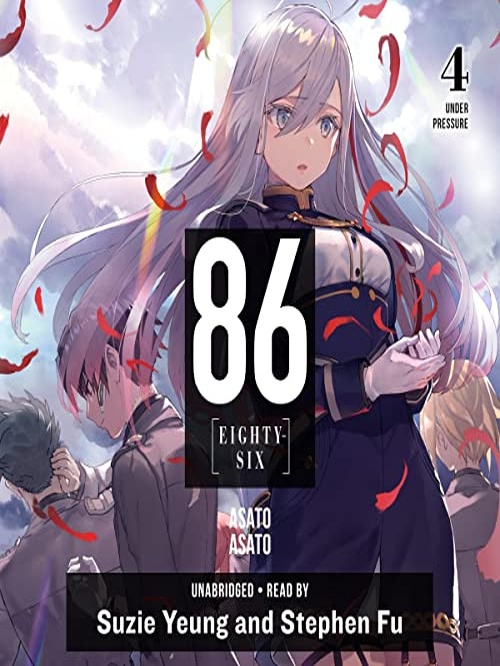
Beneath the Scars of Victory: 86–EIGHTY-SIX, Vol. 4‘s Unyielding March
We often mythologize victory as a definitive end, a narrative punctuation mark where the heroes ride off into a well-deserved sunset. Yet, the most compelling tales, much like history itself, understand that triumph merely shifts the conflict, often revealing new, subtler battles waged within the soul as much as on the battlefield. Such is the sophisticated trajectory of 86–EIGHTY-SIX, Vol. 4, the latest installment from the singular vision of Asato Asato, with Shirabii‘s evocative artistry once again grounding its Science Fiction tapestry, and Roman Lempert‘s translation deftly bridging cultural nuances for Yen Audio. This volume, narrated with compelling gravitas by Suzie Yeung and Stephen Fu, does not merely continue a story; it deepens our understanding of its protagonists’ existential burdens.
Having emerged from the crucible of the Morpho engagement, Shin and the surviving Eighty-Six are, for a fleeting moment, bathed in the afterglow of success. Republic citizens, once deemed expendable, are liberated, and the Spearhead squadron finds a semblance of reunion. Yet, this is no denouement. We are immediately confronted with the ephemeral nature of such triumphs. The true transformative insight here is how the narrative swiftly pivots from the external jubilation to the internal complexities that fester in its wake. Lena, now directly at the helm of the Eighty-Sixth Strike Package, is no longer merely a distant handler but an active, integral force, her presence a potent catalyst. Her leadership is portrayed not just as a strategic shift, but as a profound personal undertaking, demanding a constant navigation between strategic imperatives and the human cost.
Indeed, the psychological landscape of the 86 is meticulously explored. Lena‘s proximity elicits a “softer side” in Shin, a fleeting glimpse behind the hardened façade of a child soldier, hinting at a humanity he has long suppressed for survival. This nuanced character development is then juxtaposed against the awakening of “competitive spirits” within Kurena and Frederica. This isn’t a frivolous rivalry; rather, we perceive it as a poignant expression of attachment, perhaps even a nascent form of emotional possessiveness born from shared trauma and a desperate need for connection in a world designed to sever it. These interpersonal dynamics elevate the series beyond mere battlefield heroics, offering a trenchant commentary on the fragility of human relationships under duress. The authors compel us to question: what solace, what joy, can truly bloom in perpetual shadow?
The narrative, however, allows no lengthy respite for introspection. The newly formed Strike Package is thrust into its inaugural mission, plunging into the chilling depths of an “abandoned subway tunnel” beneath Charité, a secondary capital. This descent is not merely geographical; it is a metaphorical expedition into the very heart of the conflict’s unseen, insidious core. A “subterranean Legion base” awaiting them signifies that the threat is relentless, ever-evolving, and deeply entrenched. This segment powerfully underscores another transformative insight: the war against the Legion is not fought on a singular front but in countless, often unseen, battles, requiring a constant re-evaluation of tactics and an unyielding will to confront an enemy that lurks in the very foundations of the world. The shift in setting, from open skies to claustrophobic tunnels, brilliantly mirrors the tightening grip of the narrative’s tension.
In Vol. 4, Asato Asato demonstrates a remarkable intellectual rigor, crafting a work that refuses simplistic notions of good versus evil or clear-cut victories. The experience, particularly through Yen Audio‘s superb production, is profoundly immersive; Yeung and Fu infuse each character with a resonant authenticity, making the grim realities of their world palpable. We find ourselves not merely observers but fellow travelers, acutely aware of the existential weight carried by these young combatants.
This volume is a testament to the enduring power of Science Fiction to explore the depths of the human condition amidst technological warfare. It is a necessary read for discerning readers who seek more than just action, those who appreciate a narrative that delves into the psychological toll of conflict, the complexities of leadership, and the enduring, if fragile, bonds of camaraderie forged in the fires of adversity. It asks us to reflect not just on the cost of war, but on the true meaning of peace when the enemy remains an ever-present, evolving shadow.