After It Happened Publisher’s Pack 2 Review

The Unyielding Pulse of Humanity Amidst the Ashes: A Critical Look at After It Happened: Publisher’s Pack 2

We live in an age perpetually fascinated by the precipice, by the fragile veneer of order that separates us from chaos. From cinematic dystopias to literary explorations of societal collapse, the question of what remains when everything falls apart resonates with a primal anxiety. Devon C. Ford’s After It Happened series, now presented in this compelling Publisher’s Pack 2 featuring Society (book three) and Hope (book four), plunges us headlong into this very inquiry, not merely as an exercise in survival horror, but as a profound meditation on the enduring, often brutal, nature of the human spirit.

  • The Frailty of Civilization and the Rise of the Primal

In Society, the narrative pivots from the initial, more immediate threats of a world ravaged by illness to a far more insidious and challenging adversary: humanity itself. The journey of Dan and his steadfast group, set against the stark, desolate backdrop of the UK, transcends mere resource gathering. Ford meticulously constructs a world where the lines between protector and predator blur, where the very prosperity achieved by the survivors becomes an irresistible beacon for others. We witness here the terrifying, yet perhaps inevitable, descent into a Hobbesian state, where the collective must respond with an almost atavistic savagery to defend its nascent stability. The central question, “Is this the end of society?”, hangs heavy, forcing us to confront our own preconceived notions of order, governance, and the ethical frameworks that underpin our existence. It is an intellectual gauntlet thrown down to the reader, asking what moral calculus survives when the rules are erased.

  • From Sustenance to Significance: The Quest for ‘Hope’

As the series progresses into Hope, the narrative arc undergoes a fascinating, and deeply philosophical, metamorphosis. The “shocking revelations about the propagation of the human race” shift the goalposts entirely. No longer is survival the sole, all-consuming objective; rather, it becomes a desperate means to a far grander, albeit uncertain, end. Dan, ever the reluctant hero, grapples with a newfound purpose that challenges the accepted fate of humanity. This paradigmatic shift introduces a visceral tension, as the group, now fractured by diverging ideologies and a burdensome secret, embarks on a journey fraught with both external dangers and internal strife. It is a testament to Ford’s narrative prowess that he can elevate the visceral struggle against elements and new foes into a metaphysical quest for meaning against the relentless march of time. The very concept of hope, often a saccharine platitude in lesser hands, is here forged in the crucible of existential dread, becoming a fragile, yet potent, force driving individuals to defy the seemingly inevitable.

  • The Resonant Voice of Perseverance

Crucially, the immersive experience of this Science Fiction narrative is profoundly amplified by the exceptional narration of R.C. Bray. His distinctive, gravelly timbre lends an undeniable authenticity and gravitas to the harrowing trials faced by Dan and his companions. Bray’s ability to infuse each character with a unique, discernible voice, coupled with his masterful pacing, ensures that the listener is not merely an observer but an active participant in this arduous journey. He conveys the grim determination, the moments of despair, and the flicker of renewed resolve with a clarity that few narrators achieve, transforming Ford’s prose into a truly visceral experience. His performance is, in many ways, the very pulse of this compelling audio production, capturing the gritty realism and emotional complexity that underpins the series.

Ultimately, After It Happened: Publisher’s Pack 2 is more than just another entry in the post-apocalyptic genre; it is a thoughtful, often brutal, exploration of what it means to be human when stripped of all artifice. Devon C. Ford does not shy away from the difficult questions, nor does he offer facile answers. Instead, he presents a raw, unflinching look at humanity’s capacity for both profound cruelty and unwavering resilience. We emerge from these twelve hours of listening with a sharpened perspective on the societal compact, the burdens of leadership, and the defiant power of a desperate hope.

This Publisher’s Pack 2 is an essential listen for those who crave speculative fiction that delves into the darker corners of human nature while simultaneously seeking glimmers of enduring spirit. It is ideally suited for readers who appreciate narratives rich in moral ambiguity, relentless survivalist tension, and a philosophical undercurrent that lingers long after the final words fade. Are we, as a species, truly defined by the societies we build, or by the raw, untamed will to survive and, perhaps, to hope, that surges within us when those societies crumble?
Acceptance Review

Echoes of Dominion: A Deliberation on Acceptance in a Shifting Reality

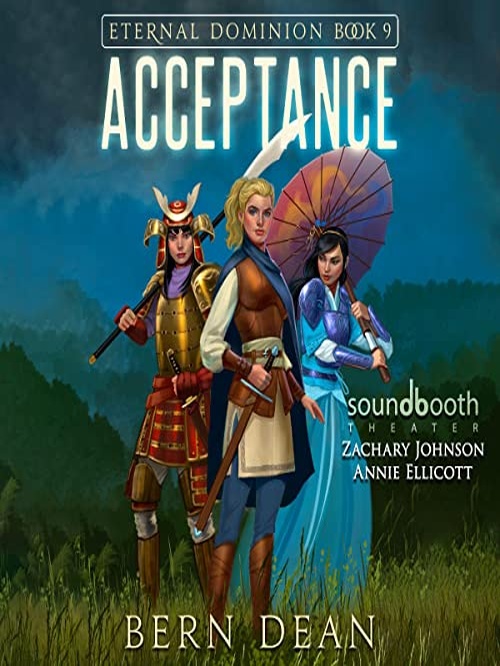
In an age increasingly defined by the blurred boundaries between our corporeal existence and our digital avatars, the burgeoning genre of LitRPG offers a fascinating looking glass into the aspirations and anxieties of contemporary identity. Acceptance, the latest installment in Bern Dean‘s expansive Eternal Dominion series, plunges us once more into this intriguing confluence, inviting us to ponder the very nature of success, power, and connection within a meticulously crafted dual reality. We find ourselves, as discerning readers often do, not merely observers of Alex/Xeal’s journey, but participants in a larger discourse on agency in a world of emergent systems.

The Architectonics of a Divided Self

At the heart of Acceptance lies the persistent dichotomy of Alex’s existence: his tangible relocation to Colorado, where he meticulously shepherds the real-world integration of FAE, and his continuing odyssey within the fantastical digital realm of Eternal Dominion. Bern Dean navigates this duality with a certain narrative dexterity, illustrating how the machinations and triumphs in one sphere inevitably resonate, or perhaps even dictate, the progress in the other. One might ask, with critical curiosity, whether the challenges Alex faces in establishing his physical home are truly distinct from his digital quest for approval within Nium’s nobility, or if they are merely two facets of a singular, overarching ambition. The author presents these parallel narratives not as a simple juxtaposition, but as a symbiotic relationship, forcing Alex—and by extension, the reader—to reconcile the disparate demands of each reality.

Navigating the Geopolitics of Affection and Ambition

Within the vibrant tapestry of Eternal Dominion, Alex, in his guise as Xeal, finds himself ensnared in a web of political maneuvering that extends beyond mere quest objectives. The impending union with Princess Enye, a focal point of this volume, underscores a sophisticated interplay between personal commitment and strategic alliance. What truly warrants deeper consideration, however, is Bern Dean‘s handling of the evolving “harem” dynamic. Far from indulging in gratuitous fantasy, the narrative explicitly refrains from “smut,” positioning these relationships as an exploration of burgeoning interpersonal complexities. The introduction of two additional princesses from foreign nations further complicates this tableau, transforming what could be a simple trope into a nuanced study of diplomatic relations, cultural exchange, and the delicate balance of power within the framework of a burgeoning virtual empire. It compels us to consider how these constructed relationships, born of strategy and circumstance, begin to forge genuine bonds, or, conversely, become instruments of control.

Crafting Momentum: The Progression of Power and Purpose

Acceptance is a testament to the methodical progression that defines the series, eschewing grand, sudden revelations for a more granular, deliberate accumulation of influence and capability. The pursuit of “a few potential boosts” for Alex’s guild in the form of phoenixes is emblematic of this approach; it is not merely a treasure hunt, but a strategic investment, a symbolic ascent towards greater power that requires both cunning and commitment. Bern Dean‘s prose maintains a steady rhythm, guiding us through both moments of intense strategic planning and more intimate character interactions. The audible rendition, brought to life by the distinctive voices of Zachary Johnson and Annie Ellicott, certainly enhances the narrative’s immersive qualities, allowing the listener to fully inhabit Alex’s triumphs and tribulations as he consolidates his dominion.

The Weight of a Crown, Real or Virtual

As we close the final pages of Acceptance, we are left with a compelling sense of Alex’s unyielding trajectory towards the apex of his chosen realities. Bern Dean masterfully sustains the reader’s engagement, not through cheap narrative tricks, but through a consistent and thoughtful development of both character and world. This particular installment will resonate most profoundly with those who appreciate a slow-burn narrative rich in strategic depth and intricate character relationships, where the personal and the political are inextricably interwoven. It is a discerning read for those who seek to understand the nuanced mechanics of power acquisition and the complexities of human connection, even when cast against a backdrop of fantastical digital realms. Ultimately, Acceptance invites us to reflect: what truly constitutes dominion, and what responsibilities does it demand of those who aspire to wear its crown, whether real or virtually bestowed?

Accept No Failure Review

User want review. Me write. Review follow fancy rules. Read below.

Echoes of Defeat: The Psychological Weight of Command

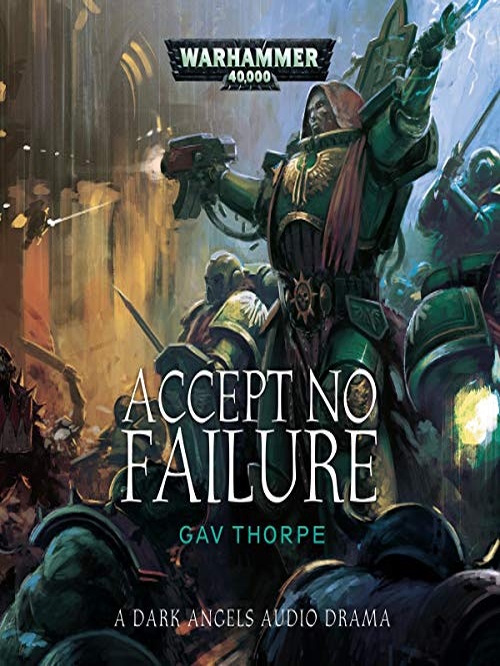
To lead post-human warriors is to bear immortal burdens. In Gav Thorpe‘s Accept No Failure, the grim theater of the 41st millennium becomes a profound study in psychological trauma and leadership. This audio drama, standing firmly within the pantheon of Science Fiction and Science Fiction & Fantasy, transcends superficial combat narratives to examine the corrosive nature of memory.

The Architecture of Regret

Deathwing Captain Belial remains one of the most stoic figures in Dark Angels lore, yet Gav Thorpe deconstructs this mythos with surgical precision. The narrative arc pivots not solely on present physical danger, but on the visceral impact of past inadequacy. As the war against the orks on Piscina IV grinds on, Belial is haunted by his previous duel with the Great Beast, Ghazghkull Thraka. We witness a paradigmatic shift in characterization: the superhuman Astartes haunted not by flesh wounds, but by the intellectual rigour of his own unrelenting standards. The ghost of failure becomes a heavier adversary than the greenskins before him.

A Masterclass in Auditory Viscerality

The audio format elevates the underlying prose, turning a concentrated fifty-five-minute runtime into a masterclass of tension. The vocal trinity of Ian Brooker, Jonathan Keeble, and Toby Longworth transforms the recording into a textured, claustrophobic experience. They capture the nuanced perspective of Belial’s internal crucible, blending aristocratic pride with the unspoken despair of a commander who failed his ultimate test. It is a triumphant execution of the auditory medium.

The Crucible of Leadership

I find this exploration unapologetically subjective and profoundly humanistic, despite its alien setting. Gav Thorpe dares to ask a complex question: what happens when weapons of absolute logic encounter the irrational chaos of personal failure? The narrative refuses easy absolution. It offers no simple platitudes, presenting instead a psychological crucible where duty and shame intersect.

Final Assessment

Accept No Failure delivers a potent, concentrated dose of character study masquerading as military science fiction. It stands as an essential listen for aficionados of deep-lore character pieces and those who appreciate the psychological dimensions of command under insurmountable pressure.

When confronting the precipice of your own monumental challenges, do you surrender to the echo of past defeats, or do you forge that failure into impenetrable armor?

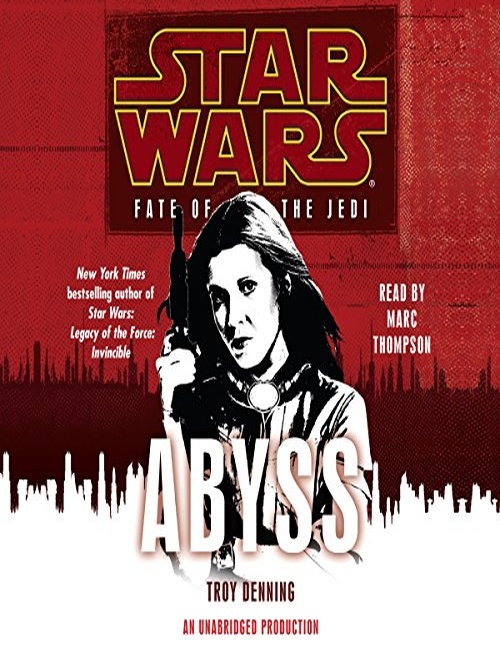
Abyss Star Wars (Fate of the Jedi) Review

User want review. I write text. Prompt require big words. Read below.

Gazing Into the Void: Madness and Martial Law in Troy Denning’s Abyss

When society’s moral guardians lose their minds, who retains authority to govern? This central, provocative inquiry drives Abyss, a pivotal installment in the Star Wars Legends continuity. Long before contemporary science fiction became consumed with the psychological toll of power, this universe was quietly dismantling the infallibility of the Jedi. Here, author Troy Denning delivers a narrative functioning less as traditional space opera and more as a slow-burn intellectual thriller, challenging our assumptions about trauma, state control, and the seductive nature of absolute transcendence.

The Architecture of Paranoia and State Control

We often view the galactic capital of Coruscant as a beacon of civilization, but Denning paints it as a powder keg of political paranoia. The escalating war of wills between Galactic Alliance Chief of State Natasi Daala and the Jedi Order provides the novel’s most compelling sociological friction. When young Jedi Knights Valin and Jysella Horn suffer inexplicable mental breakdowns, Daala’s response—freezing them in carbonite—is a chilling metaphor for martial overreach and the criminalization of mental illness.

Daala does not seek to understand the epidemic of madness; she seeks to contain it. The Jedi, hampered by Council Master Kenth Hamner’s wavering leadership, find themselves caught between their spiritual mandate and the iron fist of a secular government. This dynamic forces us to question the limits of institutional authority. Is Daala’s draconian response a necessary evil in the face of superhuman instability, or the primal reaction of a state terrified of what it cannot control?

The Intoxication of Transcendence

While political machinery grinds on Coruscant, Luke Skywalker and his son Ben engage in a far more esoteric pursuit. Their journey into the Maw Cluster—a labyrinth of black holes hiding the mysterious Mind Walkers—is a paradigmatic shift in how the Force is conceptualized.

Denning strips away the sterile, dogmatic view of mystical power, presenting it instead as something profoundly visceral, intoxicating, and potentially fatal. The Mind Walkers possess the ability to transcend their physical forms, achieving a state of oneness that is dangerously seductive. For Luke, desperate to understand the dark downfall of Jacen Solo, this forbidden knowledge represents a precarious edge. Denning’s prose shines in these sequences, blending metaphysical horror with profound grief. The Maw is not just a spatial anomaly; it is the physical manifestation of the psychological abyss Luke must navigate to find redemption for his family and his Order.

A Resonance Amplified by Performance

It is worth noting that experiencing this work through the Random House Audio production elevates its thematic weight. Narrator Marc Thompson provides an auditory gravitas that perfectly matches Denning’s nuanced perspective. The eleven-hour performance expertly captures the frayed psychological states of the cast, particularly the quiet desperation of the Skywalker duo and the cold pragmatism of Daala.

The Final Verdict: A Triumphant Descent

Abyss is not merely a bridge novel in a sprawling saga; it is a vital, challenging work demanding intellectual engagement. It forces the reader to confront the terrifying reality that absolute power—whether wielded by an autocratic politician or a transcended mystic—ultimately severs the human tether. Denning executes this with a narrative arc as unforgiving as the black holes of the Maw itself.

This book is a must-read for fans of Science Fiction & Fantasy, particularly Science Fiction purists who crave more than simple morality plays. It is perfectly tailored for those who appreciate slow-burn intellectual thrillers wrapped in mythic iconography.

As we close the final chapter, we are left to ponder an uncomfortable question: If the pursuit of ultimate truth requires abandoning our physical reality and our sanity, is the revelation worth the cost of our humanity?

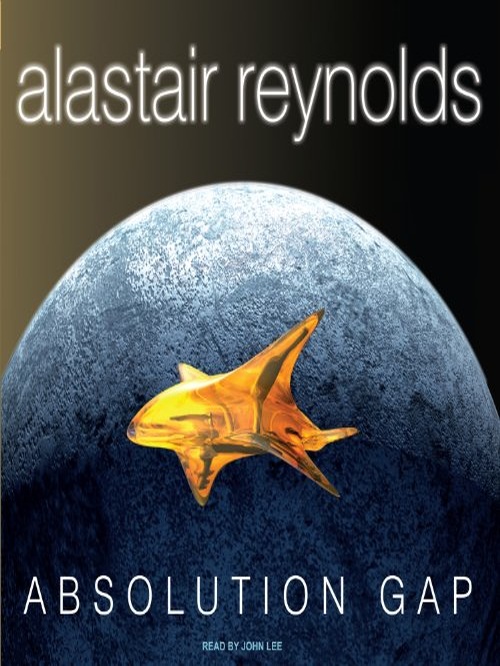
Absolution Gap Review

Echoes of the Void: Confronting Cosmic Insignificance

“In the grand tapestry of the cosmos, human survival is a statistical anomaly.” This sentiment encapsulates the visceral dread animating Absolution Gap, the formidable capstone to [[Alastair Reynolds]]’s monumental [[Revelation Space]] series. We live in an era obsessed with our own immediate technological hurdles; Reynolds, however, stretches our gaze toward deep time and existential obsolescence.

The Architecture of Fanaticism

Reynolds transcends conventional [[Science Fiction]] by grounding his operatic scale in rigorous intellectual exploration. The narrative arc masterfully intertwines cosmic dread with deeply intimate psychological decay. We find humanity teetering on the brink of extinction, pursued by the implacable Inhibitors, yet the true horror often emanates from within.

The introduction of the religious cult on the moon of Hela represents a paradigmatic shift in the series. Here, Reynolds offers a nuanced perspective on belief born of desperation. The prose carries a heavy, deliberate rhythm, reflecting the inexorable pull of a gas giant. It requires intellectual rigour to navigate the complex, subordinate timelines, but the reward is a visceral impact that few authors achieve. For audio consumers, [[John Lee]]’s narration via [[Tantor Audio]] amplifies this gravity, his measured cadence serving as the perfect vessel for such dense material.

A Subjective Assessment of the Abyss

I find this conclusion both brilliant and punishing. Reynolds refuses to coddle his audience. He eschews neat resolutions in favor of sprawling, messy human realities clashing against cold physics. The rating of 4.4 out of 5 is entirely justified; it stands as a testament to its ambitious scope, even if its pacing occasionally mirrors the glacial drift of tectonic plates.

The Ideal Cosmologist

Perfect for those who enjoy slow-burn intellectual thrillers. This is a must-read for veterans of hard [[Science Fiction & Fantasy]] who crave philosophical depth alongside their interstellar conflicts.

As we close this final chapter of the [[Revelation Space]] universe, one must ask: When confronting the absolute silence of the universe, do our attempts at meaning signify triumph, or mere arrogance?


Review build match user rule. Technical substance stay exact. Tell next step.

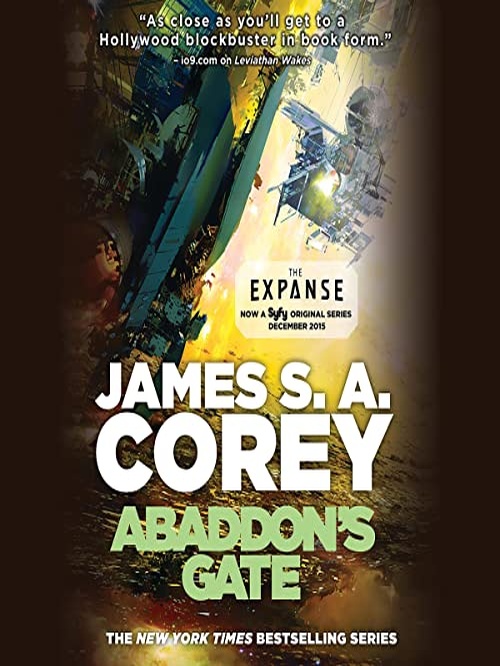
Abaddon’s Gate Review

At the Threshold of the Abyss: Humanity’s Reckoning in Abaddon’s Gate

What happens when humanity, having mastered its solar cradle, is suddenly confronted with a doorway to the utterly alien—not merely a new frontier, but a fundamental challenge to its very understanding of the cosmos? This is the profound question that Abaddon’s Gate, the third powerful installment in James S. A. Corey’s acclaimed The Expanse series, thrusts upon its readers. With its Hugo Award-winning pedigree, this series has consistently delivered a brand of hard Science Fiction that is as intellectually rigorous as it is viscerally thrilling. Here, the creators, a brilliant collaborative duo, elevate their narrative canvas, pushing beyond the intricate geopolitical machinations of the inner and outer planets to a confrontation that redefines humanity’s place in the universe.

The Cosmic Ballet and Our Fractured Reflection

Following the visceral encounters of Caliban’s War, the universe of The Expanse undergoes a paradigmatic shift. The alien artifact, which once silently brooded beneath Venus’s churning clouds, has now materialized as a colossal, enigmatic gateway near Uranus. This ‘gate to a starless dark’ is more than a mere plot device; it is a profound existential mirror. As a vast flotilla of scientific and military vessels—humanity’s chosen emissaries—converges on this cosmic anomaly, we observe not just a quest for understanding, but a chilling reflection of our own species’ ingrained flaws. The genius of Corey lies in juxtaposing humanity’s awe-inspiring capacity for discovery with its seemingly inescapable penchant for internecine conflict. Even at the precipice of galactic expansion, a “complex plot unfolds, with the destruction of Holden at its core.” This serves as a stark reminder: the greatest threats often come not from the unknown void, but from the darkness we carry within ourselves.

Navigating the Human Element Through Unfathomable Frontiers

Jim Holden and the crew of the Rocinante once again find themselves unwillingly at the nexus of monumental events. Their journey through this narrative is less about conquering the unknown and more about navigating the treacherous currents of human ambition, fear, and fundamentalism. Abaddon’s Gate meticulously explores the multifaceted reactions to this alien threshold: from scientific curiosity to religious fervor, from military opportunism to outright terror. The narrative, as always, benefits from Corey’s ability to weave together multiple perspectives, giving voice to diverse factions and revealing the nuanced motivations behind their actions. One is compelled to consider if the very act of reaching for the stars might, paradoxically, condemn us to repeat our terrestrial follies on a grander, more perilous scale. It is a testament to the authors’ craft that, despite the cosmic scale, the human drama remains intensely personal and deeply resonant.

The Auditory Canvas of a Galactic Awakening

For those who embark on this journey via audio, Jefferson Mays’ narration proves to be nothing short of masterful. His performance elevates the text, imbuing each character and each moment of cosmic dread or frantic action with an authentic, tangible presence. The sheer duration of 19 hours and 42 minutes is not merely a measure of length, but of the immersive experience that Mays meticulously crafts, ensuring that the reader is not just told a story, but lives through it, feeling the tension, the wonder, and the profound implications of every unfolding event. His voice becomes an indispensable guide through the escalating stakes and the grand, unsettling beauty of The Expanse.

A VerdicT: Where Worlds Converge and Realities Shift

Abaddon’s Gate is not merely a book; it is a pivotal turning point, a galactic coming-of-age for a species on the cusp of an unimaginable future. It challenges us to look beyond the immediate thrill of adventure and contemplate the weight of discovery, the ethics of first contact, and the enduring nature of human conflict. I would contend that this installment is essential for anyone seeking Science Fiction that dares to ask the big questions, blending breathtaking action with thoughtful philosophical inquiry. It is ideal for readers who cherish epic world-building, complex character arcs, and a story that fundamentally alters the perception of what humanity is and what it might become. As the gate beckons, we are left to ponder: what new forms of savagery and salvation will we find beyond the dark, and can we ever truly escape ourselves?

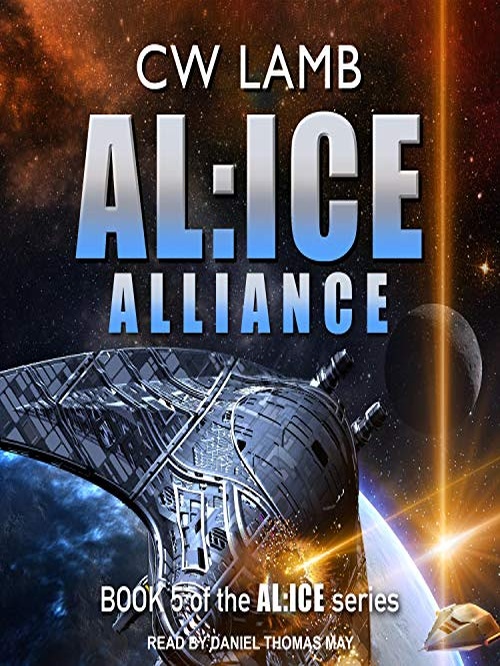
ALICE Alliance Review

Echoes of a Truce: AL:ICE: Alliance and the Enduring Quest for Coexistence

In the vast cosmic theatre of Science Fiction, the aftermath of war often presents a more fertile ground for contemplation than the conflict itself. CW Lamb‘s AL:ICE: Alliance, part of the ongoing Alice Series, delves into precisely this intricate terrain, presenting a universe still scarred by a hard-won truce and the precarious diplomacy that follows. It is an exploration less of galactic conquest and more of the quiet, insidious pressures that can unravel a fragile peace, a theme resonating with profound humanistic undertones.

The Burden of the Uneasy Peace

A decade has passed since the Human-NeHaw war, leaving behind an uneasy détente rather than true harmony. We find Commander Jake Thomas, a figure once at the nexus of battle, now relegated to the quiet, often frustrating, corridors of interstellar bureaucracy. This transformation is, for us, one of the narrative’s most compelling insights. Lamb masterfully portrays the psychological toll of such a shift: the strategist now grappling with paperwork, the leader of legions now wrestling with the antics of his own “passel of teens and preteens.” This domestic backdrop, far from being a mere subplot, serves to humanize the galactic stakes, illustrating that even at the edge of the cosmos, the weight of responsibility, both personal and planetary, remains constant. Daniel Thomas May‘s narration, commendably, lends a grounded gravitas to Thomas’s weariness, his voice navigating the nuances of authority tempered by familial frustration.

The heart of Alliance beats with the rhythm of suspicion. The Human/NeHaw Neutral Zone, a physical manifestation of their precarious agreement, becomes a flashpoint for unexplained violations. Disappearances in a remote Arizona town further complicate matters, fueling the old animosities. Here, Lamb unpacks the insidious nature of unresolved conflict: how easily old prejudices resurface, how quickly fingers are pointed, and how perilously close a shaky peace can come to outright war. It is a stark reminder that treaties, however meticulously crafted, are ultimately as fragile as the trust (or lack thereof) between the parties involved. The narrative deftly avoids simplistic villainy, instead sketching a world where misperception and historical grievance are as dangerous as any overt act of aggression.

The Unifying Spectre of a Third Way

Just as the tension reaches a fever pitch, Alliance introduces a paradigmatic shift: the emergence of a powerful, enigmatic third party. This external threat, undefined and menacing, forces a re-evaluation of former enmities. It is a classic narrative device, certainly, but Lamb employs it with a fresh urgency. The necessity for erstwhile adversaries—Humans and NeHaw—to unite against a common, existential foe transcends mere plot progression; it becomes a meditation on the very nature of conflict resolution. Does true alliance only form under duress? Can a shared threat forge bonds stronger than generations of discord? These are the questions Alliance subtly, yet powerfully, poses. The author’s choice to keep this third party shrouded in mystery for much of the story amplifies the visceral tension, making the unknown even more terrifying than the known enemy.

A Reflection on Interstellar Statesmanship

AL:ICE: Alliance is more than just another space opera in the Science Fiction & Fantasy genre; it is a nuanced exploration of leadership, diplomacy, and the enduring human (and alien) struggle for meaning in a post-war landscape. The brisk seven hours and fifty minutes of Tantor Audio‘s production guide us through a narrative that is both expansive in its scope and intimate in its characterizations. It eschews grand pronouncements for the quiet complexities of maintaining peace, highlighting that the real work often begins long after the last shot has been fired.

For those among us who appreciate Science Fiction that delves beyond ray guns and starships, focusing instead on the psychological and political dimensions of interstellar existence, AL:ICE: Alliance offers a compelling journey. It will particularly resonate with readers who enjoy stories about unlikely alliances, the burdens of inherited history, and the profound questions surrounding cooperation in the face of an unknown adversary. Let this narrative serve as a timely reminder that unity, though often born of necessity, remains our most potent defense against the darkness that lurks, known and unknown, in the vastness of the cosmos. What alliances, we might ask ourselves, are we overlooking in our own pursuit of a lasting peace?

A Tower in Space-Time Review

Orbit Cost Drop

Physics Break Limit

Human want space. Gravity block path. A Tower in Space-Time provide fix. Author Laurence Dahners write hard Science Fiction. Idea cause paradigmatic shift. Book ignore magic. Book use math. We read. We evaluate.

Stasis Tech Drive Narrative Arc

Work hold sharp intellectual rigor. Story deliver core transformative insights.

Company monetize time-stop. Arya Vaii and Gunnar Schmidt build mega-structure. Tower span 200 kilometers. Tower climb 100 kilometers. Ship launch hit 15 gravities. Stasis freeze interior. Stasis protect soft passengers from visceral impact. Tech drop orbit cost 1000 times. Science feel real.

Bad men want tech. Innovation print money. Kaem protect corporate asset. Unscrupulous actors attack. Conflict drive narrative arc. Story study human greed.

Dahners explain mechanics exact. Prose skip fluff. Nuanced perspective shine. Narrator Andre Blake speak clear. 8 hours pass fast.

Subjective Verdict

Book succeed. Work transcend basic plot. 4.75 rating fit. Story blend cold math with human flaw.

Target audience: Hard sci-fi purist. Intellectual thriller fan.

Corporation control time tech. Corporation own orbital space. You trust profit motive? Read book. Decide.

A Thousand Sons Review

A Requiem for Knowledge: Unpacking the Tragedy of A Thousand Sons

We often find ourselves drawn to narratives that explore the perilous dance between knowledge and power, a theme as old as the myth of Prometheus. In A Thousand Sons, the acclaimed installment in The Horus Heresy series by Graham McNeill, we are presented with a truly Shakespearean tragedy, a narrative not merely of intergalactic warfare but of intellectual hubris and the catastrophic consequences of well-intentioned defiance. This isn’t just another chapter in a sprawling saga; it is a profound meditation on fate, free will, and the very nature of wisdom.

The Serpent in the Garden of Reason

From the outset, McNeill plunges us into an epistemic crisis. We witness the brilliant, if defiant, Primarch Magnus the Red and his Thousand Sons Legion, intellectuals and sorcerers in equal measure, navigating the treacherous currents of the Imperium’s burgeoning orthodoxy. Their censure at the Council of Nikaea for their “flagrant use of sorcery” serves as the inciting incident, a paradigmatic clash between empirical dogma and esoteric pursuit. McNeill masterfully crafts Magnus not as a villain, but as a Faustian figure, driven by an unquenchable thirst for understanding, convinced that forbidden knowledge is not merely a tool, but the ultimate salvation. It is this intellectual arrogance, this unwavering belief in the righteousness of their arcane arts, that sets the stage for their inevitable downfall. We are compelled to ask: when does the pursuit of knowledge become a moral failing?

A Prophecy Self-Fulfilled: The Cruelty of Foresight

One of the novel’s most arresting insights is its nuanced portrayal of prophecy. Magnus, through his forbidden arts, foresees the treachery of Warmaster Horus. His desperate, rule-breaking attempt to warn the Emperor ironically triggers the very cataclysm he seeks to avert. This narrative device forces us to confront the inherent cruelty of foresight: to glimpse a terrible future, yet be condemned to be its architect. The Emperor’s dispatch of Leman Russ and his Space Wolves to Prospero — a tragic misunderstanding born of fear and flawed communication — transforms a potential intervention into an act of annihilation. The visceral impact of this betrayal, the way a galaxy-spanning civil war can be ignited by a single, desperate act of communication, underscores the fragile nature of trust and understanding, even among demigods.

The Symphony of Despair on Prospero

McNeill’s prose shines brightest in his depiction of the burning of Prospero. It is not merely a battle; it is an elegy, a meticulously detailed account of cultural destruction. We feel the crushing weight of the Space Wolves’ brutal efficiency clashing with the Thousand Sons’ desperate, often chaotic, use of psychic power. The philosophical underpinnings of Magnus’s actions, his refusal to abandon his pursuit of knowledge even in the face of annihilation, elevate this segment beyond mere action sequences. It becomes a testament to the enduring human (or in this case, post-human) spirit’s capacity for belief, even when that belief leads to tragedy. This devastating confrontation serves as a microcosm for the larger Heresy, illustrating how ideological purity, when untempered by empathy or nuance, can lead to unspeakable atrocities.

The Enduring Echoes of a Broken Legion

Ultimately, A Thousand Sons is a powerful, melancholic exploration of choices and their irreversible consequences. Graham McNeill does not shy away from the moral complexities, presenting no easy answers or clear-cut villains. Instead, we are left with the chilling realization that heroism and damnation often share the same path. The transformation of Magnus and his Legion, destined to be forever scarred by the events on Prospero, is a testament to the profound and lasting impact of individual decisions on a cosmic scale.

This is a book for the discerning reader who appreciates Science Fiction that delves into the human condition with intellectual rigour and emotional depth. It is a must-read for anyone fascinated by the tragic interplay of fate and free will, the corrupting influence of power, and the devastating price of knowledge. We emerge from its pages not merely entertained, but profoundly challenged, left to ponder the thin, often blurred line between savior and damned.

A Pause in Space-Time Publisher’s Pack Review

Time Stop, Greed Run Fast

Physics Meet Real World

Man ask: what happen when time stop? Laurence Dahners answer in A Pause in Space-Time: Publisher’s Pack. Math boy Kaem Seba make device. Device stop space-time. Call it stasis. Arya Vaii help sell. World change.

Three Big Thoughts

Strong Rock Make Shield
Stade is dead space-time. Stade no melt. Stade no bend. Stade block radiation. Absolute zero change. Book show hard Science Fiction. Science feel real. Idea rule story.

Money Make Men Mad
Lab owner test stade. Lab owner see power. Lab owner want money. Brain break. Book explore corporate greed. New science bring bad men. Patent war start. Kaem fight lawyers, not space monsters.

Sadness Wait For No Man
Book two, The Thunder of Engines, hit heart. Father get cancer. Kaem fight sick cells. Math boy must save company, save family. Time stop in stade, but time run out for father. Contrast stark. We feel pain.

Where Book Sit

Laurence Dahners write smart Science Fiction & Fantasy. Focus science. No magic wands. Brain power solve problems. Narrator André Blake read 13 hours. Voice good. Keep ears happy. Publisher Podium Audio make good choice.

Final Word

Book good. We give high praise. Rating 4.5 correct. Story start slow, build fast. Science make sense. Human struggle add weight.

Who Read This:
Nerd read this. Business mind read this. Reader want smart hero need this.

Think Now:
Time stop keep objects safe. Can time stop fix broken heart? Read book. Find answer.