A New Dawn Star Wars Review

Age Of Empire: Critique A New Dawn

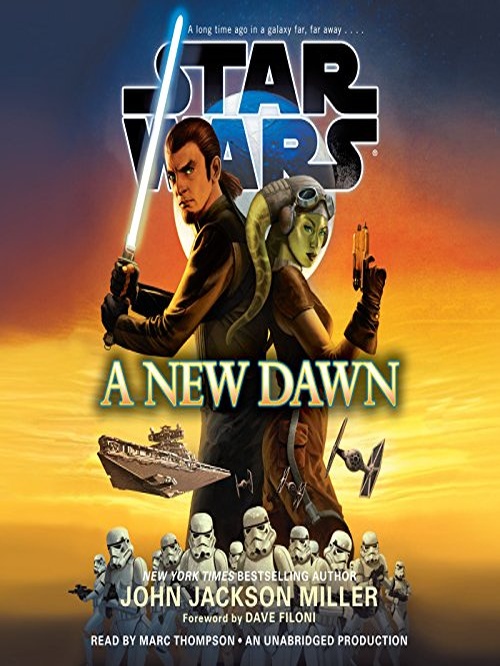
Republic fall. Jedi die. Empire rise. We face dark times. John Jackson Miller pen book. He explore void between trilogies. Text analyze systemic oppression.

Crucible Of Dissent

Repression breed rebellion. Palpatine grip choke galaxy. Peace equal brutality. Order equal total control. We observe psychological toll. Citizens become unexploded bombs.

Broken heroes meet. Kanan Jarrus run. He hide Jedi past. Hera Syndulla scheme. She seek freedom. Paths cross. Destiny ignite. Narrative arc map deep trauma. Miller construct nuanced perspective. Characters reject fate initially. Reluctance ground story.

Corporate evil dominate. Villain Count Vidian personify industrial greed. Machine replace humanity. Paradigmatic shift occur. Text deliver visceral impact.

Prose And Execution

Miller write sharp text. Pacing rapid. Work bridge Episode III and Episode IV. Lucasfilm Story Group collaborate. Canon align exact.

Audiobook format excel. Marc Thompson narrate. Voice acting elevate narrative. Science Fiction & Fantasy genre demand strong voice. Thompson provide complete immersion.

Judgment Of Work

I evaluate book strong. Text dissect imperial fascism unapologetically. Intellectual rigor present. Plot maintain momentum.

Audience map clear. Work fit Science Fiction purists. Book reward slow-burn political thriller fans.

Emperor tighten grip. Oppression spark inevitable fire. You submit or ignite? Read book. Find answer.

A Man on Fire A Cyberpunk LitRPG Review

The Incendiary Ascent of a Cybernetic Sovereign: Warby Picus‘s Vision of Power and Anarchy

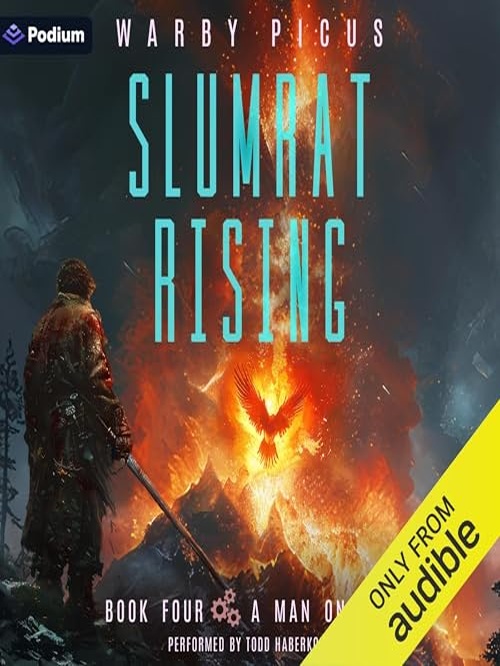
In an age where the lines between gritty cyberpunk dystopias and the fantastical realms of magic are increasingly blurred, Warby Picus‘s A Man on Fire: A Cyberpunk LitRPG ignites the fourth volume of the Slumrat Rising series with a potent blend of ambition, power, and moral ambiguity. We find ourselves, as discerning readers, not merely observing a narrative unfold, but rather grappling with the profound implications of a singular will reshaping an entire world. This is not simply a tale of a hero’s journey; it is an unsettling meditation on the nature of absolute power and the violent birth of a new order.

The Tyrant’s Metamorphosis: From Scum to Sovereign

Truth Medici’s trajectory in Slumrat Rising has been nothing short of meteoric, and in this installment, his evolution reaches its zenith, or perhaps, its nadir, depending on one’s perspective. Picus masterfully charts the transformation of a “desperate slumrat” through the ranks of burglar, mercenary, and terrorist, culminating in his coronation as the “revered prince of a kingdom to come.” This isn’t merely character development; it’s a profound exploration of identity forged in the crucible of cultivation and raw ambition. The narrative revels in the intoxicating allure of power, as Truth, now an “immortal heir to a dynasty hidden for millennia,” finds himself “pampered by succubae, demons, and sprites.” Here, Picus brilliantly subverts traditional heroic tropes, presenting us with a protagonist whose ascent is fueled by a morally complex drive, blurring the distinctions between righteous rebellion and nascent tyranny. We are compelled to confront the uncomfortable truth: what happens when the oppressed becomes the oppressor, wielding their newfound strength with an unyielding, almost divine, authority?

The Geopolitics of Grit: A World on the Brink

Beyond Truth’s personal apotheosis, A Man on Fire expands its canvas to depict a world on the precipice of profound, violent change. The backdrop of “a vast nationalist uprising reaching its fiery peak” is quintessentially cyberpunk, painting a picture of systemic decay and revolutionary fervor. Yet, Picus imbues this setting with a unique urban fantasy texture, suggesting ancient forces at play beneath the high-tech facade. The narrative shrewdly positions Truth not merely as a participant, but as a central, almost mythical, figure in this societal upheaval. His contemplation – “What does he really want the end of the world to look like when all is said and done?” – transcends mere plot, delving into the philosophical underpinnings of revolution and the difficult choices faced by those who dare to dismantle the existing order. The tension between Truth’s personal ambitions and the broader revolutionary goals championed by his estranged brother, Vig, forms the emotional and intellectual core of this volume, prompting us to question the divergent paths to systemic change.

Echoes of Empire: The King Rat’s Return

The true genius of Picus‘s storytelling often lies in the subtle irony and potent symbolism woven into the narrative. Truth’s journey back to “impoverished Harban,” not as the “slumrat” he once was, but as “King Rat,” is a powerful motif. It speaks to a reclamation of identity, not by shedding his past, but by embracing and elevating it. This return signifies not just a physical homecoming, but a symbolic inversion of societal hierarchy, where the lowest becomes the highest, and the marginalized seizes control. The promise that “his reign will count for more than anyone can imagine” hints at a legacy that will challenge established norms, leaving us to ponder the very fabric of power, lineage, and destiny in a world teetering on the brink of an entirely new age. This is a narrative that consistently asks difficult questions, refusing easy answers.

The Auditory Experience: A Symphony of Anarchy

For those who engage with their literature through the immersive medium of audiobooks, Podium Audio‘s production, skillfully narrated by Todd Haberkorn, offers a truly captivating experience over a substantial twenty-hour runtime. Haberkorn‘s ability to convey the gravelly ambition of Truth Medici, the urgency of a world in revolt, and the ethereal whispers of arcane powers undoubtedly adds another layer of depth, transforming the reading into an auditory journey through Picus‘s richly imagined, volatile universe. It is a testament to the power of sound in enhancing the visceral impact of such a complex, genre-bending saga.

A Deliberate Descent into Dominion

A Man on Fire is an unapologetically audacious entry into the Science Fiction & Fantasy canon, one that refuses to be neatly categorized. It is a work for those who find solace not in conventional heroism, but in the intricate dance of power, philosophy, and consequence. We recommend it unequivocally to readers who are drawn to narratives that challenge their moral compass, revel in the intoxicating ascent of anti-heroes, and appreciate a meticulous fusion of cyberpunk‘s gritty realism with urban fantasy‘s mystical undercurrents. Warby Picus has crafted more than just a story; he has offered a mirror, reflecting our own uncomfortable fascination with power and the complex tapestry of human ambition. What, indeed, would you have the end of the world look like, if you held the reins of destiny?

A House Divided Review

The Crucible of Allegiance: Examining A House Divided

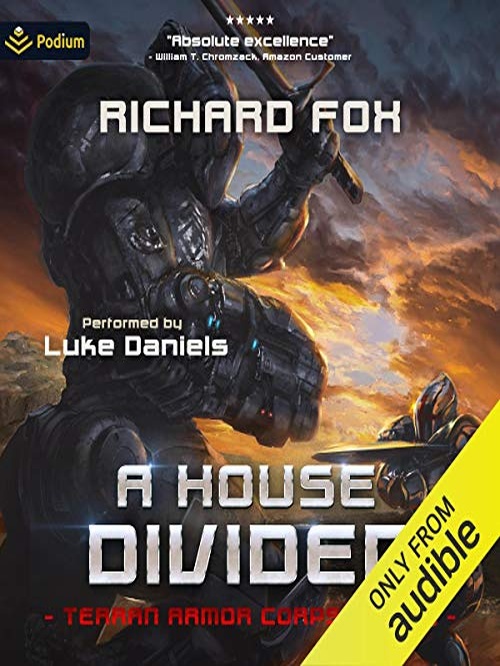
In the vast and often tumultuous landscape of Science Fiction, where empires rise and fall with cosmic indifference, few narratives truly dare to peer inward, confronting the schisms that fracture not just galactic federations, but the very essence of human loyalty. Richard Fox‘s A House Divided, the latest installment in his formidable Terran Armor Corps series, plunges us into precisely such a crucible, asking not merely how one fights, but for whom, and at what cost. This is not simply a tale of interstellar warfare; it is an intricate study of geopolitical fractures and the enduring, often painful, bonds that bind a fighting force.

The Internal Front: When Ideals Collide

From the very outset, A House Divided signals its intent to move beyond the conventional skirmishes of space opera. Fox masterfully constructs a narrative that foregrounds the perilous internal conflicts brewing within the Terran forces themselves. We are compelled to confront the sobering reality that even the most disciplined and formidable military apparatus is susceptible to the human frailties of ideology, ambition, and fractured trust. This nuanced portrayal of internal strife serves as a profound reflection on the enduring question: what happens when the enemy wears the same uniform, or worse, operates under the same banner, albeit with a divergent vision? The narrative eschews simplistic black-and-white morality, instead painting a complex tapestry where protagonists wrestle with choices that blur the lines between duty and conscience, allegiance and personal conviction.

Crafting Cohesion Amidst Chaos

Richard Fox demonstrates an impressive command of his fictional universe, enriching the established lore of the Terran Armor Corps with layers of political intrigue and character-driven drama. The pacing is relentless, yet never at the expense of thematic depth. We witness the visceral impact of combat, a hallmark of military Science Fiction, but it is tempered by moments of quiet introspection and strategic deliberation. The author’s prose, while direct and purposeful, consistently manages to evoke the immense scale of the conflict while grounding the stakes in the personal struggles of its characters. It is a testament to Fox‘s skill that he can balance grand galactic maneuvers with the intimate dilemmas faced by individuals caught in the maelstrom. And for those who traverse this narrative through sound, Luke Daniels‘s narration lends an authoritative gravitas, his nuanced delivery capturing the diverse emotional registers required by such a story.

The Echoes of Fractured Loyalty

One of the more compelling aspects of A House Divided lies in its exploration of the psychological toll of internal conflict. What does it mean for a soldier, or indeed, an entire corps, when the very foundations of their purpose are called into question? Fox delves into the existential weight of such a situation, presenting characters whose loyalties are tested by competing demands, moral ambiguities, and the specter of past grievances. This thematic richness elevates the book beyond mere genre entertainment, prompting us to reflect on the fragility of institutions and the persistent human drive for self-determination, even when it leads to self-inflicted wounds. The book posits that true strength is not merely in might, but in the painful process of confronting and, perhaps, mending the rifts within.

A Call for Unity, or Resignation?

Ultimately, A House Divided stands as a potent contribution to contemporary Science Fiction. It is a meticulously crafted narrative that resonates with the timeless struggle between unity and division, collective purpose and individual will. Richard Fox challenges us to look beyond the immediate battle and consider the deeper ideological currents that shape conflict, both on and off the battlefield.

This book is an indispensable read for those who cherish military Science Fiction that dares to transcend mere action, engaging with the complex psychological and political undercurrents of war. It will particularly appeal to readers who appreciate nuanced character development and plots steeped in strategic depth and ethical dilemmas. One leaves the final page not with simple satisfaction, but with a lingering, thought-provoking question: in the face of such profound internal division, can any house, however grand or powerful, truly stand united? The answers, as Fox so ably demonstrates, are rarely simple, and often, agonizingly earned.

A Game with No Rules Review

When Empires Fracture: Order, Loyalty, and the Chaos Between

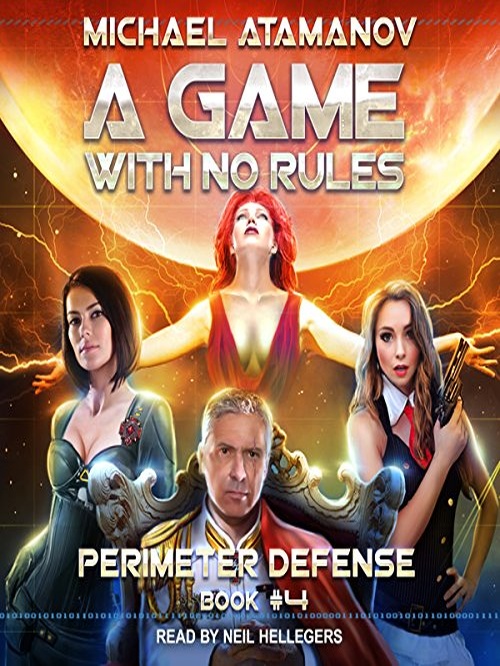
There is a particular dread that comes with watching a great institution collapse—not in a single catastrophic moment, but through a slow, grinding erosion of trust, obedience, and shared purpose. Michael Atamanov‘s A Game with No Rules, the latest installment in his Perimeter Defense series, understands this dread intimately. It weaponizes it.

The Anatomy of Institutional Decay

The Empire is crumbling. Not from without—at least, not yet—but from within, as the Great Houses turn increasingly inward, their loyalties calcifying into self-interest. Atamanov constructs this collapse with a structural intelligence that elevates the book well above standard Science Fiction space opera. This is not a story about laser battles and starship maneuvers, though those elements exist. It is, at its marrow, a study in political entropy—the moment when the center can no longer hold and every peripheral power begins to sense, with animal cunning, that the apex predator has grown old.

What makes Atamanov’s framing so sharp is his refusal to assign clean moral coordinates. The Great Houses are not simply villainous. They are rational actors responding to a weakened signal. That is a far more uncomfortable truth to sit with.

Three Tensions That Define the Narrative

First, the question of coordination versus coincidence. Atamanov plants this seed early and tends it with admirable patience. Are the cascading defections a spontaneous collapse, or does an unseen hand orchestrate them? This dramatic irony—the reader suspects conspiracy while the protagonist struggles to confirm it—generates a sustained intellectual tension that rewards attentive reading. It mirrors, not incidentally, how real political crises unfold: ambiguously, maddeningly, without the clean edges that hindsight later imposes.

Second, the alien invasion as structural pressure, not mere plot device. In lesser hands, the encroaching alien threat would serve as straightforward antagonism—the external monster that forces humanity to unite. Atamanov is more sophisticated. The invasion functions as a stress test, a forcing mechanism that exposes every fracture line the Empire had papered over with ceremony and tradition. The aliens matter less as characters than as a mirror held up to human dysfunction.

Third, the traitor aristocrats—and what their betrayal reveals about belonging. The rumored alliances between influential nobles and alien forces carry genuine psychological weight. Atamanov understands that treason is rarely born of ideology alone. It emerges from accumulated grievance, wounded pride, the slow accumulation of slights from institutions that promised more than they delivered. These figures, even when condemned, feel legible.

Atamanov in the Landscape of Military Science Fiction

Situating A Game with No Rules within the broader Science Fiction tradition, one finds Atamanov occupying an interesting middle ground—neither the austere, idea-driven density of Alastair Reynolds nor the propulsive pulp of early David Weber. He writes with the pacing instincts of someone who understands serialized fiction deeply: momentum is everything, but momentum must be earned through character investment, not action inflation.

Within the Perimeter Defense series, this volume marks what feels like a genuine narrative escalation—a pivot from tactical problem-solving toward something more philosophically ambitious. The stakes are no longer merely military. They are civilizational.

Neil Hellegers’ narration, across nearly thirteen hours, serves the material well. His register carries the right blend of world-weariness and urgency, lending the political machinations a gravity that cold prose alone might struggle to sustain.

Who Should Make This Journey

A Game with No Rules rewards readers who have followed the series, though its political architecture is drawn clearly enough that a patient newcomer can find their footing. It is ideally suited for those who find their Science Fiction most satisfying when it doubles as political philosophy—when questions of governance, loyalty, and institutional legitimacy carry as much weight as the technology enabling them. Fans of Frank Herbert’s Dune, particularly its preoccupation with how power corrupts the systems designed to wield it, will recognize a kindred sensibility here.

Those seeking pure action catharsis may find the deliberate pacing occasionally frustrating. That frustration, I would argue, is the point. Atamanov wants us to feel the friction of a world that refuses to resolve cleanly.

A Final Reckoning

With a rating that places it firmly among the more distinguished entries in contemporary military Science Fiction, A Game with No Rules earns its reputation not through spectacle but through seriousness of intent. Atamanov asks a question that feels urgently contemporary: when the institutions meant to protect us reveal themselves as hollowed out, who among us is willing—and capable—of being the load-bearing wall?

The answer he offers is not comfortable. But then, the best science fiction rarely is. It holds the mirror up until we are forced to look.

A Fearful Symmetry Review

When Science Meets the Forge of Civilization: Olan Thorensen’s A Fearful Symmetry

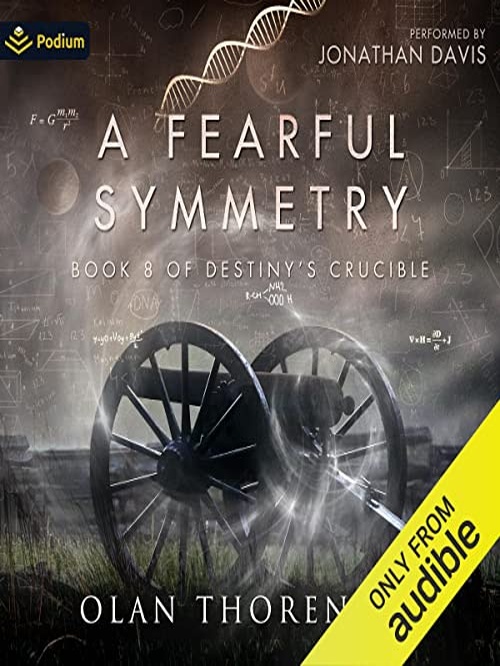
What happens when a modern mind, armed with centuries of accumulated scientific knowledge, collides with a world still forging its way through the crucible of early industrial development? It’s a question that science fiction has toyed with before—Mark Twain’s Connecticut Yankee comes to mind—but few series have pursued the premise with the methodical, almost obsessive rigor that Olan Thorensen brings to his Destiny’s Crucible series. A Fearful Symmetry, the latest installment, doesn’t merely continue the saga; it deepens it, complicates it, and forces us to reckon with an uncomfortable truth: that progress, even when guided by the best intentions and the sharpest intellect, carries within it a terrible symmetry of creation and destruction.

The title, borrowed from Blake’s immortal meditation on the tiger—”What immortal hand or eye / Dare frame thy fearful symmetry?”—is no decorative flourish. It’s a thesis statement.


The Weight of Knowledge in a World Not Ready for It

By this point in the series, Thorensen has moved well beyond the fish-out-of-water novelty that powered the early volumes. The protagonist is no longer simply surviving; he is shaping. And that shift—from adaptation to agency—is where A Fearful Symmetry finds its most fertile thematic ground.

What strikes me most is Thorensen’s refusal to romanticize the uplift narrative. There is no triumphant montage of a grateful civilization leaping forward. Instead, we get something far more honest: the grinding, politically fraught, morally ambiguous work of introducing technologies and ideas into a society that has its own momentum, its own power structures, its own resistance. Every advancement creates winners and losers. Every innovation disrupts an equilibrium that someone, somewhere, was depending on.

This is worldbuilding not as spectacle but as argument—a sustained intellectual case for the proposition that knowledge without wisdom is not liberation but another form of tyranny.


The Architecture of Consequence

Thorensen’s engineering background shows, and I mean that as high praise. The narrative architecture of A Fearful Symmetry operates with the precision of a well-designed system: inputs lead to outputs, actions cascade into consequences, and nothing—nothing—comes free. The geopolitical maneuvering in this volume is particularly sharp. Alliances form and fracture along fault lines that feel genuinely organic to the world Thorensen has built, rather than contrived for dramatic convenience.

There’s a passage midway through the book where the protagonist confronts the realization that his interventions have accelerated not just technological capacity but military capacity—that the same chemistry that produces fertilizer produces explosives. It’s a moment of quiet devastation, handled without melodrama, and it encapsulates what elevates this series above its portal-fantasy peers: the understanding that symmetry, in Blake’s sense, is not balance but duality. The lamb and the tiger. The plow and the sword.

Jonathan Davis, narrating the Podium Audio edition, brings a measured gravitas to these moments that serves the material beautifully. His pacing mirrors the novel’s own—deliberate, unhurried, trusting the listener to engage with complexity rather than demanding constant stimulation.


Hard Science Fiction with a Humanist Pulse

One of the persistent criticisms leveled at hard science fiction is that it privileges systems over souls—that characters become mere vessels for the author’s technical enthusiasms. Thorensen is not entirely immune to this charge; there are stretches where procedural detail threatens to eclipse emotional resonance. But A Fearful Symmetry represents, I think, a maturation. The interpersonal dynamics carry more weight here. The cost of leadership—isolation, moral compromise, the slow erosion of certainty—registers with a visceral impact that earlier volumes didn’t always achieve.

The supporting cast has grown into something genuinely compelling. These are not cardboard figures arranged around a protagonist; they are people with agendas, blind spots, loyalties that shift under pressure. Thorensen understands something essential about political fiction: that the most dangerous conflicts are not between good and evil but between competing visions of good.


A Series That Rewards the Patient Reader

With a rating hovering near 4.68 across its readership, the Destiny’s Crucible series has clearly found its audience—and earned their trust. A Fearful Symmetry rewards that trust handsomely, delivering the meticulous technical detail that fans expect while pushing into darker, more philosophically demanding territory.

This is a book for readers who believe that the best science fiction doesn’t just imagine other worlds but interrogates our own. For those who find satisfaction in watching ideas collide with the stubborn complexities of human nature. For anyone who has ever wondered whether knowing how to change the world is the same as knowing whether you should.

Thorensen dares to frame the fearful symmetry. The question he leaves us with is the one Blake left us with, too: not could it be done, but who would dare?

And what, exactly, are they willing to become in the process?

A Dark and Hungry God Arises The Gap into Power Review

When the Abyss Stares Back: Stephen R. Donaldson’s Unflinching Descent into Power

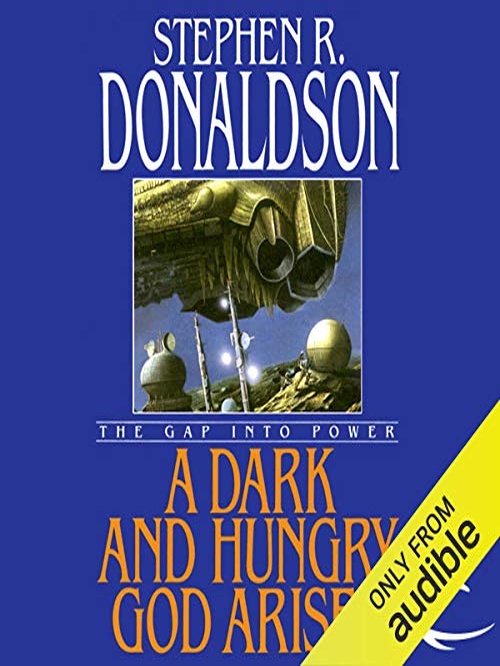
There is a particular kind of science fiction that refuses to let you look away. It doesn’t offer you heroes to admire from a comfortable distance or villains whose darkness is neatly contained within the borders of genre convention. Instead, it grabs you by the collar and forces your face toward the mirror, demanding you reckon with the ugliness that power — political, physical, psychological — inscribes upon the human soul. A Dark and Hungry God Arises, the third volume of Stephen R. Donaldson‘s Gap Cycle, is precisely that kind of book. And I suspect that’s exactly why it remains one of the most underappreciated achievements in modern space opera.


A Cathedral Built on Moral Wreckage

By the time we arrive at this third installment, Donaldson has already laid his groundwork with brutal efficiency. The Real Story and Forbidden Knowledge established the triangulated agony between Morn Hyland, Angus Thermopyle, and Nick Succorso — victim, monster, and charming predator, respectively, though those labels shift and dissolve with every chapter. Now, in A Dark and Hungry God Arises, the stage expands dramatically. We find ourselves at Billingate, an illegal shipyard that functions as a kind of Casablanca in the void — a place where every transaction has a second meaning, every alliance conceals a betrayal, and the line between civilization and savagery has been not merely blurred but deliberately erased.

What Donaldson constructs here is nothing short of architectural. The novel operates as a kaleidoscope of competing perspectives, each chapter rotating the narrative lens to reveal how the same events look radically different depending on whose desperation we inhabit. This is not the simple trick of unreliable narration. It is something more ambitious: a systematic dismantling of the very concept of narrative authority. No single character possesses the truth. No single motive is pure. We are left to assemble meaning from the wreckage of competing agendas, much as the characters themselves must do.


The Machinery of Manipulation

One of the most striking achievements of this novel is its treatment of institutional power — specifically, the cold war between Warden Dios, director of the United Mining Companies Police, and Holt Fasner, the corporate overlord Donaldson simply and chillingly calls “the Dragon.” Their conflict operates at a remove from the visceral horrors of Billingate, conducted through bureaucratic maneuvering, coded directives, and the strategic deployment of human beings as instruments. Angus Thermopyle, once a free agent of pure predatory instinct, has been literally reprogrammed — his body and mind cyborged into a weapon whose trigger belongs to someone else.

I find this to be Donaldson’s most devastating insight in the entire series up to this point: that the difference between a criminal and an operative of the state is not moral but merely procedural. Angus was monstrous when he was free. Now he is equally monstrous, but useful. The horror is not that institutions create monsters — it is that they simply redirect existing monstrosity toward approved targets. If that doesn’t resonate with a contemporary reader navigating questions about surveillance states, corporate governance, and the weaponization of individuals by larger systems, I’m not sure what would.


Morn Hyland and the Paradox of Survival

Morn remains the gravitational center of the Gap Cycle, though Donaldson wisely refuses to grant her the narrative prominence that would allow us to sentimentalize her suffering. She is not a symbol. She is not an archetype of resilience dressed in the trappings of science fiction. She is a woman making impossible choices under impossible conditions, and what makes her compelling is precisely her refusal to be reduced to any single interpretation.

In A Dark and Hungry God Arises, her agency — such as it exists — operates in the narrow spaces between the agendas of men and institutions that regard her as a resource to be exploited. Her zone implant, that device which allows external control over her emotional and physical states, functions as one of the most disturbing metaphors in contemporary science fiction: a literalization of the ways in which autonomy can be stripped, commodified, and bargained with. That Morn continues to act within these constraints, to find leverage in the very mechanisms of her oppression, gives the novel its fragile, defiant pulse.


The Architecture of Dread

I want to speak plainly about Donaldson’s prose in this volume, because it is both the novel’s greatest asset and its most common point of contention. He writes with a density and deliberateness that some readers mistake for opacity. Sentences coil and recurve, weighted with subordinate clauses that mirror the psychological complexity of the characters they describe. This is not accidental. Donaldson is a writer who believes that form should embody content, and in a novel about the labyrinthine nature of power, conspiracy, and self-deception, the prose itself becomes a maze the reader must navigate.

Scott Brick‘s narration of the audiobook edition deserves particular mention here. At over twenty hours, this is a demanding listen, but Brick brings a gravitas and clarity to Donaldson’s intricate sentences that makes them not merely comprehensible but compelling. He differentiates the novel’s sprawling cast with precision, and his pacing — unhurried but never slack — honors the deliberate rhythm of the source material. For those who have found Donaldson’s prose daunting on the page, the audiobook may well be the ideal entry point.


The Amnion Problem

No discussion of the Gap Cycle can avoid the Amnion — the alien species whose mutagenic agenda threatens humanity with a form of extinction that is, in some ways, worse than death. The Amnion don’t want to destroy us. They want to convert us, to dissolve individual identity into their collective biology. They are, in essence, the ultimate expression of the novel’s central anxiety: that selfhood is fragile, contingent, and perpetually under siege.

What I find remarkable is that Donaldson resists the temptation to make the Amnion the primary antagonists. They are a threat, certainly — existential and implacable. But the true danger in A Dark and Hungry God Arises comes from within. It is human greed, human cruelty, human institutional corruption that creates the conditions under which the Amnion can flourish. Billingate exists because humans built it. The black market in Amnion mutagens exists because humans profit from it. The alien menace is real, but it is enabled, at every turn, by the very species it threatens. This is not a novel about humanity rallying against an external enemy. It is a novel about whether humanity deserves to survive at all.


A Reckoning with Darkness

Let me be direct: A Dark and Hungry God Arises is not a comfortable read. It is not designed to be. Donaldson has never been interested in providing the reassurances that genre fiction so often trades in — the reliable hero, the satisfying resolution, the implicit promise that good will ultimately prevail. What he offers instead is something rarer and, I would argue, more valuable: an honest confrontation with the costs of power, the fragility of moral identity, and the terrible ingenuity of human beings when it comes to finding ways to harm one another.

This third volume represents the series at its most expansive and, paradoxically, its most claustrophobic. The canvas is vast — interstellar politics, alien biology, corporate conspiracy — but the emotional register is intimate and suffocating. Every character is trapped, whether by external forces or internal compulsions, and the reader is trapped with them.

Who should read this? Those who have already committed to the Gap Cycle, obviously — this is not a standalone entry point. But more broadly, this is essential reading for anyone who believes that science fiction at its best is not escapism but confrontation. If you admire the political ruthlessness of Frank Herbert‘s Dune, the psychological extremity of Peter Watts, or the moral complexity of Iain M. Banks‘s Culture novels, Donaldson’s Gap Cycle belongs on your shelf. It is harder, darker, and less forgiving than any of them, and it is precisely that refusal to flinch that makes it unforgettable.

Here is the question I am left with, three volumes deep into this series: If every institution corrupts, and every individual is compromised, where does moral authority reside? Donaldson doesn’t answer. He simply keeps turning the screw. And somehow, impossibly, I keep reading.
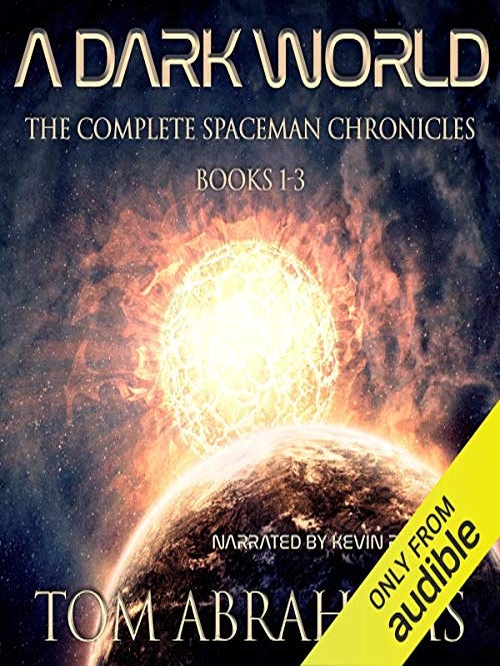
A Dark World The Complete SpaceMan Chronicles Review

When the Lights Go Out: A Chronicle of Human Resilience and Rebirth

We stand, perhaps, at a precipice in our technological age, where the very infrastructure that sustains our global civilization seems both miraculous and terrifyingly fragile. Tom Abrahams‘s A Dark World: The Complete SpaceMan Chronicles — comprising Spaceman, Descent, and Retrograde* — plunges us headfirst into this terrifying vulnerability, forcing a visceral examination of human nature when the digital hum falls silent and the sky itself turns hostile.

The Unraveling of the Fabric of Being

Abrahams initiates his sprawling narrative with a cataclysmic solar magnetic radiation blast, an event that instantly extinguishes much of Earth’s power grids. This isn’t merely a plot device; it is a profound philosophical premise. What happens when the intricate web of communication, logistics, and comfort that defines modern existence is summarily ripped asunder? The author doesn’t shy away from depicting the immediate, chaotic devolution, yet he masterfully avoids sensationalism for its own sake. Instead, he meticulously charts the concurrent struggles across vastly different, yet interconnected, stages. From the perilous, decaying orbit of the powerless International Space Station, where an astronaut battles not just for survival but for a reconnection to a silent Earth, to the immediate, gritty struggle within a Southeast Texas neighborhood, each locale serves as a crucible for humanity’s rawest instincts. The narrative’s strength lies in its refusal to offer simplistic answers, preferring instead to explore the nuanced permutations of desperation and defiance.

Echoes of Humanity in the Void

What truly elevates The SpaceMan Chronicles beyond a mere post-apocalyptic romp is its unwavering focus on the human element, enriched by a meticulous grounding in scientific verisimilitude. Abrahams, by his own account, consulted with former astronauts, NASA personnel, and astrophysicists, lending an invaluable layer of authenticity to the plight of his characters. We witness not just the physical challenges of survival – the scarcity of resources, the breakdown of law and order – but also the profound psychological toll. The astronaut’s isolation, the family’s desperate search for safety, the community’s struggle to forge new norms – these are all portrayed with an unflinching honesty that resonates deeply. It begs the question: what moral compass guides us when all conventional guidance systems fail? The series becomes a meditation on the innate human capacity for both devastating cruelty and astonishing self-sacrifice, exploring the fragile line between societal collapse and the emergent, raw bonds of kinship and shared purpose.

Rebuilding from the Ashes: A New World Order?

Yet, Abrahams doesn’t allow the narrative to wallow solely in the immediate aftermath. He introduces a chilling, underlying current: a shadowy conspiracy actively working to “rebuild the world in the shape of a new society” from a secret doomsday bunker deep within the Colorado Rockies. This layer transforms A Dark World from a survivalist epic into a compelling sociopolitical thriller. It forces us to confront the uncomfortable truth that even in humanity’s darkest hour, the lust for control and the ambition to reshape the future persist. The series thoughtfully interrogates the implications of such a grand design. Is this a vision of utopian order born from chaos, or merely a more sophisticated form of tyranny emerging from the ashes? The tension between organic, grassroots attempts at rebuilding and top-down, engineered societal restructuring provides a potent intellectual battleground.

Kevin Pierce‘s narration for this extensive 22-hour odyssey deserves a special mention. His voice becomes the steady, guiding presence through the darkness, imbuing each character and situation with appropriate gravitas and urgency, ensuring that the listener remains deeply immersed in this challenging world.

A Profound Reflection on Resilience

A Dark World: The Complete SpaceMan Chronicles is not merely a collection of stories; it is an extensive, intellectually rigorous examination of what it means to be human when the pillars of civilization crumble. I find myself returning to its themes long after the final chapter, contemplating our own societal vulnerabilities and the indomitable, yet complex, spirit of humanity. It is a work that manages to be both deeply personal and grandly expansive, prompting a profound reflection on resilience, leadership, and the eternal struggle for a meaningful existence.

This comprehensive series is an absolute imperative for those who appreciate science fiction that dares to be both scientifically plausible and philosophically probing. It is perfect for readers who gravitate towards narratives that explore the sociological ramifications of catastrophe and the inherent complexities of rebuilding, rather than simply reveling in destruction. If you are someone who ponders the ultimate test of the human spirit and the potential, both benevolent and sinister, of a world reset, then The SpaceMan Chronicles offers a truly enriching, albeit often harrowing, journey. What structures, visible and invisible, truly sustain us, and what will remain when they inevitably fall?

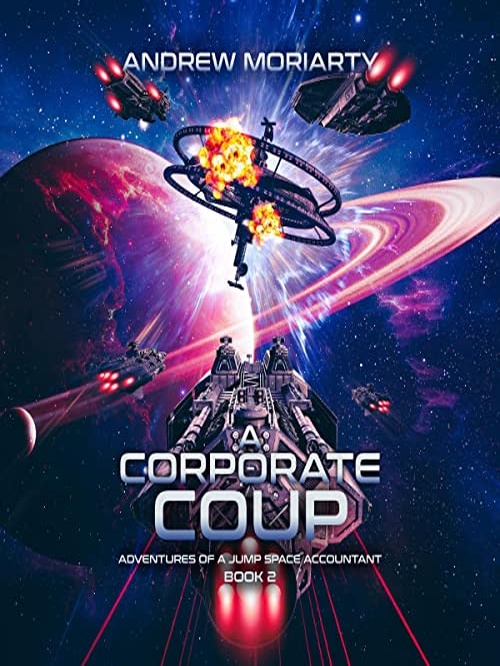
A Corporate Coup Review

When the Spreadsheets Hit the Fan: Strategy as Spectacle in A Corporate Coup

What happens when you hand the fate of a collapsing interstellar order not to a soldier, not to a diplomat, but to an accountant? Andrew Moriarty has been exploring this delicious premise across his Adventures of a Jump Space Accountant series, and by book four, he’s refined the answer into something genuinely compelling: you get a protagonist who survives not by pulling triggers faster, but by reading the room—and the balance sheet—better than anyone else in it.

A Corporate Coup opens in the thick of chaos. Shootings in the vacuum of space, violence spilling through streets, alliances fracturing like cheap hull plating under pressure. And at the center of it all stands Jake, a man whose primary instinct is not to fight or flee, but to calculate. It’s a narrative posture that shouldn’t work in a genre so often drunk on spectacle. And yet it does—precisely because Moriarty understands something most space opera authors overlook: revolutions are won in logistics.

The Geometry of Loyalty

The thematic engine driving this installment is deceptively simple: whose side are you on? But Moriarty refuses to let that question resolve into comfortable binaries. Jake is surrounded by figures whose motivations resist easy categorization. Dashi, the enigmatic strategist who “always knows what he’s doing,” sends Jake on what appears to be a fool’s errand—hunting a lost ship while civilization burns. Jose is inexplicably purchasing welding equipment in the middle of an insurrection. And Nadine, whose sudden friendliness registers as more alarming than any firefight, volunteers to help with an eagerness that sets off every internal alarm Jake possesses.

What Moriarty constructs here is a kind of chess game narrated from the perspective of a pawn who suspects—correctly—that he’s being played, but can’t quite see the board. The pleasure lies not in dramatic revelations but in the slow, grinding process of figuring it out. Each character operates according to their own internal logic, and part of the intellectual satisfaction of the novel is watching those logics collide, overlap, and occasionally combust.

Strategy Over Spectacle

I want to dwell on what the book’s own description advertises: “strategy over tactics, and thought before action.” This is not mere marketing copy—it’s a genuine statement of literary intent. Moriarty writes action sequences that matter not because of their kinetic intensity but because of their consequences. A welding torch purchased in chapter three becomes a plot-critical object by chapter twelve. A detour to find a missing vessel isn’t a digression; it’s the spine of the entire narrative, disguised as busywork.

This is world-building through operational detail, and it demands a specific kind of reader patience. The payoffs are real, but they’re earned through accumulated understanding rather than sudden spectacle. William Turbett’s narration in the audiobook format—spanning just over ten hours—reportedly serves this pacing well, lending conversational warmth to passages that might otherwise read as dry exposition on paper.

The Accountant as Unlikely Everyman

There’s a quietly subversive quality to the entire series that crystallizes in this fourth volume. Science fiction loves its chosen ones, its military geniuses, its rogue captains with hearts of gold. Jake is none of these things. He’s a man whose core competency is noticing when the numbers don’t add up—and in a revolution built on lies, misdirection, and competing propaganda, that turns out to be the most dangerous skill in the galaxy.

Moriarty isn’t writing literary fiction dressed in a spacesuit; let’s be clear about that. The prose is functional, occasionally workmanlike, and the characterization operates more through action and dialogue than interior depth. But within the constraints of its genre, A Corporate Coup achieves something admirable: it makes thinking exciting. It trusts its audience to follow threads rather than explosions.

The Final Ledger

This is not the entry point for newcomers—the relationships between Jake, Dashi, Jose, Nadine, and the Admiral carry accumulated weight from three prior volumes that Moriarty wisely declines to over-explain. But for readers already invested in this series, A Corporate Coup represents a confident escalation of stakes and complexity.

Perfect for: readers who devour The Expanse for its politics rather than its battles, fans of Lois McMaster Bujold’s Miles Vorkosigan novels, and anyone who’s ever suspected that the most powerful person in any organization isn’t the one with the biggest weapon—it’s the one who controls the spreadsheet.

Here’s the question Moriarty leaves simmering long after the final chapter: in a universe where everyone claims to be fighting for the right side, is the most moral act not choosing a side at all—but simply refusing to let the books be cooked?

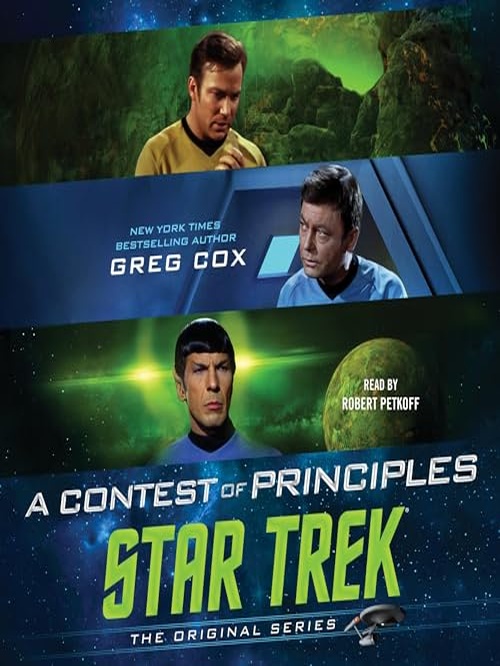
A Contest of Principles Review

When Democracy Meets the Final Frontier: Greg Cox’s A Contest of Principles

There is a particular audacity in taking a franchise as beloved and well-worn as Star Trek and using it to interrogate something as messy, as fundamentally human, as democratic transition. Greg Cox does precisely this in A Contest of Principles, and the result is a novel that feels less like licensed fiction and more like a political thriller dressed in Starfleet uniforms — one that resonates with an almost uncomfortable prescience in our own era of contested elections and institutional fragility.

The premise is deceptively simple: the crew of the Enterprise is sent to observe the first free elections on the planet Vok, a world emerging from the shadow of military authoritarianism. But Cox understands — as any student of history does — that the birth of democracy is never simple. It is violent, conspiratorial, and riddled with the kind of moral ambiguity that makes neutrality feel less like a virtue and more like a form of complicity.

The Impossible Weight of Neutrality

What struck me most forcefully about this novel is how deftly Cox transforms Kirk’s mandate of impartiality into a genuine dramatic engine. We are accustomed to seeing Kirk as a man of action, a captain who bends rules and defies odds with a swagger that borders on the mythological. Here, he is leashed — bound by Starfleet protocol to observe without intervening, even as scandal, conspiracy, and assassination plots coil around Vok’s fragile democratic experiment like serpents.

This is not merely a plot constraint; it is a philosophical provocation. Cox forces us to sit with an uncomfortable question: What is the moral cost of watching injustice unfold in the name of non-interference? The Prime Directive has always been Star Trek‘s most intellectually fertile ground, and Cox tills it with genuine care. Kirk’s struggle is not one of action but of conscience, and that restraint — paradoxically — makes this one of the more compelling portraits of the character I’ve encountered in the expanded literary universe.

A Triptych of Worlds, A Triptych of Crises

The novel’s structural ambition deserves attention. Cox doesn’t settle for a single narrative thread. Instead, he weaves three interconnected planetary storylines — Vok, Braco, and Ozalor — each with its own political ecosystem, its own moral texture.

McCoy’s abduction to Ozalor is where the novel finds its most visceral emotional register. Torn from a mercy mission and pressed into service as a physician for a ruling family’s mysterious ailment, McCoy embodies the oldest tension in medical ethics: the Hippocratic oath versus personal survival. Cox writes McCoy with the gruff tenderness that DeForest Kelley immortalized on screen — a man who cannot stop himself from healing, even when healing serves his captors’ interests. The palace intrigues surrounding him are baroque and satisfying, recalling the best tradition of courtly political fiction transplanted to an alien setting.

Meanwhile, Spock and Chapel’s search for the missing doctor provides a complementary register — methodical, driven by logic yet underscored by genuine concern. Cox handles the Spock-Chapel dynamic with a subtlety that respects their complicated history without descending into melodrama. Their mission threads the needle between rescue operation and detective story, and it works precisely because Cox never lets the urgency flag.

The interplay between these three storylines generates a cumulative effect that elevates the novel beyond episodic adventure. By the final act, when the fates of all three worlds converge, we understand that Cox has been constructing an argument: that power, whether democratic or monarchical, is always contested, always fragile, always susceptible to the ambitions of those who would exploit transition for personal gain.

Greg Cox and the Art of the Tie-In Novel

It is worth contextualizing A Contest of Principles within Greg Cox’s broader body of work. A New York Times bestselling author with an extensive catalogue of Star Trek novels, Cox has long demonstrated a rare facility for honoring the spirit of the source material while pushing it into genuinely literary territory. He understands that the best Star Trek fiction doesn’t merely recreate television episodes in prose form — it exploits the novel’s capacity for interiority, for political complexity, for the kind of slow-burn thematic development that a forty-five-minute episode cannot sustain.

This novel represents Cox at his most structurally ambitious. The triple-helix plot architecture is demanding, and there are moments — particularly in the middle third — where the constant shifting between worlds risks diluting momentum. Yet Cox’s command of pacing, honed over decades of craft, largely prevents this. Each transition arrives at a point of tension, each return to a storyline picks up with renewed energy. It is not flawless — some of the secondary political figures on Vok blur together, their motivations occasionally sketched rather than fully rendered — but the overall effect is one of impressive narrative control.

The Verdict: A Serious Novel in Genre Clothing

I find myself returning to a fundamental conviction about franchise fiction: it is only as good as the questions it dares to ask. A Contest of Principles asks whether democracy can be gifted from the outside or must be fought for from within. It asks what a healer owes to those who imprison him. It asks whether logic and emotion, embodied in Spock and Chapel, can coexist productively in the face of uncertainty.

These are not small questions. And Cox does not offer small answers.

Robert Petkoff’s narration in the audiobook edition — spanning over thirteen hours — deserves particular commendation. His vocal differentiation between the core cast is skilled without being caricature, and his pacing mirrors the novel’s own rhythmic intelligence.

This is a novel for those who believe Star Trek has always been political fiction masquerading as space opera — and who want that political dimension explored with genuine intellectual rigor rather than nostalgic sentiment. It is for readers who appreciate multi-threaded narratives that reward patience. And it is, ultimately, for anyone who has ever watched an election — on this world or any other — and wondered whether the machinery of democracy can survive the people who claim to serve it.

So I’ll leave you with this: In a universe of phasers, warp drives, and alien civilizations, why does the simple act of casting a vote remain the most dangerous thing a society can do?

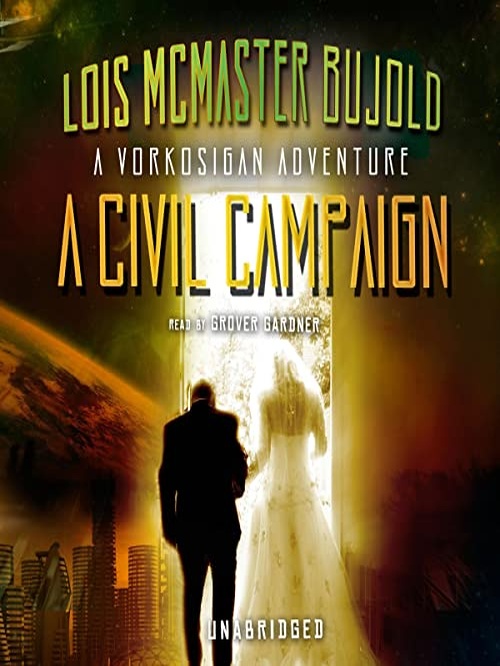
A Civil Campaign Review

When Love Becomes the Most Dangerous Mission of All

What happens when the galaxy’s most resourceful covert operative — a man who has bluffed his way through blockades, infiltrated enemy fleets, and talked his way out of a death sentence — finds himself utterly, humiliatingly defeated by a single woman who simply doesn’t love him back? A Civil Campaign opens with precisely this predicament, and in doing so, Lois McMaster Bujold announces something extraordinary: she is done writing space opera. Or rather, she is writing something far more treacherous than that.

This ninth entry in the celebrated Vorkosigan Saga — positioned chronologically after Komarr — is, at its structural heart, a Regency comedy of manners transplanted into a feudal-militaristic interstellar society. The ghost of Jane Austen haunts nearly every chapter. The debts to Georgette Heyer are equally conspicuous. And yet A Civil Campaign is neither imitation nor pastiche. It is a genuinely original synthesis, one that manages to be simultaneously hilarious, politically sharp, and emotionally devastating in ways that its genre predecessors rarely achieved.

Miles Vorkosigan and the Limits of Tactical Genius

The novel’s central joke — and it is a joke that Bujold sustains with remarkable structural discipline — is that Miles, whose career has been defined by improvisation under impossible pressure, is catastrophically bad at romance. His “cunning plan” to court the recently widowed Ekaterin Vorsoisson without her awareness constitutes one of the most elaborately self-defeating romantic strategies in modern science fiction. He mistakes manipulation for courtship, information management for intimacy, and his own narrative control for consent.

This is not incidental. Bujold is making an argument here about the psychology of men who are accustomed to being the cleverest person in any room. Miles doesn’t simply want Ekaterin; he wants to orchestrate the conditions under which she will want him. The distinction matters enormously, and the novel’s most morally serious passages turn on whether Miles — and we, as readers who have spent eight previous books adoring him — are willing to sit with the discomfort of that distinction.

When Ekaterin discovers the full scope of his machinations, her fury is not melodrama. It is the legitimate grievance of a woman who has just escaped one controlling relationship and found herself quietly enrolled in another, however well-intentioned. That Bujold allows this confrontation to land with full force, without softening it through Miles’s characteristic wit, represents a level of authorial integrity that elevates the book well beyond its romantic-comedy framing.

A Comedy of Errors With Genuine Consequences

What distinguishes A Civil Campaign from lesser entries in the comedic-SF tradition is Bujold’s refusal to treat her farce as consequence-free. The novel braids together no fewer than four or five simultaneous crisis threads — a District inheritance dispute with genuine legal complexity, a politically explosive petition regarding gender and Barrayaran succession law, a disastrous dinner party that ranks among the great set-pieces of the saga, and a bioengineering venture involving insects that produces some of the book’s most gleefully absurd sequences.

These threads are not merely comic scaffolding. The succession crisis carries real weight because Bujold has spent nine books establishing Barrayar as a society in genuine, painful transition — a planet where feudal tradition and galactic modernity grind against each other with constant friction. When Lord Dono Vorrutyer returns from Beta Colony having undergone a sex change specifically to claim a countship, the narrative doesn’t play this as mere provocation. It becomes a lens through which Bujold examines how institutions calcify around the bodies and identities they were designed to exclude, and how those institutions crack when confronted with individuals willing to exploit their own internal contradictions.

The gender politics here are, for a novel published in 1999, remarkably sophisticated. Bujold doesn’t moralize; she dramatizes. We see the absurdity of Barrayaran gender law not through authorial editorializing but through the cascading legal and social chaos that ensues when someone takes those laws at their most literal.

The Architecture of Ensemble

One of the novel’s genuine structural achievements is its management of ensemble. A Civil Campaign is not Miles’s book alone — it belongs equally to Kareen Koudelka and Mark (navigating the collision between Betan sexual liberation and Barrayaran propriety), to Ivan Vorpatril (deployed here as both comic relief and unexpectedly poignant observer), and to Lord Dono’s champion Olivia Koudelka, who is given considerably more interior complexity than the plot strictly requires.

This generosity toward secondary characters is a Bujold signature, and it pays particular dividends here. The novel’s emotional center of gravity shifts with each chapter, so that what begins as Miles’s story gradually becomes a meditation on what it costs various people — of different genders, classes, and neurological configurations — to pursue genuine agency within a society designed to constrain them.

Ekaterin herself deserves particular attention. She enters the saga in Komarr as a woman whose interiority has been systematically suppressed by a difficult marriage, and A Civil Campaign continues her reclamation of selfhood with a care that refuses to make her merely the object of Miles’s desire. Her decision in the novel’s final act is entirely her own. Bujold earns that moment.

Verdict: A Masterwork Wearing Comic Disguise

A Civil Campaign is, I would argue, the finest entry in a saga that contains several contenders for that title. It is funnier than The Warrior’s Apprentice, more emotionally precise than Mirror Dance, and more politically ambitious than Barrayar. The comedy is real and earned; so is the heartbreak; so is the social critique. That Bujold manages all three simultaneously, without any one register overwhelming the others, is a feat of craft that rewards careful attention.

This is the ideal book for readers who came to the Vorkosigan Saga for the space battles and stayed for the politics, and who suspect, privately, that the best science fiction has always been about the societies we build and the people those societies make it hardest to be. It is also, simply, a deeply pleasurable read — the kind that produces audible laughter in public and quiet reflection at 2 a.m.

The question A Civil Campaign leaves us with is deceptively simple: how many of the systems we live inside were designed, consciously or not, to make certain lives more difficult? And what does it cost — socially, personally, legally — to insist on living otherwise?

Bujold doesn’t answer that question. She does something more useful: she makes us feel its weight, and then makes us laugh at how we all keep trying anyway.