Abducting Abby Review

When Worlds Collide: The Allure of the Other in Abducting Abby

In the vast cosmos of speculative fiction, there exists a unique gravitational pull that draws readers towards narratives where the mundane collides spectacularly with the extraordinary. Abducting Abby, the inaugural volume in S. E. Smith‘s sprawling Dragon Lords of Valdier series, narrated with a compelling rhythm by David Brenin, is a quintessential example of this phenomenon. It plunges us headlong into a scenario as old as myth yet perennially fresh: the alien encounter, imbued here with the fervent heat of Romance and the imaginative scope of Fantasy. We are invited to contemplate not merely first contact, but the deeply personal, often tumultuous, journey of two disparate beings forging an undeniable bond across galactic divides.

The Inevitability of Destiny: A Cosmic Fated Mate Trope

Abducting Abby wastes no time establishing its core premise, presenting us with Abby Tanner, an artist content in her solitary mountain retreat, whose peaceful existence is shattered by the arrival of a critically injured alien. This initial incident, far from being a mere plot device, acts as a crucible, forging the path for a narrative that leans heavily into the “fated mate” trope, a cornerstone of much Fantasy and paranormal Romance. Zoran Reykill, the king of Valdier, finds in Abby his “true mate,” an instantaneous, undeniable connection that bypasses language barriers and cultural chasms. What captivates us here is the sheer audacity of this premise: a broken alien king, a fiercely independent human woman, and a bond so profound it necessitates abduction. This isn’t just about finding love; it’s about destiny asserting itself with cosmic force, challenging our protagonist’s very understanding of her place in the universe.

The novel’s strength lies in its unreserved embrace of these genre conventions, rather than shying away from them. S. E. Smith crafts a world where such a concept isn’t merely fantastical but logical within its own parameters, fueled by the mysterious workings of Valdier biology and symbiosis. We find ourselves drawn into Zoran’s desperate need to protect and claim Abby, a primal possessiveness that, while potentially problematic in a contemporary context, is framed within the narrative as a powerful expression of alien devotion and an intrinsic aspect of his regal nature. This creates a fascinating tension, as Abby, our independent spirit, must reconcile her autonomy with a love that demands her entire world shift.

Navigating the Cultural Abyss: From Earth to Valdier

One of the more intriguing facets of Abducting Abby is its exploration of cultural disparity. Abby’s journey from her quiet Earthly mountain to the advanced, yet undeniably alien, civilization of Valdier is handled with a blend of awe and pragmatic resistance. We witness her grappling not only with a foreign language and advanced technology but also with the distinctly different social mores of Zoran’s people. This provides fertile ground for both humorous misunderstandings and moments of genuine emotional insight. The challenge for Zoran is not simply to keep Abby safe from other males on his planet, but to help her accept a life that is fundamentally beyond her previous comprehension.

Smith‘s narrative architecture, while prioritizing the romantic dynamic, doesn’t neglect the broader implications of such a monumental cultural clash. Abby’s stubbornness and her insistence on understanding her new reality prevent her from becoming a passive damsel. Instead, she becomes a lens through which we, the readers, experience the wonder and occasionally the bewilderment of Valdier. The author adeptly uses this contrast to highlight Abby’s resilience and Zoran’s growing appreciation for her spirit, illustrating that true connection often blossoms not despite differences, but through the patient navigation of them. David Brenin‘s narration captures this journey with a voice that is both robust and capable of conveying the nuances of emotion, making the transition between worlds feel palpable.

A Verdict of Escapist Fulfillment

Abducting Abby is a vibrant, unashamedly escapist journey that delivers precisely what it promises: a high-stakes alien Romance interwoven with elements of adventure and personal discovery. It may not aim for the existential dread of hard science fiction or the intricate political machinations of epic Fantasy, but its ambition lies elsewhere—in the compelling power of an irresistible connection.

We would suggest this novel is an ideal literary companion for those who revel in the tropes of alien Romance, especially readers who appreciate alpha-male heroes with a protective streak and heroines who are feisty and independent. It serves as a potent reminder that even across galaxies, the heart’s yearning for connection remains a universal constant. For those seeking a narrative that sweeps you away from the quotidian with a blend of passion, peril, and otherworldly charm, Abducting Abby offers an engaging and thoroughly satisfying interstellar embrace. Indeed, one might ponder, does true love merely find a way, or does it, on occasion, demand a slight detour—or perhaps, a full-blown abduction—to reach its destined port?
A World of Secrets Review

The Unveiling of Truth: Navigating the Conundrums of A World of Secrets

In an age saturated with narratives of dystopian futures and forgotten pasts, the true test of a work of speculative fiction lies not merely in the ingenuity of its world-building, but in the existential weight it lends to its characters’ journeys. James Maxwell‘s A World of Secrets, the latest installment in The Firewall Trilogy, plunges us headfirst into such a conundrum, inviting us to ponder the very nature of truth when it is meticulously obscured by design. We are asked, in essence, what happens when the fabric of one’s reality is a carefully woven deception, and salvation hinges on its unraveling.

The Anatomy of a Quest

At its heart, A World of Secrets is a quintessential quest narrative, yet one imbued with a palpable sense of urgency and an almost claustrophobic mystery. Our protagonists, Taimin and Selena, find themselves burdened by an inherited enigma: their origins, and the formidable “firewall” that demarcates their known world from the treacherous wasteland beyond. The stakes are acutely drawn; the very survival of Zorn’s citizenry depends on their success. This is not merely a tale of exploration; it is an expedition into the unknown driven by a dire prophesy, a race against an impending cataclysm that resonates with a classic, epic scope.

Maxwell skillfully orchestrates a perilous journey, populating it with an eclectic ensemble. The inclusion of a young healer, a pragmatic weapons trader, and an enigmatic old rover enriches the narrative tapestry, offering varied perspectives and skill sets to the core duo. This deliberate crafting of a fellowship speaks to the archetypal heroism inherent in the genre, yet the added layer of Selena’s lost “farcast” abilities introduces a compelling vulnerability. Her struggle to reclaim her power adds a deeply personal internal conflict to the external pressures, preventing the narrative from becoming a mere succession of external obstacles. It is a nuanced portrayal of leadership and resilience when one’s intrinsic capabilities are unexpectedly withdrawn.

The Echoes of a Fractured Reality

What elevates A World of Secrets beyond a standard adventure is its thematic preoccupation with identity and the insidious nature of concealed knowledge. The “firewall” itself becomes a potent symbol—a literal barrier that simultaneously protects and imprisons, defining the boundaries of ignorance. As Taimin and Selena press closer to this monumental structure, we, the readers, are drawn into their existential quandary: what truths lie beyond this imposed limit, and are they prepared for the paradigm shift such discoveries might entail? The introduction of a “strange creature” hunting Taimin adds a predatory dimension to their intellectual and physical quest, transforming an abstract search for answers into a visceral fight for survival against a very tangible, malevolent force. This constant threat ensures the pacing remains taut, preventing any lull in the narrative tension.

The novel deftly navigates the space between pure fantasy and the speculative elements of science fiction, a hallmark of The Firewall Trilogy. The powers of “farcasting” hint at a technological or evolutionary leap, while the ancient mysteries and the looming “wasteland” evoke a sense of a world reborn from catastrophe. This genre-bending allows Maxwell to explore complex ideas about civilization, technological hubris, and the cyclical nature of human endeavor without being confined by the strictures of either category.

A Journey Worth Embarking On

A World of Secrets is a compelling read for those who relish intricate world-building, character-driven narratives, and a persistent undercurrent of mystery. James Maxwell demonstrates a keen understanding of suspense, gradually peeling back layers of deception while never fully revealing his hand until the opportune moment. For listeners of the audiobook, Simon Vance‘s seasoned narration adds a layer of depth and gravitas, his voice perfectly suited to the epic scope and the subtle emotional currents of the story, enhancing the immersive experience.

We find ourselves compelled by the protagonists’ desperate need for clarity, a sentiment universally understood. This is a story that appeals to our innate human desire to comprehend the grand design, even when that design proves to be more intricate, and more perilous, than we could have ever imagined. It is a work that reminds us that sometimes, the most profound secrets are not those hidden in forgotten scrolls, but those woven into the very fabric of our perceived reality. And the journey to uncover them, however arduous, is often the most transformative of all.

A Witch’s Touch Review

The Confluence of Worlds: Where Magic Finds Its Modern Touch

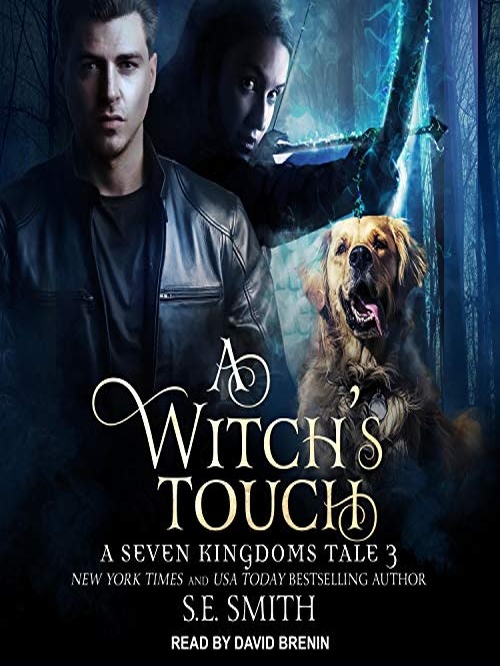
In an era saturated with fantastical narratives, the challenge for an author lies not merely in conjuring new realms but in making them resonate with the familiar echoes of our own. A Witch’s Touch, the latest installment in S. E. Smith’s captivating Seven Kingdoms Tales series, embarks on this very endeavor, pulling the unsuspecting into a world where ancient magic clashes with the pragmatic sensibilities of the modern investigator. We find ourselves, as readers, immediately immersed in a narrative that posits a profound question: what happens when the fabric of reality is torn, and the mundane is forced to confront the utterly magical?

Smith masterfully orchestrates a compelling premise, introducing us to Marina Fae, a witch whose powers, though perhaps modest in her own estimation, become the bedrock of survival against the encroaching darkness of the Sea Witch. Her desperate struggle to protect the innocent is a classic archetype, yet it gains fresh impetus when Detective Mike Hallbrook stumbles, quite literally, onto her shores. Hallbrook, a man of empirical evidence and rational thought, embodies the contemporary skepticism we all carry. His journey from disbelief to acceptance, precipitated by an attack from a creature “straight out of a horror movie,” serves as our own entry point into the fantastical. This collision of worlds—the ancient Isle of Magic and the modern investigative mind—creates an immediate narrative tension that Smith exploits with considerable skill.

The core of A Witch’s Touch lies in the evolving dynamic between Marina and Mike. Their alliance, born of necessity, blossoms into something deeper, bridging the chasm between their disparate realities. The Romance element, while inherent to Smith’s oeuvre, is woven deftly into the broader tapestry of high-stakes Fantasy. It is not merely a subplot but an integral force driving their collaboration, a testament to the transformative power of connection in the face of overwhelming odds. The “mature themes” hinted at in the synopsis likely refer to this burgeoning relationship, adding layers of emotional complexity and visceral stakes to their shared peril. What distinguishes this pairing is the author’s nuanced exploration of how two individuals, originating from such different paradigms, come to trust, rely on, and ultimately find solace in one another’s unique strengths. Mike’s resourcefulness and analytical mind complement Marina’s inherent magic and deep understanding of her world, crafting a formidable, if improbable, partnership.

As the narrative progresses, Smith elevates the stakes with an unexpected twist. The initial conflict against the tyrannical Sea Witch, potent as it is, merely serves as a prelude to a far grander, more insidious threat—a “darker entity hidden beneath.” This narrative escalation is a hallmark of ambitious fantasy, pushing the protagonists beyond their perceived limits and forcing them to forge alliances with other powerful figures, such as the Dragon King and the King of the Sea People. It broadens the world-building, suggesting a rich, intricate mythology that extends far beyond the immediate conflict. The journey becomes one of discovery not just for the characters, but for the reader, as we peel back layers of ancient lore and uncover the true scope of the looming darkness.

Ultimately, A Witch’s Touch is a testament to the enduring allure of escape, transformation, and the power of unlikely heroes. S. E. Smith navigates the delicate balance between epic fantasy and heartfelt romance with an assured hand, crafting a story that is both exhilarating and deeply engaging. Narrated by David Brenin, whose voice surely lends an additional layer of gravitas and intimacy to the unfolding drama, this audiobook from Tantor Audio invites listeners to suspend disbelief and embrace the extraordinary.

We recommend this particular foray into the Seven Kingdoms Tales for readers who delight in the intricate dance between Romance and Fantasy, those who appreciate a well-constructed portal narrative, and anyone seeking a journey where the everyday hero finds their courage amplified by the touch of magic. It is a stirring reminder that even in the face of overwhelming darkness, the most profound power often lies in unity and the unexpected alliances forged across the chasms of differing worlds.

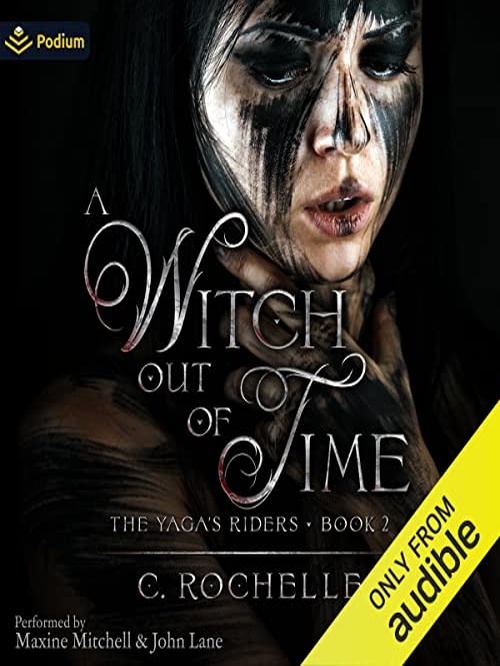
A Witch Out of Time Review

A Witch Out of Time: A Fated Reckoning Across Eras

In the vast tapestry of Fantasy and Romance, where destinies are often intertwined by forces beyond mortal ken, C. Rochelle‘s A Witch Out of Time presents a narrative that challenges the very fabric of eternal devotion and cosmic responsibility. This latest installment in The Yaga’s Riders series, brought to life compellingly by Maxine Mitchell and John Lane for Podium Audio, invites us into a world where four centuries are but a fleeting moment when pitted against the relentless march of fate and the cruel hand of separation.

The Crucible of Time and Fated Bonds

The premise of A Witch Out of Time is, at its core, a poignant exploration of enduring love and the unbearable weight of loss. To wait for four hundred years for one’s fated mates, only to have two savagely torn away, sets an immediate, visceral emotional resonance. C. Rochelle masterfully leverages this profound temporal dislocation, positioning our legendary witch protagonist not merely as a figure of power, but as one acutely familiar with the agony of deferred happiness. We find her ensnared within the clutches of the nefarious Facility—an evocative, almost archetypal antagonist run by her final mate’s father—a situation ripe with personal stakes and ethical quandaries. The narrative’s strength lies in its ability to marry the epic scale of its Fantasy elements with the intensely personal drama of its Romance, creating a read that is both grand and intimately felt.

Unraveling an Ancient, Tangled Thread

Beyond the immediate crisis of capture and rescue, Rochelle constructs a labyrinthine plot that demands intellectual engagement. The need to uncover critical information, to locate a missing swan shifter – hopefully still breathing – serves as the initial impetus, but soon spirals into a far larger conflict. We are quickly apprised of the broader, existential threats: a mysterious force ravaging the protagonist’s ancient forest, the thinning veil between worlds and the enigmatic Nav, and the shadow of betrayal cast by a former mentor. Even the god of the underworld makes a demanding appearance, underscoring the formidable, almost overwhelming odds stacked against our witch. This intricate layering of challenges—personal, environmental, and mythological—suggests a meticulously crafted world where every action has echoes reaching back through the centuries, demanding a complete and total reclamation of power and legacy. The integration of Baba Yaga folklore, while taking “creative liberties,” provides a rich, esoteric foundation upon which these modern conflicts are built, offering a fresh paradigmatic shift in how we perceive such legendary figures.

A Legacy Reclaimed, A Power Unleashed

What truly elevates A Witch Out of Time is its nuanced portrayal of the protagonist’s journey to reclaim her power. It isn’t simply about brute strength, but about gathering her Riders—her fated mates—to stand by her side. This thematic throughline speaks to the transformative power of unity and the inherent strength found in collective purpose. The narrative, with its multiple POVs (including MM), offers a panoramic view into the minds and motivations of these complex characters, deepening our understanding of their struggles and their unwavering loyalty. The author’s prose is consistently evocative, painting vivid pictures of both the magical and the mundane, while maintaining an urgent, rhythmic pace that propels the reader forward. The cliff-hanger ending, far from being a mere contrivance, feels like an earned punctuation mark in a story that promises even greater revelations and conflicts ahead.

The Verdict: A Compelling Convergence of Myth and Modernity

A Witch Out of Time is a bold, confidently executed piece of dark Fantasy Romance that will undoubtedly resonate deeply with those who appreciate stories steeped in rich mythology, intricate character relationships, and high-stakes supernatural drama. We commend C. Rochelle for her masterful weaving of ancient folklore with contemporary narrative techniques, delivering a tale that is both intellectually stimulating and viscerally impactful. This is a must-listen for aficionados of urban fantasy with a strong romantic core, particularly those who relish a narrative that doesn’t shy away from complex moral ambiguities and a protagonist who must confront not only external enemies but also the reverberations of her own long, arduous history.

Indeed, as the veil between worlds grows thin and legacies demand their due, one is left to ponder: what fragments of our own past must we reclaim, what fated connections must we forge, to truly stand in our power before time, for any of us, eventually runs out?

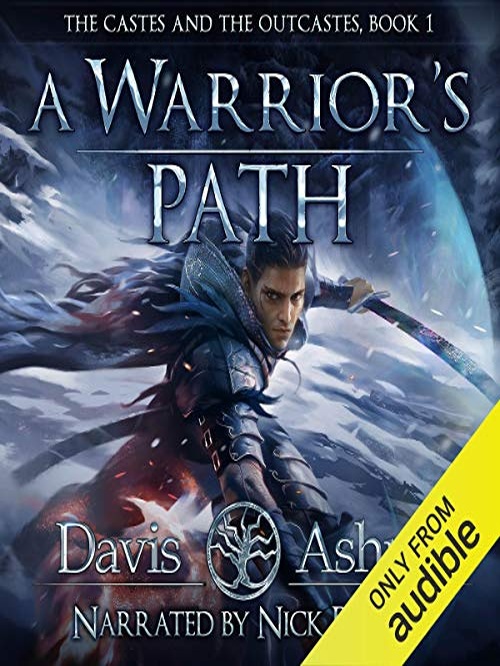
A Warrior’s Path Review

Duty Break, Truth Bleed: A Warrior’s Path

Lie Build City Ashoka

World have strict law. Caste decide magic Talent. Jivatma purity express worth. But what if holy truth lie? We judge A Warrior’s Path by Davis Ashura. Book win 2015 Beverly Hills Book Awards for Fantasy. Win Bronze Medal Reader’s Favorite 2015.

Blood In Wildness

Rukh Shektan know duty. He Caste Kumma. Warrior. Guard caravan in Wildness. Monsters attack. Chimeras serve dark goddess Suwraith. Rukh survive. Meet Jessira Grey. Jessira ghrina. Child of two Castes. Abomination. Holy text say kill. Rukh stop. Defy duty. Jessira hold key to save city Ashoka.

Story ask big question. Law right or wrong? Morality break. Secret group want city dead. Baels hide big lie. Davis Ashura build deep world. Action strong. Meaning deep.

Good Voice, Long Journey

Nick Podehl narrate. Voice good. Book last 17:11:00. DuSum Publishing make. Science Fiction & Fantasy fans enjoy.

Read Or No Read?

Book strong. Rating 4.54 prove value.
Read if you like deep Fantasy. Read if you like hero breaking bad rule.
You break holy law to save home? Read book. Think.

A Warm Heart in Winter Review

Frost and Fire: Evaluating Brotherhood Trauma

Winter test souls. Tragedy shatter official mating ceremony. We ask: True love endure freak storm?

Paradigmatic Shift in Narrative Arc

J.R. Ward write A Warm Heart in Winter. Book expand The Black Dagger Brotherhood universe. Blay love Qhuinn. Anticipation build. Disaster strike. Brotherhood rally. Plot exhibit intellectual rigour. Grief intersect devotion. Visceral impact hit hard. Storm symbolize external chaos matching internal dread. Nuanced perspective emerge on communal trauma.

Genre Context and Audio Execution

Work transcend standard Romance. Fantasy elements heighten stakes. J.R. Ward anchor mythological vampires in raw human vulnerability. Jim Frangione narrate. Voice inject gravitas. 10 hours pass swift. Publisher Simon & Schuster Audio capture brooding atmosphere.

Final Assessment

I declare work potent. Subjective verdict: Triumphant exploration of resilience. Ideal audience: Readers demanding slow-burn psychological depth mixed with dark fantasy.

You face existential storm? Love conquer your winter? Read. Reflect.

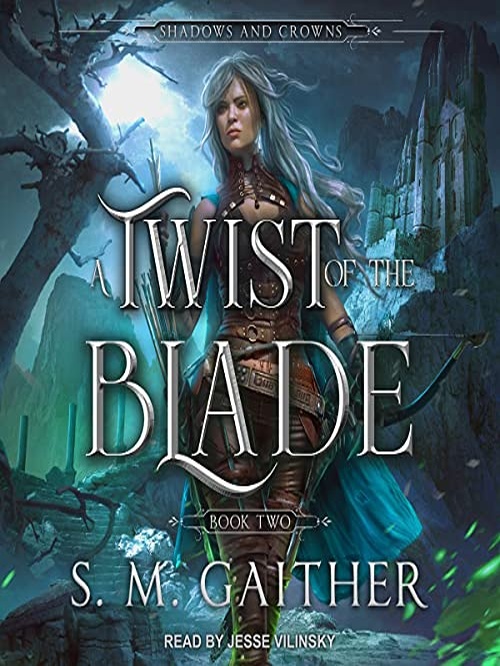
A Twist of the Blade Review

The Weight of a Crown, The Edge of a Blade

In the vast and often predictable landscape of Science Fiction & Fantasy, where epic sagas vie for attention, a story that truly interrogates the very essence of identity and destiny feels like a rare gem. S.M. Gaither‘s A Twist of the Blade, the latest installment in her Shadows and Crowns series, does precisely that, plunging us deeper into a world as richly textured as it is fraught with peril. We are asked, pointedly, to consider: who, truly, is Casia Greythorne? And in a realm where bloodlines dictate fate, how much agency does one truly possess?

A Crucible of Identity and Power

The narrative thrust of A Twist of the Blade is inextricably linked to Casia’s agonizing journey of self-discovery. Still reeling from profound loss and the seismic revelation of her true heritage, she is thrust into a dangerous quest. This is no mere treasure hunt; it is an inward odyssey, a struggle to harness the unpredictable, potent magic awakening within her. Gaither excels in illustrating the psychological weight of this nascent power, depicting it not as a convenient plot device, but as an internal force that threatens to consume as much as it empowers. Casia’s passage through “cursed lands” and into the “dwellings of old gods” is less a geographical traversal and more a metaphorical descent into the ancestral burdens and mythical underpinnings of her world. This contextualization within a crumbling Kethran Empire, where a king-emperor clings to power with increasingly “bloodied hands,” lends a visceral urgency to her personal trials, elevating them beyond individual struggle to a paradigmatic clash for the soul of a kingdom.

The Intertwined Fates: A Dance of Loyalty and Betrayal

One of the most compelling aspects of A Twist of the Blade lies in its intricate exploration of human relationships amidst geopolitical upheaval. The novel doesn’t shy away from the moral ambiguities inherent in war and power, particularly through the poignant dynamic between Casia and Elander Revenmar. Elander, a man whose life was once defined by a clear mission and unwavering fealty, finds his certainties irrevocably fractured by Casia’s enigmatic presence. Gaither masterfully crafts a tension that is both romantic and existentially threatening; his internal conflict, caught between duty and a burgeoning, dangerous affection, becomes a powerful counterpoint to Casia’s own struggles. The adage that “salvation always comes with a cost” is not merely a tagline but a thematic cornerstone, examined through their fraught interactions where alliances are precarious, and debts are often paid in the deepest currency imaginable. This narrative choice imbues the story with a mature complexity, refusing easy answers or predictable allegiances.

Crafting a World on the Brink

Beyond its profound character work, A Twist of the Blade distinguishes itself through its evocative world-building. We are not just told of a decaying empire; we feel its decay through the king-emperor’s increasingly desperate and brutal grip, the omnipresent “monsters and soldiers” stalking Casia, and the sense of a grand historical tapestry unraveling. The “Southern empire” becomes a vibrant, if perilous, stage for both deadly foes and “unlikely allies,” showcasing Gaither‘s ability to populate her world with nuanced supporting characters who defy simple categorization. For listeners, Jesse Vilinsky‘s narration, as rendered by Tantor Audio, adds another layer of immersion, her voice deftly navigating the shifting emotional landscape and the diverse cast, bringing a resonant depth to both the intimate moments and the epic pronouncements.

Ultimately, A Twist of the Blade is not merely an adventure; it is an examination of what it means to inherit a destiny, willingly or not, and the profound personal sacrifices demanded by the pursuit of power and justice. S.M. Gaither offers us a narrative that is both expansive in scope and acutely focused on the inner lives of its protagonists. This is a must-read for connoisseurs of Fantasy who crave not just magic and dragons, but also sophisticated psychological depth and morally complex characters wrestling with their place in a world teetering on the precipice. It challenges us to reflect on the choices we make when faced with our own “twists of the blade”—those moments where our identity is forged in the crucible of adversity.

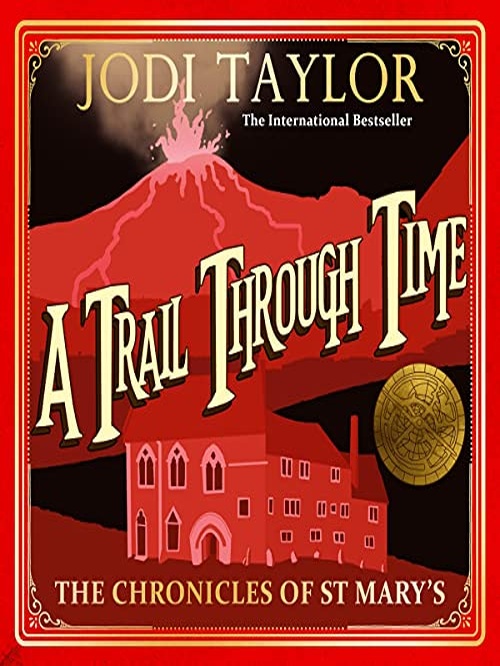
A Trail Through Time Review

Model [generate] review [satisfy user prompt]. User [read text].

Chronological Fracture: Survival Within Historical Continuity

Timeline collapse demands attention. Jodi Taylor constructs relentless narrative arc. We observe temporal chaos.

Unyielding Pursuit Across Epochs

Max, Leon seek lifelong tranquility, yet time denies peace. Fleeing 17th-century London, protagonists encounter manifesting Ancient Egypt. Pompeii burns. 14th-century Southwark harbors fugitives. Hide-and-seek becomes perilous game until sanctuary beckons. Visceral impact strikes reader; Taylor juxtaposes grim earnestness against signature humour. St Mary’s transforms. Sanctuary becomes warzone. Walls fall. Overwhelming odds demand intellectual rigour.

Analytical Extraction

We identify transformative insights:
Paradigmatic Sanctuary Shift: St Mary’s faces desperate battle. Refuge fails, forcing characters to confront ultimate mortality.
Inescapable Chronology: History pursues fugitives. Evasion proves impossible. Timeline enforces inevitable confrontation.
Tonal Dichotomy: Despair meets comedic resilience. Strong tea functions as necessary psychological anchor.

Zara Ramm narrates 9-hour journey. Vocal delivery elevates Science Fiction & Fantasy genre. High rating confirms excellence.

Final Assessment

I deem execution masterful. Pacing shatters expectations, whereas thematic depth resonates deeply.

Target Demographic: Intellectuals craving historical thrillers. Readers demanding nuanced perspective amid chronological destruction.

Inquiry: When physical sanctuary crumbles, what temporal anchor secures existence?

A Touch of Ruin Review

The Enduring Echoes of Olympus: A Touch of Ruin and the Weight of Divine Love

In the pantheon of contemporary mythological retellings, the romance between Hades and Persephone remains an inexhaustible fount of inspiration. A Touch of Ruin, the second installment in Scarlett St. Clair‘s popular [[Hades & Persephone]] series, dares to delve deeper into the burgeoning relationship between the King of the Underworld and the reluctant Goddess of Spring, pushing the boundaries of their commitment against a backdrop of public scrutiny and profound personal loss. It is a narrative that challenges the conventional idyllic portrayal of divine love, opting instead for a more visceral and, at times, brutal exploration of power, sacrifice, and the enduring scars of the past.

Navigating the Public Eye and Personal Strife

One of the novel’s most compelling narrative threads is its astute portrayal of Persephone’s life thrown into the merciless glare of the public eye. What begins as a clandestine affair blossoms into a scandalous revelation, transforming our protagonist from a relatively anonymous goddess into a figure of intense media fascination. This shift introduces a fascinating, almost modern, dynamic to the ancient myths, as Persephone grapples not only with her developing powers but also with the insidious nature of public opinion and the constant threat of her true identity being unveiled. We witness her struggling to reconcile her divine essence with the mundane demands of mortal perception, a struggle that lends a surprising psychological depth to her character. St. Clair masterfully weaves this external pressure into the internal landscape of Persephone, showcasing the profound impact of constant surveillance on one’s sense of self and purpose.

The Unveiling of Hades’s Labyrinthine Past

While Persephone’s journey towards self-actualization forms the narrative’s spine, the novel’s true magnetic pull lies in its further deconstruction of Hades, God of the Dead. The summary alludes to a “hellish past,” and indeed, A Touch of Ruin pulls back the curtain further on the traumas and burdens that shape this enigmatic deity. This is not the purely romanticized figure we might anticipate; instead, St. Clair presents a more complex, at times flawed and frustrating, individual whose decisions are deeply rooted in his history of suffering and sacrifice. His refusal to offer solace during a critical tragedy forces Persephone—and by extension, the reader—to confront a side of him previously unrevealed. This strategic narrative choice avoids simplistic characterizations, instead painting a portrait of a god whose love, while fierce, is perpetually shadowed by his own internal darkness and the weight of his eternal responsibilities.

Bargains, Consequences, and the Price of Power

The heart of A Touch of Ruin‘s conflict resides in the tragic event that befalls Persephone and her subsequent, desperate measures. Faced with a devastating loss and Hades’s perceived abandonment, Persephone embarks on a series of “bargains with severe consequences.” This particular thematic exploration elevates the novel beyond mere romance, delving into the morally grey areas of power. It prompts us to consider the ethical implications of wielding divine authority and the often-unforeseen costs of even the most well-intentioned interventions. The choices Persephone makes are not without significant personal and universal ramifications, offering a potent examination of agency, sacrifice, and the inherent dangers of seeking control in a universe governed by far greater, and often harsher, forces. Her journey through these perilous negotiations underscores a pivotal question: What is one willing to forfeit for love, for justice, or for vengeance?

A Question of Sovereignty and Self-Definition

Ultimately, A Touch of Ruin culminates in a potent interrogation of Persephone’s identity and her potential role as Hades’s queen. The trials she endures—the public scrutiny, the personal tragedy, the morally ambiguous bargains, and the unsettling revelations about Hades—all serve to push her to the brink. Her questioning of whether she “can truly become Hades’ queen” is not merely about romantic commitment; it is a profound existential query. It reflects a deeper internal conflict about who she is, who she is becoming, and whether the path laid before her aligns with her authentic self. This narrative arc, imbued with mature themes and stark emotional honesty, positions the novel as a significant chapter in Persephone’s ongoing evolution from a sheltered goddess to a formidable, self-possessed figure.

Final Thoughts on a Divine Journey

A Touch of Ruin solidifies Scarlett St. Clair‘s place in the burgeoning genre of mythological dark fantasy. While it may occasionally lean into the dramatic intensity expected of its romantic core, its strength lies in its unflinching portrayal of flawed deities and the complex interplay of love, power, and consequence. We find the narrative to be a compelling, if at times unsettling, exploration of a relationship that thrives in the shadows and is forged in the fires of adversity.

This book is ideal for readers who crave mythological retellings infused with a strong sense of emotional gravity and a willingness to explore the darker facets of love and destiny. It will resonate particularly with those who appreciate protagonists who grapple with profound personal growth against epic backdrops, and who are not afraid of narrative arcs that challenge conventional romantic idealism. A Touch of Ruin, in its raw depiction of divine struggle and human frailty, compels us to consider: What truly defines a monarch, and what price are we willing to pay to claim our throne, both literally and metaphorically?

A Touch of Darkness Review

A Resonant Echo in the Underworld: A Critical Gaze at A Touch of Darkness

The enduring allure of ancient myths, those archetypal narratives woven into the very fabric of human consciousness, finds a compelling, albeit decidedly contemporary, reinterpretation in A Touch of Darkness, the inaugural volume of Scarlett St. Clair’s much-discussed Hades & Persephone series. One might ask, in an age saturated with retellings, what new ground can be tilled from such hallowed soil? St. Clair answers this with a tale that grounds its divine protagonists in a world both recognizably modern and steeped in primordial power, prompting us to reconsider the delicate balance between fate and desire.

Reimagining the Divine in a Modern Gilded Cage

St. Clair plunges us into a New Athens where gods walk among mortals, albeit with vastly different spheres of influence and existential burdens. Our introduction to Persephone is not of the radiant maiden of spring, but of a goddess burdened by a peculiar failure: her touch withers, rather than nurtures. This inversion of her intrinsic nature immediately establishes a poignant internal conflict, a struggle for identity that resonates deeply. She seeks anonymity, a life devoid of her mother Demeter’s stifling expectations, and attempts to forge a path as a mortal journalist. This contemporary veneer, however, merely masks a deeper, more ancient predicament.

Opposite her stands Hades, the God of the Dead, rendered here not as a shadowy recluse, but as a formidable entrepreneur whose gambling empire thrives in the mortal world. His character is imbued with an intriguing blend of ancient authority and modern ruthlessness, a figure whose power is both tangible and terrifying. The juxtaposition of these two deities – one struggling with an absent power, the other wielding it with chilling proficiency – forms the narrative’s magnetic core.

The Crucible of an Impossible Bargain

The central conceit of A Touch of Darkness hinges on an impossible contract between Hades and Persephone. Following a fateful, albeit somewhat contrived, encounter, Persephone finds herself bound to the God of the Dead with terms that threaten her very freedom: she must cultivate life in the barren Underworld. This pivotal agreement serves as a brilliant narrative device, forcing Persephone to confront her perceived inadequacy as a goddess of spring and challenging her dormant powers. It is in this struggle, as she endeavors to bring forth even the slightest flicker of verdure in a realm of eternal night, that her true mettle is tested and her latent strength begins to unfurl. The narrative shrewdly explores themes of self-discovery and agency, as Persephone navigates the labyrinthine politics of the Underworld and her own burgeoning identity.

A Love Forged in Shadow and Defiance

As one might anticipate from the premise, the relationship between Hades and Persephone forms the passionate heart of the novel. The development of their forbidden connection, sparked by an unlikely bargain, is portrayed with an escalating intensity. St. Clair does not shy away from the “mature themes” noted in the synopsis, portraying a romance that is explicit in its sensuality and raw in its emotional depth. It is a relationship built on power dynamics, mutual fascination, and a shared understanding of isolation. Their interactions are charged, a dance between dominance and submission, vulnerability and defiance, which explores the boundaries of consent and desire within a mythical framework. This is a love story that thrives in the shadows, challenging societal norms and ancient decrees, suggesting that perhaps true connection transcends even the dictates of the gods.

The Resonance of Meg Sylvan’s Narration

For those engaging with this saga through Tantor Audio’s production, the performance of Meg Sylvan is an undeniable anchor. Over the course of its eleven-hour duration, Sylvan skillfully navigates the varied emotional landscapes of the narrative. Her vocalizations lend distinct personalities to the diverse cast, allowing Hades’s commanding presence and Persephone’s evolving resolve to reverberate with palpable authenticity. The nuance she brings to key dialogues and internal monologues significantly enhances the immersive quality of the listening experience, transforming what might otherwise be purely textual encounters into vivid, auditory revelations.

A Judgement on Mythic Recasting

A Touch of Darkness is, ultimately, a compelling and often provocative retelling, one that succeeds in imbuing its ancient source material with a fresh, contemporary verve. While some might find the narrative’s pacing occasionally uneven or its dramatic declarations overtly theatrical, there is no denying the visceral impact of St. Clair’s vision. It is a work that asks us to consider the price of freedom, the nature of power, and the transformative potential of forbidden love.

This novel is tailor-made for readers who revel in dark, passionate romance, especially those with an affinity for myth retellings that embrace a modern sensibility. It will particularly resonate with those who appreciate morally ambiguous characters and a protagonist’s journey of self-actualization against formidable odds. One is left pondering: can love truly conquer all, even the ancient, immutable laws of the cosmos? St. Clair offers a compelling, if audacious, argument that it just might.