When the War Ends, the Real Wounds Begin
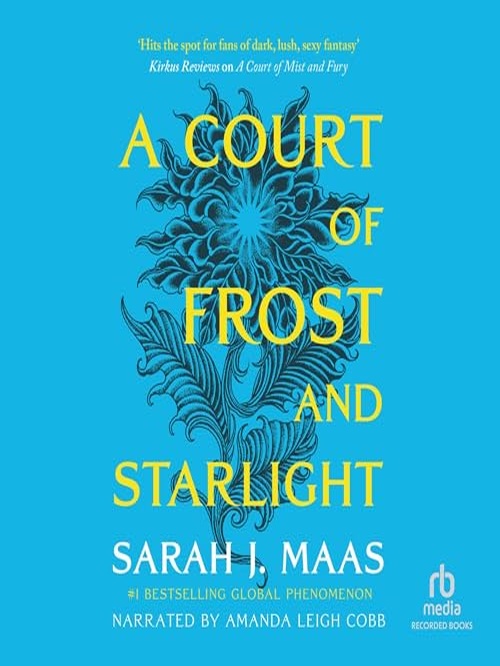
What happens after the final battle? After the blood dries on the battlefield and the victory feasts wind down, what remains? It’s a question fantasy rarely bothers to ask. We close the book on the climactic showdown, satisfied, and seldom wonder how the heroes sleep at night — or whether they sleep at all. In A Court of Frost and Starlight, Sarah J. Maas dares to linger in that uncomfortable aftermath, and the result is something unexpectedly intimate, occasionally uneven, and quietly significant within the broader architecture of her A Court of Thorns and Roses series.
A Novella That Breathes Between the Storms
Let me be direct: this is not a novel. It’s a novella — a bridge, a breath, an interlude. Readers expecting the kinetic plotting and escalating stakes of A Court of Wings and Ruin will find themselves recalibrating within the first few chapters. The pacing is deliberately slow. The action is domestic. The drama is internal. And I’d argue that’s precisely the point.
Set in the months following the war against Hybern, the story follows Feyre and Rhysand as they navigate the reconstruction of the Night Court during the approach of Winter Solstice. On the surface, it’s a holiday narrative — gift-giving, decorating, reunions with beloved characters. Beneath that surface, Maas is doing something more deliberate: she’s cataloging grief.
The Cartography of Scars
The most compelling dimension of Frost and Starlight lies in its refusal to let trauma be conveniently resolved. Maas rotates through multiple points of view — Feyre, Rhysand, Cassian, Morrigan — and each perspective reveals a character performing normalcy while privately fracturing. Rhysand’s guilt over what he asked of his people. Feyre’s compulsive need to create, to paint, as though beauty might paper over the void. Nesta’s corrosive rage, which Maas renders not as villainy but as a wound turned outward.
It’s Nesta, in fact, who emerges as the novella’s most visceral presence despite relatively limited page time. She is the character who refuses to perform healing on anyone else’s timeline, and Maas wisely doesn’t force her to. The seeds planted here — her self-destruction, her isolation, her fury at a world that broke her and then expected gratitude — would later bloom into the sprawling narrative of A Court of Silver Flames. In retrospect, this novella functions as essential groundwork.
Cassian, too, carries a particular weight. His scenes vibrate with suppressed longing and a soldier’s restlessness — a man built for war who must now learn the architecture of peace. It’s a subtle portrait, and one of Maas’s more psychologically credible characterizations.
The Limits of the Interlude
I won’t pretend the novella is without its weaknesses. The pacing, while thematically justified, occasionally tips from meditative into inert. Some chapters read more like connective tissue than narrative — functional rather than essential. The Feyre-Rhysand dynamic, while warm, risks saccharine territory; their relationship has been so thoroughly idealized across three prior volumes that the absence of genuine friction between them here feels less like marital contentment and more like narrative stasis.
There’s also the question of depth versus breadth. By touching on so many characters’ inner lives, Maas sometimes sacrifices the kind of sustained, immersive interiority that would make any single arc truly devastating. We get glimpses — powerful ones — but glimpses nonetheless.
And yet, I find myself forgiving these structural imperfections. The novella knows what it is. It doesn’t pretend to be the next epic installment. It asks for six hours of your time — Amanda Leigh Cobb‘s narration on the audiobook makes those hours feel effortless — and offers in return something the main series rarely pauses long enough to provide: emotional reckoning.
The Quiet Before the Next Thunder
A Court of Frost and Starlight is, ultimately, a story about the lie we tell ourselves after survival — that the hard part is over. Maas understands, perhaps intuitively, that survival is merely the beginning of a different kind of battle, one fought in kitchens and bedrooms and the silence between conversations.
This novella is for readers already invested in the Inner Circle, those who care less about where the plot goes next and more about what these characters carry inside them. It is not the entry point. It is not the crescendo. It is the moment you sit with someone you love and realize that the cracks in them run deeper than you’d allowed yourself to see.
So here’s the question worth sitting with: Do we read fantasy to escape the aftermath — or to finally, safely, face it?