Accidental Warrior Review

The Reluctant Messiah and the Call of the Digital Wild

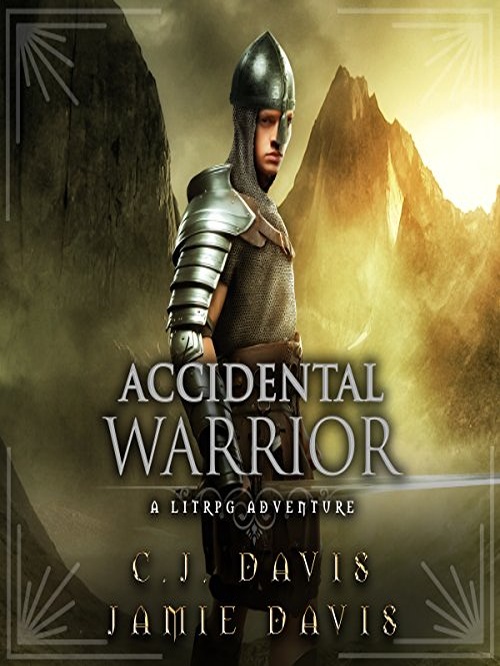
There is an enduring allure in the narrative of the ‘accidental hero,’ a figure plucked from the quotidian and thrust into the crucible of epic destiny. It is a trope that speaks to our collective desire for significance, for the grand adventure that lies just beyond the mundane. In Accidental Warrior, the second installment in the [[LitRPG Accidental Traveler Adventure]] series by the astute minds of [[Jamie Davis]] and [[C. J. Davis]], we are invited once more to witness this archetypal journey, observing Hal Dix as he grapples with a calling he never sought yet cannot, in good conscience, refuse.

The Weight of a Second Summoning

After a foray into the fantastical realm of Fantasma, Hal Dix, our everyman protagonist, had seemingly achieved an enviable equilibrium. His career ascended, his home life flourished – a testament, perhaps, to the grounding influence of an unexpected adventure. Yet, the tranquility is ephemeral. The narrative’s strength, here, lies in its immediate disruption: the return of the mage Tildi, the Elder, bearing tidings of peril and a desperate plea. It is a profound exploration of personal responsibility, demanding that Hal abandon his hard-won peace for a comrade in distress. We witness Hal’s internal conflict not as a weakness, but as a deeply human reluctance, a nuanced perspective on heroism that sets him apart from the more traditional, eager champions of fantasy. This return to Fantasma is not merely a plot device; it is a critical juncture where the ‘accidental’ in his title is tested, evolving into a deliberate, albeit begrudging, commitment.

Navigating the Contours of a Prophecy

The genius of Accidental Warrior is not merely in its genre classification as LitRPG – a blend of literary and role-playing game mechanics – but in how Jamie Davis and C. J. Davis weave these elements into the very fabric of Hal’s burgeoning destiny. The game world of Fantasma is not just a setting; it’s a dynamic entity that shapes and responds to Hal’s progression. His “leveling up,” both within the game’s mechanics and in his personal growth, offers a compelling parallel to the real-world maturation process. We are presented with a protagonist who initially sought respite, perhaps even escape, but now finds himself intrinsically linked to a prophecy, a ‘mythical hero’ in the making. This contextualization within a pre-ordained fate, coupled with his persistent resistance to it, creates a fascinating tension. The authors deftly use the LitRPG structure to externalize Hal’s internal struggles, his newfound abilities reflecting his increasing acceptance of his extraordinary circumstances.

The Symphony of Reluctance and Resilience

As Roberto Scarlato’s skilled narration guides us through the almost ten hours of this audio adventure, we are struck by the sustained rhythm of the narrative. The pacing is deliberate, allowing us to dwell on Hal’s dilemmas and appreciate the evolution of his relationships within Fantasma. The focus remains steadfastly on Hal’s journey, transforming him from a convenient solution to a genuine, if still reticent, leader. The prose, while accessible, avoids simplistic tropes, instead cultivating a world that feels both familiar in its fantasy elements and fresh in its approach to character-driven development. This isn’t just another quest; it’s an examination of how purpose finds the individual, even when that individual would rather remain comfortably unburdened by greatness.

A Mandate for the Modern Myth-Seeker

Accidental Warrior cements its place as a compelling continuation, deepening the thematic explorations initiated in the series’ first book. It is a testament to the fact that even in worlds built on numbers and stats, the human (or human-adjacent) element of friendship, duty, and self-discovery remains paramount. We find ourselves invested not merely in the unfolding battles or the acquisition of new skills, but in Hal’s quiet, powerful transformation.

This volume is unequivocally for those who appreciate a hero who earns their mantle through genuine reluctance and a steadfast commitment to their comrades, rather than an unbridled thirst for glory. It serves as an excellent case study for readers intrigued by the intellectual underpinnings of the LitRPG genre, particularly how it can be employed to explore profound questions of identity and destiny. Ultimately, Accidental Warrior compels us to consider: what would we do if the fate of a world, and the well-being of a friend, rested on our shoulders, even if we were merely accidental participants? A worthwhile reflection for any discerning reader seeking substance within the realms of speculative fiction.
Accidental Traveler Box Set Volumes 1-3 Review

The Accidental Odyssey: Navigating Reality’s Glitches and Gaming’s Grand Designs

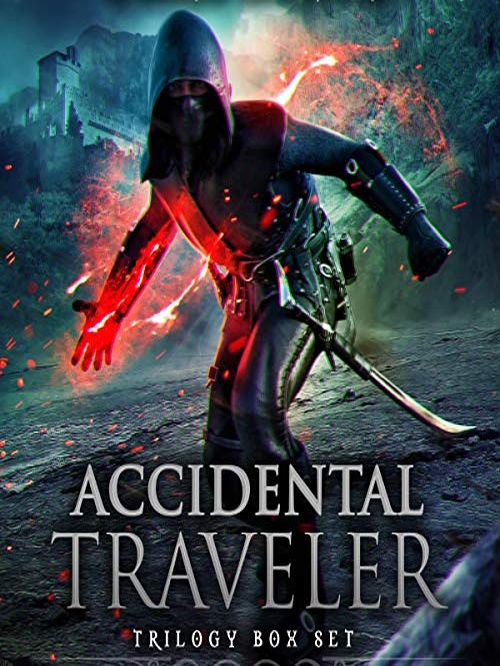
In an age where the mundane often overshadows the magnificent, the allure of the virtual realm offers a potent escape, a chance to recalibrate one’s narrative. It is this fundamental human desire for transformation, for agency in a world that frequently denies it, that forms the pulsating heart of Accidental Traveler Box Set Volumes 1-3 by the collaborative talents of Jamie Davis and C. J. Davis. This trilogy, a complete immersion into the LitRPG genre, invites us to consider what happens when the digital border blurs and destiny finds an unlikely avatar.

The Mundane’s Metamorphosis

We open our journey with Hal, a character whose predicament—”can’t catch a break”—resonates deeply within the modern consciousness. He is, to put it mildly, stuck. It’s a state many of us recognize, a stagnation that yearns for a catalyst. The fortuitous (or perhaps fated) encounter at a flea market, culminating in the acquisition of a “bootleg copy of a new game,” serves as a masterful narrative device. It’s the proverbial rabbit hole, a digital portal promising momentary respite, yet delivering a seismic shift in Hal’s very existence. Here, the authors lay the groundwork for an exploration not just of gaming mechanics, but of the existential weight of circumstance and the sudden, startling possibility of an unscripted life.

Architecting Identity in a Systematized World

The genius of this LitRPG Accidental Traveler Adventure lies in its skillful articulation of the protagonist’s evolution through the traditional archetypes of fantasy: Thief, Warrior, and Mage. This isn’t merely a progression through character classes; it is a profound journey of self-discovery within a structured, rule-bound universe. As Hal is forced to embody these disparate roles, we witness the systematic dismantling of his previous ‘stuck’ identity and the painstaking construction of a new one, defined by skills, choices, and consequences. The narrative expertly leverages the inherent appeal of LitRPG—the quantifiable progression, the clear objectives, the visceral feedback loop of success and failure—to craft a compelling metaphor for navigating real-world challenges. It posits that perhaps, within a world governed by explicit rules, one can truly find their footing, their purpose, and ultimately, their power. The journey through each volume feels less like distinct adventures and more like crucial developmental stages, each forging a new facet of Hal’s burgeoning self.

The Philosophical Undercurrents of Play

Beyond the undeniable thrill of leveling up and conquering digital foes, Accidental Traveler subtly probes deeper questions about agency, destiny, and the nature of victory. The description’s assertion, “every game needs a winner,” is not merely a marketing tag; it’s a thematic anchor. Is winning a matter of grinding stats, or does it demand a deeper understanding of the game’s intrinsic ethics, its hidden moral economy? Hal’s transformation from an “accidental” player to a purposeful participant speaks volumes about the human capacity to adapt, to master, and to find meaning even in circumstances thrust upon us. The narrative invites us to reflect on the games we all play in life, whether by choice or by chance, and the strategies we employ to emerge triumphant—or at least, to survive with our sense of self intact. The pacing is designed to immerse, building a world that feels both fantastical and oddly logical, an internal consistency that is crucial for any successful LitRPG.

A Judgement on Digital Destiny

From our vantage point, the Accidental Traveler Box Set Volumes 1-3 stands as a robust and engaging entry into the LitRPG canon. Jamie Davis and C. J. Davis have not merely created a world; they have constructed an experience, rich in the satisfying progression inherent to the genre, yet imbued with a character arc that resonates beyond the screen. The narrative, as expertly delivered by Roberto Scarlato for the auditory experience, maintains a captivating rhythm, pulling the listener deeper into Hal’s unpredictable journey.

This collection is unequivocally for those who find intellectual solace in structured fantasy, for readers who appreciate the meticulous detail of system-driven worlds, and most importantly, for anyone who has ever felt the yearning for a second chance, a fresh start, even if it means being thrust into an unforeseen adventure. It asks us, perhaps, to consider our own “bootleg copies” of reality, and what grand destinies might lie hidden within.

Accidental Thief Review

Navigating the Labyrinth of the Self: An Accidental Journey into Fantasma

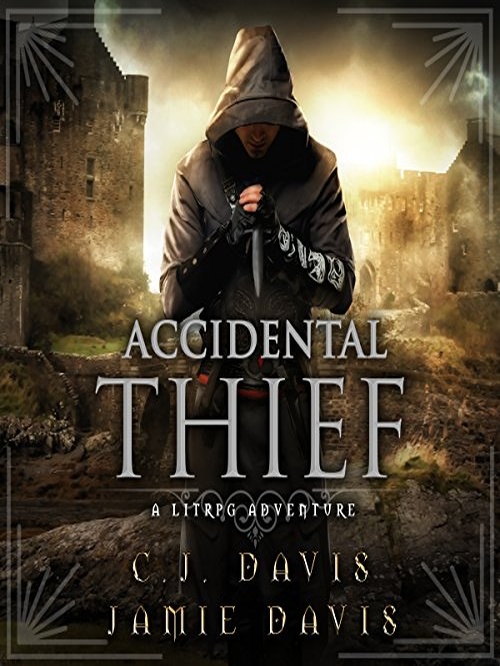
In an age increasingly defined by the permeable membrane between the digital and the mundane, where the allure of virtual realities promises respite from the quotidian, Accidental Thief by Jamie Davis and C.J. Davis presents a timely, albeit subtly disquieting, premise. We are introduced to Hal Dix, a figure so thoroughly steeped in the grey banality of unfulfilled aspirations that his very existence seems to echo the collective sigh of the unremarkable. An IT help desk drone, overshadowed by his executive spouse, his self-worth is a fragile construct, perpetually assailed by the world’s dismissive gaze. It is a predicament that resonates, perhaps uncomfortably, with the quiet desperations many of us harbor.

One might ask: what happens when the desperate wish for a different life, for a chance at agency, is unexpectedly granted? The authors explore this through Hal’s fateful acquisition of a bootleg game – a relic of illicit charm promising escape into the highly anticipated realm of Fantasma. But as the narrative unfolds, we, alongside Hal, are reminded that one should indeed “be careful what one wishes for,” for the game’s embrace is far more encompassing and demanding than a mere weekend diversion.

The Unwilling Hero’s Genesis

What truly elevates Accidental Thief beyond a mere genre exercise is its nuanced portrayal of Hal’s reluctant metamorphosis. The LitRPG landscape, often populated by characters readily embracing their new, overpowered roles, finds a poignant counterpoint in Hal. He is not a “chosen one” in the archetypal sense, but an “accidental traveler,” thrust into a world where his only advantage might be his very lack of innate heroism. This inversion of the hero’s journey allows for a more authentic exploration of self-discovery. We witness Hal’s struggle not merely with monsters or quests, but with his own ingrained insecurities, his history of being overlooked, and the profound discomfort of suddenly having to define himself through action rather than passive acceptance. The game’s mechanics become a crucible, forcing him to shed the skin of his previous identity, albeit awkwardly, even clumsily.

The Ontological Weight of the ‘Game’

The narrative’s most compelling intellectual thrust lies in its probing of the boundaries between the real and the simulated. The “bootleg release” of Fantasma subtly implies an imperfect, perhaps even dangerous, entry point, immediately imbuing Hal’s adventure with an undercurrent of systemic instability. Is this a game, a new reality, or a liminal space where the rules are still being written, and perhaps, exploited? The authors artfully navigate this thematic ambiguity, suggesting that the escape Hal so desperately craved might be a more profound, perhaps even ontological, shift than he ever anticipated. His burgeoning skills as an Accidental Thief are not just game mechanics; they represent a stark, often morally grey, path to self-actualization. This invites a deeper reflection on how our environments, be they real or virtual, can compel us towards identities we might never have envisioned for ourselves.

An Unconventional Path to Agency

The core of Hal’s journey, then, is less about mastering a game and more about reclaiming his narrative agency. His life prior to Fantasma was one dictated by external perceptions and internal resignation. Within the labyrinthine confines of this new, fantastical world, he is afforded the rare, terrifying opportunity to forge his own path, however circuitous or unexpected. The narrative deftly employs the LitRPG framework to illustrate this personal evolution: each skill point, each encounter, each difficult choice, serves as a tangible metric of his growing self-reliance and the slow, arduous process of building a new identity from the shards of his old, broken one. It is a testament to the power of unforeseen circumstances to ignite dormant strengths, making Hal a genuinely relatable, if flawed, protagonist.

A Deliberate Introduction to a Grand Adventure

Ultimately, Accidental Thief offers a thoughtfully constructed overture to what promises to be an epic LitRPG fantasy trilogy. It eschews bombast for character-driven immersion, drawing us into Hal’s world with an empathetic hand. The authors have crafted a debut that is both a critique of modern ennui and a celebration of the human spirit’s capacity for adaptation, even when adaptation means embracing an unforeseen, perhaps unsavory, role.

This is a book for those who appreciate the slower burn of character development over immediate gratification, for readers who find themselves contemplating the existential quandaries posed by our increasingly digital lives, and for enthusiasts of the LitRPG genre who crave a narrative with thematic depth alongside the satisfying crunch of leveling up. Accidental Thief reminds us that sometimes, the most profound journeys begin not with a grand quest, but with a simple, desperate wish, and the accidental discovery of a self we never knew we could be. We encourage you to step into Fantasma and consider what it truly means to be the master of your own (accidental) destiny.

Accidental Mage Review

User demand review. AI write text. AI follow persona constraints. Read output.

Accidental Mage: Visceral Impact In Virtual Realms

Grief Drive Narrative Arc

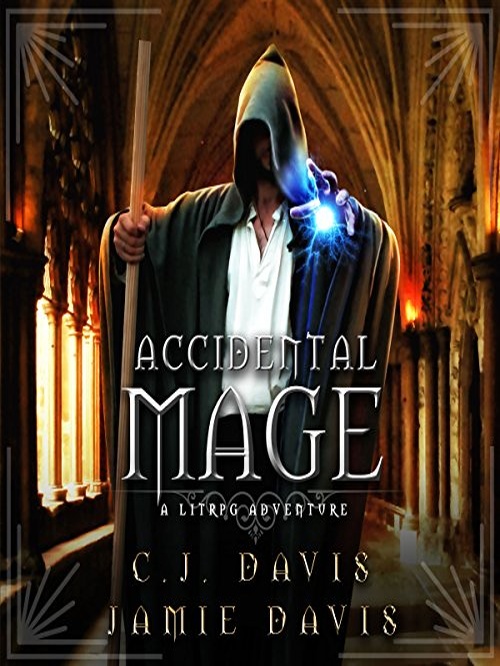
We examine Accidental Mage. Authors Jamie Davis and C. J. Davis write third installment of LitRPG Accidental Traveler Adventure series. Hal Dix return Fantasma. Real-world tragedy force paradigmatic shift. Escapism become survival. We observe nuanced perspective. Game transcend entertainment. Virtual world process physical grief. Hal abandon physical sword. Hal embrace arcane mastery.

Intellectual Rigour Of Magic System

LitRPG genre usually focus stats. Davis brothers elevate mechanics. Hal face four cantankerous archmages. Magic require profound discipline. System demand intellectual rigour. Progression mirror psychological healing. We value narrative choice. Authors reject cheap power fantasy. Hero earn skills through suffering. Story deliver true visceral impact.

Auditory Experience Enhance Fantasy

Publisher MedicCast Productions deliver strong audio. Roberto Scarlato narrate 10-hour journey. Voice anchor Science Fiction & Fantasy elements. Scarlato capture emotional weight. Narration provide steady rhythm. Audio format suit LitRPG structure perfectly.

Final Assessment

Accidental Mage succeed. Trilogy conclusion satisfy. Authors blend emotional depth with stat progression. We judge book worthy.

Audience target: LitRPG fans seek slow-burn character growth. Readers want emotional stakes in Fantasy settings.

Reflection demand: Does digital achievement heal physical world trauma? Experience Hal’s journey. Decide truth yourself.