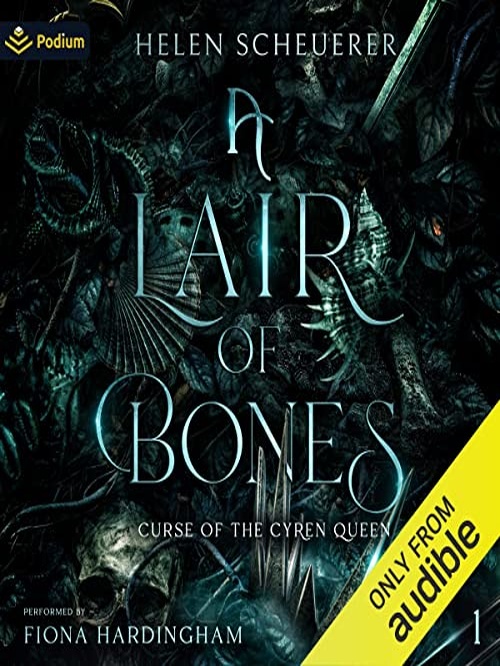
A Lair of Bones Review

Into the Dark Below: Where Ambition Echoes Off Bone

What happens when you strip a fantasy heroine of every conceivable advantage — noble birth, political connections, even the basic respect of her own species — and then throw her into a tournament designed to kill her? Helen Scheuerer answers that question with A Lair of Bones, the opening salvo of her Curse of the Cyren Queen quartet, and the answer is more unsettling, more texturally rich, than the premise might initially suggest.

I’ll confess: I came to this book expecting a fairly standard tournament arc dressed in dark fantasy trappings. What I found instead was a claustrophobic, vertically stratified world that functions as both setting and argument — a place where geography is politics, where your altitude within a subterranean lair determines your worth, and where music carries the weight of a weapon.

The Architecture of Oppression

Saddoriel is the novel’s quiet triumph. Scheuerer constructs her cavernous fortress not as mere backdrop but as a living thesis on caste and containment. The lair operates on a vertical logic: power ascends, misery sinks. Roh, our protagonist — daughter of a criminal, bone cleaner by forced vocation — inhabits the lowest rungs of this architecture, both literally and socially. There’s something almost Dickensian in the specificity of her labor, the grime of it, the way the lair’s upper echelons remain tantalizingly abstract to someone who has only ever known the Lower Sector.

What elevates this beyond familiar chosen-one territory is Scheuerer’s refusal to make Roh’s ambition entirely sympathetic. Roh doesn’t merely want freedom or justice; she wants power. That distinction matters. It complicates every alliance she forms, every risk she takes, and it forces us to sit with a protagonist whose moral compass doesn’t always point where we’d like it to.

Cyrens, Not Sirens: The Texture of Reinvention

The cyren mythology here deserves attention. Scheuerer draws from siren lore but bends it into something less familiar — creatures bound to music and magic in ways that feel organic to the world rather than decorative. The Queen’s Tournament, the novel’s central narrative engine, leverages this mythology effectively. Each trial demands not just physical prowess but a kind of cunning that feels specific to cyren culture, rooted in deception and sonic manipulation.

Where the book occasionally falters is in its pacing through the tournament’s middle trials. There are stretches where the escalation plateaus, where the tension that Scheuerer builds so masterfully in the opening act diffuses into procedural sequences that feel more dutiful than dangerous. The labyrinthine setting — all tunnels and levels — can blur together when the narrative lingers too long without a sharp character beat to anchor us.

Yet when Scheuerer is firing on all cylinders, the prose carries a visceral, almost tactile darkness. Bones aren’t metaphorical here. They’re workplace material. They’re architecture. They’re what’s left of the losers. That materiality gives the novel a grounded brutality that separates it from more sanitized entries in Young Adult dark fantasy.

The Weight of a Name

One of the more compelling threads running through A Lair of Bones is the question of inherited identity. Roh is defined — constrained, punished, dismissed — by her mother’s crimes before she ever has the chance to commit her own. Scheuerer handles this with nuance, resisting the temptation to make Roh’s redemption arc about proving her essential goodness. Instead, the novel asks a harder question: what kind of person does systemic contempt actually produce? The answer, it turns out, is someone far more interesting than a simple underdog.

Fiona Hardingham‘s narration in the audiobook edition deserves particular mention. At over thirteen hours, the performance carries the weight of Saddoriel’s depths with a tonal range that distinguishes between the lair’s many inhabitants without ever tipping into caricature. Her Roh is sharp-edged and hungry — exactly right.

A Descent Worth Taking

A Lair of Bones is not a flawless novel. Its middle sags, some of its secondary cyrens remain more archetype than character, and the inclusion of the bonus novella A Song in the Deep — while welcome — underscores how much worldbuilding Scheuerer needs beyond the main narrative to make her mythology cohere fully.

But here’s what stays with me: this is a book that takes its own darkness seriously. It doesn’t use grim aesthetics as window dressing for a fundamentally comforting story. Roh’s world is cruel in structural, systemic ways, and her response to that cruelty is ambition untethered from moral certainty. That’s a compelling foundation for a quartet.

Perfect for readers who gravitate toward the subterranean menace of Naomi Novik‘s Scholomance series or the political ruthlessness of Sarah J. Maas‘s early work, but who crave a protagonist less interested in being liked than in surviving on her own uncompromising terms.

The question Scheuerer leaves us with isn’t whether Roh will win the tournament. It’s whether winning will leave anything worth ruling.
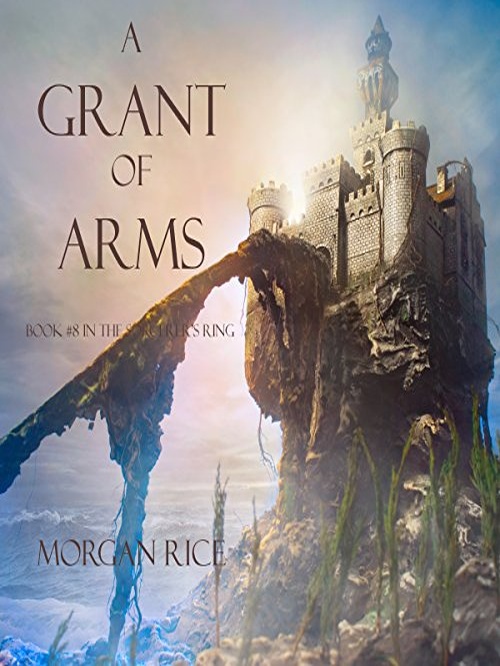
A Grant of Arms Review

The Crucible of Conscience: A Grant of Arms and the Fractured Soul of the Ring

In the grand tapestry of epic fantasy, where the lines between light and shadow often blur, Morgan Rice continues to weave a narrative of monumental struggle and existential introspection with A Grant of Arms, the latest installment in The Sorcerer’s Ring series. This is not merely a chapter in a sprawling saga; it is a profound examination of identity, allegiance, and the very cost of salvation, presented with a relentless pace that challenges the reader’s every assumption. As seasoned voyagers through literary realms, we approach this text not just as an adventure, but as an intellectual exercise in understanding the human, or indeed, the heroic, condition under immense duress.

The Labyrinth of the Self

What immediately strikes one within A Grant of Arms is the sheer audacity of its central conflict: the battle for Thor’s very soul. We are accustomed to heroes facing external dragons, tyrannical kings, or ancient evils; Rice deftly pivots this expectation, plunging Thor into a visceral internal war, manipulated by the dark sorcery of Andronicus and Rafi. This is where the narrative truly elevates itself beyond the conventional Teen & Young Adult framework. The author invites us to ponder the fragility of identity when subjected to malevolent magical influence, echoing philosophical inquiries into free will and the nature of self. Can one truly be oneself when one’s deepest convictions are being systematically dismantled? Thor’s struggle to cast off the chains of his father and free his spirit becomes a powerful metaphor for shedding inherited burdens and forging one’s own destiny, even when the path is obscured by shadow and deceit.

A Symphony of Converging Quests

Beyond Thor’s harrowing journey, A Grant of Arms unfolds a rich, multi-layered narrative, each thread a quest pregnant with peril and consequence. Gwendolyn, a character whose resolve deepens with every adversity, embarks upon a perilous expedition into the Netherworld, a landscape as psychologically daunting as it is physically treacherous, in pursuit of Argon. Simultaneously, Reece rallies the Legion for an almost mythical quest into the depths of the Canyon to retrieve a lost sword – a classic trope, yet imbued here with fresh urgency. Then there is the looming menace of Romulus, whose magical cloak heralds a sinister advance on the Ring’s protective shield, threatening the very fabric of their world.

The genius here lies in Rice’s ability to maintain narrative tension across these disparate yet interconnected plotlines. Each character’s journey, whether it’s the struggle for freedom from betrayal by Kendrick, Erec, Bronson, and Godfrey, or the tragic dance of Tirus and Luanda serving Andronicus, contributes to a crescendo of impending doom and fleeting hope. The author demonstrates an acute understanding of how individual fates are inextricably linked to the grander cosmic battle, turning isolated dilemmas into vital components of the overarching struggle.

When Allegiances Crumble

Perhaps the most potent thematic undercurrent in this installment is the exploration of loyalty, betrayal, and moral ambiguity. Rice does not shy away from the ugly truths of human nature, even within a fantastical setting. Characters are forced to make impossible choices, and the consequences ripple through the entire narrative. The “shocking twist” regarding Alistair, hinted at in the publisher’s summary, promises a paradigmatic shift in the reader’s understanding of established relationships and alliances. This unflinching gaze at the complexities of good and evil, where even ostensibly good characters grapple with difficult compromises, lends the story a profound sense of realism, despite its magical backdrop. It’s a compelling reminder that true heroism often emerges not from unwavering purity, but from the messy crucible of doubt and difficult decisions.

A Deep Dive into Destinies

A Grant of Arms is, in essence, a call to examine what we fight for, both within and without. Morgan Rice’s sophisticated world-building continues to impress, crafting settings that feel both ancient and immediately dangerous. The narrative’s rhythm, expertly conveyed by Wayne Farrell‘s measured narration in its audio format, allows for both moments of intense action and quieter introspection, a testament to the author’s control over her craft. This is a story that, despite its epic scale, always returns to the beating hearts of its protagonists.

For those who find solace and challenge in narratives that explore the deepest recesses of the human spirit amidst grand adventures, A Grant of Arms is an essential read. It is perfect for connoisseurs of fantasy who appreciate intricate plots, character arcs steeped in moral complexity, and high-stakes drama that keeps one turning pages long into the night. It challenges us not only to root for the heroes but to question the very nature of heroism itself. Will Thor reclaim his soul? Will the Ring stand? These questions linger, compelling us to reflect on our own grants of arms – the choices and allegiances that define our own battles.

A Forge of Valor Review

When Love Demands Sacrifice and Lineage Demands Answers

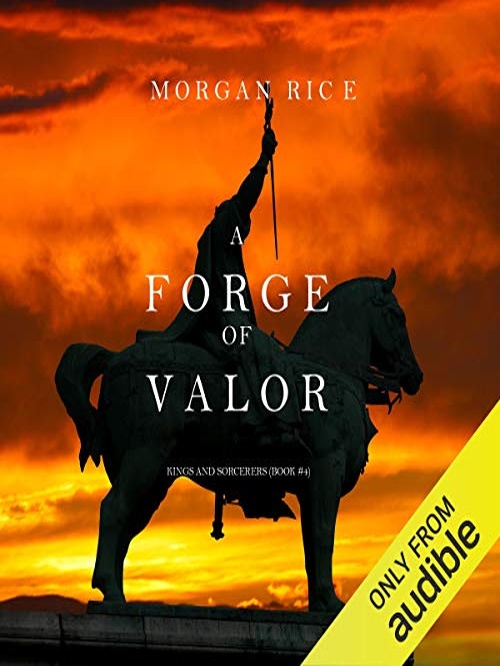
There’s a particular kind of fantasy novel that doesn’t ask you to think—it asks you to feel, to surrender to the velocity of its plot and the primal stakes of its world. Morgan Rice‘s A Forge of Valor, the fourth installment in the Kings and Sorcerers series, is precisely that kind of book: a breathless, sword-drawn sprint through a kingdom fracturing under the weight of war, secrets, and the terrible arithmetic of loyalty.

The question the book poses, perhaps unwittingly, is an old one—older than fantasy itself: What do we owe the people who made us, and what do we owe the power growing inside us?


The Architecture of Diverging Paths

What strikes me most about A Forge of Valor is its structural ambition. Rice juggles three distinct narrative threads—Kyra’s agonizing choice between self-knowledge and filial duty, Aidan’s desperate gambit to free his father from a capital dungeon, and Merk’s siege-bound defense of the Tower of Ur—and keeps each one taut with escalating tension. This is not a book that lingers. It moves with the relentless pacing of a serial, each chapter ending on a breath held just a beat too long.

The strongest of these threads belongs to Kyra. Her resurrection from near-death through Kyle’s sacrifice is more than a plot device; it functions as the novel’s central metaphor. Power, Rice insists, is never free. Every gift exacts its toll. Kyra’s subsequent confrontation with Alva about her mother’s identity finally cracks open a mystery that has simmered across the series, and the revelation—while I won’t spoil it—reframes everything we thought we understood about her abilities. The choice she then faces, between completing her training at the source of her power and rushing to save her imprisoned father, is genuinely compelling. It’s the classic tension between becoming and belonging, and Rice doesn’t resolve it cheaply.

The Forge as Metaphor

The title itself rewards a moment’s reflection. A forge doesn’t create metal—it transforms it through extreme heat and pressure. Every character in this installment is being subjected to their own crucible. Merk, the former assassin seeking redemption among the watchers of the Tower of Ur, discovers that guarding a nation’s most precious relic means more than passive vigilance when a massive troll army encircles his walls. His arc is the most conventionally heroic, but Rice grounds it in the visceral reality of siege warfare—the claustrophobia, the dwindling resources, the slow erosion of certainty.

Aidan’s storyline, with the loyal Motley at his side, carries the emotional weight of a child navigating an adult’s catastrophe. There’s something almost Dickensian about a boy threading through the perilous machinery of a hostile capital, armed with nothing but devotion and a dog. It’s the thinnest thread narratively, but it pulses with an earnest emotional frequency that balances the darker registers elsewhere.

What Rice Does Well—and Where the Seams Show

I should be candid. Rice’s prose operates in a particular register: clean, functional, and fast. You won’t find the ornate world-building of a Robin Hobb or the moral complexity of a Joe Abercrombie here. The dialogue serves plot more than character, and certain emotional beats—particularly around healing and sacrifice—arrive with a predictability that dulls their impact on a second reading. The troll invasion, while thrilling in its momentum, relies on familiar siege-narrative conventions without subverting them.

And yet, there’s an undeniable pull to Rice’s storytelling. She understands pacing the way a composer understands tempo. The six-hour audiobook, narrated by Wayne Farrell, moves like a river current—you don’t notice the speed until you look up and realize you’ve traveled miles. The 4.58 average rating from listeners reflects this: readers come for the velocity, and Rice delivers.

Who Should Pick This Up

A Forge of Valor is not for readers seeking literary deconstruction of the fantasy genre. It is for those who want to be transported—quickly, completely, without ironic distance. If you’ve followed Kyra, Aidan, and Merk through the first three volumes, this installment rewards your investment with genuine revelations and escalating stakes. It’s ideal for Young Adult and Science Fiction & Fantasy readers who prize momentum and emotional directness over ambiguity.

For newcomers, start with Rise of the Dragons. This is a river you enter at its source or not at all.

I’m left with this thought: Kyra’s choice—power or love, destiny or family—is one we dress up in different costumes throughout our lives. Rice frames it in swords and sorcery, but the forge she’s really describing is the one we all pass through when we realize that choosing who we want to become sometimes means walking away from the people who need us most.

What would you choose?

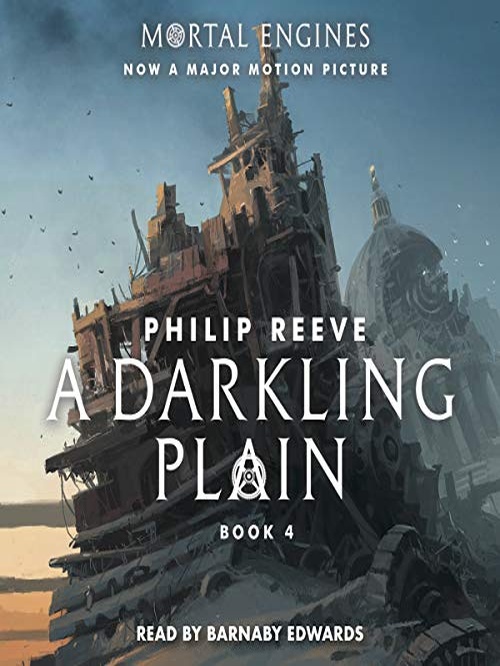
A Darkling Plain Review

The Echoes of a Dying World: A Concluding Reflection on A Darkling Plain

In the vast, shifting dunes of contemporary Science Fiction & Fantasy, few series have etched themselves into our collective imagination with the stark, singular vision of Philip Reeve’s Mortal Engines. Its culmination, A Darkling Plain, arrives not as a triumphant fanfare but as a resonant, melancholic symphony, an elegy to a world teetering on the brink, grappling with the profound consequences of its own brutal past. We approach this final volume with a sense of both dread and anticipation, eager to witness the ultimate fate of its complex characters and the ravaged, yet strangely beautiful, landscape they inhabit.

Unearthing Truths in a World Undone

Reeve has, throughout this remarkable series, masterfully woven a tapestry of municipal Darwinism, where cities devour cities in a perverse, mechanised struggle for survival. A Darkling Plain brings this brutal logic to its inevitable, devastating climax. The very mention of London as a “radioactive ruin” is enough to send a shiver down the spine, immediately setting a somber, apocalyptic tone. Yet, it is within these very ruins that Reeve posits the seeds of resolution, or perhaps, simply the brutal truths that have long lain dormant. The journey of Tom and Wren into the underbelly of this fallen titan is more than a mere treasure hunt; it is an archaeological excavation of humanity’s hubris and its desperate, lingering hope. Their discoveries are not just plot devices but philosophical insights into the cyclical nature of conflict and the faint possibility of transcending it.

The Crucible of Fanaticism and the Human Spirit

While Tom and Wren navigate the physical and metaphorical darkness, Hester faces a different kind of abyss. Her confrontation with a fanatical enemy, armed with both destructive weapons and an unyielding will to annihilate, elevates the narrative beyond mere adventure. This is where Reeve delves into the psychological and sociological underpinnings of his world. What drives such fanaticism? What are the limits of human endurance when faced with absolute malevolence? Hester’s arc, always fraught with moral ambiguity, reaches its most poignant and perilous point here, forcing us to consider the fine line between conviction and madness, survival and extinction. It is a testament to Reeve’s nuanced characterisation that we remain deeply invested in her struggle, even as her choices challenge our own ethical frameworks.

The Weight of a Legacy Unfurled

This final installment, a winner of the esteemed Guardian Children’s Fiction Prize, solidifies Reeve’s place as a visionary storyteller within the Teen & Young Adult landscape. Yet, to pigeonhole this work solely for a younger audience would be to overlook its profound intellectual rigour and its unflinching gaze into the darker aspects of human nature and societal collapse. The narrative pacing, even in its expansive 15-hour audio rendition (expertly brought to life by Barnaby Edwards), never falters, propelling us through a landscape of desperate gambits and heartbreaking revelations. Reeve does not offer easy answers; instead, he presents a deeply reflective and often bleak assessment of the choices that define our species, echoing historical parallels and speculative futures with incisive clarity.

A Stark Conclusion, A Lingering Question

Ultimately, A Darkling Plain is a masterclass in concluding an epic saga. It dares to be uncompromising, delivering a powerful, subjective conclusion that feels earned rather than contrived. This is a book for those who appreciate narratives that challenge, provoke, and linger long after the final page (or, in this case, the final spoken word). It is perfect for readers who gravitate towards Science Fiction & Fantasy that prioritises thematic depth over simplistic heroics, who are willing to confront the potential for both immense destruction and fragile hope within the human heart. We are left not with tidy resolutions, but with a profound call to reflection: What is the true cost of progress, and how much ruin can humanity truly bear before it is utterly transformed, or utterly lost? Reeve reminds us that the plain may be dark, but the questions it raises illuminate our own complex world with startling clarity.

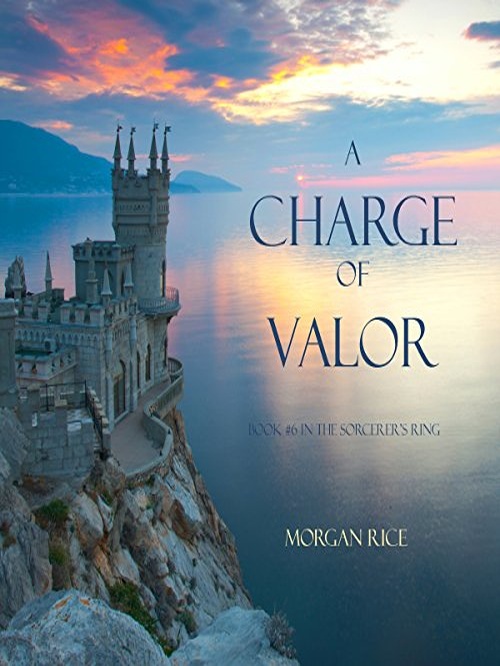
A Charge of Valor Review

The Unyielding Pulse of a Fading World: A Deep Dive into A Charge of Valor

In the sprawling tapestry of modern Fantasy literature, where sagas often stretch across countless tomes, the sixth installment of The Sorcerer’s Ring series, A Charge of Valor, emerges not merely as a continuation but as a crucible for its burgeoning heroes. Author Morgan Rice, with her characteristic blend of urgent narrative and intricate world-building, propels us further into a realm teetering on the brink, demanding from its protagonists not just strength, but an unwavering spirit in the face of insurmountable odds. We find ourselves, as readers, caught in a tempest of valor and despair, where every choice carries the weight of a kingdom.

Echoes of Ancient Prophecy and Personal Trials

From the outset, this volume asserts itself as a pivotal moment in Thorgrin’s arduous quest. His journey, now deep within the malevolent heart of the Empire in pursuit of the stolen Destiny Sword, is more than a mere retrieval mission; it is a profound descent into self-discovery. Rice masterfully orchestrates a series of visceral challenges, forcing Thor and his companions to confront not only monstrous adversaries but also the chilling specter of loss. The depiction of a close-knit group grappling with an unexpected tragedy imbues the narrative with a raw, affecting humanity. It is in these moments of shared grief and renewed camaraderie that the true essence of valor is forged – not in grand victories, but in the unwavering commitment to one another amidst desolation. The trek through the desolate Salt Fields, the suffocating embrace of the Great Tunnel, and the fiery ascent of the Mountains of Fire are not merely scenic backdrops; they are extensions of the internal landscapes of characters pushed to their very limits, demanding “powers greater than he has ever used.”

The Unflinching Gaze of Despair and Resilience

While Thor’s odyssey commands much of our attention, the narrative deftly pivots to the besieged heart of the Ring, where Gwendolyn navigates her own harrowing recovery. Her struggle with the psychological aftermath of an attack, painted with an unflinching portrayal of depression, offers a compelling counterpoint to the external battles. It is here that Rice explores the quiet heroism of enduring, of finding the will to fight when the spirit is broken. The ensuing battle for Silesia, waged by Kendrick and others against impossible odds, becomes a testament to collective defiance and the fierce protection of honor. This multifaceted approach, weaving together grand-scale conflict with intimate personal anguish, lends the series a depth often sought, but rarely fully achieved, in Teen & Young Adult fantasy.

Moreover, the unfolding subplots provide a rich tapestry of intrigue and individual evolution. Godfrey’s transformation behind enemy lines, discovering a unique brand of warrior spirit, and Gareth’s cunning dance with capture, highlight the diverse forms valor can take. Erec’s desperate fight to protect Savaria and his beloved Alistair adds a layer of poignant romance amidst the chaos. And, crucially, the “shocking twist” of Thor learning his true parentage promises a paradigmatic shift, reshaping not just his destiny but the very foundations of the prophecy that underpins the entire saga. It is a narrative bombshell that reverberates with immense potential, propelling the series into uncharted emotional and mythological territory.

The Architect of Grand Escapism

A Charge of Valor is, undeniably, a quintessential installment for aficionados of epic fantasy. Morgan Rice maintains a relentless pace, ensuring that readers are constantly engaged, propelled from one perilous encounter to the next. While some may find certain stylistic choices characteristic of the genre, it is the sheer scope of ambition, the consistent development of its expansive cast, and the unwavering commitment to its central themes of courage, sacrifice, and identity that truly distinguish this volume. It is a testament to the enduring power of storytelling to transport and transform.

This is a book for those who delight in the relentless pursuit of destiny against overwhelming darkness, for readers who appreciate the intricate dance between internal turmoil and external conflict. It serves as a potent reminder that even in the most fantastical of settings, the human (and indeed, non-human) spirit, when tested, can reveal layers of resilience and strength we often overlook. We conclude our journey through this particular chapter not with a sense of closure, but with an insatiable hunger for what comes next, eager to witness the repercussions of Thor’s revelation and the fate of a world teetering on the precipice of its own making.

A Beautiful Friendship Review

Review ready. Read below.


The Silent Language of Sphinx: Reimagining First Contact in David Weber’s Star Kingdom

Can we truly bridge the chasm between species without losing our own humanity? In David Weber’s A Beautiful Friendship, this classic science fiction inquiry receives a surprisingly intimate, youth-focused rejuvenation. Best known for his sprawling, politically complex military space operas, Weber shifts his gaze to the genesis of his famous Honorverse, offering a prequel in the Teen & Young Adult and Science Fiction & Fantasy genres that is as much an ecological treatise as it is a coming-of-age adventure.

We are invited not to witness the clashing of star fleets, but the quiet, epoch-making moment two distinct minds—one human, one alien—find common ground in a dangerous wilderness.

The Clash of Civilizations on a Virgin World

The narrative trajectory begins with a classic relocation trope: Stephanie Harrington is transplanted from the ultra-civilized, predictable world of Meyerdahl to the frontier planet of Sphinx. Yet, Weber avoids the cliches of teenage rebellion, instead framing Stephanie’s frustration with parental boundaries as a genuine, intellectual hunger for discovery. Sphinx is not merely a backdrop; it is a living, breathing antagonist and ally.

Through vivid prose, the wilderness of Sphinx emerges as a character in its own right—a place of lethal predators and untapped beauty that contrasts sharply with the sterile safety of humanity’s older colonies. It is here, in the tension between safety and exploration, that the story finds its momentum.

The Telepathic Symbiosis

At the heart of the novel is the first-of-its-kind bond between Stephanie and Climbs Quickly, a member of the indigenous treecat species. Weber’s depiction of the treecats is a masterclass in speculative biology and sociology. They are not mere pets, nor are they human-like aliens in furry suits. They possess their own complex social structures, taboos, and a telepathic language that Weber describes with remarkable nuance.

The bond itself is not portrayed as magic, but as a profound, sometimes overwhelming neurological and emotional convergence. The contrast between the treecats’ endearing traits—such as their taste for celery—and their lethality when threatened serves as a poignant reminder of nature’s duality. It forces us to question our own anthropocentric definitions of intelligence and rights.

The Threat of Anthropocentric Hubris

Beyond the personal connection between girl and alien, the novel expands into a socio-political thriller. The emergence of an intelligent indigenous species threatens the established order and the financial interests of powerful human factions. Weber deftly introduces the threat of genocide driven by greed, presenting a mirror to historical colonization on Earth.

The struggle is not merely for physical survival, but for the moral soul of the colony. The narrative challenges the reader to consider the ethics of expansion: does our stewardship of new worlds grant us the right to domesticate or destroy what we do not understand?

A Triumphant Prelude for Discerning Minds

Ultimately, A Beautiful Friendship succeeds because it treats its young protagonist—and its audience—with intellectual respect. The prose is sophisticated, refusing to simplify the moral dilemmas or the scientific realities of Sphinx’s ecosystem.

For readers seeking a slow-burn, character-driven narrative that explores the philosophical depths of telepathy and environmental ethics, this book is essential. It is a must-read for both young minds looking to transition into hard science fiction and seasoned fans of the Star Kingdom saga wishing to return to the roots of the legend.

As we close the final chapter, we are left with a lingering question: if we were to encounter another thinking species tomorrow, would we possess the humility to listen, or would we only hear the echo of our own desires?