86–EIGHTY-SIX, Vol. 3 Review

Echoes in the Abyss: 86–EIGHTY-SIX, Vol. 3 and the Search for Meaning Amidst Oblivion

In the grand tapestry of modern Science Fiction, few narratives resonate with the visceral intensity and poignant introspection of 86–EIGHTY-SIX. Volume 3, penned by Asato Asato and illustrated by Shirabii, continues this compelling saga, pushing its characters—and its readers—to confront not only the overwhelming machinery of war but the far more insidious enemy of existential despair. We are invited, once again, into a world where the lines between humanity and machine, victor and victim, are irrevocably blurred, only to find new depths of psychological complexity awaiting us.

The Ineluctable March of Iron and Desperation

The battlefield of 86–EIGHTY-SIX has always been a crucible for its protagonists, the Eighty-Six, those dehumanized soldiers relegated to the front lines. Yet, in this third installment, the scale of devastation reaches new, horrifying heights. We witness the terrifying efficacy of the Long-Range Artillery-type Legion, a monolithic railgun capable of raining “unmitigated chaos” from hundreds of kilometers away. The description evokes a palpable sense of dread, portraying a weapon that doesn’t just destroy, but utterly obliterates, crumbling the vaunted defenses of both the Federacy and the Gran Mur. This isn’t merely an escalation of firepower; it’s a paradigmatic shift in warfare, one that renders conventional tactics obsolete and underscores the sheer, unfeeling might of the Legion. The decision to send a “special strike force” – spearheaded, naturally, by Shin and his unit – into the heart of Legion territory is born of desperation, a last, audacious gamble against an enemy that threatens to swallow all. It’s a testament to Asato Asato‘s ability to continually raise the stakes, forcing us to consider the ultimate cost of survival when all other options have withered.

The Reaper Unburdened: A Crisis of Purpose

Yet, amidst the external cataclysm, it is the internal landscape of Shin, the “Reaper,” that commands our most profound attention. Having confronted and ostensibly defeated the ghost of his brother, and having freed himself from the systemic oppression of the Republic, Shin finds himself in a void—a man without purpose. “What reason does he have to go on living? For whose sake does he fight…?” These questions, posed directly in the summary, cut to the very core of his being. For so long, Shin’s existence has been defined by the pursuit of vengeance, the liberation from bondage, and the duty to his fallen comrades. With those objectives seemingly achieved, he faces the harrowing emptiness that often follows the cessation of a long, arduous struggle. This predicament elevates 86–EIGHTY-SIX, Vol. 3 beyond mere military Science Fiction. It becomes a profound psychological study, a disquisition on the nature of identity and the human need for meaning, even in the most desolate of circumstances. We are left to ponder whether freedom from a burden is truly liberation if it leaves one adrift in an existential vacuum.

Scars of Systemic Injustice and the Endurance of Spirit

Even as the narrative focuses on the immediate threat and Shin’s personal crisis, the underlying critique of systemic injustice continues to pulsate beneath the surface. The “controversial decision” to deploy the Eighty-Six for such a suicidal mission, even under the guise of necessity, subtly reinforces their status as expendable assets. It serves as a stark reminder that even in new territories and under new alliances, the shadow of their past—their inherent ‘otherness’—lingers. Asato Asato masterfully weaves this socio-political commentary into the high-stakes action, preventing the story from becoming a simplistic tale of good versus evil. It is, instead, a nuanced exploration of a world scarred by prejudice, where the fight for survival is often intertwined with the struggle for recognition and a place in a society that would rather forget.

A Profound Journey Into the Human Condition

86–EIGHTY-SIX, Vol. 3 is not merely another chapter in an action-packed series; it is a meticulously crafted examination of the human spirit under immense duress. Asato Asato‘s prose, skillfully rendered into English by Roman Lempert, possesses a lyrical precision that belies the brutal subject matter, allowing for moments of profound introspection amidst the chaos. The audio narration by Suzie Yeung and Stephen Fu, for those experiencing it through Yen Audio, undoubtedly adds another layer of emotional depth to this already rich narrative.

We find ourselves compelled by Shin’s desolate search for meaning, a quest that mirrors, in its own way, the universal human yearning for purpose. This volume is a testament to the series’ enduring power and its ability to continually evolve, pushing its characters to confront not just external threats but the very fabric of their existence. It’s a journey not to be undertaken lightly, but one that promises substantial intellectual and emotional rewards. For those who seek military Science Fiction with a philosophical heart, a narrative that dares to ask the uncomfortable questions about war, identity, and the price of survival, 86–EIGHTY-SIX, Vol. 3 is an essential read. It challenges us to look beyond the explosions and into the quiet despair that can haunt even the most formidable of warriors. What anchors us when our anchors are gone? And is finding a new purpose truly freedom, or merely a new cage? These are the enduring echoes this volume leaves in its wake.


86–EIGHTY-SIX, Vol. 2 Review

Echoes of Duty: When Peace Itself Becomes a Battleground

In a world increasingly saturated with narratives of conflict and resolution, there arise those rare works that dare to question the very nature of peace, revealing it not as a passive state but as a profound, often excruciating, internal struggle. 86–EIGHTY-SIX, Vol. 2 by Asato Asato, with the evocative illustrations by Shirabii and brought to life through Roman Lempert‘s insightful translation and the compelling narration of Suzie Yeung and Alejandro Saab, delves precisely into this unsettling territory. We are asked to consider: what happens when the very mechanism of survival becomes a default, and the promised solace of peace feels alien, even disorienting?

The Weight of Unearned Solace

Having escaped the genocidal machinations of the Republic of San Magnolia, the surviving members of the Spearhead squadron, led by the enigmatic Shin, find themselves in the Federal Republic of Giad. This new land, ostensibly offering them refuge and a chance at a normal life, presents a fresh, perhaps more insidious, form of challenge. Here, the narrative shifts from the visceral terror of the battlefield to the quiet, psychological torment of assimilation. We witness the protagonists grappling with a profound sense of displacement; their lives, so long defined by the relentless pursuit of survival, now lack a clear, immediate purpose. Asato Asato masterfully illustrates the dichotomy between external peace and internal turmoil, portraying the Eighty-Six not as broken victims, but as individuals whose very identities have been forged in the crucible of war, making the embrace of normalcy a complex, almost unnatural act. The authors compel us to reflect on the long shadows cast by trauma, questioning whether true peace can ever be found when one’s past is perpetually present.

The Irresistible Call of the Inferno

It is this profound unease that inevitably draws them back to the front lines. The choice to re-enlist, to willingly return to the hell they barely escaped, is presented not as a reckless act, but as an almost existential imperative. For the Eighty-Six, the battlefield is not merely a place of death, but paradoxically, a realm where their skills, their camaraderie, and their very existence find undeniable meaning. This return underscores a bleak truth: for some, the structure and brutal clarity of conflict offer a perverse form of comfort absent in civilian life. Here, the performances of Suzie Yeung and Alejandro Saab are particularly potent, lending a gravitas and an undertone of resigned determination to their characters that makes this pivotal decision feel earned and deeply tragic. The narrative deftly navigates the psychological landscape of soldiers who find their purpose in the very act of fighting, exploring the nuanced motivations that drive individuals back into harm’s way, beyond simple ‘duty’.

A Glimmer of Unconventional Wisdom

Into this fray steps Frederica Rosenfort, a young girl whose precocious wisdom and rare abilities disrupt the established order of the Eighty-Six’s stoic world. Frederica is more than a mere plot device; she functions as a fascinating narrative fulcrum, offering a fresh, often disarmingly innocent, perspective on the brutal realities surrounding her. Her presence compels both the characters and the reader to re-evaluate moral frameworks and the inherent costs of war. She is a reminder of what is being fought for, and perhaps, the profound innocence that war so readily devours. Her dialogue and interactions provide moments of stark clarity and poignant humanity amidst the relentless march of technological warfare, demonstrating Asato Asato‘s skill in weaving complex character dynamics into a compelling genre piece.

A Profound Meditation on Human Resilience

86–EIGHTY-SIX, Vol. 2 is far more than a conventional military science fiction story; it is an incisive psychological study. It challenges our preconceived notions of heroism, survival, and the insidious ways in which society can dehumanize its own. Asato Asato‘s prose, expertly rendered by Roman Lempert, possesses an elegant brutality, allowing the reader to experience both the visceral terror of combat and the subtle agony of a soul searching for its place. The seamless interplay of action, introspection, and thematic depth ensures that this volume lingers in the mind long after the final chapter.

This audiobook is essential listening for those who seek to engage with science fiction that doesn’t shy away from philosophical complexity and emotional rawness. It is particularly resonant for enthusiasts of military fiction who appreciate a deep dive into the psychological toll of war, rather than mere spectacle. We recommend it unequivocally for readers who value character-driven narratives that dissect the human condition under duress, offering not easy answers, but profound questions. In a world perpetually grappling with the aftermath of conflict, 86–EIGHTY-SIX, Vol. 2 serves as a powerful, unsettling mirror, urging us to consider the true price of both war and the peace that follows.

86–EIGHTY-SIX, Vol. 1 Review

The Unseen Scars of War: A Dissection of Dehumanization in 86—EIGHTY-SIX, Vol. 1

The concept of a “bloodless war” is, we are often told, the ultimate triumph of technology, a sterile, sanitized conflict fought by machines, for machines, with human lives preserved. But what if this notion is merely a convenient fiction, a collective delusion perpetuated to preserve a fragile societal peace? This is the unsettling question that Asato Asato‘s 86—EIGHTY-SIX, Vol. 1, with illustrations by Shirabii and expertly translated by Matthew Rutsohn, thrusts upon its audience. It is a work that peels back the veneer of technological advancement to reveal the raw, bleeding core of human prejudice and the profound cost of selective blindness.

The Hypocrisy of a ‘Casualty-Free’ Conflict

The Republic of San Magnolia, a nation cloaked in the patriotic colors of red, white, and blue, boasts of its war against the Giadian Empire’s unmanned Legion drones. Their own autonomous Juggernauts, they claim, have rendered combat casualty-free. Yet, the brutal, visceral truth lies beyond the eighty-five fortified sectors: in the “nonexistent” Eighty-Sixth Sector, where young men and women, stripped of their names and humanity—dubbed the Eighty-Six—are forced to pilot these “unmanned” machines into a hellish, suicidal struggle. This immediate revelation of systemic hypocrisy is a searing indictment of how easily a society can rationalize its atrocities when the victims are conveniently categorized as “non-human.” Asato Asato crafts a chillingly plausible scenario, forcing us to confront the uncomfortable echoes of historical prejudices that persist under new guises. The narrative’s strength lies in its unflinching portrayal of this engineered oblivion, where an entire population is not just oppressed, but actively erased from the collective consciousness.

Bridging the Abyss: Empathy Through Shared Turmoil

At the heart of this poignant narrative is the unlikely connection forged between Major Vladilena “Lena” Milizé, an idealistic handler from the “pureblood” Republic, and Shin, the stoic and battle-hardened commander of an Eighty-Six unit. Their interactions, primarily through a long-distance communication system, form the emotional and philosophical fulcrum of the story. Lena, initially a symbol of the Republic’s misguided benevolence, is slowly but irrevocably confronted with the horrific realities her society denies. Through Shin’s terse, often brutal dispatches from the front lines, she experiences the visceral impact of their “unmanned” war. We witness Lena’s gradual awakening, a painful transition from abstract empathy to a profound, personal understanding of the Eighty-Six’s plight. The audiobook, masterfully narrated by Suzie Yeung and Alejandro Saab, particularly elevates these exchanges, with their nuanced delivery lending gravitas to every whispered doubt and defiant declaration. The narrators imbue their characters with an emotional depth that makes the chasm between their worlds feel both vast and intimately traversable.

The Unromantic Reality of the Battlefield

86—EIGHTY-SIX, Vol. 1 does not romanticize war. It presents the battlefield not as a stage for heroism, but as a crucible of suffering, where the young are forged and broken. The pacing is deliberate, oscillating between the sterile, bureaucratic halls of San Magnolia and the dust-choked, blood-soaked realities faced by the Eighty-Six. The narrative refuses to shy away from the psychological toll of constant combat, the quiet despair, and the grim determination that characterize Shin and his squad. It is a testament to Asato Asato‘s skill that we become deeply invested in these characters, their backstories hinted at with a subtle hand, their present struggles painfully immediate. This is Science Fiction that delves into the very core of human endurance, questioning what remains of one’s identity when stripped of everything else. The intellectual rigour applied to the moral quandaries is commendable, preventing the story from devolving into a mere action spectacle.

A Profound Reflection on Humanity’s Perils

Ultimately, 86—EIGHTY-SIX, Vol. 1 is far more than a genre piece; it is a powerful polemic against the dangers of systemic prejudice, the seduction of manufactured truths, and the profound cost of turning a blind eye to injustice. We emerge from this first volume with a deep sense of unease, haunted by the realization that the mechanisms of dehumanization depicted within are not so far removed from our own history, or indeed, our present.

This initial installment is a compelling read for those who seek Science Fiction that challenges, provokes, and explores the darker facets of human nature and societal constructs. It is particularly recommended for readers who appreciate narratives rich in character development, ethical dilemmas, and an unflinching gaze at the brutal realities of war. Those drawn to works that dissect propaganda and the insidious nature of discrimination will find much to ponder here. We leave its pages not merely entertained, but profoundly encouraged to reflect on the unseen, unheard cries that echo in the margins of our own comfortable existences.

6d6 A Caverns and Creatures Mini-Adventure Collection Review

Rolling the Bones: An Unconventional Glimpse into Caverns and Creatures

There are literary endeavors that seek to uplift the soul, challenge intellectual paradigms, or explore the profound depths of the human condition. And then there are those that simply aim to deliver a hearty, unrepentant laugh, often in the face of conventional decorum. 6d6: A Caverns and Creatures Mini-Adventure Collection by Robert Bevan, brought to vibrant auditory life by Jonathan Sleep, unequivocally falls into the latter category, serving as a concentrated dose of the irreverent spirit that has come to define this peculiar corner of the Fantasy genre. We find ourselves, as discerning readers, not merely observing, but actively participating in a peculiar experiment in genre subversion.

The Anatomy of Audacious Humor

One approaches a collection with titles such as “The Wang is the Hardest Part” and “Cross My Fart and Hope to Die” not with expectations of highbrow prose, but with a knowing smirk and a readiness for the delightfully absurd. This compilation of six short narratives within the expansive Caverns and Creatures universe is precisely what it promises: a series of concise, punchy adventures that distil the essence of Bevan’s comedic genius. These aren’t mere vignettes; they are carefully constructed comedic setups, each offering a distinct flavor of the series’ signature blend of slapstick, satire, and surprisingly clever wordplay, often bordering on the audacious.

The true transformative insight here lies in how Bevan wields these mini-adventures. They function as a sort of laboratory, allowing him to push the boundaries of comedic scenarios and character interactions without the overarching demands of a full-length novel. Whether dissecting the existential angst of an “Aasimar” or lampooning the burgeoning “LitRPG” subgenre, each story showcases a writer unafraid to expose the inherent silliness lurking beneath the grand epic narratives of traditional fantasy. We witness here not just jokes, but a systematic deconstruction, performed with a surgeon’s precision and a clown’s gleeful abandon.

Short Forms, Sharp Wit: Narrative Dexterity

The brevity of the short story format often tests an author’s ability to create impact. Bevan, however, demonstrates a remarkable dexterity in crafting narratives that, despite their conciseness, deliver both character insights and satisfying comedic arcs. What might appear as mere frivolousness on the surface reveals a keen understanding of comedic timing and escalation. The dialogue, delivered with Jonathan Sleep’s impeccable narration in the audiobook, crackles with a crude, yet undeniably effective, wit that is entirely consistent with the series’ established voice.

For instance, the titles themselves, crude as they may be, are not arbitrary. They serve as a powerful signal, a thematic overture, preparing the reader for a journey into a world where high fantasy tropes are consistently undercut by lowbrow humor and a cynical, yet endearing, perspective. This collection offers a unique opportunity to explore the peripheral characters and one-off scenarios that might not fit into the main narrative arc but are nonetheless vital in fleshing out the comedic potential of the Caverns and Creatures realm. It’s a testament to Bevan’s skill that these disparate pieces coalesce into a cohesive, albeit chaotic, whole.

A Verdict for the Adventurous Palate

Ultimately, 6d6: A Caverns and Creatures Mini-Adventure Collection is not for the faint of heart, nor for those who cling to the staid conventions of literary purity. It is, instead, a delightful romp for the initiated and a provocative invitation for the curious. Its audacious humor, its willingness to poke fun at sacred cows (both within and outside the fantasy genre), and its sheer, unadulterated fun are its undeniable strengths.

This collection is unequivocally a must-read for existing fans of Robert Bevan’s Caverns and Creatures series, offering more of the distinctive humor and world-building they’ve come to adore. However, we would also commend it to discerning readers who possess an appreciation for subversive comedy, genre deconstruction, and a willingness to embrace the hilariously inappropriate. It challenges us to reconsider what defines “fantasy” and reminds us that sometimes, the most profound insights can be couched in the most uproarious laughter. Are we not, after all, all just rolling the dice in our own mini-adventures?

5d6 Review

The Bawdy Bestiary: Robert Bevan‘s Unapologetic Forays into Fantasy’s Underbelly

In an era saturated with epic quests, intricate magic systems, and heroes burdened by destiny, a distinct current of fantasy has emerged, reveling in the irreverent, the R-rated, and the outright absurd. This is where Robert Bevan‘s [[Caverns and Creatures]] series carved its niche, and the collection 5d6 offers perhaps its most unvarnished, riotous installment yet. For those accustomed to the polished narratives of Tolkienesque grandeur or the intricate world-building of contemporary high fantasy, 5d6 is less a gentle stroll through Rivendell and more a drunken crawl through a goblin-infested tavern, complete with all the chaotic, often vulgar, charm that implies.

Plumbing the Depths of the Dungeons (and Beyond)

5d6, a compendium of six short stories, plunges us back into the darkly comedic universe of [[Caverns and Creatures]]. Titles like “Tossing the Salaad,” “The Fuccubus,” and “Pixie Dicks” are not merely provocative; they serve as a blunt declaration of the collection’s intent. Bevan is not interested in subtlety or adherence to classical fantasy tropes, at least not in any traditional sense. Instead, he wields explicit humor, gross-out gags, and morally ambiguous characters as instruments of satire, dissecting the very fabric of role-playing game conventions with a gleefully transgressive spirit. We find ourselves not just observing the antics of a dysfunctional adventuring party, but becoming complicit in their often-appalling, yet undeniably hilarious, misadventures.

One might easily dismiss such fare as mere shock value, yet to do so would be to overlook Bevan‘s shrewd understanding of comedic timing and character dynamics. Across these six tales, from “They Fight Three Giants” to “Fistin’ the Furious,” there is a consistent, if crude, logic to the world. The characters, for all their vices and incompetence, possess a strange relatability. They are archetypes taken to their most ludicrous extremes, reflecting perhaps the chaotic improvisations and dark humor often found at a gaming table among close friends. This collection is less about a linear narrative progression and more about a series of increasingly outrageous scenarios, each designed to elicit a visceral reaction, often a laugh, sometimes a wince.

The Art of the Audible: Jonathan Sleep‘s Embodiment

A review of this audiobook would be remiss without acknowledging the masterful performance of [[Jonathan Sleep]]. His narration is not merely a reading; it is an embodiment of Bevan‘s world. Sleep navigates the coarse language and outlandish situations with a gravitas and comedic timing that elevates the material. He understands the rhythm of Bevan‘s prose, lending distinct, often caricatured, voices to the myriad creatures and characters. This vocal dexterity transforms what could be merely a series of written jokes into a vibrant, immersive, and often uproarious auditory experience. It is a testament to Sleep‘s skill that even the most audacious moments land with precisely the intended impact, making him an indispensable component of the Caverns and Creatures phenomenon.

Beyond the Grotesque: A Critique of Convention

What, then, is the enduring appeal of such an unapologetically explicit collection? We contend that 5d6, and indeed the broader [[Caverns and Creatures]] series, functions as a powerful, albeit crass, meta-commentary on the fantasy genre itself. It strips away the romanticism and high-minded ideals, exposing the often-absurd foundations upon which many epic narratives are built. It asks us to laugh at the ridiculousness of hyper-masculine heroes, the convenient deus ex machinas, and the frequently illogical motivations that drive traditional fantasy plots. While its methods are far from subtle, the collection offers a refreshing, albeit R-rated, palate cleanser for those weary of predictable heroics. It is a celebration of the chaotic, the unheroic, and the deeply flawed, proving that even within the most grotesque scenarios, genuine humor and a unique perspective can thrive.

For readers with a robust sense of humor and a high tolerance for the irreverent and the explicit, 5d6 is an absolute riot. It is perfectly suited for those who appreciate the subversion of expectations, who enjoy a good laugh at the expense of conventional fantasy tropes, and who can discern the cleverness beneath the crude exterior. This is not a book for the faint of heart or those seeking profound philosophical insights, but rather a robust dose of comedic escapism. It serves as a reminder that the world of [[Fantasy]] is vast enough to accommodate even its most bizarre and boundary-pushing inhabitants, inviting us to ponder: what true adventures lie beyond the polite conventions we so often uphold?

4d6 Review

A Raucous Roll of the Dice: Unpacking the Unapologetic Humor of 4d6

In an era where much of Fantasy literature strives for ever more intricate world-building and increasingly solemn themes, a series like Caverns and Creatures by Robert Bevan arrives as a glorious, unrepentant barbarian at the gates, loudly proclaiming its intent to shatter all pretense. 4d6, the latest collection of short narratives within this riotous universe, is precisely what one would expect from its predecessors: a veritable bacchanalia of the absurd, an unflinching descent into the delightfully profane. We find ourselves once again immersed in a world where the epic and the scatological coalesce with a startling, albeit puerile, genius.

The Art of the Affront: Subverting the Sacred

What immediately strikes us about 4d6, even before delving into the tales themselves, are the titles – “Genital Harpies,” “The Unwashed Asses,” “Wight Trash,” “Probing the Annis.” These are not merely provocative; they are declarations of intent, challenging the very notion of what constitutes a ‘respectable’ narrative within the Science Fiction & Fantasy canon. Robert Bevan operates not just as a storyteller, but as a satirist, gleefully dismantling sacrosanct genre conventions with the precision of a surgeon and the blunt force of a medieval club. Each story functions as a droll, often crude, meta-commentary on the tropes of tabletop role-playing games and high fantasy. It asks, implicitly, if heroism can coexist with projectile vomiting, or if grand quests can indeed revolve around the most ignominious bodily functions. The answer, in Bevan’s world, is an emphatic, if somewhat disgusting, yes.

The Unsung Hero: Jonathan Sleep’s Droll Delivery

While Robert Bevan pens the words, it is the vocal artistry of Jonathan Sleep that truly elevates this collection, particularly in its audio format. To navigate such overtly crude and politically incorrect humor without it devolving into mere offensive bluster requires a nuanced hand—or, in this case, a nuanced voice. Sleep manages to infuse the narratives with a dry, almost academic drollness that creates a captivating dissonance. His delivery imbues the most outrageous lines with a gravitas they scarcely deserve, making the punchlines all the more potent. He is not merely reading; he is performing a masterclass in comedic timing, allowing the listener to find the intellectual spark hidden beneath layers of vulgarity. The choice of narrator here is not incidental; it is an essential component of the comedic architecture, ensuring that the humor lands with maximum visceral impact, yet never quite loses its intellectual anchor.

Beyond the Bathroom Humor: A Glimpse of the Profoundly Silly

To dismiss 4d6 as mere lowbrow entertainment would be to miss its subversive charm. Beneath the surface of incessant flatulence jokes and sexual innuendo, there lies a surprisingly consistent world and a commitment to character arcs, however warped. The enduring appeal of Caverns and Creatures is that it takes itself just seriously enough to make its comedic departures genuinely funny. We are not just laughing at the characters, but with them, as they grapple with truly bizarre situations that echo, however faintly, the struggles of actual adventurers – albeit those whose primary concerns often involve bodily fluids and deeply uncomfortable social interactions. The collected stories here demonstrate a rare skill: making the absurd feel grounded, and the grotesque surprisingly endearing.

A Concluding Jest

4d6 is, unequivocally, a niche offering. It is not for the faint of heart, nor for those who cherish their Fantasy untainted by explicit language and a relentless pursuit of the ridiculous. However, for those of us who appreciate the sheer audacity of Robert Bevan‘s vision, and for whom the Science Fiction & Fantasy genre benefits from a good, hard, self-deprecating laugh, this collection is an absolute delight. It is a testament to the idea that humor, even at its most base, can be incredibly insightful, poking holes in the grand narratives we so often take for granted. We commend it to those who enjoy their intellectual rigor served with a generous helping of crude humor, seasoned with the impeccable delivery of Jonathan Sleep. It is a must-read (or rather, a must-listen) for the connoisseur of anti-establishment fantasy, a vibrant, unashamed explosion of drollery that continues to carve its own unique, often repulsive, but undeniably hilarious path.

3d6 Review

Rolling the Dice on Deconstruction: A Deep Dive into Robert Bevan’s 3d6

In an age where sprawling epic fantasies often demand hundreds of hours of commitment, there exists a unique charm in the literary vignette—a potent, distilled narrative that offers both brevity and depth. 3d6, a collection of short stories from Robert Bevan’s acclaimed Caverns and Creatures series, presents precisely this: a concentrated dose of the irreverent wit and astute genre deconstruction that fans have come to cherish. We are invited not merely to observe, but to critically engage with a world perpetually on the brink of comedic chaos, a world where the fantastical is relentlessly subjected to the absurdities of human—or rather, gamer—logic.

The Art of the Curated Chaos

3d6 is not a novel in the conventional sense, but rather a compendium of six distinct tales: “House of Madness,” “Naga Please,” “Elf Inflicted,” “The Land Before Tim,” “A Fistful of Gold Pieces,” and “The Minotard.” Each title alone hints at the pastiche and parody Bevan so masterfully employs, twisting familiar Fantasy tropes into brilliantly off-kilter narratives. These aren’t merely throwaway anecdotes; they are carefully crafted excursions into the periphery of a much larger, albeit equally chaotic, universe. They serve as vital connective tissue, fleshing out the idiosyncratic inhabitants and the relentless, often brutal, logic of the Caverns and Creatures world, all while maintaining an accessible, even conversational intellectualism.

What I find particularly compelling about this collection is its sheer narrative efficiency. Bevan achieves in a handful of pages what many authors struggle with across entire chapters: he builds character, advances world-lore, and delivers genuine laughs with a precision that speaks to a profound understanding of comedic timing and genre expectations. From the Lovecraftian whispers of “House of Madness” to the pun-laden perils of “Naga Please,” the author consistently demonstrates an unwavering commitment to both satirizing and celebrating the very bedrock of Science Fiction & Fantasy. It is an intellectual tightrope walk, executed with a flair that is both audacious and endearing.

Beyond the Laughs: A Deeper Satire

Beneath the surface of slapstick and acerbic dialogue lies a more nuanced critique of gaming culture and the inherent absurdities of applying real-world morality to a system-driven, often arbitrary, fantasy setting. Bevan’s characters, perpetually exasperated and occasionally brilliant, navigate a world governed by dice rolls and arbitrary quests, forcing us to consider the existential implications of such a construct. The narratives, though brief, often challenge our preconceived notions of heroism, villainy, and the very nature of storytelling within interactive mediums. This is where Bevan’s work elevates itself from mere parody to a form of social commentary, albeit delivered with a mischievous grin.

The collection also benefits immensely from its structure. As individual pieces, they offer swift gratification, making 3d6 an ideal companion for moments requiring a quick intellectual reprieve without demanding a significant narrative investment. Yet, taken as a whole, they form a cohesive testament to the expansive and consistently inventive imagination of Robert Bevan. For those familiar with the series, these stories fill in delightful gaps and introduce new facets of the world, deepening the reader’s understanding and appreciation for its overarching narrative tapestry. Even for newcomers, they offer an excellent primer into the unique blend of humor and dark fantasy that defines the series, an undeniable testament to the author’s narrative prowess and the exceptional delivery by Jonathan Sleep in the audiobook format, which lends an additional layer of character to an already vibrant cast.

The Unapologetic Verdict: A Gem for the Discerning Fan

In conclusion, 3d6 is undeniably a critical hit for aficionados of subversive fantasy. Robert Bevan continues to prove himself a master of the satiric mode, delivering a collection that is as intelligent as it is entertaining. This is not a book for those seeking conventional high fantasy epics or tales of earnest heroism. Instead, it is a triumph for readers who revel in genre deconstruction, who appreciate sharp wit, and who find joy in the intelligent lampooning of established tropes.

I would strongly recommend 3d6 to existing fans of Caverns and Creatures—it is an essential expansion of their beloved universe. Furthermore, for anyone with a penchant for meta-commentary, a love of tabletop RPGs, and a desire for fiction that dares to be genuinely funny while subtly profound, this collection offers a truly rewarding experience. It beckons us to ponder: What profound truths can we unearth when we dare to laugh at the very foundations of our most cherished fictions?

36 Hours Review

The Anatomy of Panic: A Review of “36 Hours”

Author: Bobby Akart
Narrator: Kevin Pierce
Genre: Post-Apocalyptic / Sci-Fi Survival


The Clock Starts Now

In the realm of post-apocalyptic fiction, the true terror rarely lies in the ruins of the aftermath; it is found in the precipice, the moments right before the lights go out for good. Bobby Akart’s 36 Hours, part of the Blackout series, masterfully captures this exact window of escalating dread. The narrative acts as a countdown, detailing the frantic, chaotic window of time between a catastrophic solar flare event and the total collapse of modern infrastructure. It is an exercise in tension, stripping away the comforts of the 21st century hour by hour.

The Voice of the Apocalypse

Akart’s strength is his meticulous research, making the disaster scenario feel terrifyingly plausible. The societal breakdown is not instantaneous; it is a slow, agonizing realization that help is not coming. This creeping dread is perfectly anchored by the narration of Kevin Pierce, a voice that has become synonymous with the survivalist genre. Pierce’s gravelly, measured delivery acts as the calm within the storm, lending a chilling, documentary-like gravitas to the unraveling of society.

A Mirror to Fragility

What elevates 36 Hours is its stark commentary on our absolute dependence on the grid. It’s a sobering reflection on how quickly civil behavior evaporates when resources become scarce and darkness falls. Akart doesn’t rely on zombies or mutants to create fear; the monsters in this story are ordinary people pushed to the edge by a sudden, catastrophic shift in their reality. It’s a cynical but necessary exploration of human nature under acute stress.

Who Should Start Prepping?

This audiobook is a grounded, suspenseful thriller that prioritizes realism over fantasy.

Ideal Audience Mapping:
The Prepper Mindset: Listeners who enjoy fiction that explores the logistical and psychological realities of societal collapse.
Fans of Hard Sci-Fi Disasters: Those who appreciate threats based on actual scientific possibilities (like EMPs or solar flares).
The Suspense Junkie: Anyone looking for a taut, fast-paced countdown thriller that relies on psychological tension rather than pure action.

The Final Grade: 4.4/5 Solar Flares. A gripping, terrifyingly plausible countdown to darkness that will make you look at your smartphone with deep suspicion.


Reviewed by Fantapage Editorial Team

2d6 (Caverns and Creatures) Review

Subverting the Sacred Dice: A Critical Examination of Robert Bevan’s ‘2d6’

We often turn to Fantasy to escape the mundane, seeking heroic epics and moral clarity. Yet, in 2d6, a collection of six short stories within the Caverns and Creatures series, Robert Bevan dismantles these grand tropes with vulgar, satirical glee. This collection presents a fascinating case study in lowbrow comedy executed with surprising narrative precision, forcing a confrontation between traditional heroic archetypes and the harsh reality of human pettiness.

The Poetry of the Profane

Bevan’s work sits at the intersection of tabletop gaming culture and bathroom humor. While initial glances might dismiss stories like “Sticky White Mess” or “Cornholed” as mere juvenile antics, a deeper analysis reveals a keen understanding of group dynamics. The characters are not heroes; they are deeply flawed modern gamers trapped in a fantasy world, reacting not with noble valor but with base self-preservation.

This incongruity drives the humor, creating a visceral impact that challenges the reader’s expectations of the genre. The narrative arc of each short story relies on the friction between high-fantasy settings and the low-fantasy morality of the protagonists. It is a paradigmatic shift from the idealized escapism of Tolkien to the gritty, cynical realism of modern gaming subculture.

Sonic Delivery and Narrative Pacing

The auditory dimension of this collection, narrated by Jonathan Sleep, merits scholarly attention. Sleep’s performance acts as a critical conduit for Bevan’s prose, translating the rhythmic vulgarity of the dialogue into a cohesive auditory experience. The six-hour duration is episodic yet tightly paced, avoiding the narrative fatigue that often plagues longer comedy anthologies.

“Cooper’s Christmas Carol” stands out as a highlight, offering a cynical, genre-savvy deconstruction of Dickensian tropes. It showcases Bevan’s ability to structure parody effectively within a constrained format, demonstrating an unexpected intellectual rigour beneath the crass exterior.

The Verdict on LitRPG Satire

Ultimately, 2d6 is a loud, chaotic counterpoint to high fantasy. It is not for the faint of heart or the easily offended. For scholars of contemporary digital culture and LitRPG, it represents a crucial, albeit sticky, milestone in self-published satire.

Ideal Audience: Perfect for tabletop roleplayers who appreciate dark, irreverent humor and prefer their fantasy devoid of moral posturing.

A Final Thought: Does the subversion of fantasy tropes in LitRPG reflect a growing cultural cynicism toward traditional heroic narratives, or is it merely the ultimate form of escapist play?

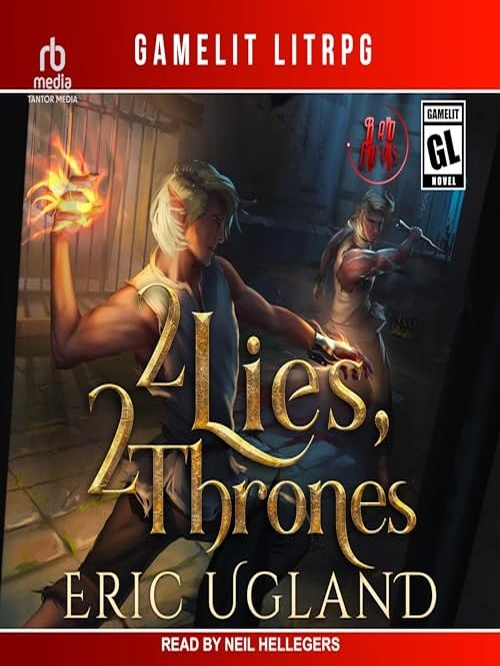
2 Lies, 2 Thrones Review

Crown, Cell, Lies

Clyde Hatchett jail bound. Hit princess. False claim. Death near. Quest clear name.

Quest List

  • Get paper. Prove noble blood.
  • Stop wedding. Win truth-sayer favor.
  • Break cult. Stop empire ruin.

Review

Eric Ugland build tense plot. High stakes. Clyde fight smart. Glaton politics dirty. Neil Hellegers voice bring life. Genre Science Fiction & Fantasy mix LitRPG well.

Verdict

Perfect for LitRPG fans. Heavy action. Good humor.

Buy book. Read now.