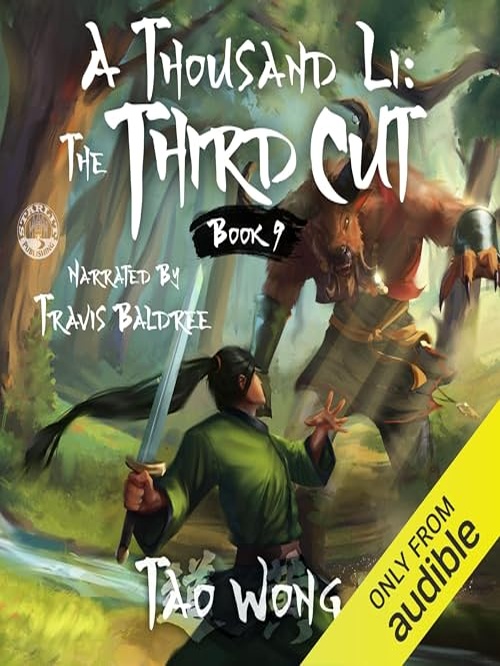
The Serpent’s Coil: Unraveling Corruption in A Thousand Li‘s Ninth Incarnation
In an age increasingly defined by the subtle encroaches of decay, both societal and spiritual, where does one truly seek a wellspring of purity amidst the pervasive taint? Tao Wong‘s latest offering, A Thousand Li: The Third Cut, the ninth installment in his sprawling xianxia cultivation series, plunges us into precisely such a moral and metaphysical crucible. It asks not merely how one battles external evil, but how the very essence of cultivation, of spiritual progression, can itself become warped, reflecting a profound disquiet that resonates far beyond its fantastical realm.
The Unseen Taint: A Metaphysics of Decay
From the opening lines, a chilling premise is established: “An ill wind blows from the South….” This is not merely a localized conflict; it is an existential threat to the very fabric of the spiritual world. Wong masterfully introduces the concept of corrupted spirit stones and “twisted daos,” turning what could be a simple quest narrative into an investigation of metaphysical pollution. We are forced to consider the vulnerability of even the most fundamental elements of power and enlightenment. This pervasive corruption emanating from Nanyue serves as a brilliant narrative device, allowing Wong to explore the moral ambiguities inherent in power and the insidious nature of decay. It prompts us to ponder: if the very building blocks of spiritual progress can be tainted, what hope remains for the uncultivated? The author’s ability to imbue the fantastical elements of xianxia with such weighty philosophical undercurrents elevates The Third Cut beyond mere genre fare.
Wu Ying’s Odyssey: A Cultivator’s Progress in Perilous Lands
Our protagonist, Wu Ying, returns, not as a static hero, but as a evolving instrument against this encroaching darkness. Guided by the mystical “wind of heaven,” his journey through this exotic kingdom is less about brute force and more about discernment. He confronts not just formidable foes, but “powerful daos and perilous threats” that demand a deeper understanding of the cultivation path itself. This installment particularly shines in its portrayal of Wu Ying’s intellectual and spiritual growth. He is compelled to analyze, to question, to understand the nature of the corruption, rather than simply parry its manifestations. The inclusion of “companions new and old” enriches this odyssey, providing both foil and reinforcement, reminding us that even in individual cultivation, community and shared purpose hold their own vital dao. Wong‘s narrative rhythm here is exceptional, balancing moments of intense action with periods of introspective reflection, mirroring the very ebb and flow of cultivation itself.
Crafting an Esoteric Tapestry: The Allure of the Far East
As with previous entries in A Thousand Li, The Third Cut continues to enchant with its richly drawn world, a hallmark of wuxia and xianxia literature. Tao Wong, an author already acclaimed for his adeptness in world-building across series like The System Apocalypse and Adventures on Brad, demonstrates here a profound respect for the genre’s traditions while infusing it with his distinct voice. The descriptions of the exotic kingdom are not merely decorative; they become integral to the unfolding mystery. Every landscape, every artifact, seems to whisper of ancient wisdom and present danger. For enthusiasts of immortal cultivation and wondrous martial art styles, this is familiar territory, yet Wong manages to keep it fresh, compelling us to dive deeper into the arcane mechanics of spirit beasts and the complex hierarchies of cultivation. The immersive quality of the prose ensures that we are not merely reading about a world, but experiencing its ethereal dangers and its fleeting beauties.
A Journey Worthy of the Dao
A Thousand Li: The Third Cut is, in my estimation, a potent testament to the enduring appeal and evolving sophistication of the xianxia genre. It is a work that manages to be both deeply entertaining and subtly thought-provoking, a rare alchemy in any literary endeavor. Wong has not just maintained the series’ momentum but has deepened its thematic resonance, presenting a narrative that challenges the very foundation of spiritual progress. The experience, further enhanced by the masterful narration of Travis Baldree, who consistently brings nuanced texture to Wong‘s intricate worlds, is one of immersion and intellectual engagement.
For Whom the Spirit Stones Call
This novel is an absolute must-read for existing fans of the A Thousand Li series, as it meticulously expands upon established lore and character arcs. However, it also serves as a compelling entry point for those curious about the philosophical depth that xianxia can offer beyond its surface-level appeal of martial prowess and mystical powers. It is perfect for readers who appreciate narratives where the external conflict mirrors an internal struggle, where power is not merely accumulated but understood, and where the purity of one’s path is constantly under scrutiny.
Beyond the Veil of Cultivation
As we conclude Wu Ying’s latest ordeal, one is left to ponder: what echoes of Nanyue’s corruption resonate within our own contemporary spheres? Can we, too, discern the subtle twisting of values, the tainting of foundational principles, before the ill wind becomes an uncontainable storm? The Third Cut provides not just an escape into a richly imagined world but a potent allegory for our times, inviting us to look closely at the integrity of our own chosen paths.