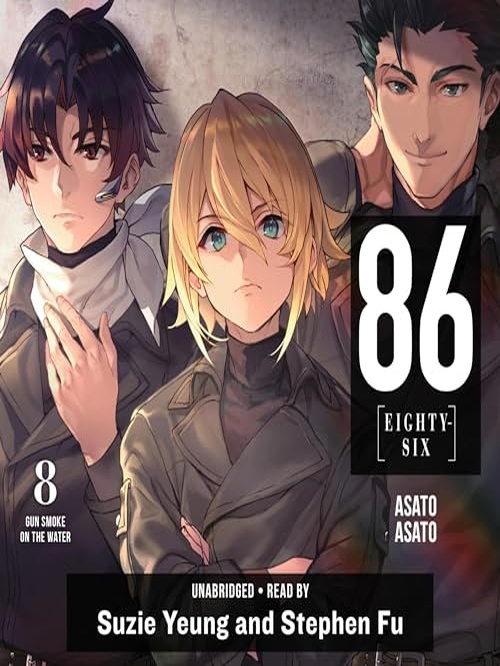
The Existential Irony of Peace: 86–EIGHTY-SIX, Vol. 8 Navigates a New Battlefield
In the annals of human conflict, the aftermath of war often proves as fraught with peril as the battles themselves. We speak of the psychological scars, the societal reordering, and the profound, sometimes terrifying, vacuum left by the cessation of a defining struggle. It is precisely into this nuanced, often overlooked territory that [[86–EIGHTY-SIX]], Vol. 8, by the masterful [[Asato Asato]], with stunning artwork by [[Shirabii]] and expertly rendered into English by [[Roman Lempert – translator]] for [[Yen Audio]], plunges us with unwavering intellectual rigor. This is not merely another chapter in a sprawling [[Science Fiction]] saga; it is a poignant meditation on identity, purpose, and the unexpected burdens of salvation.
The Unforeseen Crucible of Calm
The preceding volumes have, with visceral impact, immersed us in the grim reality of the Eighty-Six, child soldiers condemned to fight a hopeless war against the Legion. Now, with “an end to the endless war” tantalizingly within reach, Asato presents us with a profoundly unsettling question: what becomes of those whose very existence has been forged in the fires of perpetual conflict? The description speaks of “a path to purpose laid with iron rails,” a metaphor that immediately conjures images of unyielding, perhaps unalterable, destinies. For a people defined by their fight, the promise of peace is not a simple panacea; it is a crucible, testing their very soul.
We observe the dichotomy: some find solace, “love; others, new aspirations,” a testament to the enduring human capacity for resilience and adaptation. Yet, the true genius of this volume lies in its unflinching examination of “those who have yet to dream.” These are the souls for whom the cessation of hostilities is not a liberation but a disorientation. Their “iron wills,” once bent only towards survival and defiance, now find themselves distorted by the “warm rays of hope.” This is an inversion of expectation, a chilling reminder that purpose, however grim, can be a potent anchor, and its removal, a profound destabilizer. The narrative delves deep into the psychological landscape of soldiers who, having stared into the abyss for so long, find the light of peace blinding and disorienting. It challenges our facile assumptions that an end to violence automatically ushers in an era of tranquility.
The Anatomy of an Existential Crisis
What distinguishes 86–EIGHTY-SIX, Vol. 8 within the broader [[Science Fiction & Fantasy]] genre is its commitment to exploring the human cost beyond the physical. Asato Asato crafts a narrative that transcends mere plot advancement, transforming it into a study of existential redefinition. The book subtly dissects the myriad ways individuals cope with, or fail to cope with, a radical shift in their fundamental reality. It foregrounds the idea that trauma does not simply dissipate with the removal of its source; rather, it reshapes the individual, creating new vulnerabilities and unforeseen internal battles.
The sustained excellence of the series, reflected in its impressive average rating of 4.86, is not merely due to its action sequences or its compelling world-building, but to this persistent dedication to character psychology and thematic depth. The audio format, with its duration of 08:26:00, allows for a prolonged immersion into these nuanced internal landscapes, giving the listener ample time to reflect on the characters’ struggles and their own understanding of purpose. We are compelled to ask: If our identity is inextricably linked to our struggle, what becomes of us when the struggle ceases? And what are the implications for a society that has inadvertently created a class of people whose very function was to die?
A Concluding Reflection on Redemption and Redefinition
Ultimately, 86–EIGHTY-SIX, Vol. 8 is not just a gripping continuation; it is a profound philosophical inquiry cloaked in the compelling garb of Science Fiction. It reminds us that victory can be a double-edged sword, especially for those who have paid the highest price. This volume solidifies Asato Asato’s reputation for crafting narratives that are as intellectually stimulating as they are emotionally resonant.
We would heartily recommend this installment to readers who crave more than simple escapism from their Science Fiction. It is ideal for those who appreciate narratives that probe the intricate workings of the human psyche, confront the moral ambiguities of conflict, and bravely ask what comes after the fight. It is a vital read for anyone interested in the enduring question of purpose, and the often-painful process of redefining oneself in a world utterly transformed. To journey with the Eighty-Six as they face their greatest, and perhaps most subtle, adversary – the very meaning of their existence – is an experience that lingers long after the final chapter.