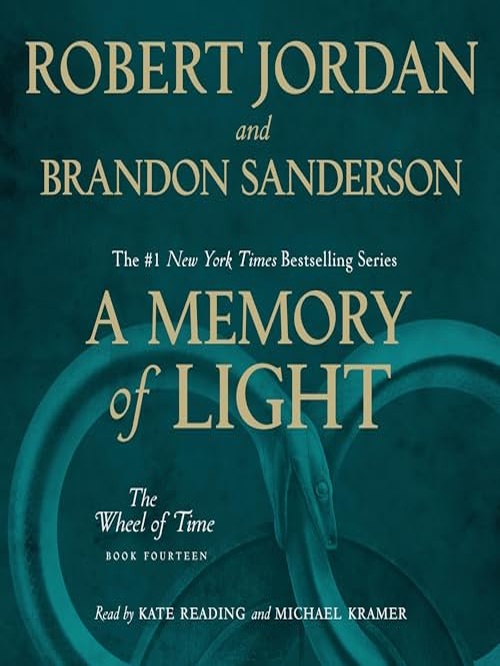
A Memory of Light Review

The Last Turning of the Wheel: A Grand Overture for an Epic’s End

For over three decades, The Wheel of Time has spun its intricate narrative tapestry, drawing millions into a world where destiny is a palpable force and the shadow of oblivion looms large. When Robert Jordan, the visionary architect of this saga, passed, a palpable anxiety gripped its devoted followers. Would the intricate threads of prophecy, character, and political intrigue ever find their destined conclusion? Enter Brandon Sanderson, who, with reverence and remarkable skill, took up the mantle. A Memory of Light, the final volume, stands as a testament to this unique collaboration, a cathartic culmination of an odyssey that began with The Eye of the World.

Weaving the Threads of Fate: A Concluding Act

The sheer weight of expectation placed upon A Memory of Light was colossal. It was not merely a book, but a promise – a promise to deliver a fitting end to one of fantasy’s most ambitious undertakings. What we find within these pages is not just an ending, but a crescendo. Sanderson, working from Jordan’s meticulous notes and vision, masterfully navigates the narrative’s numerous converging paths. We observe the final movements of countless characters, each arc reaching its logical, often heartbreaking, conclusion. From the desperate gambits of the heroes to the chilling machinations of the Shadow, every element is geared towards the ultimate confrontation – the Last Battle.

The novel deftly handles an unprecedented scale of conflict. This isn’t merely a battle; it is a war for the very fabric of existence, a concept that Robert Jordan painstakingly built towards across fourteen volumes. The philosophical underpinnings of free will versus predestination, good versus evil, and the enduring power of hope are not merely discussed but are made manifest through the crucible of war. The narrative forces us to confront the true cost of heroism and the nuanced shades of morality when the world hangs in the balance.

The Voices of Prophecy: An Auditory Experience

As an audiobook, presented by Macmillan Audio, A Memory of Light benefits immensely from the seasoned voices of Michael Kramer and Kate Reading. Their performances, honed over many years with this series, are nothing short of iconic. Kramer’s deep, resonant tones perfectly capture the gravitas of Rand al’Thor’s burden, while Reading’s versatility brings to life the myriad female characters, from the fierce Aes Sedai to the defiant Maidens. Their impeccable pacing and nuanced characterizations ensure that even during the most frantic battle sequences or the most profound philosophical discussions, the listener remains utterly immersed. Despite its considerable length, this profound audio journey, clocking in at nearly eighteen hours (as per this particular rendition), is seamlessly rendered, making every moment of the Dragon’s final ride a truly memorable auditory experience.

The Dragon’s Last Ride: Impact and Legacy

The critical reception, reflected in its stellar average rating of 4.9, confirms what many devotees already felt: A Memory of Light largely succeeds in its monumental task. It is a book that demands patience and rewards it with profound emotional resonance. It is not without its moments of intense sorrow, but it is also replete with moments of pure triumph and sacrifice that affirm the human spirit. The series, now also developing into a TV series, will undoubtedly find new audiences, but this particular volume stands as the definitive culmination for those who have walked the long road with Rand, Mat, and Perrin.

For those who have invested years, even decades, in The Wheel of Time, A Memory of Light is not merely a book to be read or listened to; it is an event. It offers a powerful, conclusive statement on the series’ core themes and solidifies its place in the pantheon of epic Fantasy literature. We emerge from its pages not just with a sense of closure, but with a renewed appreciation for the grand sweep of Robert Jordan’s imagination, brought to its glorious, harrowing end by Brandon Sanderson. It is a testament to perseverance, both of its characters and its creators, and it leaves us pondering the cyclical nature of time, and the enduring power of memory itself.
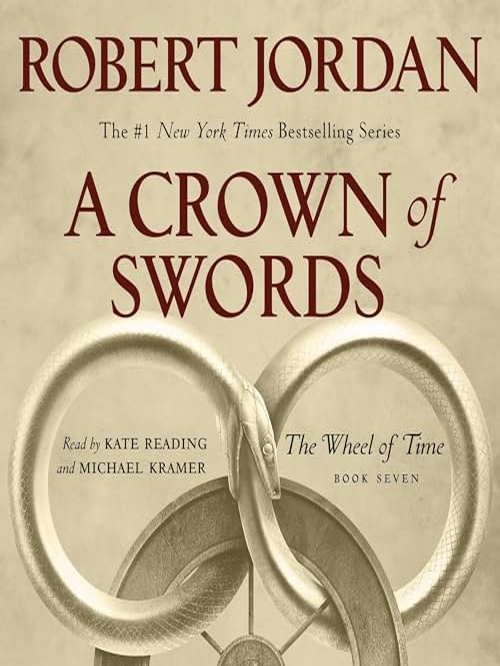
A Crown of Swords Review

A Crown of Swords: Where Victory Tastes of Ash and the World Refuses to Cooperate

What does it mean to win? Not in the clean, triumphant sense that fantasy so often promises — banners raised, enemies routed, the hero standing tall against a golden horizon — but in the bruising, ambiguous sense that real consequence demands. Robert Jordan‘s A Crown of Swords, the seventh installment in The Wheel of Time, poses this question with uncomfortable persistence. Rand al’Thor has broken the Aes Sedai. He has survived Dumai’s Wells. And yet, standing at what should feel like a pinnacle, he finds himself more fractured, more isolated, more dangerous than ever before.

This is not a novel about salvation. It is a novel about the cost of becoming the instrument of salvation.

The Dragon Reborn, Unraveling

Jordan has always been fascinated by the psychological toll of prophecy — the way destiny operates less like a gift and more like a slow confiscation of selfhood. In A Crown of Swords, that preoccupation reaches its most visceral articulation yet. Rand is not merely hardening; he is calcifying. The warmth that made him sympathetic in The Eye of the World has been methodically stripped away, replaced by a cold, geometric logic that borders on sociopathy. He must be hard, he tells himself. He must not break.

Jordan is doing something genuinely sophisticated here. Rand’s psychological deterioration is not dramatic villainy — it is bureaucratic, incremental, terrifyingly mundane. He makes decisions that are militarily sound and humanistically catastrophic, and the narrative refuses to adjudicate cleanly between them. This moral opacity is A Crown of Swords at its most intellectually rigorous, and it elevates the book well above the standard fantasy fare it superficially resembles.

The Texture of an Overcrowded World

One cannot review this novel without addressing its structural ambition — and its structural strain. Jordan’s world at this point in the series has achieved a density that is genuinely unparalleled in epic fantasy. Sea Folk Windfinders, Wise One politics, the internal fractures of the White Tower, the mercantile brutality of Ebou Dar — each thread carries its own weight, its own internal logic, its own cast of characters whose motivations deserve and receive genuine attention.

The Elayne and Mat storyline in Ebou Dar is, frankly, the novel’s most consistently pleasurable engine. Mat Cauthon — gambler, reluctant hero, walking anachronism — reaches something approaching full realization here. His interactions with the Daughter of the Nine Moons carry an erotic charge that Jordan handles with more wit than he is typically credited for. And the hunt for the bowl ter’angreal, MacGuffin though it may be, generates genuine momentum in a book that occasionally struggles to sustain it.

Egwene’s arc, meanwhile, operates in a different register entirely — quieter, more politically textured. Watching her consolidate authority among disparate factions of channelers is a masterclass in soft power, and Jordan renders her competence without rendering her infallible. She earns every inch.

Shadar Logoth and the Question of Ends

The novel’s climax — Rand’s confrontation with the Forsaken Sammael amid the corrupted ruins of Shadar Logoth — deserves particular attention, not for its action choreography but for its philosophical staging. Shadar Logoth is Jordan’s most potent symbol: a city destroyed not by the Shadow but by its own hatred of the Shadow. The evil that consumed it, Mashadar, kills indiscriminately. It does not distinguish between Forsaken and Dragon Reborn.

That Rand chooses this place for his confrontation is not incidental. Jordan is making a pointed argument about the seductive danger of fighting darkness by absorbing it — the very transformation Rand is undergoing on a psychological level. The setting and the character arc rhyme in ways that reward close reading and punish the speed-reader who treats this as mere action spectacle.

Whether the resolution of that confrontation fully satisfies is a matter of legitimate critical debate. Jordan’s handling of consequence here — specifically, what actually happens to Sammael — is elliptical in ways that feel less like artful ambiguity and more like narrative evasion. It is one of the book’s genuine weaknesses, and one worth naming plainly.

Measured Against the Series, Measured on Its Own Terms

A Crown of Swords is not The Shadow Rising, Jordan’s undisputed apex. It lacks that book’s anthropological boldness, its willingness to abandon familiar ground entirely in pursuit of world-mythological depth. Nor does it match Lord of Chaos for sheer structural audacity — the buildup to Dumai’s Wells remains one of the great sustained sequences in modern fantasy.

What it offers instead is consolidation with purpose. It is a novel doing the difficult, unglamorous work of managing an enormous narrative machine: setting pieces in motion, paying off threads laid books earlier, and complicating its central hero in ways that will take another seven volumes to resolve. Judged by those terms, it succeeds with considerable craft.

Kate Reading and Michael Kramer’s audiobook performances, for those engaging with Macmillan Audio‘s production, remain exemplary — their vocal differentiation across Jordan’s sprawling cast is an achievement that deserves acknowledgment in any honest accounting.

Who Needs This Book, and Why

A Crown of Swords belongs to readers who have already surrendered themselves to Jordan’s project — who understand that The Wheel of Time is not a series of self-contained novels but a single, vast work of philosophical fantasy published in installments. For those readers, this volume is essential: the psychological portrait of Rand alone justifies the investment.

For newcomers hoping to sample the series here: don’t. The rewards are real, but they are not portable. This is fiction that demands its full context.

The deeper question A Crown of Swords leaves resonating is one Jordan never quite states aloud but embeds in every interaction Rand has with the people who love him: At what point does the weapon aimed at the Dark One become indistinguishable from the darkness itself? Jordan does not answer. He is too honest for that. He simply keeps turning the Wheel.