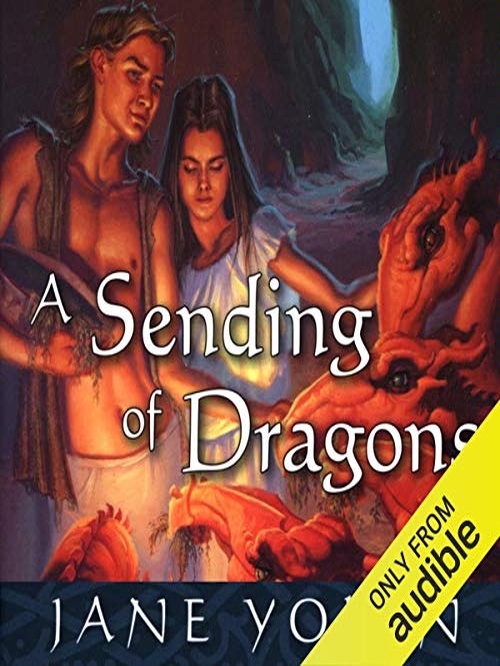
A Dragon’s Shadow and the Weight of Human Echoes: Reflecting on A Sending of Dragons
From the shimmering scales of legend to the intimate companionship of a bonded pair, dragons have long captivated the human imagination. Yet, few authors delve into the complex tapestry of draconic existence with the sustained intellectual curiosity and emotional depth of Jane Yolen. In A Sending of Dragons, the penultimate installment of her celebrated The Pit Dragon Chronicles, Yolen invites us once more to the arid, compelling world of Austar IV, a realm where the fate of humans and their fire-breathing counterparts are inextricably linked, and where the most primitive instincts often lurk just beneath the veneer of civilization.
Unearthing Ancient Prejudices
What begins as an exploratory journey for Jakkin and his fiercely intelligent companion, Akki, swiftly transmutes into an ethical crucible. The discovery of a subterranean, primeval cult dedicated to the ritualistic sacrifice of dragons is not merely a plot device; it is a profound interrogation of cultural relativism and the insidious nature of entrenched dogma. Yolen masterfully presents a society whose reverence for these magnificent creatures manifests in a horrifying act of devotion, forcing our protagonists—and, by extension, us—to confront the uncomfortable truth that faith, untempered by empathy, can breed unspeakable cruelty. We observe Jakkin and Akki grappling with this stark revelation, their youthful idealism tested against a worldview both alien and chillingly familiar, echoing historical conflicts where one group’s spiritual conviction justified another’s subjugation.
The Maturation of Empathy and Understanding
One of the enduring strengths of The Pit Dragon Chronicles lies in its sensitive portrayal of burgeoning adulthood, and A Sending of Dragons continues this arc with compelling nuance. Jakkin and Akki are no longer simply adolescents navigating the complexities of their bond with dragons; they are thrust into positions of moral leadership, compelled to mediate between conflicting ideologies, and to challenge deeply ingrained patterns of thought. Their journey here is less about physical prowess and more about intellectual rigour and emotional fortitude—the painstaking process of understanding, rather than merely condemning, that which they find abhorrent. Yolen skillfully traces their transition from reactive observers to proactive agents of change, demonstrating that true heroism often resides not in grand gestures, but in the patient, often painful, work of fostering interspecies and intercultural understanding.
The Sustained Allure of Austar IV
Yolen‘s world-building, already rich and immersive in previous volumes, expands here to reveal new, unexpected facets. The hidden recesses where the cult resides offer a vivid contrast to the more industrialized, albeit still harsh, landscapes previously explored. This deep dive into a cloistered, almost forgotten society adds layers of anthropological texture to the narrative, reminding us that even within a seemingly known world, pockets of ancient tradition can persist, challenging the assumptions of progress. The dragons themselves, far from being monolithic symbols, are further explored through their varied relationships with different human factions, underlining Yolen‘s consistent thematic thread: the vital importance of respecting all forms of life, and the inherent dangers of reducing complex beings to mere resources or sacrificial offerings. For those listening, Marc Thompson‘s narration lends an additional gravitas and an affecting intimacy to these explorations, his voice skillfully modulating to capture the urgency and the quiet moments of introspection alike.
A Call for Deliberate Engagement
A Sending of Dragons is more than a thrilling Science Fiction & Fantasy adventure for the Teen & Young Adult demographic; it is a thoughtful meditation on the enduring conflict between enlightenment and superstition, the burden of leadership, and the imperative to protect the vulnerable. Jane Yolen does not shy away from the darker aspects of human nature, but she consistently grounds her narrative in a profound belief in the power of connection and empathy.
We posit that this book is essential reading not only for ardent fans of The Pit Dragon Chronicles but for any discerning reader who values speculative fiction that challenges, rather than merely entertains. It is particularly resonant for those who appreciate narratives exploring ethical dilemmas, cultural clashes, and the often-fraught path to genuine understanding. As the final pages settle, one is left to ponder: in our own complex world, how often do we mistake tradition for truth, and what dragons, both literal and metaphorical, do we unwittingly consign to the sacrificial altar of our own narrow perspectives? The work compels a deliberate engagement, urging us to look beyond the immediate and consider the profound.