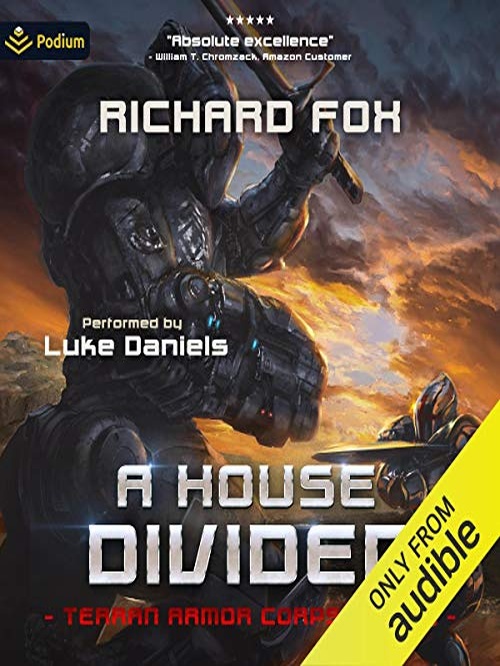
The Crucible of Allegiance: Examining A House Divided
In the vast and often tumultuous landscape of Science Fiction, where empires rise and fall with cosmic indifference, few narratives truly dare to peer inward, confronting the schisms that fracture not just galactic federations, but the very essence of human loyalty. Richard Fox‘s A House Divided, the latest installment in his formidable Terran Armor Corps series, plunges us into precisely such a crucible, asking not merely how one fights, but for whom, and at what cost. This is not simply a tale of interstellar warfare; it is an intricate study of geopolitical fractures and the enduring, often painful, bonds that bind a fighting force.
The Internal Front: When Ideals Collide
From the very outset, A House Divided signals its intent to move beyond the conventional skirmishes of space opera. Fox masterfully constructs a narrative that foregrounds the perilous internal conflicts brewing within the Terran forces themselves. We are compelled to confront the sobering reality that even the most disciplined and formidable military apparatus is susceptible to the human frailties of ideology, ambition, and fractured trust. This nuanced portrayal of internal strife serves as a profound reflection on the enduring question: what happens when the enemy wears the same uniform, or worse, operates under the same banner, albeit with a divergent vision? The narrative eschews simplistic black-and-white morality, instead painting a complex tapestry where protagonists wrestle with choices that blur the lines between duty and conscience, allegiance and personal conviction.
Crafting Cohesion Amidst Chaos
Richard Fox demonstrates an impressive command of his fictional universe, enriching the established lore of the Terran Armor Corps with layers of political intrigue and character-driven drama. The pacing is relentless, yet never at the expense of thematic depth. We witness the visceral impact of combat, a hallmark of military Science Fiction, but it is tempered by moments of quiet introspection and strategic deliberation. The author’s prose, while direct and purposeful, consistently manages to evoke the immense scale of the conflict while grounding the stakes in the personal struggles of its characters. It is a testament to Fox‘s skill that he can balance grand galactic maneuvers with the intimate dilemmas faced by individuals caught in the maelstrom. And for those who traverse this narrative through sound, Luke Daniels‘s narration lends an authoritative gravitas, his nuanced delivery capturing the diverse emotional registers required by such a story.
The Echoes of Fractured Loyalty
One of the more compelling aspects of A House Divided lies in its exploration of the psychological toll of internal conflict. What does it mean for a soldier, or indeed, an entire corps, when the very foundations of their purpose are called into question? Fox delves into the existential weight of such a situation, presenting characters whose loyalties are tested by competing demands, moral ambiguities, and the specter of past grievances. This thematic richness elevates the book beyond mere genre entertainment, prompting us to reflect on the fragility of institutions and the persistent human drive for self-determination, even when it leads to self-inflicted wounds. The book posits that true strength is not merely in might, but in the painful process of confronting and, perhaps, mending the rifts within.
A Call for Unity, or Resignation?
Ultimately, A House Divided stands as a potent contribution to contemporary Science Fiction. It is a meticulously crafted narrative that resonates with the timeless struggle between unity and division, collective purpose and individual will. Richard Fox challenges us to look beyond the immediate battle and consider the deeper ideological currents that shape conflict, both on and off the battlefield.
This book is an indispensable read for those who cherish military Science Fiction that dares to transcend mere action, engaging with the complex psychological and political undercurrents of war. It will particularly appeal to readers who appreciate nuanced character development and plots steeped in strategic depth and ethical dilemmas. One leaves the final page not with simple satisfaction, but with a lingering, thought-provoking question: in the face of such profound internal division, can any house, however grand or powerful, truly stand united? The answers, as Fox so ably demonstrates, are rarely simple, and often, agonizingly earned.