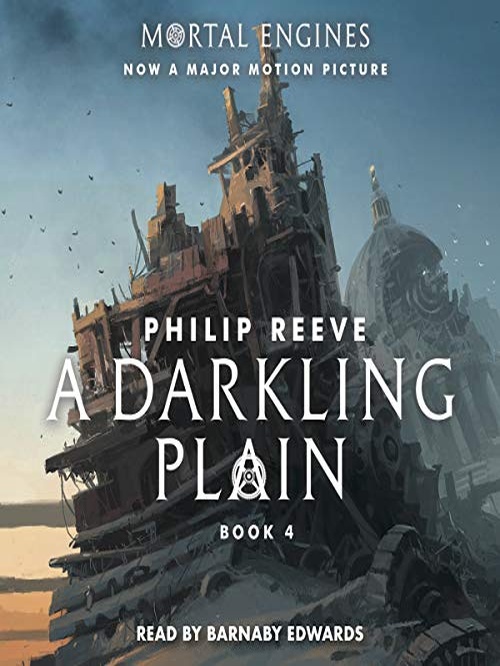
The Echoes of a Dying World: A Concluding Reflection on A Darkling Plain
In the vast, shifting dunes of contemporary Science Fiction & Fantasy, few series have etched themselves into our collective imagination with the stark, singular vision of Philip Reeve’s Mortal Engines. Its culmination, A Darkling Plain, arrives not as a triumphant fanfare but as a resonant, melancholic symphony, an elegy to a world teetering on the brink, grappling with the profound consequences of its own brutal past. We approach this final volume with a sense of both dread and anticipation, eager to witness the ultimate fate of its complex characters and the ravaged, yet strangely beautiful, landscape they inhabit.
Unearthing Truths in a World Undone
Reeve has, throughout this remarkable series, masterfully woven a tapestry of municipal Darwinism, where cities devour cities in a perverse, mechanised struggle for survival. A Darkling Plain brings this brutal logic to its inevitable, devastating climax. The very mention of London as a “radioactive ruin” is enough to send a shiver down the spine, immediately setting a somber, apocalyptic tone. Yet, it is within these very ruins that Reeve posits the seeds of resolution, or perhaps, simply the brutal truths that have long lain dormant. The journey of Tom and Wren into the underbelly of this fallen titan is more than a mere treasure hunt; it is an archaeological excavation of humanity’s hubris and its desperate, lingering hope. Their discoveries are not just plot devices but philosophical insights into the cyclical nature of conflict and the faint possibility of transcending it.
The Crucible of Fanaticism and the Human Spirit
While Tom and Wren navigate the physical and metaphorical darkness, Hester faces a different kind of abyss. Her confrontation with a fanatical enemy, armed with both destructive weapons and an unyielding will to annihilate, elevates the narrative beyond mere adventure. This is where Reeve delves into the psychological and sociological underpinnings of his world. What drives such fanaticism? What are the limits of human endurance when faced with absolute malevolence? Hester’s arc, always fraught with moral ambiguity, reaches its most poignant and perilous point here, forcing us to consider the fine line between conviction and madness, survival and extinction. It is a testament to Reeve’s nuanced characterisation that we remain deeply invested in her struggle, even as her choices challenge our own ethical frameworks.
The Weight of a Legacy Unfurled
This final installment, a winner of the esteemed Guardian Children’s Fiction Prize, solidifies Reeve’s place as a visionary storyteller within the Teen & Young Adult landscape. Yet, to pigeonhole this work solely for a younger audience would be to overlook its profound intellectual rigour and its unflinching gaze into the darker aspects of human nature and societal collapse. The narrative pacing, even in its expansive 15-hour audio rendition (expertly brought to life by Barnaby Edwards), never falters, propelling us through a landscape of desperate gambits and heartbreaking revelations. Reeve does not offer easy answers; instead, he presents a deeply reflective and often bleak assessment of the choices that define our species, echoing historical parallels and speculative futures with incisive clarity.
A Stark Conclusion, A Lingering Question
Ultimately, A Darkling Plain is a masterclass in concluding an epic saga. It dares to be uncompromising, delivering a powerful, subjective conclusion that feels earned rather than contrived. This is a book for those who appreciate narratives that challenge, provoke, and linger long after the final page (or, in this case, the final spoken word). It is perfect for readers who gravitate towards Science Fiction & Fantasy that prioritises thematic depth over simplistic heroics, who are willing to confront the potential for both immense destruction and fragile hope within the human heart. We are left not with tidy resolutions, but with a profound call to reflection: What is the true cost of progress, and how much ruin can humanity truly bear before it is utterly transformed, or utterly lost? Reeve reminds us that the plain may be dark, but the questions it raises illuminate our own complex world with startling clarity.