When Love Demands Sacrifice and Lineage Demands Answers
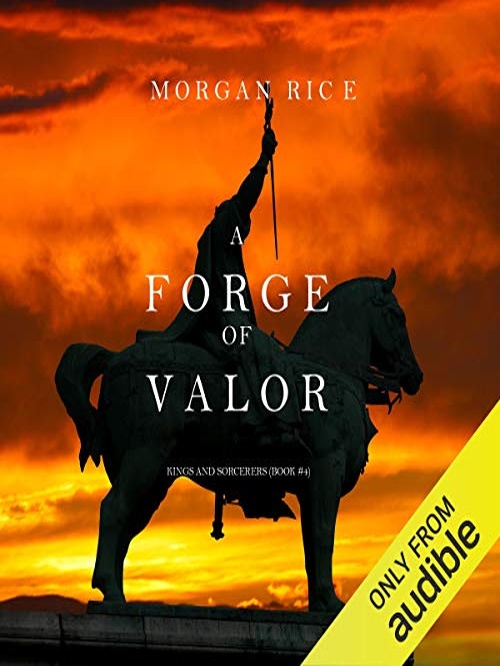
There’s a particular kind of fantasy novel that doesn’t ask you to think—it asks you to feel, to surrender to the velocity of its plot and the primal stakes of its world. Morgan Rice‘s A Forge of Valor, the fourth installment in the Kings and Sorcerers series, is precisely that kind of book: a breathless, sword-drawn sprint through a kingdom fracturing under the weight of war, secrets, and the terrible arithmetic of loyalty.
The question the book poses, perhaps unwittingly, is an old one—older than fantasy itself: What do we owe the people who made us, and what do we owe the power growing inside us?
The Architecture of Diverging Paths
What strikes me most about A Forge of Valor is its structural ambition. Rice juggles three distinct narrative threads—Kyra’s agonizing choice between self-knowledge and filial duty, Aidan’s desperate gambit to free his father from a capital dungeon, and Merk’s siege-bound defense of the Tower of Ur—and keeps each one taut with escalating tension. This is not a book that lingers. It moves with the relentless pacing of a serial, each chapter ending on a breath held just a beat too long.
The strongest of these threads belongs to Kyra. Her resurrection from near-death through Kyle’s sacrifice is more than a plot device; it functions as the novel’s central metaphor. Power, Rice insists, is never free. Every gift exacts its toll. Kyra’s subsequent confrontation with Alva about her mother’s identity finally cracks open a mystery that has simmered across the series, and the revelation—while I won’t spoil it—reframes everything we thought we understood about her abilities. The choice she then faces, between completing her training at the source of her power and rushing to save her imprisoned father, is genuinely compelling. It’s the classic tension between becoming and belonging, and Rice doesn’t resolve it cheaply.
The Forge as Metaphor
The title itself rewards a moment’s reflection. A forge doesn’t create metal—it transforms it through extreme heat and pressure. Every character in this installment is being subjected to their own crucible. Merk, the former assassin seeking redemption among the watchers of the Tower of Ur, discovers that guarding a nation’s most precious relic means more than passive vigilance when a massive troll army encircles his walls. His arc is the most conventionally heroic, but Rice grounds it in the visceral reality of siege warfare—the claustrophobia, the dwindling resources, the slow erosion of certainty.
Aidan’s storyline, with the loyal Motley at his side, carries the emotional weight of a child navigating an adult’s catastrophe. There’s something almost Dickensian about a boy threading through the perilous machinery of a hostile capital, armed with nothing but devotion and a dog. It’s the thinnest thread narratively, but it pulses with an earnest emotional frequency that balances the darker registers elsewhere.
What Rice Does Well—and Where the Seams Show
I should be candid. Rice’s prose operates in a particular register: clean, functional, and fast. You won’t find the ornate world-building of a Robin Hobb or the moral complexity of a Joe Abercrombie here. The dialogue serves plot more than character, and certain emotional beats—particularly around healing and sacrifice—arrive with a predictability that dulls their impact on a second reading. The troll invasion, while thrilling in its momentum, relies on familiar siege-narrative conventions without subverting them.
And yet, there’s an undeniable pull to Rice’s storytelling. She understands pacing the way a composer understands tempo. The six-hour audiobook, narrated by Wayne Farrell, moves like a river current—you don’t notice the speed until you look up and realize you’ve traveled miles. The 4.58 average rating from listeners reflects this: readers come for the velocity, and Rice delivers.
Who Should Pick This Up
A Forge of Valor is not for readers seeking literary deconstruction of the fantasy genre. It is for those who want to be transported—quickly, completely, without ironic distance. If you’ve followed Kyra, Aidan, and Merk through the first three volumes, this installment rewards your investment with genuine revelations and escalating stakes. It’s ideal for Young Adult and Science Fiction & Fantasy readers who prize momentum and emotional directness over ambiguity.
For newcomers, start with Rise of the Dragons. This is a river you enter at its source or not at all.
I’m left with this thought: Kyra’s choice—power or love, destiny or family—is one we dress up in different costumes throughout our lives. Rice frames it in swords and sorcery, but the forge she’s really describing is the one we all pass through when we realize that choosing who we want to become sometimes means walking away from the people who need us most.
What would you choose?