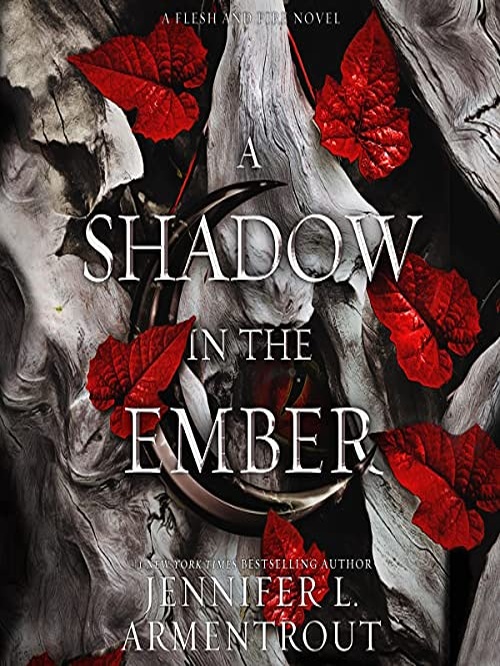
A Shadow in the Ember Review

User want fancy review. I write text. Review follow strict rules. Read review.

The Architecture of Fate: Deconstructing Jennifer L. Armentrout’s Primal Mythos

What is the true cost of salvation when the currency demanded is one’s own soul? The reluctant assassin, bound by duty and destined for tragedy, is a narrative cornerstone. Yet, within A Shadow in the Ember—the inaugural installment of the Flesh and Fire series—Jennifer L. Armentrout manipulates this archetype with an intellectual rigor that elevates the text far beyond a mere prequel to her beloved Blood and Ash universe. We are invited into a meticulously crafted paradigm where destiny is not a divine gift, but a psychological prison.

The Psychological Anatomy of a Weapon

At the center of this moral labyrinth is Seraphena Mierel. She is introduced not as a protagonist afforded the luxury of self-discovery, but as an instrument of statecraft. Born shrouded in the veil of the Primals, her existence is entirely transactional. I found her internal duality to be the novel’s most compelling triumph. She operates as a Maiden to the public, yet harbors the lethal mandate of an assassin whose singular mission is to seduce and execute the Primal of Death. Armentrout excels in mapping the visceral impact of this burden. Sera’s conviction that she is a “monster”—a specter drenched in blood—offers a nuanced perspective on the trauma of indoctrination. We witness a protagonist who has wholly internalized her objectification, viewing herself merely as a blade wielded by desperate ancestors.

The Dichotomy of Desire and Annihilation

When Seraphena inevitably collides with her target, the narrative arc shifts from political espionage to an evocative exploration of intimacy as rebellion. The Primal of Death is introduced not merely as an antagonist, but as a catalyst for Seraphena’s buried humanity. Armentrout navigates the Romance and Fantasy genres with a masterful, slow-burning cadence. The romance here is intrinsically linked to destruction; to fall in love is to ensure the kingdom’s slow demise at the hands of the Rot.

The author’s prose shines brightest when dissecting the friction between Sera’s lethal conditioning and the seductive, unspooling truths offered by the Primal. His unexpected tenderness does not simply ignite physical passion—it systematically dismantles the dark, fatalistic architecture of Sera’s mind. It is a paradigmatic shift where the ultimate act of defiance is to allow oneself to feel.

A Subjective Assessment

A Shadow in the Ember stands as a triumph of atmospheric world-building and character-driven tension. I find Armentrout’s exploration of agency amidst predestination to be deeply resonant. She forces us to question whether true freedom can ever be achieved when our genesis is steeped in the machinations of gods and ancestors.

This work is essential reading for aficionados of the romantasy subgenre who demand emotional intelligence alongside their escapism. It is perfectly tailored for readers who savor slow-burn, morally ambiguous narratives where the stakes are apocalyptic and the romance is unapologetically fierce.

As you close the final chapter, one must ponder: When the forces of Life and Death have explicitly authored your beginning and your end, is the brief, fiery space between them enough to call your own?

Review done. Tell next task.
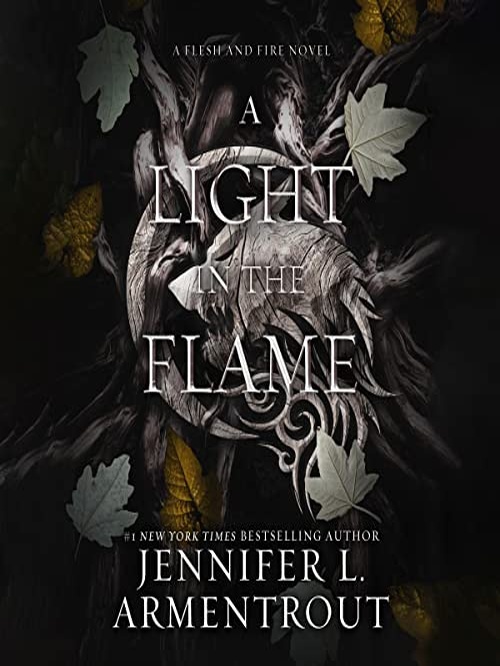
A Light in the Flame Review

Navigating the Labyrinth of Destiny: A Critical Look at A Light in the Flame

In the ever-expanding cosmos of Fantasy Romance, certain narratives manage to etch themselves into the reader’s psyche, not merely as fleeting entertainment but as explorations of profound human (and non-human) dilemmas. A Light in the Flame, the second installment in Jennifer L. Armentrout‘s Flesh and Fire series, is precisely such a work. It invites us, the discerning bibliophile, to delve deeper into a world where destiny is a cruel mistress, love a dangerous gamble, and power an intoxicating, often corrupting, force.

The Inextricable Knot of Duty and Desire

From the outset, A Light in the Flame plunges us back into the tumultuous existence of Sera, whose very purpose has been intricately woven into the fabric of a prophecy—a destiny to end the tyrannical reign of Kolis. The central tension here, as elegantly articulated in the description, revolves around the shattering of fragile trust between Sera and Nyktos, the Primal she was fated to destroy yet now finds herself inextricably bound to. What Armentrout masterfully achieves is the visceral juxtaposition of duty and an undeniable, scorching passion. We witness Sera‘s internal battle, a compelling, almost agonizing dance between the self she believes she must be and the woman she is becoming through her volatile connection with Nyktos. It challenges us to ponder: can true agency exist when one’s very survival, and the fate of realms, hinges on an emotion as elusive and dangerous as love? The narrative suggests that even in the most dire of circumstances, the heart finds its own intractable logic, often at odds with the grand designs of prophecy.

World-Building as a Tapestry of Peril

Armentrout continues to expand the rich, often brutal, mythology of Iliseeum and the Shadowlands, transforming what might initially appear as a mere backdrop into an active, menacing character itself. The escalation of attacks and Kolis‘s summons to Court are not simply plot devices; they are tectonic shifts that underscore the existential threat facing our protagonists. The revelation of the “Primal power of Life” growing within Sera, pushing her toward her Culling and subsequent Ascension, introduces an element of biological imperative intertwined with the metaphysical. This intricate layering of lore—the necessity of Nyktos‘s love for her survival, his supposed inability to feel it—elevates the stakes beyond mere romantic entanglement. It becomes an ontological quest, where the very definition of being and purpose is under constant scrutiny. Armentrout compels us to consider the burden of power, particularly when it blossoms within a vessel unprepared for its full, transformative weight.

The Unspoken Language of Primal Affection

While the explicit nature of the Romance genre often emphasizes the physical, A Light in the Flame delves into the more nuanced, almost philosophical aspects of connection. The idea that Nyktos is “incapable of feeling” love, yet Sera‘s Ascension is contingent upon it, creates a fascinating psychological dilemma. Is love purely an emotion, or can it manifest as an act of will, a profound commitment despite inherent limitations? This exploration pushes against conventional notions of affection, suggesting that perhaps love, in its primal form, is less about sentimentality and more about a deep-seated recognition, a mutual necessity for survival and growth. The book, through Sera‘s journey, encourages us to look beyond superficial expressions and seek the deeper currents of connection that bind beings together, even when those bonds are forged in the crucible of conflict and prophesied destruction.

A Journey Through Fire and Reflection

A Light in the Flame is not a book for the faint of heart, nor for those seeking a light, ephemeral read. It is a robust, deeply immersive experience, narrated with a captivating intensity by Stina Nielsen for Brilliance Audio, which further amplifies the inherent drama. This is a narrative that demands engagement, that pulls you into its vortex of despair and burgeoning hope. While Armentrout‘s prose remains evocative and her pacing relentless, it is the thematic undercurrents—the burden of destiny, the transformative power of love, and the intricate dance between individual will and cosmic imperative—that truly resonate.

For those who crave Fantasy Romance with high emotional stakes, intricate world-building, and characters who grapple with their very essence, A Light in the Flame offers a rich, challenging, and ultimately rewarding journey. It is a necessary read for anyone invested in the Flesh and Fire series, deepening the complexities and raising profound questions about sacrifice, survival, and the enduring, often perilous, nature of connection. We are left to ponder: when caught between the hammer of fate and the anvil of the heart, can one truly forge their own path, or are we forever bound by the sparks ignited by primordial fires?

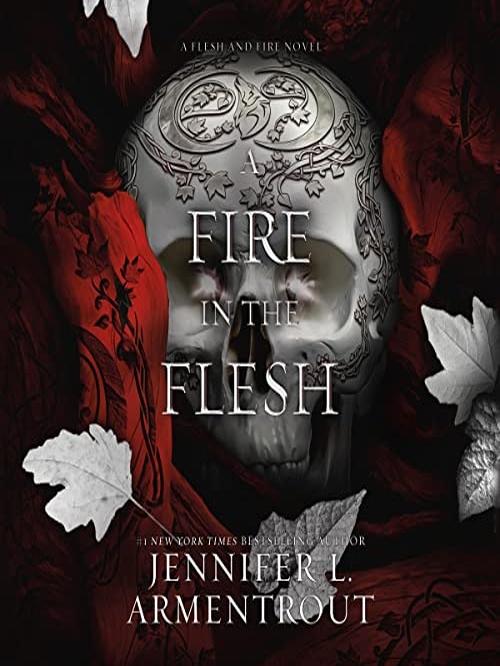
A Fire in the Flesh Review

The Crucible of Fate: Armentrout’s Latest Foray into Primordial Entanglements

In the expansive and often tumultuous landscape of fantasy romance, where mythical stakes frequently collide with the deeply personal, Jennifer L. Armentrout‘s A Fire in the Flesh, the latest installment in her Flesh and Fire series, arrives with the weight of expectation and the promise of primordial chaos. We find ourselves, once again, thrust into a world teetering on the precipice, where the very fabric of existence is woven through ancient prophecies, divine betrayals, and the searing intensity of a love that dares to defy even the Fates.

Navigating the Labyrinth of Divinity and Desire

From its very inception, A Fire in the Flesh plunges the reader, or in this case, the listener, into an immediate and harrowing dilemma. Sera and Nyktos, our central figures, are ensnared in the clutches of Kolis, the self-proclaimed and deeply unsettling King of the Gods. This narrative choice eschews the gentle preamble, opting instead for a psychological crucible that immediately tests the resilience of our protagonists and the very foundation of their burgeoning, yet undeniably potent, connection. Armentrout masterfully leverages this captivity as more than mere plot device; it becomes a lens through which she explores the profound complexities of power, agency, and the often-blurry lines between savior and captor.

The author, with a seasoned hand evident across her extensive body of work in the fantasy and romance genres, delves into the existential quandary of destiny versus self-determination. The promise of “the one thing more powerful than the Fates” is not merely a tantalizing hook but a thematic undercurrent that permeates every interaction and revelation. Here, Armentrout invites us to question whether love, in its purest and most desperate form, can truly unravel the meticulously spun threads of prophecy, or if it is merely another intricately designed strand within that very tapestry. The exploration of Kolis’s “erratic nature and twisted sense of honor” adds a fascinating layer to the antagonist, moving him beyond a one-dimensional villain into a figure whose cruelty is tempered, however slightly, by an almost perverse adherence to his own warped moral code. This nuance, while disquieting, enriches the narrative considerably.

Echoes of Ancient Lore and the Resonance of the Human Spirit

What truly distinguishes A Fire in the Flesh is its ambitious attempt to marry the epic scale of a looming “War of Primals” and the very “creation of the realms” with the intimate, often raw, emotional landscape of Sera’s personal journey. We witness her grapple not only with Kolis’s machinations and the shocking truths unveiled within his Court—truths that fundamentally “upend what she has understood about her duty”—but also with the inexorable march toward her own Ascension. This dual-pronged struggle, external and internal, provides the narrative with its dynamic tension.

The interplay between Nyktos’s unwavering resolve to preserve Sera’s life, even at the cost of “utter destruction of the realms,” and Sera’s own burgeoning understanding of her role, elevates the romance from mere passionate entanglement to a desperate pact forged in the crucible of impending doom. It is here that Armentrout‘s prose, often visceral and immediate, finds its stride, conveying the urgency and the palpable sense of danger that permeates every page. The intricate lore, while dense at times, serves to ground the personal drama within a rich, mythological framework, offering a symphony of myth and emotion that is both expansive and deeply personal. Furthermore, for those who embark on this journey via Brilliance Audio, Stina Nielsen‘s narration adds an invaluable dimension, her nuanced performance capturing the gravitas of the stakes and the fiery spirit of the characters.

A Concluding Illumination

Ultimately, A Fire in the Flesh is a bold continuation, one that refuses to shy away from the darker corners of its fantastical world or the complex motivations of its divine inhabitants. It is a testament to Armentrout‘s enduring ability to craft narratives that are both compellingly intricate and emotionally resonant. While the pace can feel relentless, the deluge of revelations and the constant threat of annihilation ensure that the reader remains thoroughly engaged, perpetually questioning the nature of truth, loyalty, and the ultimate price of survival.

This book will undoubtedly resonate most profoundly with devotees of complex, high-stakes fantasy romance who revel in deep lore, morally grey characters, and relationships forged in fire. It is for those who seek not just a love story, but a sweeping epic where the boundaries of fate are constantly challenged, and the power of choice, however constrained, remains the most potent weapon. As the narrative careens towards its inevitable, yet tantalizingly unpredictable, climax, one is left to ponder: Can true love indeed be the “unexpected thread” that untangles the unwritten, or is it merely the catalyst for a grander, perhaps more tragic, design?