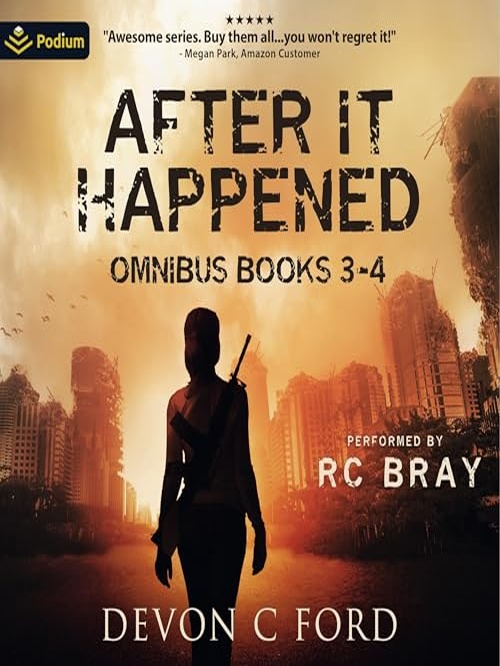
After It Happened Publisher’s Pack 2 Review

The Unyielding Pulse of Humanity Amidst the Ashes: A Critical Look at After It Happened: Publisher’s Pack 2

We live in an age perpetually fascinated by the precipice, by the fragile veneer of order that separates us from chaos. From cinematic dystopias to literary explorations of societal collapse, the question of what remains when everything falls apart resonates with a primal anxiety. Devon C. Ford’s After It Happened series, now presented in this compelling Publisher’s Pack 2 featuring Society (book three) and Hope (book four), plunges us headlong into this very inquiry, not merely as an exercise in survival horror, but as a profound meditation on the enduring, often brutal, nature of the human spirit.

  • The Frailty of Civilization and the Rise of the Primal

In Society, the narrative pivots from the initial, more immediate threats of a world ravaged by illness to a far more insidious and challenging adversary: humanity itself. The journey of Dan and his steadfast group, set against the stark, desolate backdrop of the UK, transcends mere resource gathering. Ford meticulously constructs a world where the lines between protector and predator blur, where the very prosperity achieved by the survivors becomes an irresistible beacon for others. We witness here the terrifying, yet perhaps inevitable, descent into a Hobbesian state, where the collective must respond with an almost atavistic savagery to defend its nascent stability. The central question, “Is this the end of society?”, hangs heavy, forcing us to confront our own preconceived notions of order, governance, and the ethical frameworks that underpin our existence. It is an intellectual gauntlet thrown down to the reader, asking what moral calculus survives when the rules are erased.

  • From Sustenance to Significance: The Quest for ‘Hope’

As the series progresses into Hope, the narrative arc undergoes a fascinating, and deeply philosophical, metamorphosis. The “shocking revelations about the propagation of the human race” shift the goalposts entirely. No longer is survival the sole, all-consuming objective; rather, it becomes a desperate means to a far grander, albeit uncertain, end. Dan, ever the reluctant hero, grapples with a newfound purpose that challenges the accepted fate of humanity. This paradigmatic shift introduces a visceral tension, as the group, now fractured by diverging ideologies and a burdensome secret, embarks on a journey fraught with both external dangers and internal strife. It is a testament to Ford’s narrative prowess that he can elevate the visceral struggle against elements and new foes into a metaphysical quest for meaning against the relentless march of time. The very concept of hope, often a saccharine platitude in lesser hands, is here forged in the crucible of existential dread, becoming a fragile, yet potent, force driving individuals to defy the seemingly inevitable.

  • The Resonant Voice of Perseverance

Crucially, the immersive experience of this Science Fiction narrative is profoundly amplified by the exceptional narration of R.C. Bray. His distinctive, gravelly timbre lends an undeniable authenticity and gravitas to the harrowing trials faced by Dan and his companions. Bray’s ability to infuse each character with a unique, discernible voice, coupled with his masterful pacing, ensures that the listener is not merely an observer but an active participant in this arduous journey. He conveys the grim determination, the moments of despair, and the flicker of renewed resolve with a clarity that few narrators achieve, transforming Ford’s prose into a truly visceral experience. His performance is, in many ways, the very pulse of this compelling audio production, capturing the gritty realism and emotional complexity that underpins the series.

Ultimately, After It Happened: Publisher’s Pack 2 is more than just another entry in the post-apocalyptic genre; it is a thoughtful, often brutal, exploration of what it means to be human when stripped of all artifice. Devon C. Ford does not shy away from the difficult questions, nor does he offer facile answers. Instead, he presents a raw, unflinching look at humanity’s capacity for both profound cruelty and unwavering resilience. We emerge from these twelve hours of listening with a sharpened perspective on the societal compact, the burdens of leadership, and the defiant power of a desperate hope.

This Publisher’s Pack 2 is an essential listen for those who crave speculative fiction that delves into the darker corners of human nature while simultaneously seeking glimmers of enduring spirit. It is ideally suited for readers who appreciate narratives rich in moral ambiguity, relentless survivalist tension, and a philosophical undercurrent that lingers long after the final words fade. Are we, as a species, truly defined by the societies we build, or by the raw, untamed will to survive and, perhaps, to hope, that surges within us when those societies crumble?
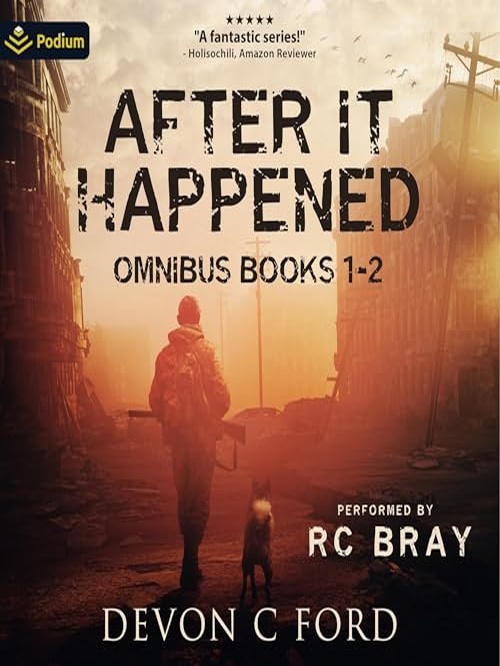
After It Happened Publisher’s Pack Review

The Unveiling of Humanity: When Civilization’s Veneer Cracks

What remains when the intricate tapestry of civilization unravels, leaving behind only the stark threads of primal instinct and desperate ingenuity? This is the profound, unsettling question at the heart of Devon C. Ford‘s After It Happened: Publisher’s Pack, an omnibus comprising Survival (Book 1) and Humanity (Book 2). We are ushered into a world abruptly shorn of its accustomed order, a landscape that is both terrifyingly alien and disturbingly familiar, where the very definition of “survival” quickly cedes ground to the more challenging imperative of “humanity.”

The Anatomy of Collapse and Resilience

Ford wastes no time in plunging us into the immediate aftermath of a mysterious illness that has swept through the UK, silencing cities and decimating populations with a chilling efficiency. Survival, the first installment, is a masterclass in establishing a visceral, almost claustrophobic atmosphere of post-apocalyptic dread. Here, the narrative arc is tightly focused on Dan, a reluctant everyman hero thrust into leadership, and the disparate group he coalesces around him. What immediately strikes the discerning reader is not merely the mechanics of finding shelter and sustenance – though these are rendered with meticulous, believable detail – but the raw psychological realism of individuals grappling with profound loss and the dawning realization of a fundamentally altered world.

We contend that Ford‘s genius lies in his nuanced portrayal of external threats giving way to internal conflicts. The desolation is not just a backdrop; it is an active character, stripping away societal niceties to reveal the inherent brutality and, occasionally, surprising resilience of human nature. The author deftly explores the precarious balance between cautious pragmatism and burgeoning despair, painting a stark tableau where trust is a currency more valuable than gold, and betrayal, an ever-present shadow. The urgency is palpable, the stakes unequivocally high, forcing both characters and readers to confront uncomfortable truths about what we hold dear when everything is taken away.

Beyond Mere Existence: The Crucible of Humanity

As the journey progresses into Humanity, the narrative matures, shifting its focus from the frantic scramble for existence to the more existential struggle of retaining moral integrity in a world devoid of established laws. Having carved out a semblance of a home, Dan and his group now face the ultimate test: not merely surviving the wilderness or the lingering echoes of the pandemic, but confronting the “brutality of human nature” itself. This is where Ford truly elevates his work beyond a simple survival thriller into a more contemplative exploration of human ethics.

Herein lies one of the series’ most transformative insights: that the most dangerous predators in a collapsed world are often those who look just like us. The tension derived from external threats – the elements, dwindling resources – morphs into a sophisticated examination of emergent social dynamics, the formation of new power structures, and the inevitable clash of ideologies among survivors. Ford meticulously dissects the complex interplay of fear, ambition, and the desperate yearning for order, demonstrating how quickly human beings can revert to tribalism or, conversely, strive for a higher collective good. The reader is compelled to ponder what sacrifices are justifiable, and what lines, once crossed, irrevocably diminish the very “humanity” we strive to preserve.

A Verdict on the Unvarnished Truth

After It Happened is not a series for the faint of heart, nor for those seeking simplistic heroes or neatly packaged morality tales within the Science Fiction & Fantasy genre. While categorized broadly, its true strength lies in its grounded, unflinching portrayal of a world brought to its knees, focusing on the human drama rather than fantastical elements. Devon C. Ford offers a gritty, authentic depiction of societal collapse and the arduous path to rebuilding, not just infrastructure, but the very fabric of human connection. The writing is taut, evocative, and possessed of a propulsive energy that ensures a sustained, visceral impact.

We unequivocally recommend this collection for readers who revel in intellectually rigorous post-apocalyptic narratives, those who appreciate a deep dive into the psychological consequences of catastrophe, and who are unafraid to confront the darker, yet also remarkably resilient, facets of the human spirit. It is a compelling testament to the notion that sometimes, the greatest battle is not against an external enemy, but within ourselves. Do we succumb to the primal urge for survival at any cost, or do we stubbornly cling to the ideals that define our collective “humanity”? Ford‘s work invites us to consider this question long after the final page has been turned.