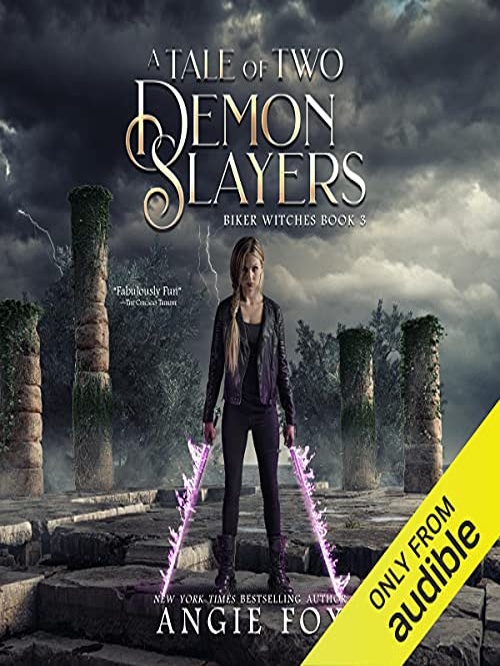
A Tale of Two Demon Slayers Review

Dark Twin Demand Blood

Magic Shatter Normal

Identity break. Teacher color-code plans before. Magic change life. Teacher become slayer. She fight imp. She fight demon. Mundane die. Supernatural rule.

Evil Mirror Attack

Angie Fox write Fantasy. Story hold Romance. Hero travel Greece meet griffin family. Sun shine. Drink pour. Peace end fast. Dark magic forge twin. Twin steal power kill hero. Theme show duality. Hero face dark self.

Weird Pack Win

Twin fight solo. Hero gather pack stop evil. Biker witch grandma ride. Jack Russell dog talk. Necromancer cast spell. Absurd mix work well. Tavia Gilbert speak audio. Pace move fast.

Judge Book

I like story. Action hit hard. Good for Fantasy reader. Perfect for Romance fan. Reader buy book learn survival. Read story.

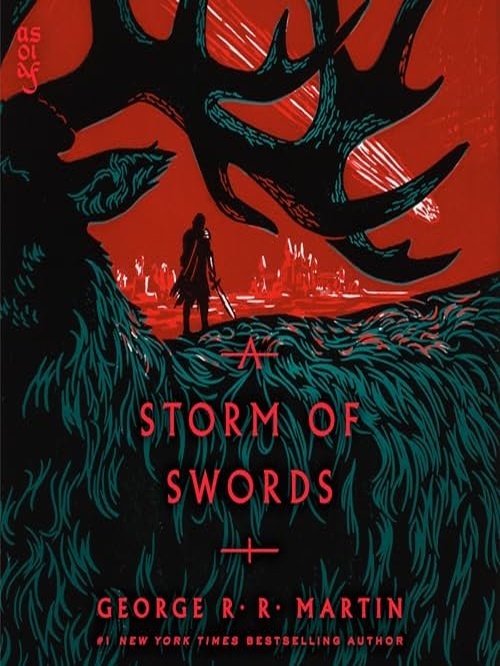
A Storm of Swords Review

The Unrelenting Tempest: A Deeper Look into A Storm of Swords

In the vast, intricate tapestry woven by George R.R. Martin, A Storm of Swords, the third installment in the epic A Song of Ice and Fire series, stands not merely as a continuation but as a veritable watershed moment. We find ourselves, as readers, caught in a maelstrom far more ferocious and unpredictable than anything hinted at in its predecessors. This is where the grim prophecies coalesce into brutal realities, where the familiar contours of fantasy tropes are not just bent but irrevocably shattered.

The Crucible of Conflict: Where All Hope Lies Bleeding

To speak of A Storm of Swords is to grapple with the sheer, unflinching audacity of its narrative. Martin, with a precision both surgical and devastating, elevates the stakes to an almost unbearable degree. We witness the full, horrific fruition of the wars that have simmered and raged across Westeros. Alliances are forged only to be betrayed with breathtaking savagery, and the quest for power consumes its adherents in a conflagration of ambition and despair. The Lannisters may hold the Iron Throne, but their grip is tenuous, their dominion haunted by the ghosts of their victims and the whispers of their enemies. Robb Stark, the young wolf, struggles to maintain his rebellion, his destiny entwined with a fate as cruel as any Shakespearean tragedy. And across the narrow sea, Daenerys Targaryen, mistress of the last three dragons, continues her inexorable march, her burgeoning power a beacon of both hope and potential devastation.

What sets this volume apart is its relentless commitment to consequence. Martin understands that in war, heroes often fall, and villains can find moments of unexpected humanity. The moral landscape is not merely grey; it is a sprawling, blood-soaked morass where every decision carries an existential weight. Characters we have grown to love, or perhaps despise, are subjected to tortures both physical and psychological, pushing them beyond their limits and revealing facets of their being we scarcely imagined. This isn’t just a story about kings and queens; it is a profound exploration of human resilience, depravity, and the elusive nature of justice in a world governed by brutal power dynamics.

Beyond the Wall: The True Darkness Gathers

While the internal conflicts of the Seven Kingdoms dominate much of the narrative, Martin masterfully broadens the canvas, reminding us of the far greater, more ancient threats looming on the horizon. The barbaric wildlings, driven south by an even more terrifying menace, arrive en masse, their desperation and savagery a chilling counterpoint to the political machinations of the south. In their vanguard marches the mythical Others, a supernatural army of the living dead, whose animated corpses are unstoppable. This unfolding crisis from the outermost lines of civilization serves as a stark, chilling reminder that the petty squabbles for the Iron Throne pale in comparison to the existential threat that truly endangers all of humanity. It is a brilliant narrative device, forcing characters and readers alike to confront the ultimate folly of internecine conflict when a greater darkness descends.

A Literary Feat: The Art of the Narrative Shockwave

Martin’s prose in A Storm of Swords is as sharp and multifaceted as the blades wielded by his characters. He wields detail and foreshadowing with surgical precision, building tension with a slow, agonizing burn before unleashing narrative shockwaves that reverberate long after the final page. The depth of characterization, the intricate plotting, and the sheer audacity of his storytelling choices are unparalleled in contemporary Fantasy. We are not simply reading a story; we are immersing ourselves in a living, breathing world, fraught with danger, beauty, and inescapable sorrow. The audiobook narration by Roy Dotrice only amplifies this immersion, lending each character a distinct voice that resonates deeply.

The Enduring Impact and Who Should Brave the Storm

A Storm of Swords is not a book for the faint of heart, nor for those seeking simplistic escapism. It is a monumental achievement in modern Science Fiction & Fantasy, a work that challenges our preconceived notions of heroism, villainy, and the very nature of storytelling. We emerge from its pages not merely entertained, but fundamentally altered, perhaps a touch more cynical about power, but also deeply appreciative of the intricate ballet of human triumph and tragedy.

This volume is essential reading for anyone who appreciates literature that dares to be bold, complex, and unsparingly realistic in its portrayal of war and human nature. It is for those who crave a narrative that rewards deep engagement and analytical thought, an experience that transcends genre boundaries. For literary enthusiasts seeking a masterclass in world-building and character development, and particularly for those who believe that Fantasy can explore profound humanistic questions with intellectual rigour, this book is an absolute imperative. Dive into this storm, but be warned: you may never look at stories—or the world—the same way again.
A Starbrite Man A Cyberpunk LitRPG Review

Chrome Dreams And Toxic Magic

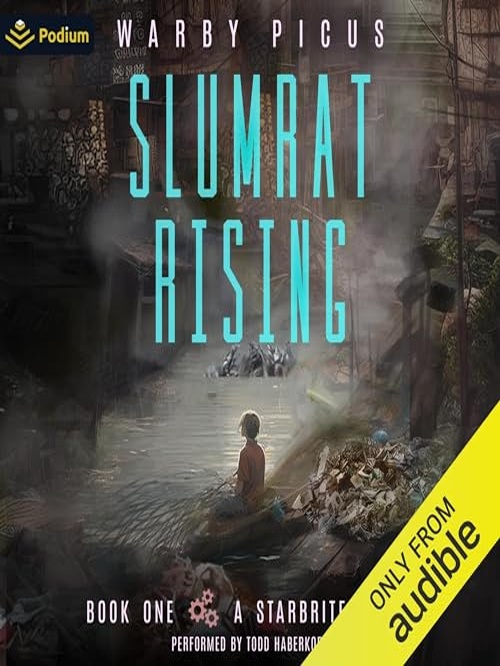
Dystopia consume humanity. Warby Picus write A Starbrite Man. Book fuse Cyberpunk and LitRPG. Prose deliver intellectual rigour. We examine dystopian reality.

System Astrologica Bind All

Truth Medici starve in Harban slums. Fight killer pimps. Protect three siblings. Elite live across canal. Magic carpets fly. Starbrite Corporation control everything. Truth pass Starbrite Aptitude Test. Escape poverty. Gain cultivation tonics.

We dissect three narrative paradigms:
– Corporate Feudalism. Megacorp replace god. “A Starbrite Man Is Always Ready” signify total subjugation.
– Illusion Of Agency. Truth sell autonomy. Save family. System grant power. System implant psychological leash.
– Mechanics As Control. LitRPG stats usually bring freedom. Here, stats mean chains.

Picus write visceral impact. Plot subvert typical Urban Fantasy tropes. Origin on Royal Road prove raw narrative strength.

Sonic Landscape

Podium Audio publish 14:05:00 epic. Todd Haberkorn narrate. Voice project street grit. Rating 4.47 reflect audience validation.

Final Judgment

I evaluate book excellent. Paradigm shift for Science Fiction & Fantasy.

Target Audience: Readers wanting grim worldbuilding. Fans of high-stakes Fantasy and nuanced perspective.
Question: Would you trade free will for siblings’ survival? Read. Decide.

A Space Oddity Review

Cosmic Dread Meet Demon Magic

Stars Hide Dark Truth

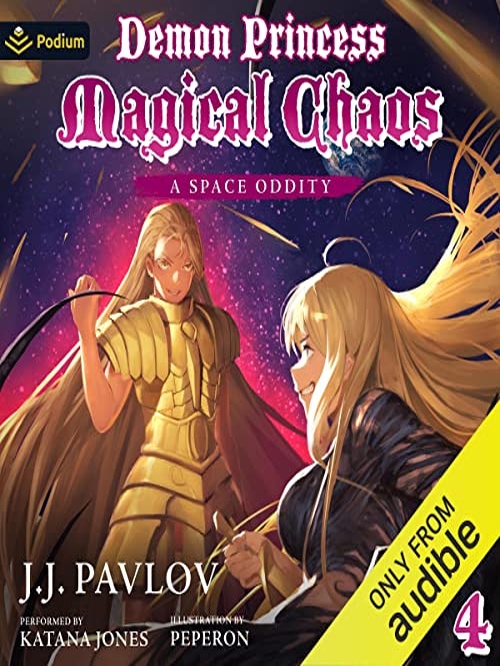
Cosmos cold. A Space Oddity blend cosmic horror with Science Fiction & Fantasy. J.J. Pavlov write Demon Princess Magical Chaos series. Reincarnation trope face paradigmatic shift. Book challenge mind. Read text.

Blood, Void, Broken Souls

Narrative arc dive deep. Three transformative insights emerge.

Teleport fail. Chaos lose Asoko. Separation force existential dread. Protagonist navigate fragmented self. Journey demand intellectual rigour.

Chaos meet mother. Reunion bring visceral impact. Betrayal test loyalty. New ally form. Character dynamic possess nuanced perspective.

Crawling Chaos leave planet. Space reveal terrible secret. Truth shatter worldview. Fantasy become science nightmare. Expect shock.

Judgment

Audiobook last 15:08:00. Katana Jones narrate. Voice elevate text. Gore exist. Explicit sexual content exist. Mature listener required. Blood serve theme. Flesh serve plot. Shock not hollow. I evaluate book strong. J.J. Pavlov master craft.

Book fit mature mind. Reader seek visceral impact. Reader desire slow-burn intellectual thriller.

Look at stars. Question past life. Void hide dark truth. Find answer. Listen now.

A Soul of Ash and Blood Review

User ask review. I write text. Follow rules. Read output.

Memory Serve As Anchor In Awakened Realm

Weight Of Past Action

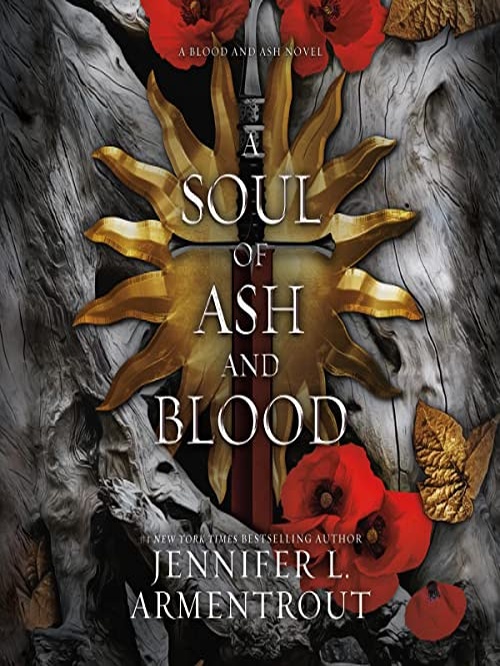
Gods awake. War loom. Queen transform. Become Primal. Poppy fall sleep. Casteel fear loss. He speak. Memory save her. We observe paradigmatic shift. Jennifer L. Armentrout pivot lens. Fantasy fuse Romance. Hawke speak now.

Visceral Impact Of Shared History

Narrative arc bend. We revisit start. Casteel reveal truth. Kieran know secrets. Now reader know.

Transformative insight emerge:
* Vulnerability build strength. Casteel talk. Words break silence.
* Perspective alter truth. Old event get new frame. Nuanced perspective shine.
* Stillness breed tension. Sleep contrast war.

Author show intellectual rigour. Series Blood and Ash grow. Prose hit hard. Casteel voice cause visceral impact. He remember. We feel.

Judgment On Stasis

I judge book. Book succeed. New view help.

Audience map clear. Fans of slow-burn tension read. Thinkers seeking unconventional wisdom read.

What wake when stasis end? Realm change. Cas change. You reflect. Read book. Await dawn.

A Small Town in Southern Illvaria An Isekai LitRPG Review

A Displaced Mind in a System-Driven Realm: Science Meets Sorcery in Southern Illvaria

In an age perpetually seeking escape, the Isekai genre offers a particularly potent fantasy: the trans-dimensional journey to a world unbound by mundane constraints. Yet, few narratives truly interrogate the intellectual and psychological ramifications of such a sudden paradigm shift with the nuanced perspective that Acaswell brings to the fore in A Small Town in Southern Illvaria: An Isekai LitRPG. This inaugural volume of the [[A Budding Scientist in a Fantasy World]] series invites us not merely to witness a new world, but to observe the fascinating collision of empirical thought with arcane systems.

The Architectonics of Alice’s Odyssey

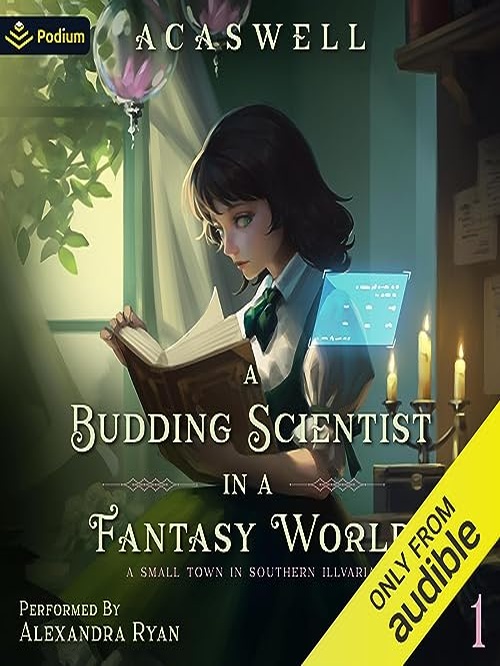
We are introduced to Alice Verianna, an ordinary teenager from Denver, who awakens to an extraordinary new reality. No longer navigating suburban ennui, Alice finds herself plunged into a realm governed by a pervasive, almost sentient System — a meta-narrative device familiar to aficionados of the LitRPG subgenre. Here, status screens dictate potential, and magic intertwines with the very fabric of existence. What distinguishes Alice, and indeed Acaswell‘s approach, is her inherent scientific disposition. Rather than simply accepting this fantastical framework, Alice begins to dissect it, to apply the very principles of observation and experimentation that defined her previous life. This intellectual rigor, her innate curiosity, becomes her most formidable attribute, offering a compelling counterpoint to the often-passive protagonists found within the genre.

The brilliance here lies in the author’s commitment to this premise. Alice doesn’t merely dabble in magic; she endeavors to understand its underlying mechanisms, to chart its properties as one might a chemical reaction. This creates a refreshing dynamic, allowing the reader to experience the discovery of magic through a scientific lens, lending an unexpected depth to the often-formulaic progression of abilities in LitRPG. We observe a protagonist who actively seeks to comprehend the how and why of her new reality, not just exploit its advantages.

Shadows of Intrigue and the Stakes of Knowledge

Beyond the intriguing personal journey of scientific exploration, A Small Town in Southern Illvaria deftly weaves a layer of geopolitical suspense. An enigmatic underground organization, the Society of Starry Eyes, looms as a significant, and potentially existential, threat. Their interest in other dimensions, coupled with their relentless pursuit of knowledge, places Alice in a precarious position. Her very existence, her alien origins, makes her a prize for those who would plumb the secrets of interdimensional travel. This narrative thread elevates the stakes beyond individual survival, imbuing the story with a sense of urgency and a deeper quest for understanding: not just how to survive, but how she arrived, and what power truly governs these cosmic shifts.

Acaswell manages to balance the meticulous detail inherent in LitRPG’s System mechanics with a broader, more intricate world-building. Southern Illvaria feels less like a mere backdrop and more like a fledgling society with its own unique challenges and opportunities, ripe for Alice’s analytical gaze. The burgeoning popularity of this series on serialized platforms is hardly surprising, given its inventive premise and meticulous execution.

A Voice for the Discerning Listener

For those who engage with narratives through the spoken word, [[Alexandra Ryan]]‘s narration, produced by [[Podium Audio]], provides a commendable auditory experience. Her delivery captures Alice’s blend of intellectual curiosity and burgeoning resilience, lending an authenticity to the character’s internal struggles and external endeavors. The performance acts as a vital conduit, bringing Acaswell‘s imaginative world and its nuanced protagonist vividly to life.

The Verdict: A Confluence of Worlds and Minds

A Small Town in Southern Illvaria: An Isekai LitRPG is more than just another entry in a crowded genre; it is a thoughtful exploration of intellectual adaptation and the enduring human drive to understand the unknown. Acaswell challenges conventional Isekai tropes by positioning a scientist at its heart, imbuing the magical with a grounded, investigatory spirit. I find myself thoroughly impressed by the author’s ability to render complex magical systems amenable to scientific inquiry, a fascinating narrative gambit that pays dividends.

This book will resonate profoundly with readers who appreciate not only the escapism of Fantasy and Science Fiction & Fantasy but also stories where intelligence and curiosity are the primary weapons. It is a must-read for those who yearn for protagonists who think, who analyze, and who endeavor to understand the universe around them, even when that universe defies all previously held notions. We are left to ponder: what greater magic exists than the systematic unraveling of a world’s deepest secrets?

A Shadow in the Ember Review

User want fancy review. I write text. Review follow strict rules. Read review.

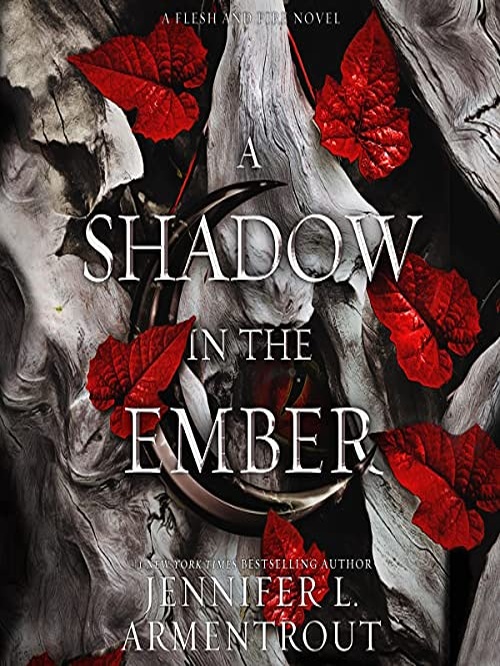
The Architecture of Fate: Deconstructing Jennifer L. Armentrout’s Primal Mythos

What is the true cost of salvation when the currency demanded is one’s own soul? The reluctant assassin, bound by duty and destined for tragedy, is a narrative cornerstone. Yet, within A Shadow in the Ember—the inaugural installment of the Flesh and Fire series—Jennifer L. Armentrout manipulates this archetype with an intellectual rigor that elevates the text far beyond a mere prequel to her beloved Blood and Ash universe. We are invited into a meticulously crafted paradigm where destiny is not a divine gift, but a psychological prison.

The Psychological Anatomy of a Weapon

At the center of this moral labyrinth is Seraphena Mierel. She is introduced not as a protagonist afforded the luxury of self-discovery, but as an instrument of statecraft. Born shrouded in the veil of the Primals, her existence is entirely transactional. I found her internal duality to be the novel’s most compelling triumph. She operates as a Maiden to the public, yet harbors the lethal mandate of an assassin whose singular mission is to seduce and execute the Primal of Death. Armentrout excels in mapping the visceral impact of this burden. Sera’s conviction that she is a “monster”—a specter drenched in blood—offers a nuanced perspective on the trauma of indoctrination. We witness a protagonist who has wholly internalized her objectification, viewing herself merely as a blade wielded by desperate ancestors.

The Dichotomy of Desire and Annihilation

When Seraphena inevitably collides with her target, the narrative arc shifts from political espionage to an evocative exploration of intimacy as rebellion. The Primal of Death is introduced not merely as an antagonist, but as a catalyst for Seraphena’s buried humanity. Armentrout navigates the Romance and Fantasy genres with a masterful, slow-burning cadence. The romance here is intrinsically linked to destruction; to fall in love is to ensure the kingdom’s slow demise at the hands of the Rot.

The author’s prose shines brightest when dissecting the friction between Sera’s lethal conditioning and the seductive, unspooling truths offered by the Primal. His unexpected tenderness does not simply ignite physical passion—it systematically dismantles the dark, fatalistic architecture of Sera’s mind. It is a paradigmatic shift where the ultimate act of defiance is to allow oneself to feel.

A Subjective Assessment

A Shadow in the Ember stands as a triumph of atmospheric world-building and character-driven tension. I find Armentrout’s exploration of agency amidst predestination to be deeply resonant. She forces us to question whether true freedom can ever be achieved when our genesis is steeped in the machinations of gods and ancestors.

This work is essential reading for aficionados of the romantasy subgenre who demand emotional intelligence alongside their escapism. It is perfectly tailored for readers who savor slow-burn, morally ambiguous narratives where the stakes are apocalyptic and the romance is unapologetically fierce.

As you close the final chapter, one must ponder: When the forces of Life and Death have explicitly authored your beginning and your end, is the brief, fiery space between them enough to call your own?

Review done. Tell next task.

A Sellsword’s Hope Review

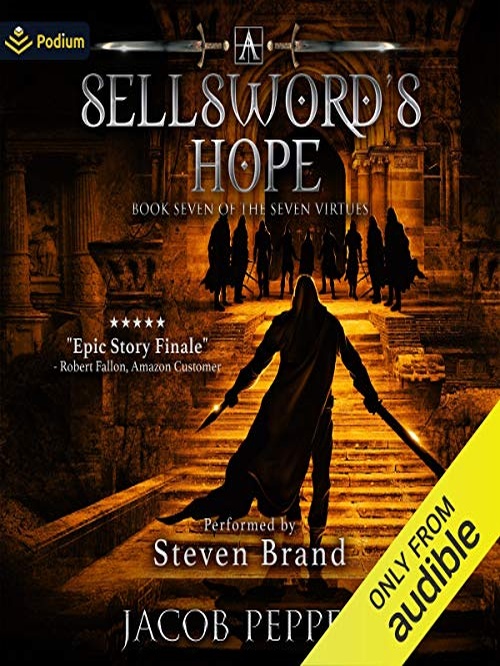
The Enduring Flame: A Sellsword’s Hope and the Alchemy of Courage

In the grand tapestry of epic fantasy, the final confrontation often serves as the crucible, testing not only the might of armies but the very spirit of a saga’s foundations. With A Sellsword’s Hope, Jacob Peppers brings his acclaimed The Seven Virtues series to a narrative crescendo, inviting us once more into a world poised on the brink. This is not merely an endgame; it is a profound exploration of what it means to fight, to hope, and ultimately, to embody the virtues that define humanity against overwhelming, seemingly emotionless, power.

The Inexorable March to Destiny

From the outset, Peppers wastes no time in establishing the dire stakes. The hard-won, yet costly, victory against Grinner has merely cleared the board for the true antagonist, an ancient evil festering in Baresh. Our protagonist, Aaron, finds himself at the vanguard of a desperate alliance, marshaling the combined forces of three kingdoms and the burgeoning power of the Virtues. The sheer scale of this endeavor, the “terrible odds” and the promise of inevitable “blood,” immediately immerses the reader in a narrative that feels both vast and deeply personal. It’s a testament to Peppers‘s craft that, even amidst the epic scope, the individual plights and sacrifices resonate with palpable urgency. We are not just witnessing a battle; we are experiencing the weight of an entire world’s fate resting on a disparate band of heroes.

The Unseen Armor: Emotion as a Force of Nature

What truly elevates A Sellsword’s Hope beyond a standard fantasy epic is its profound philosophical core. The ancient mage’s legions, creatures endowed with terrifying speed and strength, are described as being “bereft of any human feeling, including pain.” This lack of emotion is presented as their ultimate weapon, rendering them relentless and unyielding. Yet, Peppers masterfully posits a counter-argument, a transformative insight that forms the very heart of this narrative: “there is strength in emotion, a power that even the thousand-year-old mage… cannot stand against.”

This exploration of emotion as a tangible, almost magical, force is where the series finds its deepest resonance. Valor, courage, honor, and duty are not merely abstract concepts; they are the bedrock upon which hope is built. They are the unseen armor, the defiant rallying cry that allows Aaron and his motley crew—from mythical creatures and Akalians stepping out of the shadows, to the cut-throats and smugglers—to face an enemy that knows no fear. It is a powerful reminder that true strength often lies not in physical invulnerability, but in the unwavering human spirit.

An Alliance Forged in Fire

The strength of any epic fantasy lies not just in its heroes, but in the community they forge. A Sellsword’s Hope shines brightly in its depiction of this unlikely fellowship. The rich tapestry of allies, drawn from disparate corners of the world, speaks to a universality of purpose. The inclusion of “creatures out of myth and legend,” alongside the more grounded figures of “sailors and smugglers,” enriches the world-building, painting a vibrant picture of a realm where heroism manifests in myriad forms. The emergence of the mysterious Akalians from the shadows adds another layer of intrigue and power, signaling a united front against an existential threat. Steven Brand‘s narration, with its depth and versatility, undoubtedly brings each of these distinct voices and the overarching tension to vivid life, making the duration of this audio experience fly by.

A Definitive Stand

A Sellsword’s Hope is a robust, satisfying conclusion that delivers on the grand promises of its series. It is a testament to Jacob Peppers‘s storytelling prowess, offering not just a thrilling narrative arc but a compelling meditation on the very nature of heroism and the enduring power of collective will. The meticulously crafted action sequences and the high stakes are underpinned by a thematic exploration that lingers long after the final chapter.

For those who revel in epic fantasy with a strong moral compass, who seek narratives where character growth and thematic depth are as crucial as swordplay and sorcery, this book is an essential acquisition. It is perfect for readers who appreciate an unapologetic embrace of classic fantasy tropes, imbued with a fresh, insightful perspective on courage and camaraderie. We emerge from A Sellsword’s Hope not merely having witnessed a battle, but having reflected upon the profound, often quiet, strength found in shared conviction and the unwavering light of hope in the darkest hours.

A Second Chance Review

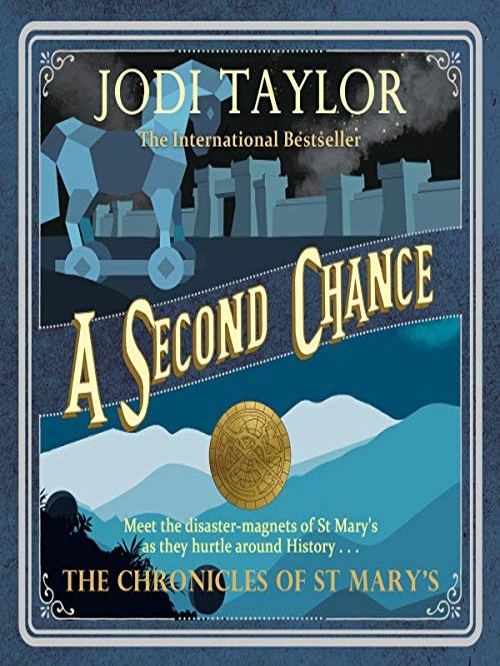
A Chrononaut’s Lament and Laugh: Re-evaluating Time’s Tumultuous Embrace in A Second Chance

The very notion of time travel, for centuries, has been the intellectual playground of philosophers and the narrative backbone of countless tales. Yet, few authors manage to infuse its inherent complexities with the sheer, unadulterated chaos and wit that Jodi Taylor consistently delivers. In A Second Chance, another vibrant entry in her beloved The Chronicles of St Mary’s series, we find ourselves, once again, clinging to the coattails of Max and her intrepid, if perpetually beleaguered, team as they navigate history’s most precarious corners. This isn’t merely a romp through temporal anomalies; it is a discerning examination of resilience, the absurdity of fate, and the indelible human imprint on the grand tapestry of epochs.

The Unruly Dance of Eras

From the outset, A Second Chance eschews any pretense of stately historical observation, plunging us headlong into a world where fact-finding missions routinely devolve into farcical near-catastrophes. Jodi Taylor‘s genius lies in her ability to juxtapose monumental historical figures and events with the most wonderfully mundane, or indeed, bizarre, contemporary predicaments. Consider the audacious encounter with Isaac Newton, presented not as a revered sage, but as a rather inconvenient mirror-thief. This immediate subversion sets the tone for a narrative that celebrates the unpredictable nature of both human history and human error. We witness the visceral brutality of Agincourt, only to be whisked away to the utterly British, and frankly dangerous, tradition of cheese-rolling in Gloucester, culminating in a “concussion by cheese.” This narrative technique doesn’t merely entertain; it cleverly underscores the idea that grand historical narratives often overlook the personal, the petty, and the profoundly peculiar.

A Heroine Forged in Temporal Fire

At the heart of this chronological maelstrom remains Max, a character whose indomitable spirit is matched only by her magnet-like attraction to disaster. The publisher’s summary poignantly highlights her continuous struggle: “Once again, it’s just one damned thing after another.” This isn’t a hyperbolic flourish; it is the very essence of Max’s journey. We witness her personal catastrophe during a jump to Bronze Age Troy, a moment that suggests Taylor is not afraid to ground the fantastical elements of Science Fiction & Fantasy in genuine emotional stakes. Even as the history department embraces the peculiar camaraderie of painting itself blue, a testament to the collective madness, Max’s personal tribulations offer a relatable anchor amidst the temporal turbulence. Her resilience, her acerbic wit, and her deeply human flaws are what elevate these adventures beyond mere escapism, forging a protagonist whose tenacity in the face of existential (and very often, just plain annoying) threats resonates deeply.

The Auditory Canvas of Chaos

For those of us who appreciate the nuanced artistry of a well-performed audiobook, Zara Ramm‘s narration undoubtedly adds another layer of enjoyment to A Second Chance. With a duration of over nine hours, her vocal performance becomes an integral part of the experience, imbuing Jodi Taylor‘s distinctive voice and characterizations with an immediacy that a silent reading might only hint at. The pacing, the comedic timing, and the emotional inflections are crucial in conveying the delightful lunacy and underlying heart of the St Mary’s universe. It is a testament to the synergy between author and narrator when the auditory experience itself becomes a character, guiding the listener through the temporal breaches with an engaging and authoritative presence.

A Resounding Affirmation of Enduring Adventure

Ultimately, A Second Chance is not simply another chapter in a popular series; it is a reaffirmation of Jodi Taylor‘s singular vision within the Science Fiction & Fantasy landscape. It is a work that manages to be simultaneously hilarious, poignant, and surprisingly thought-provoking, daring to ask what it truly means to observe history when one is irrevocably entangled within its folds.

This particular volume will, undoubtedly, be a welcome return for established devotees of The Chronicles of St Mary’s, offering the familiar blend of wry British humor, historical intrigue, and the ever-present threat of temporal annihilation. Yet, for the discerning reader—or rather, listener—seeking a series that masterfully blends the intellectual curiosity of historical fiction with the boundless imagination of fantasy, all wrapped in a cloak of uproarious comedy, A Second Chance offers a compelling argument for its enduring charm. We posit that this is an essential listen for anyone who believes that even in the face of a paradox, there’s always room for a good cup of tea and a healthy dose of irreverence. Indeed, what lessons might we ourselves glean from embracing the unexpected, even when it involves dodging rolling cheeses or confronting a mirror-stealing genius?

A Rumor of Kings Review

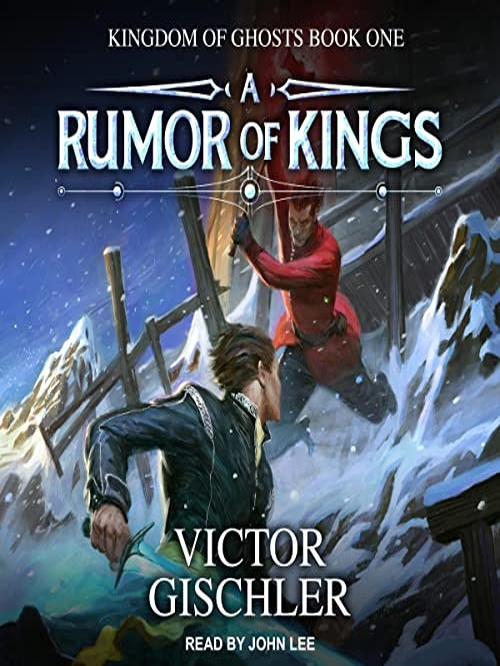
Paradigmatic Shift Inside Fractured Realm

Blood And Lineage

Greymond lack sovereign. Dukes squabble. Fantasy literature often regurgitate chosen-one tropes. Victor Gischler reject stagnation. A Rumor of Kings deliver visceral impact. We observe intellectual rigour. Author deconstruct heroism. Narrative subvert expectation.

Mind Become Battlefield

Merrik Niles embody flawed protagonist. He gamble. He steal. He acquire map. Map yield ancient artifact. Artifact trigger dormant magic. Consequence arrive. Three ghosts invade Merrik consciousness.

Occupants provide utility:
* Jester offer cynical cunning.
* Swordsman grant martial supremacy.
* Wizard channel esoteric energy.

Psychological invasion forge compelling narrative arc. Merrik confront madness. Symbiosis force moral evolution. Voices provide nuanced perspective regarding authority. Merrik navigate pretender conspiracy. Established powers resist regime change. Distant army march toward borders. Victor Gischler balance internal psychological horror against external sociopolitical chaos.

Final Assessment

We judge work exceptional. John Lee narrate audio. Performance elevate tension. A Rumor of Kings redefine dark progression within Science Fiction & Fantasy.

Ideal audience: readers craving intellectual thrillers. Readers embracing deeply flawed protagonists.

Reflection demand attention: If ancient ghosts occupy mind, whose will prevail? Read book. Determine answer.